A fleet of vehicles to identify for an event, a temporary promotion in a storefront window or equipment to mark for a team: the choice between magnetic signs or decals affects appearance as much as lifespan and ease of use. Both options can display a logo, a name, a number or a clear message. However, they don't meet the same needs when it comes to surface, how often the display changes and how permanent it needs to be.
For a school, a municipality, a sports association or a business, the right decision starts with a simple question: should this identification stay in place, or should it be removable and reusable?
Magnetic signs or decals: the right criterion
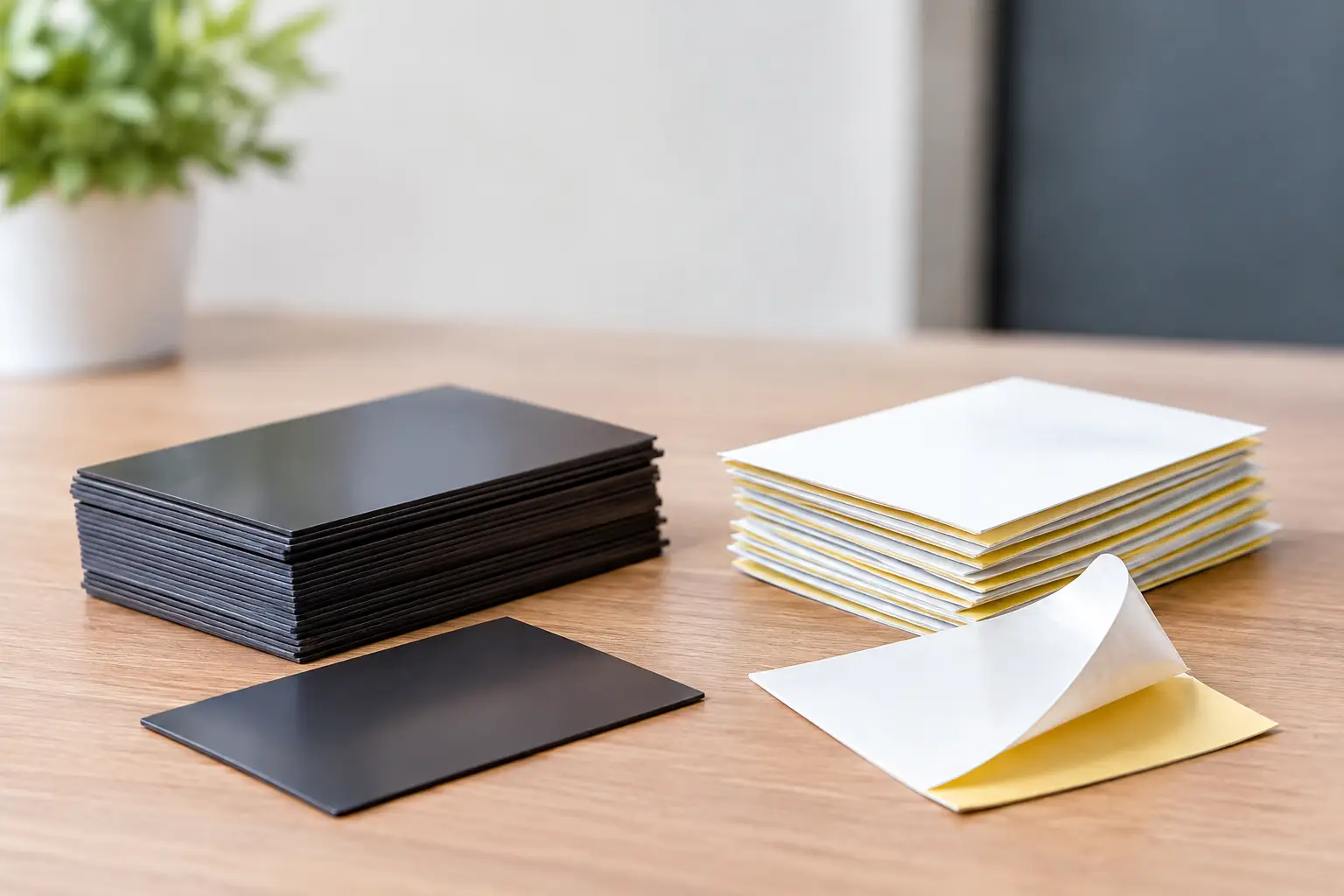
A magnetic sign attaches by magnetic attraction to a ferrous metal surface. It is designed to be removed without tools, stored and then reinstalled. It's a practical solution when a personal vehicle is occasionally used for work, when an organization lends out equipment or when a campaign lasts only a few days.
An adhesive decal, on the other hand, creates a lasting bond with the chosen surface. It suits displays that must withstand heavy use, washing, handling or outdoor conditions. Its stability often makes it the best choice for long-term identification on a door, a window, a container, a helmet or a company vehicle.
The main criterion is therefore not just budget. You need to consider the support material, exposure to sun and weather, how often the sign will be removed, the level of finish expected and the production time.
When to choose a magnetic sign
Magnetic signs are particularly useful for temporary or changing needs. A coach can identify their vehicle during the season, then remove the sign outside of club activities. A business can also supply signs to representatives, subcontractors or volunteers who use their own vehicles.
Their main advantage is reusability. The same sign can be used from one event to the next, as long as it is handled and stored properly. It also helps preserve the look of a vehicle that doesn't need to carry permanent identification.
This option does, however, have one essential technical limitation: it only sticks to ferrous metals. Aluminum, plastic, fibreglass and many modern panels are not magnetic. Before ordering, it is therefore important to check the intended area, especially on the doors of newer vehicles.
To ensure a good hold, both the sign and the surface must be clean, dry and flat. A sign placed over a moulding, a pronounced curve or a dirty area is likely to lift. On a vehicle, it should be removed periodically to clean underneath and prevent moisture or accumulated particles from damaging the paint.
The magnetic sign is well suited to the following uses: occasional vehicle identification, seasonal campaigns, team transportation, temporary services, community events and one-time sponsorships. It is less suitable if the vehicle is constantly driven in harsh conditions or if the message needs to stay displayed for several years.
The Finish of a Magnetic Sign
A custom magnetic sign can incorporate a logo, contact information, a unit number or a complete visual identity. Legibility remains the top priority: an organization's name and phone number must be readable at a glance, especially on a moving vehicle.
The graphic design must also take the format into account. A dense layout that works on a poster doesn't always translate to a vehicle door. A signage specialist can adjust the proportions, contrast and lettering size to produce a sign that is crisp and functional.
When a Decal Is the Best Solution
A decal is recommended when the identification needs to become a lasting part of the surface. A business that wants to display its logo on its service vehicles, a school that numbers its lockers, or a municipality that labels its equipment will generally get better continuity with a suitable adhesive.
Decals can be produced on different vinyls depending on the intended use. An indoor vinyl doesn't have the same requirements as a vinyl meant for an outdoor storefront window or a vehicle exposed to sun, salt and temperature fluctuations. A protective laminate can also be added when the print needs to better withstand UV rays, abrasion and regular cleaning.
The adhesive can be permanent or removable. This distinction is worth clarifying from the outset. A permanent adhesive is intended for long life and strong hold. A removable adhesive makes it easier to take the decal off after a limited-time promotion, but it isn't necessarily designed to be reused once it has been peeled off.
On a glass surface, a decal also offers several application options: inside the glass, outside, opaque, transparent or cut to shape. For a store, an office or a community hall, it can identify an entrance, display business hours or strengthen a brand image without requiring a rigid sign.
Limitations to Consider Before Application
A decal won't fix a poorly prepared surface. Dust, wax, silicone, moisture and cleaning product residue can compromise adhesion. Applying a decal to chipped paint, a very rough texture or a sharply curved surface also requires an assessment beforehand.
Removal can leave adhesive residue, especially after long outdoor exposure. This isn't a product defect: it's often the normal result of an adhesive designed to last. If the visual has to be replaced every year, a removable material or a magnetic solution may be a better choice.
Comparing Lifespan, Budget and Actual Use
In the short term, a magnetic sign can be cost-effective when it is reused many times. It avoids having to redo the identification for every event and can easily be moved from one vehicle to another, provided the surfaces are compatible.
Decals generally hold up better for continuous display. They are also more versatile, since they can be applied to metal, glass, plastic and many other surfaces. The cost depends on the material, the dimensions, the number of colours, the cutting and the protection chosen.
It would be misleading, however, to present one solution as better in every case. A magnetic sign on a company truck used every day may require too much upkeep. Conversely, a permanent decal on a volunteer's personal vehicle may be too restrictive. The right product is the one that fits your organization's actual routine.
Preparing a clear production request
To get a suitable quote, it helps to provide the information that directly guides production:
- the item to be identified and its material;
- the approximate dimensions and the number of units;
- the planned display period;
- the logo, text, colours and contact details to include;
- the conditions of use, including outdoor exposure, washing or transport.
A vector logo file usually makes it easier to reproduce shapes and lettering cleanly. If this file isn't available, a graphic design team can review the document provided and prepare a layout suited to the printing process and the chosen format.
For institutional orders, it is also wise to group related needs together. Vehicle identification can be coordinated with signs, door plaques, equipment labels, promotional apparel or engraved plaques. This consistency improves your organization's recognition and simplifies order tracking.
Another option for permanent identification
When the need involves a door, an office, a room, a machine or a piece of equipment that must stay identified for years, a rigid engraved plaque may be more appropriate than a decal. Engraved plastic plaques such as Lamicoid, as well as aluminum or other materials, can display names, numbers, instructions or logos with a professional finish.
At Mr Trophée, laser engraving, CNC engraving, screen printing and graphic design services make it possible to steer each project toward the most suitable medium, whether for practical signage or custom identification.
Before choosing, look at the surface as it will actually be used: its material, its exposure, how often it is cleaned and whether the sign needs to be removable. This simple check avoids hasty replacements and helps you get an identification that stays clear, clean and true to your organization.
You may also like
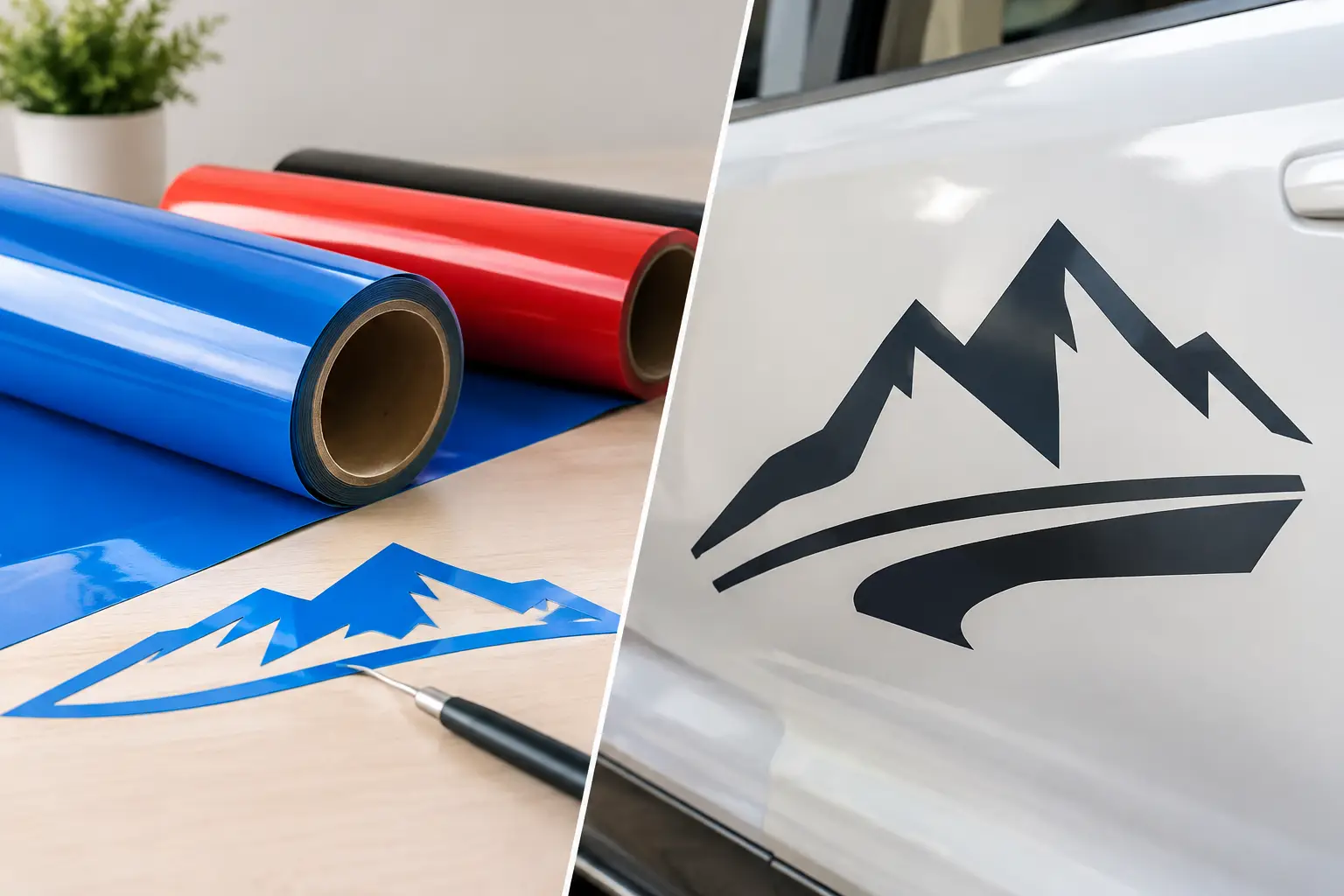
Vinyl Decals or Lettering: Which Should You Choose?
Cut vinyl or lettering: choose the right solution for your windows, vehicles and spaces, with a durable, precise and professional finish.
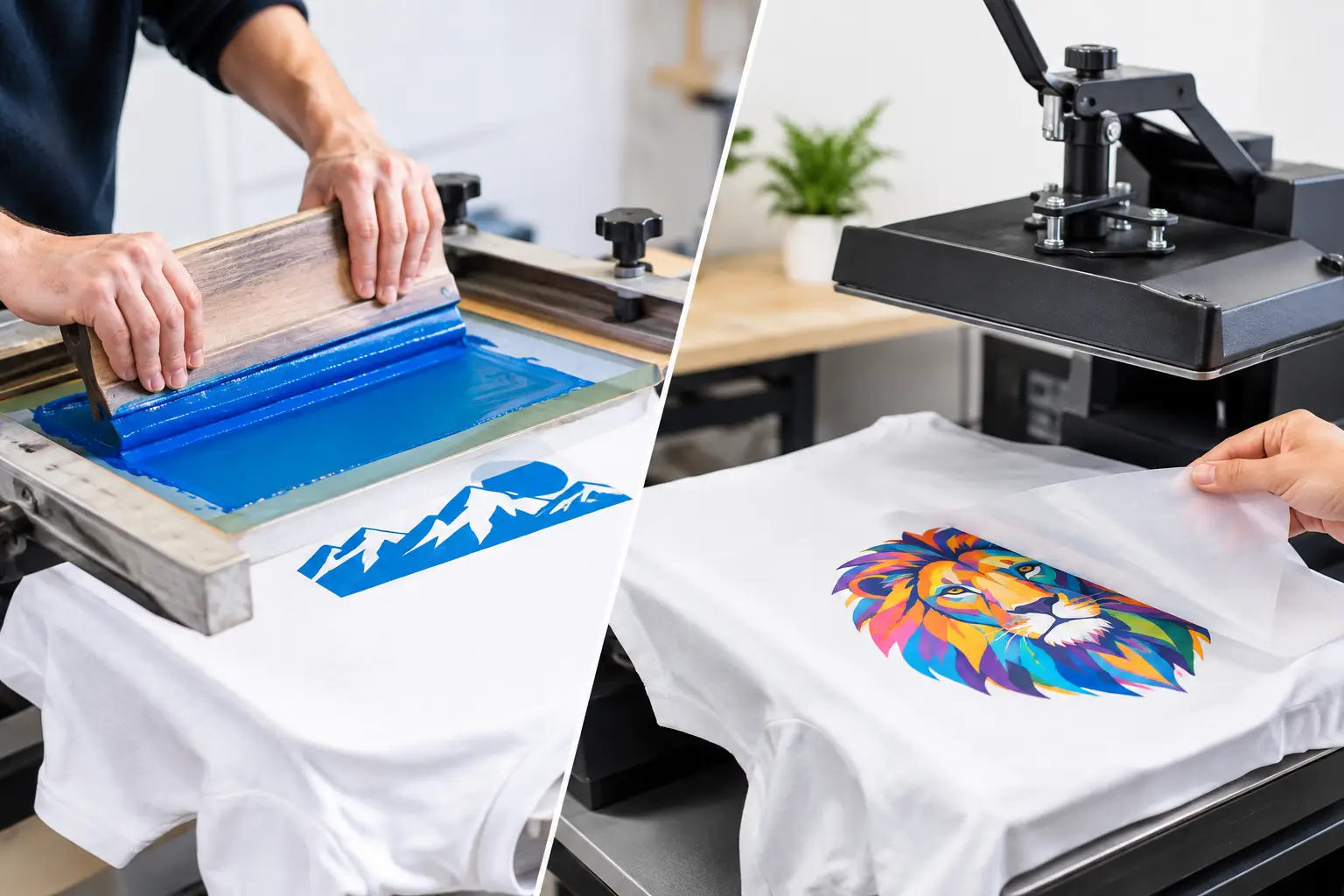
Silk screening or heat transfer, which one should you choose?
Screen printing or heat transfer: compare durability, colours, volumes and fabrics to choose the right marking method for your long-lasting custom apparel.
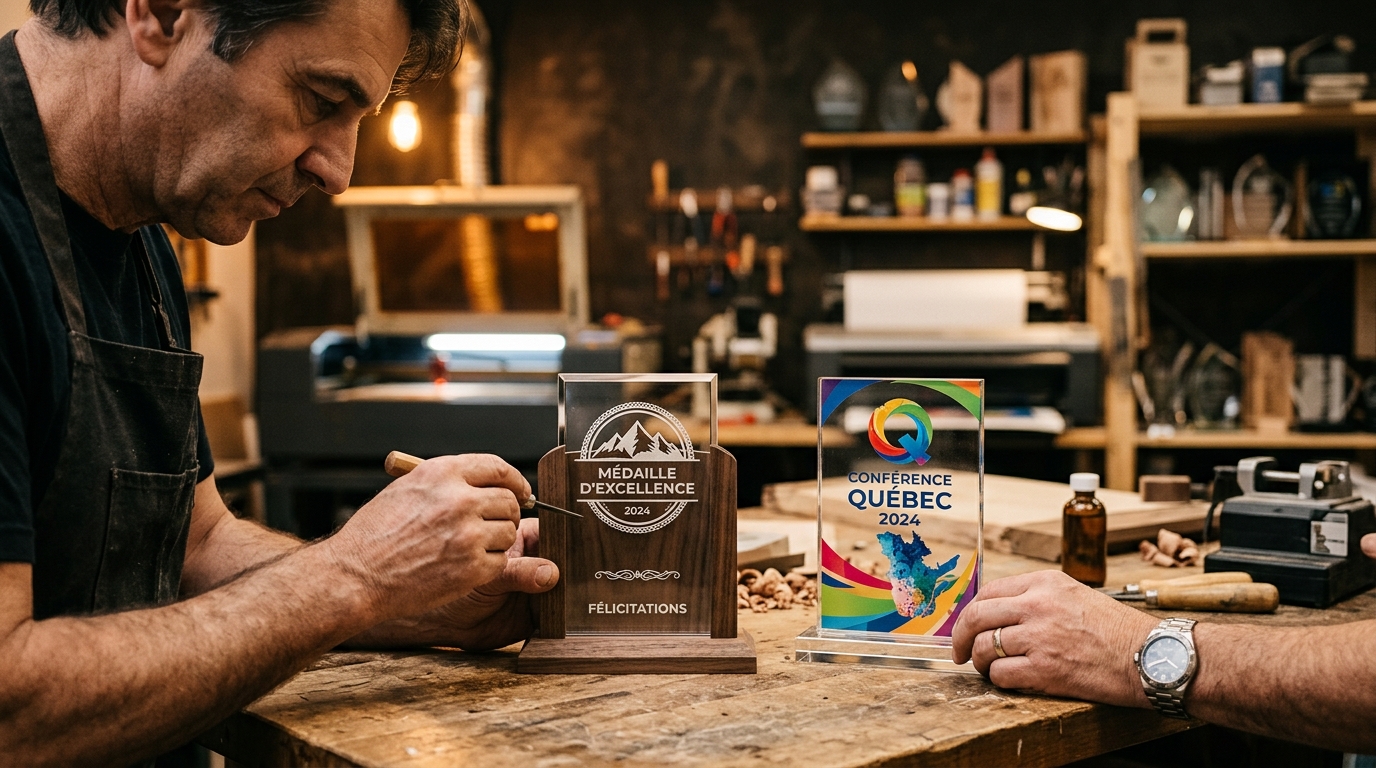
Engraving or Color Printing: Which Should You Choose for Your Awards?
Laser engraving or color printing? This guide compares both techniques to help you choose the best option based on your material, budget, and occasion.