A poorly chosen plaque is rarely noticed on the day it is installed. It is after a few Quebec winters, several cleanings, or an information update that its true quality is revealed. Aluminum and brass plaques serve very different needs, from office door identification to donor recognition, as well as building signage, equipment tags, and commemorative plaques.
Choosing the right material isn't just about the desired look. It must match the location, the text being displayed, the mounting method, the expected lifespan, and your organization's image. A school, a municipality, a sports club, or a business doesn't always need the same product, even when the format appears similar.
Aluminum vs. brass plaques: two materials, two uses
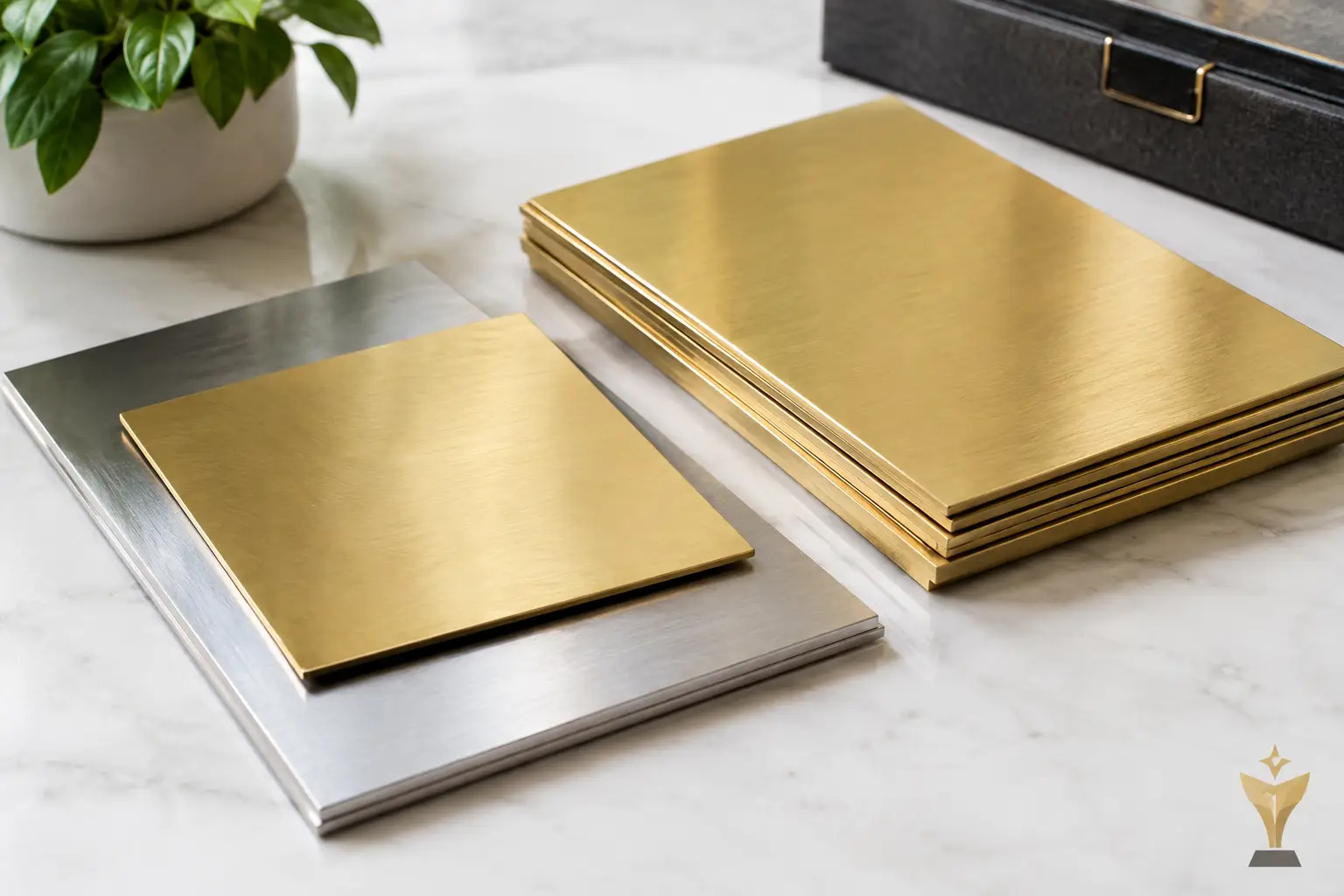
Aluminum is often chosen for its lightweight nature, corrosion resistance, and great versatility. It is particularly well suited for directional signs, equipment tags, informational panels, room numbers, and outdoor applications. Depending on the finish, it can offer a brushed, matte, satin, or coloured appearance. Anodized aluminum is especially valued when readability and durability are top priorities.
Brass brings a more traditional and ceremonial feel. Its warm golden tone is naturally associated with recognition plaques, room names, professional offices, tributes, and dedications. An engraved brass plaque gives a lasting, polished impression, making it ideal for an entrance hall, boardroom, or memorial space.
The choice isn't about one material being "better" than the other. Aluminum is generally more functional, lightweight, and economical for high-volume orders or everyday signage. Brass is preferred when presentation, prestige, and an official look matter just as much as the information itself.
When to choose aluminum
For operational needs, aluminum often provides the best balance. It works exceptionally well for identifying lockers, machinery, electrical panels, doors, storage areas, or municipal equipment. It is also ideal for plaques featuring a logo, serial number, pictogram, or specific instructions.
Outdoors, actual exposure must be taken into account. A plaque placed under an awning doesn't face the same conditions as one installed in direct sunlight, near a parking lot, or at a sports facility. The finish, text contrast, and mounting method should be selected accordingly.
When brass is the right choice
Brass is a natural fit for plaques meant to mark a milestone or recognize a contribution. A foundation honoring donors, an association highlighting past presidents, or a company celebrating years of service will all benefit from its warm, formal appearance.
However, it requires some thought regarding maintenance. Over time, brass can develop a patina. Some organizations appreciate this evolution, which enhances its classic character. Others prefer a protected finish or periodic maintenance to preserve a more uniform shine. For a plaque that will be touched or cleaned frequently, this issue is worth addressing before production.
Engraving determines plaque legibility
The material catches the eye, but the engraving conveys the message. A plaque can be elegant yet difficult to read if the font is too thin, the contrast is insufficient, or the text is too dense. The layout must be adapted to the actual size, not just to the content provided in a document.
Laser engraving is well suited to many personalization and identification applications. It allows for the precise reproduction of names, dates, logos, numbers, and graphic elements. CNC engraving can also be used when the project requires precise mechanical work, specific depths, or certain plaque formats.
For a series of identical plaques or artwork featuring coloured areas, screen printing can be a good option. Each process has its advantages. The right choice depends on the material, quantity, environment, and expected level of detail.
A simple rule helps avoid mistakes: the further away the plaque is viewed from, the shorter and higher contrast the message should be. A room name can be read from a few metres away. A machine plaque is viewed up close. A commemorative plaque can contain more text, but its visual hierarchy must remain clear: title, name, date, then secondary message.
Designing a plaque for its installation location
Before confirming an order, it is helpful to identify precisely where the plaque will be installed. This step influences the choice of metal, as well as thickness, corners, drill holes, and mounting method. A plaque affixed to an interior door can be attached with a suitable adhesive. An outdoor or institutional plaque often requires mounting holes, screws, or standoffs.
The mounting surface matters as well. Brick, concrete, wood, glass, and metal frames do not react the same way to mounting hardware. A brass plaque intended for a stone wall may require a different approach than an aluminum plaque placed on a workshop door.
The finish must also suit the context. In a school hallway or community centre, a matte surface reduces reflections and makes reading easier. In a reception hall or corporate entrance, a glossier finish can better support the desired image. It is not just about aesthetics: a misplaced reflection can make a name unreadable under ambient lighting.
Content to approve before production
Corrections after engraving are rarely simple. For individual plaques or institutional series, text approval is therefore an essential step. Names of individuals, job titles, years, accents, acronyms, and room numbers must be verified against a reliable source.
For a logo, it's best to provide a crisp, usable file rather than an image pulled from a document or an email. High-quality artwork ensures a more faithful reproduction, whether the plaque is engraved, printed, or created using a combination of processes. When space is limited, the design team can also adjust the layout without sacrificing clarity.
Planning for Series, Additions, and Replacements
Organizations rarely order just a single plaque forever. Employees change roles, rooms get renamed, sponsors evolve, and inventories expand. Thinking about these changes right from the start minimizes visual inconsistencies and simplifies future orders.
For a series of door plaques, establishing a standard is wise: same dimensions, same font, same mounting method, and same logo placement. For a recognition wall, planning for add-on individual plaques makes it easy to update the display without remaking the entire panel. In a workshop or vehicle fleet, consistent numbering simplifies equipment management and replacements.
This continuity is especially useful for schools, municipalities, non-profits, and multi-site businesses. Keeping production specifications, colours, and graphic layouts on file helps maintain consistent signage over the years. At Mr. Trophy, projects can combine custom engraving, signage, trophies, medals, and other branded products to meet multiple needs under one roof.
How to Prepare an Effective Quote Request
A clear request speeds up product selection and quote preparation. It’s helpful to include the number of plaques, approximate dimensions, intended material, final wording, logo to include, installation location, and required date. If you're deciding between aluminum and brass, a photo of the location or a description of the decor can help guide our recommendation.
Also mention less obvious constraints: sun exposure, frequent cleaning, proximity to water, mounting on an uneven surface, bilingual plaque requirements, or future name additions. These details keep you from choosing a solution that looks great on paper but isn't suited for real-world use.
A well-designed plaque doesn't need to overdo it. It should be clean, readable, and fit right in. By specifying the intended use right from the start, you give the material, engraving, and finish the best opportunity to represent your organization for years to come.
You may also like
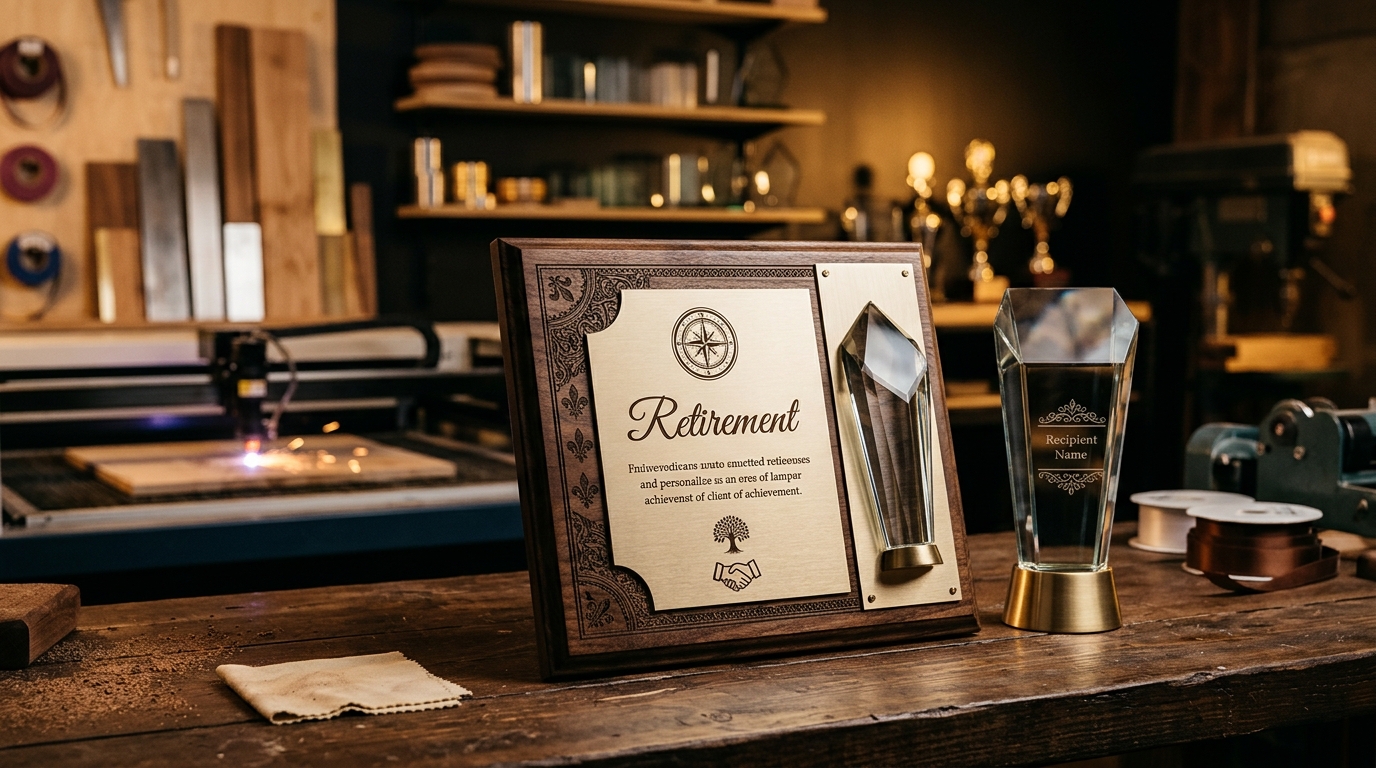
Retirement Gifts: Engraved Plaques and Trophies to Honour a Career
A retirement deserves a keepsake worthy of a whole career. Here is how to choose, word and order an engraved plaque or trophy that will truly touch the person being honoured.
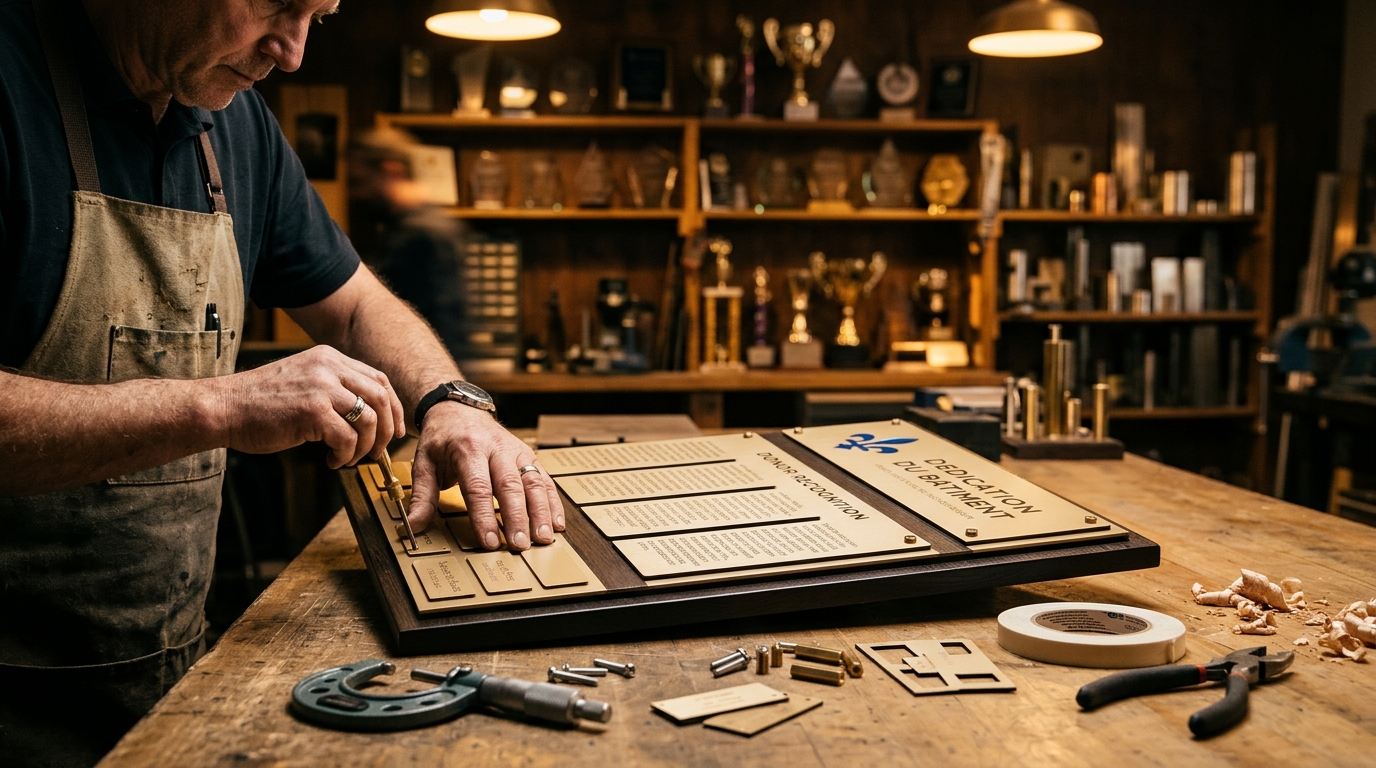
Plaques for Building Dedications and Donor Walls: Specifying Text, Size, and Mounting
Lock plate size, line breaks, bilingual order and mounting hardware before your dedication plaque or donor wall goes to production.
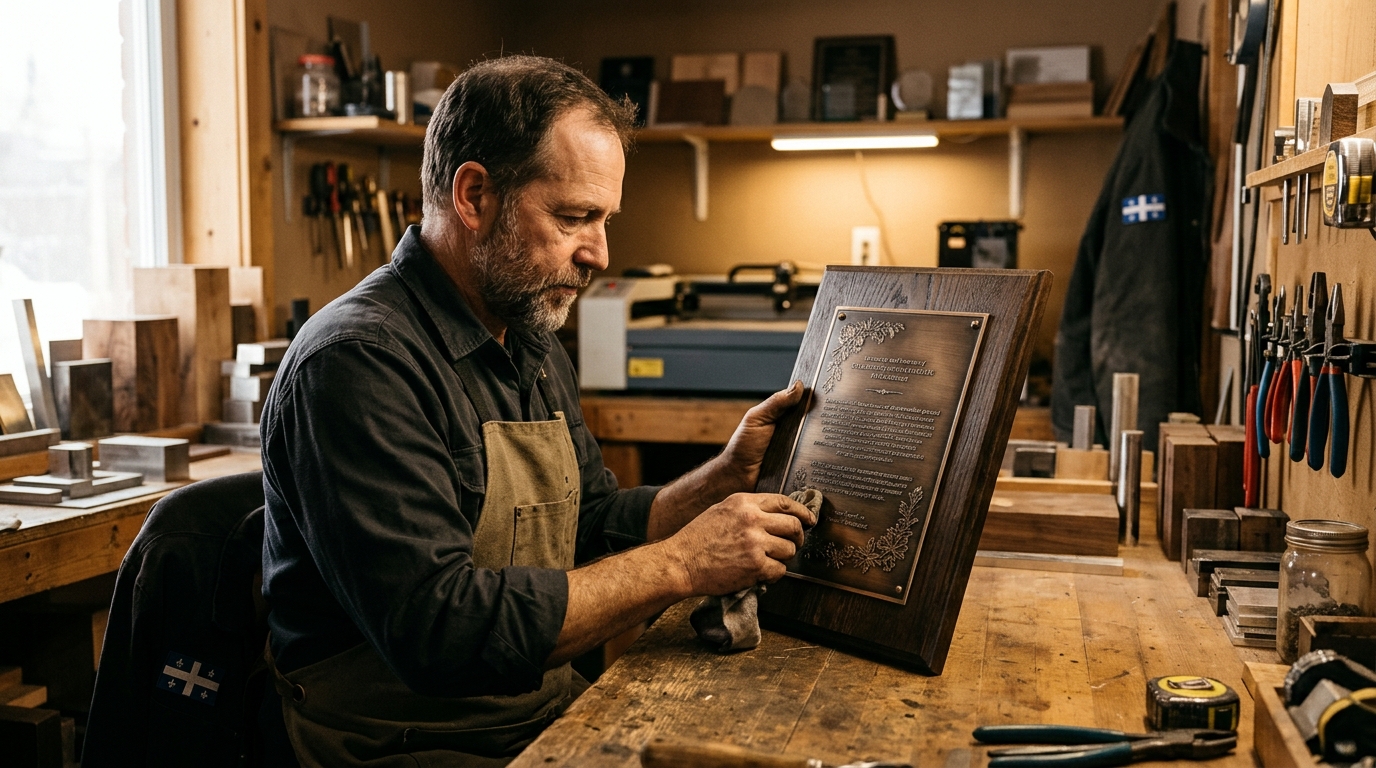
Memorial Plaques: How to Pay Tribute with Care and Durability
A tribute to a loved one, a volunteer or a place: here is how to choose the message, material and mounting for a memorial plaque that will stand the test of time.