September 21, 2026
Medals and Trophies for Sports Tournaments in Canada: An Ordering Guide for Organizers

Every year, dozens of sports tournament organizers across Canada find themselves in the same situation: award day is approaching, and the trophies haven't arrived, don't match the planned categories, or the budget has been exceeded for no apparent reason. These mistakes aren't the result of bad luck. They stem from a lack of structured planning around concrete purchasing decisions.
Whether you're organizing a regional hockey tournament or a provincial multi-sport event, ordering medals and trophies follows a precise logic that most organizers discover too late. With the rise of sporting events in Canada, particularly in the lead-up to the 2026 FIFA World Cup, the pressure on timelines and formats will only increase.
This guide presents a comprehensive operational plan: how to define your winner categories, choose the right format based on your budget, meet real delivery windows, and avoid the most costly mistakes. By the time you finish reading, you'll have an action plan ready to apply for your next edition.
Why Trophy Orders Fall Apart Before the Big Day
Two mistakes come up time and again. The first is underestimating production timelines, assuming that an order placed two weeks before the event will arrive on time. The second is choosing a format without matching it to the tournament's actual winner categories, which results in surplus pieces in some areas and shortages in others.
The consequences are real: award presentations pushed to the end of the event, participants leaving without recognition, and significant express shipping fees that can wipe out any savings made on the products themselves.
The 2026 context makes things worse. With the FIFA World Cup being held in Canada from June 11 to July 19, 2026, demand for sporting events of all sizes will increase significantly. Suppliers will be under pressure. Production timelines will stretch during peak periods.
A structured ordering framework neutralizes these risks before the tournament is even confirmed. Rather than reacting to last-minute urgency, the organizer anticipates volumes, formats, and timelines right from the planning phase.
Defining Your Winner Categories Before Choosing a Format
The first step isn't choosing a trophy format — it's knowing exactly who will be recognized and how many pieces each category requires.
Mapping Your Recognition Levels
Most tournaments have at least six distinct levels: champion, finalist, third place, most valuable player, best team, and special distinctions (sportsmanship, best goalie, rookie of the year). Each level must be identified before any contact with a supplier, since each one may call for a different format and a different quantity.
Individual Tournaments vs. Team Tournaments
In an individual tournament (tennis, swimming, martial arts), each category produces a small number of winners: a gold medal, a silver medal, a bronze medal. The total volume remains manageable, even with multiple weight or age categories.
In a team tournament (hockey, soccer, basketball), the logic is reversed. A single "champion" category can represent 15 to 20 pieces per team. Multiply that across several age divisions, and the volume grows quickly. A hockey tournament with six distinct age divisions can easily exceed several hundred pieces for champions and finalists alone, with different expectations depending on whether the players are 8 or 16 years old.
The distribution table: a fundamental rule
Before calling or emailing your supplier, build a simple table with three columns: winner category, number of participants involved, and required engraving information (player name, jersey number, tournament date).
That last point is critical. Custom trophies and medals with individual engraving extend production time. Knowing the exact number of names to be engraved from the start allows you to get an accurate production timeline and avoid unpleasant surprises two weeks before your event.
Choosing the right format based on your budget and your event
Once your distribution table is established, the choice of format determines both the visual consistency of your ceremony and how well you stay within your budget.
The three essential formats
Custom medals are the most cost-effective format for high-volume tournaments. Their low unit cost makes it possible to recognize every participant without exceeding the budget, and their compact format simplifies packaging, transport, and on-site distribution. They are particularly well suited for youth categories and participation awards, where quantity takes priority over prestige.
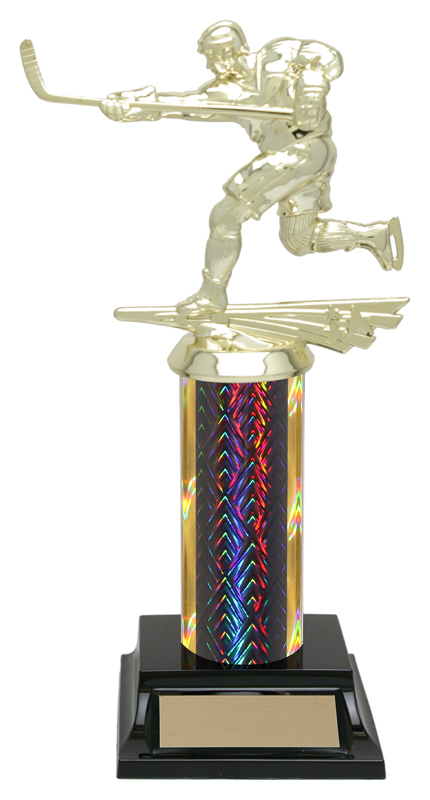
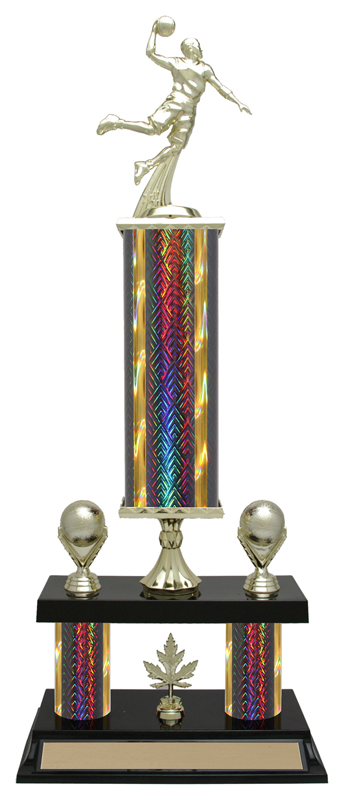
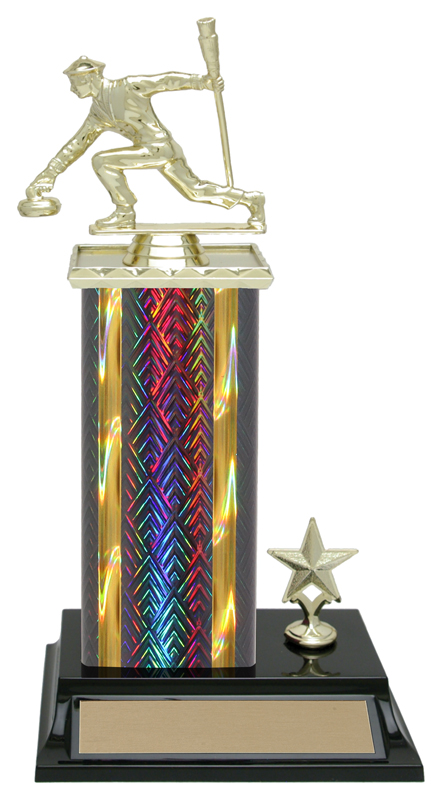
Custom trophies are the natural choice for podiums and champions. A range of heights and materials, from resin to premium metal finishes, allows you to calibrate the level of prestige according to your budget. A custom trophy presented to the champion creates a strong visual hierarchy that participants and spectators recognize immediately.
Trophy plaques occupy a middle ground: they offer lasting, professional recognition while being easier to ship than a large trophy. They are often chosen for individual merit awards, honorary distinctions, or recognitions presented to coaches and volunteers.
Comparison of the three formats
Format
Recommended volume
Price range
Typical use case
Custom medal
20 to 500+
Low (budget-friendly)
Participation, youth
Custom trophy
1 to 30
Medium to high
Podium, champion
Trophy plaque
5 to 50
Medium
Merit, special distinctions
Timelines vary depending on volume and customization; ask Mr Trophée for a confirmed timeline at the time of your quote.
Combining Formats Strategically
The most effective strategy is to pair all three formats at the same tournament: medals for all participants, custom trophies for champions in each division, and trophy plaques for special distinctions such as most valuable player or sportsmanship. This approach segments recognition without multiplying costs. Browse the complete trophies, medals and plaques catalogue at Mr Trophée to identify the product lines available at each budget level before finalizing your selection.
Delivery Windows: The Real Lead Times to Factor Into Your Plan
Once your formats are selected, the next critical variable is time. This is where the majority of orders go off the rails.
For a custom engraved order outside of peak season, allow several business weeks between confirmation and receipt, and ask your supplier for a precise lead time based on your volume and formats. This lead time covers production, engraving and shipping, with no buffer for corrections or logistical delays.
High-Risk Periods
Two windows concentrate the majority of rush orders in Canada: May–June and November–December, which correspond to end-of-season for most team sports. During these periods, production lead times can double without sufficient advance notice on your part. The concentration of summer events adds further pressure on suppliers between July and August. In 2026, the FIFA World Cup being held in Canada will amplify this seasonal congestion even further.
Expedited Production: Possible, But Needs to Be Arranged in Advance
Some suppliers, including Mr Trophée, have expedited production capabilities for tight deadlines. This service exists, but it comes with specific conditions, particularly regarding engraving file confirmation and stock availability. Verify these conditions before relying on them in your planning.
The Three-Week Rule
The most reliable method: start from your tournament date, subtract the guaranteed delivery date, then add a buffer of two to three days to review engraving proofs. The result gives you your order deadline. Three weeks before the event is a safe minimum window for most custom orders.
Volume and Lead Time: A Direct Relationship
An order of 200 medals with individual player name engraving requires different planning than an order of 20 standard trophies. Share the exact volume and engraving type from your very first quote request to get a realistic production lead time.
The Step-by-Step Order Plan for Organizers
Once your delivery windows are established, the next step is turning that planning into a concrete order. Here is the five-step process.
Step 1: Needs Inventory
Before contacting any supplier, document the total number of pieces required, broken down by winner category. For each piece, note the engraving information needed: player names, tournament date, association logos. A simple spreadsheet will do. This step eliminates back-and-forth and speeds up the quote process.
Step 2: Format Selection
Using the comparison table from the previous section, assign the right format to each category. Confirm this breakdown in writing before moving on to the next step.
Step 3: Quote Request
Send your complete distribution spreadsheet to Mr Trophée by phone at 514-565-6665, by text, or by email at info@trophee.ca. An accurate quote requires this information from the very first contact; an incomplete request delays production timeline confirmation, which can put your schedule at risk.
Step 4: Engraving Proof Approval
Once you receive the proofs, review every piece of engraved text without exception — names, dates, wording. A correction requested after production has begun results in additional charges and extended lead times. Allow at least one business day in your schedule for this review.
Step 5: Follow-Up and Reception
Confirm the delivery date at the time of ordering. Upon receipt, build in a 2-to-3-day buffer before the ceremony to inspect each piece, address any logistical issues, and prepare the award presentation without rushing.
The Most Costly Mistakes and How to Avoid Them
Even with a well-structured ordering plan, certain recurring mistakes can undermine your results. Here they are, along with their real impact.
One size for all categories. Giving the same trophy to the champion and the runner-up eliminates any visual hierarchy. Participants immediately notice the lack of differentiation, which diminishes the symbolic value of each award. Planning for at least two distinct heights is enough to correct this without significantly increasing the budget.
Participation medals without personalized engraving. Adding a first name to a medal costs very little, but greatly increases its value in the eyes of the recipient. A generic medal ends up in a drawer; a medal engraved with the athlete's name gets kept. The added cost of engraving is marginal compared to its impact on perceived recognition.
Bulk orders without checking lead times by format. Standard medals and complex custom trophies do not share the same production cycle. Grouping all formats into a single order while assuming a uniform lead time is a common mistake. Some custom trophies require more manufacturing time; confirming the lead time for each format separately prevents unpleasant surprises.
Under-ordering while counting on a last-minute adjustment. Most Canadian suppliers cannot accommodate quantity additions in the final days before a scheduled delivery. Building in a 10-to-15% buffer at the time of the initial order is far more reliable than attempting a last-minute adjustment.
Express shipping costs overlooked in the budget. A rush order can result in shipping fees significantly higher than standard delivery, wiping out any savings made on the products themselves. Including this line item in the initial budget envelope, on the same level as the products, prevents unexpected overruns.
Summary: your action plan before the next edition
Avoiding costly mistakes is one thing; turning those lessons into consistent habits from one edition to the next is another. Here are the key points to embed in your process.
Three decisions that determine the success of your order
Whatever the size of your tournament, three decisions shape everything else. First, categorize your winners before choosing any format; the number of pieces per recognition level directly determines the budget and timelines. Next, respect a minimum order window of three weeks, and longer during peak periods. Finally, approve every engraved text before production begins; a correction mid-manufacturing costs both time and money.
The right format for each level of recognition
Keep in mind the three-format logic detailed above: medals for volume, trophies for the podium, plaques for individual distinctions.
Take action before your next edition
Contact Mr Trophée (514-565-6665 or info@trophee.ca) with your complete distribution table. You'll receive a precise quote, a guaranteed delivery timeline, and the best prices in Canada. Expedited production capacity is available for tight deadlines, subject to prior confirmation.
For recurring tournaments, keep your distribution table from one edition to the next. Adjust quantities and categories based on format changes; don't start from scratch. That one habit alone cuts planning time in half every year.
Conclusion
Organizing a memorable sports tournament starts well before competition day. These three habits — categorize first, order early, approve engravings — eliminate the majority of costly mistakes.
The recognition you offer your participants directly reflects the quality of your event. A well-designed medal, a carefully crafted trophy, or a lasting commemorative plaque leave a lasting impression long after the final whistle.
Don't let logistics compromise that moment. Prepare your distribution table, contact Mr Trophée today, and head into your next edition with the confidence of a well-prepared organizer.
You may also like

Trophies and Medals for Pickleball Tournaments in Quebec: A Guide for Organizers
Pickleball keeps growing across Quebec, and so do tournaments. Here is how to plan trophies and medals without miscounts or last-minute stress.

Trophies and Medals for Basketball Tournaments in Quebec: A Guide for Organizers
Categories, medals, team trophies and MVP awards: here is how to plan your basketball tournament recognition without stress or budget surprises.

Trophies and Medals for Tennis Tournaments in Quebec: A Guide for Organizers
Planning a tennis tournament this summer or fall? Here is how to choose trophies, medals and plaques for each category while staying on budget and on schedule.