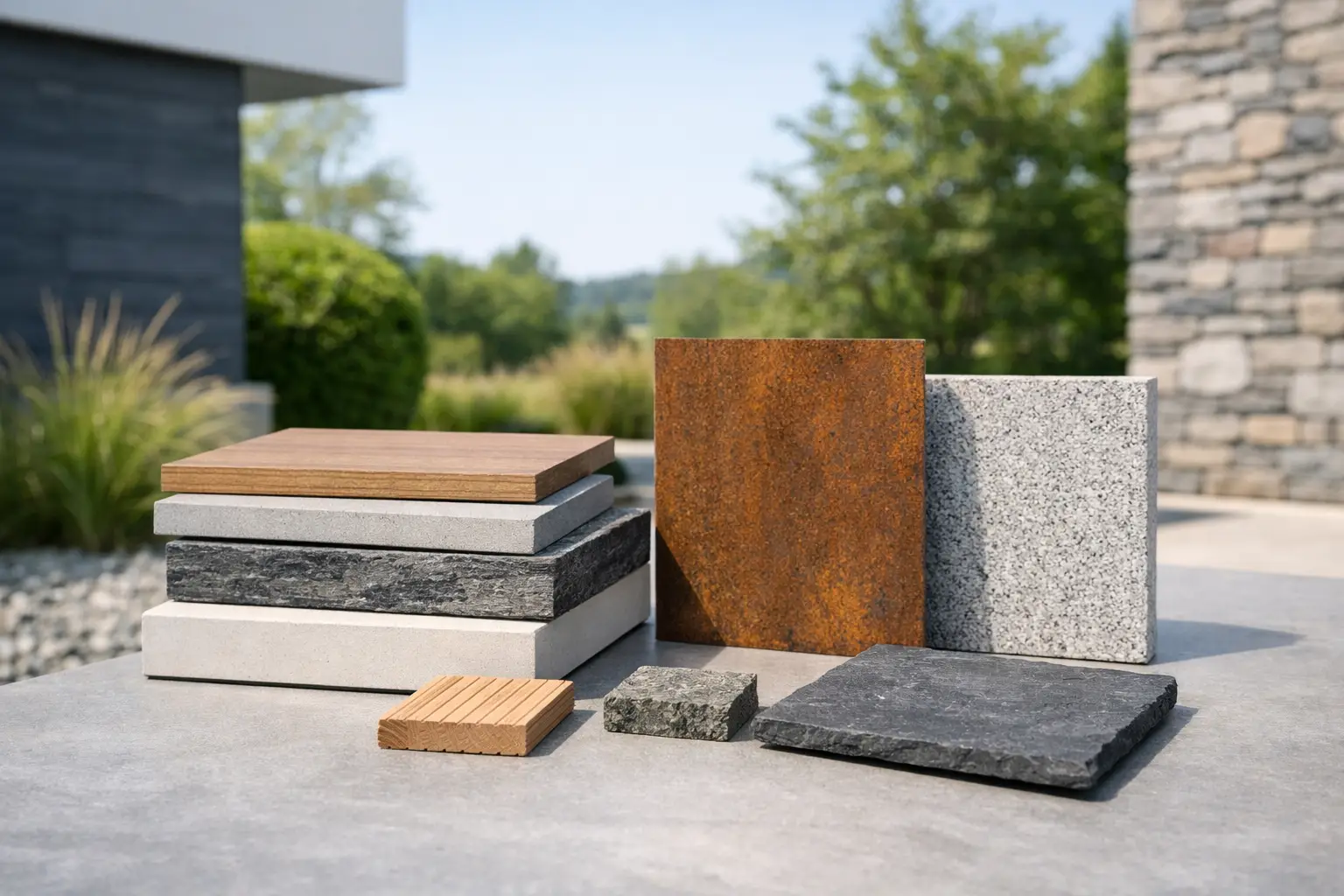
An outdoor sign must remain legible after years of rain, sunlight, frost, and daily handling. This outdoor sign materials guide helps schools, municipalities, businesses, associations, and event organizers choose a substrate suited to actual use, installation location, and desired appearance. The right material depends on more than looks alone: the marking method, fasteners, and installation environment matter just as much.
Outdoor Sign Materials Guide: Start With the Application
Before comparing finishes, define the purpose of the sign. A door plaque installed under an awning does not face the same conditions as a building sign exposed to full southern sun, a trail marker, or a commemorative plaque mounted in a park.
For an organization, it is helpful to establish from the outset what content will be displayed: department name, room number, logo, instructions, hours, donor names, or commemorative text. Format, reading distance, quantity, and mounting surface — brick wall, concrete, wood, post, or fence — should also be determined early on.
In Quebec and many other regions of Canada, freeze-thaw cycles, moisture, and road salts can accelerate wear. A decorative sign suitable for an interior lobby will not automatically be a good solution for an entrance, a sports facility, or a municipal installation.
Aluminum: The Versatile Choice for Signage
Aluminum is frequently chosen for outdoor signs because it is lightweight, stable, and corrosion-resistant. It is well suited to building identification plaques, directional panels, regulatory displays, and parking markers. Its low weight simplifies installation on a wide variety of surfaces.
Anodized aluminum offers a clean, professional surface, particularly for engraved signs featuring text, pictograms, or numbers. Brushed, silver, gold, or coloured finishes make it easy to align signage with the visual identity of a school, business, or municipality. For large formats and colour graphics, printing or screen printing may be considered depending on the project.
Its main advantage is versatility. That said, a thin sign can warp if installed without adequate backing or subjected to impacts. For high-traffic locations, the appropriate thickness should be selected, fasteners should be properly spaced, and areas where equipment may strike the sign should be avoided.
When to Choose Engraving on Aluminum
Engraving is especially well suited to permanent signs: equipment identification, room numbers, door signage, safety instructions, or institutional markers. Engraved marking does not rely on a surface adhesive and maintains clear readability when contrast is well chosen.
Stainless Steel: A Clean Finish for Demanding Locations
Stainless steel brings a contemporary, long-lasting appearance. It is a popular choice for commercial buildings, healthcare facilities, sports installations, office entrances, and architectural projects where the sign forms an integral part of the overall design.
Stainless steel holds up well against moisture and lends itself to engraving precise text, logos, and directional signage. A brushed finish visually reduces certain marks compared to a mirror surface, which requires more upkeep. For a plaque placed near a high-traffic entrance, that detail is anything but minor.
This material is heavier and generally more expensive than aluminum. It also requires careful installation, with compatible hardware and appropriate mounting points. Stainless steel is therefore a sound investment when longevity, appearance, and resistance to heavy use justify the cost.
Brass and bronze: for a lasting commemorative plaque
Brass and bronze remain the standard for honour plaques, dedications, donor recognition, and lasting tributes. Their weight, relief, and traditional look lend a particular presence to official text or institutional recognition.
These metals are especially well suited to facades, memorial gardens, heritage buildings, foundations, and municipal projects. A bronze plaque can be cast or engraved depending on the desired style, while brass allows for elegant finishes and detailed marking.
It is worth accepting that living metals evolve over time. Brass can tarnish and bronze can develop a patina depending on exposure and maintenance. This evolution is sometimes sought after for its character, but it should be explained to those responsible for the project. If the goal is to maintain a consistent shine without upkeep, aluminum or stainless steel may be more appropriate.
Acrylic and engraved laminate: useful, but best placed with care
Acrylic offers considerable aesthetic freedom. Clear, frosted, black, white, or coloured, it makes it possible to create modern plaques with engraved text, printing, or layered elements. It works well for sheltered entryways, desk plaques visible from outside, directories, and signage installed under cover.
For direct and prolonged outdoor exposure, however, it is important to choose a grade designed for exterior use and to avoid installations that trap water. Acrylic can also be more susceptible to scratches and impacts than metal. It is therefore better suited to a protected architectural application than to a site panel or a plaque installed at impact height.
Engraved laminates, often referred to as Lamicoid, are a practical solution for identification plaques, technical labels, control panels, and door markers. Engraving reveals a contrasting colour beneath the surface layer, producing precise and durable marking. Their performance depends on the grade chosen: some laminates are intended for indoor use, while others are formulated for UV exposure and outdoor conditions.
Marking matters as much as the material
An excellent plaque can become difficult to read if the customization process does not match its intended use. Laser engraving is effective on many materials and allows text, numbers, logos, and pictograms to be reproduced with precision. CNC engraving is particularly well suited to certain metals, plastics, and projects requiring greater depth or a more pronounced result.
Screen printing and direct printing are useful when a design includes multiple colours, solid fills, or detailed instructions. For outdoor signage, it's important to verify ink durability, the possible application of a protective coating, and legibility at a distance. Text that is too fine or has insufficient contrast will age poorly, even on a quality substrate.
Files provided must be reviewed before production: spelling of names, accents, numbers, up-to-date logos, contact information, and dates. In a recognition program or a multi-site signage project, an approved proof prevents inconsistencies between plaques, trophies, medals, and other personalized elements.
Mounting, contrast, and maintenance: the details that extend service life
The mounting method should be planned alongside the plaque itself. Exposed screws may suit technical or municipal signage, while standoffs provide a more architectural look. On brick or concrete, anchors must be appropriate for the substrate. On wood, it's important to account for material movement and moisture.
Contrast remains essential. Dark lettering on a light background, or the reverse, improves readability from a distance and in varying lighting conditions. Safety, directional, or accessibility information should not rely solely on a decorative effect. A simple typeface, adequate sizing, and clear pictograms make the plaque more functional on a daily basis.
Maintenance is generally minimal: gentle cleaning with plain water or a non-abrasive product suited to the material. Avoid abrasive pads on stainless steel, anodized aluminum, acrylic, and printed surfaces. For brass and bronze, choose a care method compatible with the desired patina.
At Mr Trophée, material selection can be guided by a broader discussion about format, engraving process, layout, and mounting hardware, in order to produce a plaque that fits cohesively within its installation environment. A successful outdoor plaque isn't simply built to withstand the seasons — it allows every visitor to find, understand, and recognize the information at first glance.
You may also like
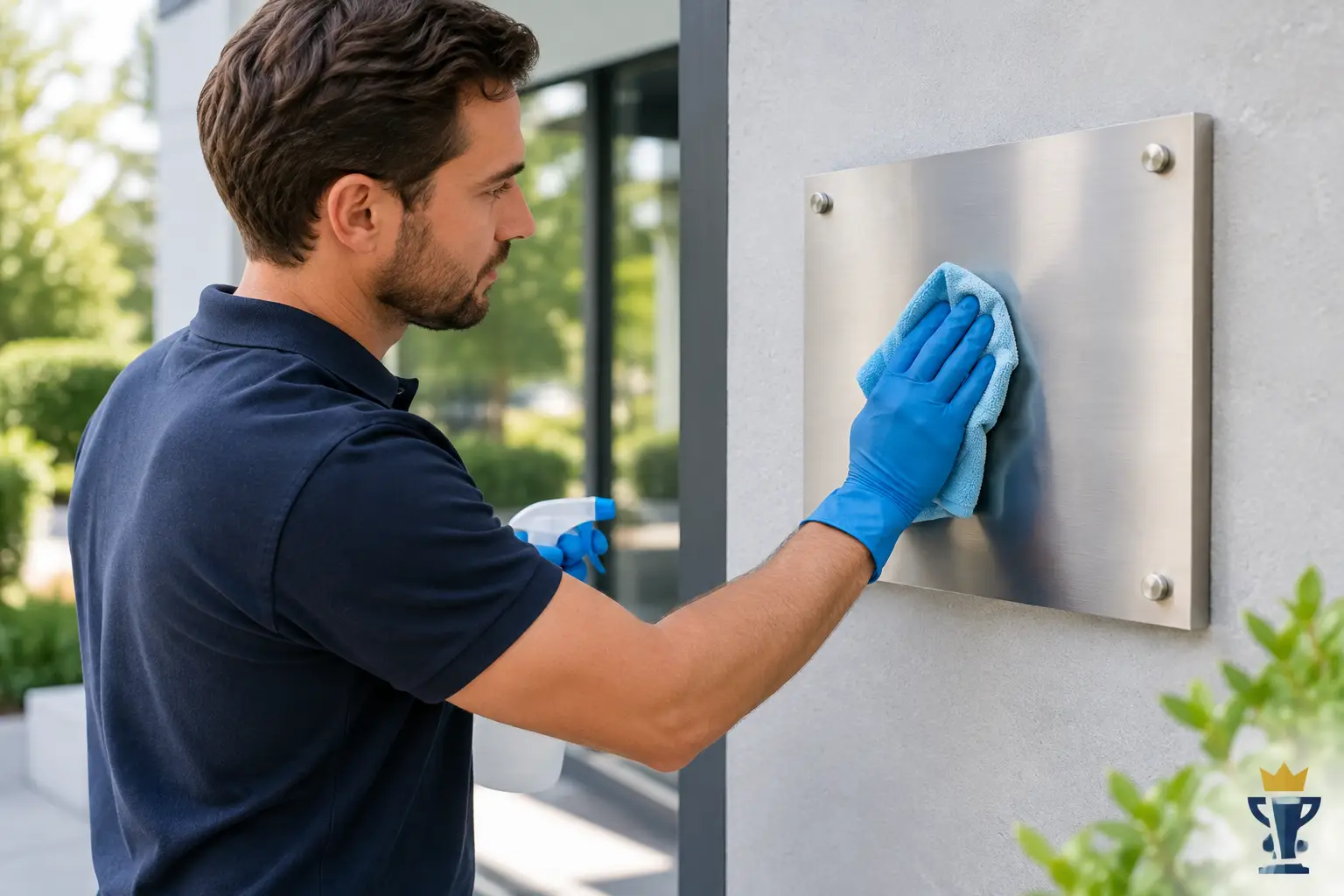
Outdoor Plaque Maintenance Guide
Outdoor plaque maintenance guide to preserve the legibility, finish, and mounting of your signs, engraved plaques, and markers throughout the seasons.
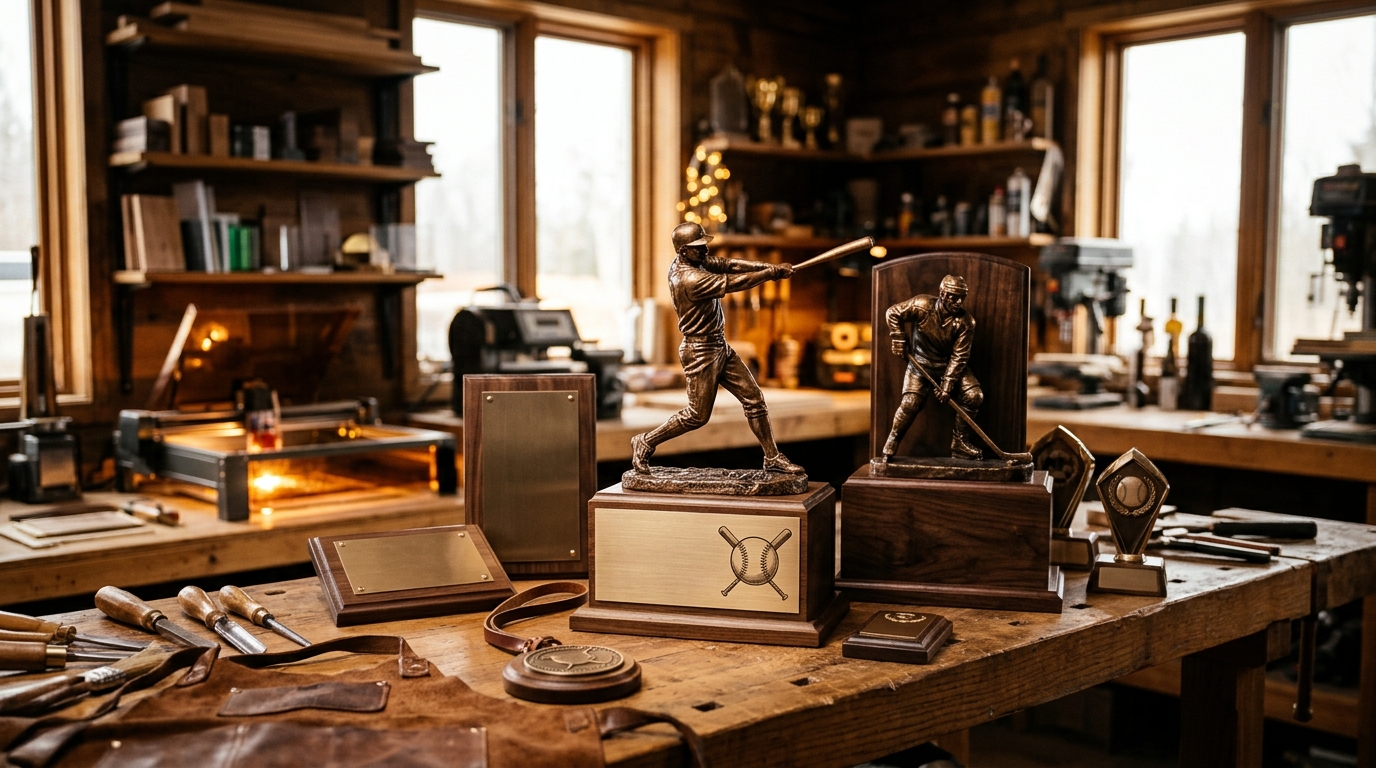
Trophies and Plaques for a Slo-Pitch or Ball Hockey Tournament: The Organizer's Guide
Running an amateur tournament means planning your awards well before the first game. Here is how to choose, count and order your trophies without stress, with help from the Mr Trophée workshop in Léry.
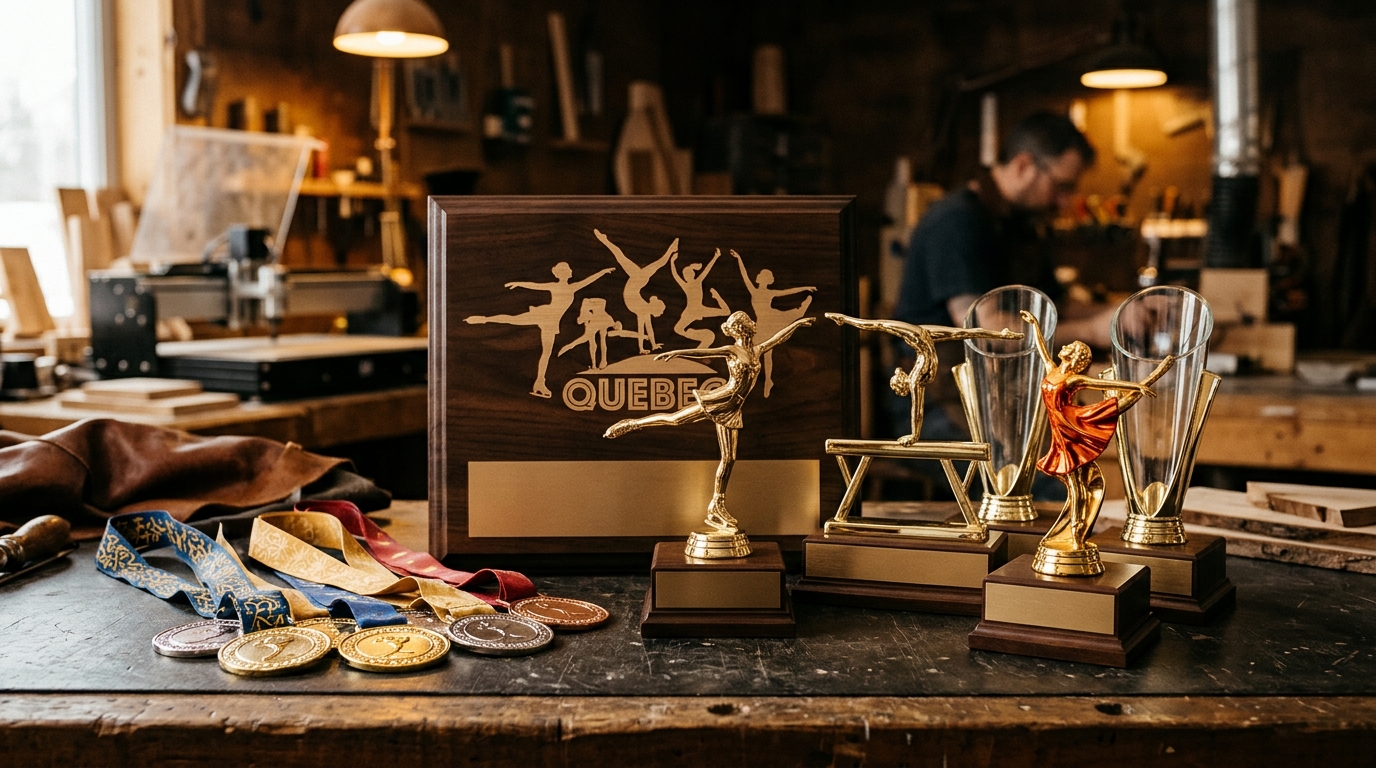
Trophies and Medals for a Dance, Gymnastics or Figure Skating Competition: A Guide for Clubs
Year-end show or regional competition: here is how to choose medals, trophies and plaques that make every young athlete shine. A practical guide for dance, gymnastics and figure skating clubs.