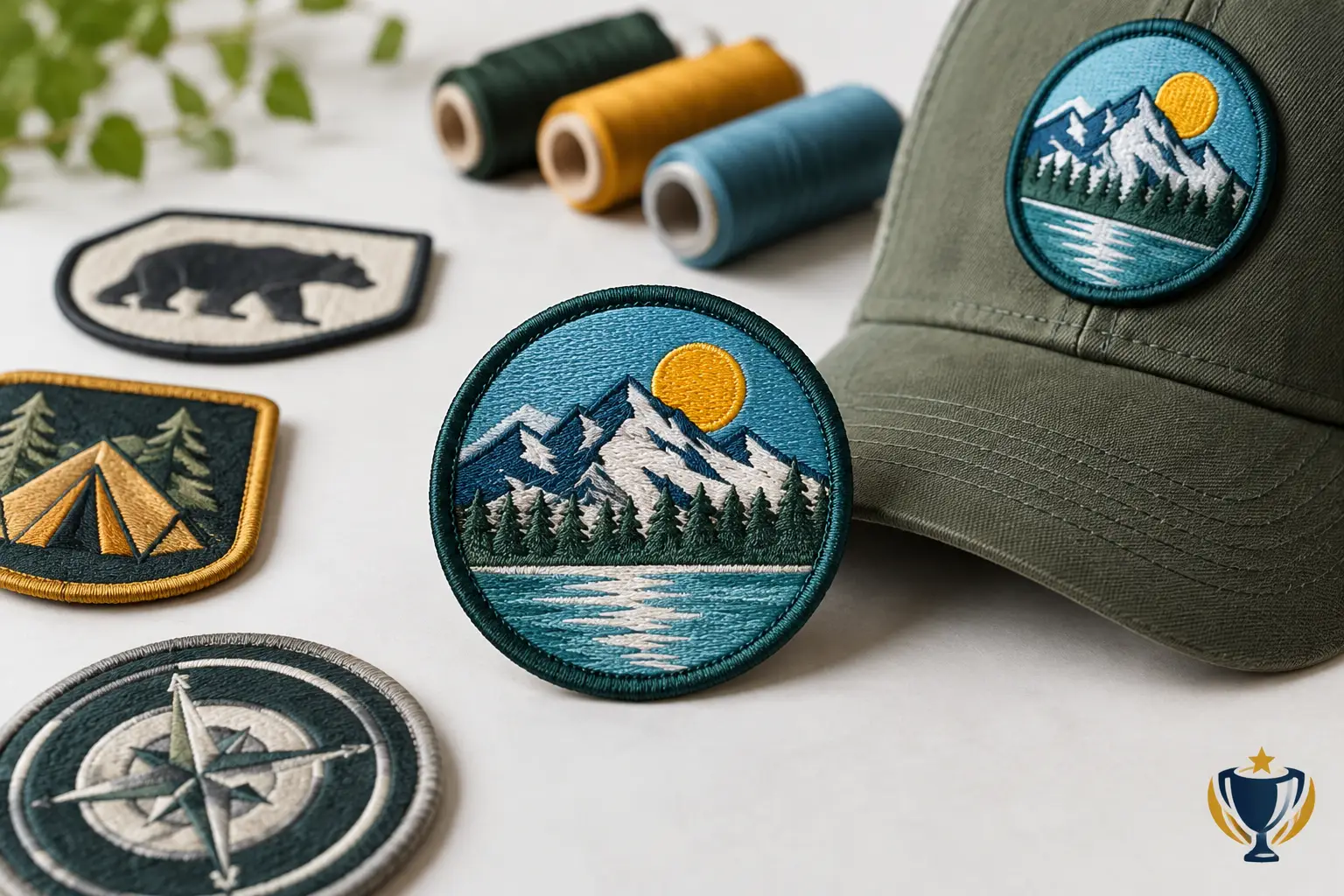
A patch is more than just a logo sewn onto a piece of clothing. Whether on a sports uniform, a work jacket, a team bag, or a promotional cap, it needs to remain legible, withstand washing, and accurately represent your organization. Creating a custom embroidered patch means thinking about the artwork, the chosen fabric, and how the product will actually be used.
For a school, municipality, sports league, or business, patches also simplify group identification and foster a sense of belonging. Applying the same emblem across multiple items creates a cohesive look without requiring a new print run for every piece of apparel.
Creating a Custom Embroidered Patch Based on Its Use
The first question isn’t just “Which logo should we use?”, but rather “Where will the patch be worn?”. A patch designed for a team jersey doesn’t have the same requirements as an emblem for a winter coat, backpack, employee polo, or promotional garment.
On a frequently washed uniform, the quality of the backing and border deserves special attention. For workwear, friction, movement, and fabric type must all be considered. A patch that is too stiff on a pocket or sleeve can compromise comfort. Conversely, a more structured patch is ideal for a cap, jacket, or display piece.
The attachment method is also crucial. Sewing offers long-lasting durability and is ideal for garments intended for extended wear. An iron-on backing makes application easier on certain fabrics, provided the material can tolerate heat. Velcro is practical when the patch needs to be removed, replaced, or swapped, particularly on certain uniforms, gear, or for temporary groups.
Organizations ordering for multiple roles benefit from defining their intended uses from the start. You can maintain the same logo while adjusting the format, backing type, or size to suit each specific garment.
The Right Format for a Custom Embroidered Patch
A larger size allows for more fine detail, but it isn’t always necessary. On the left chest, a compact patch is generally most effective: it’s easy to read up close, comfortable to wear, and well-proportioned to the garment. For the back of a jacket or bag, a larger version can accommodate a team name, year, slogan, or bold design.
The shape should complement the artwork. Round and oval patches are commonly used for clubs, service branches, and commemorative events. A rectangular shape works well for name tags, job titles, or professional identification. A custom die-cut following the outline of a logo can deliver a more distinctive look, but it requires a clean, adequately thick border to maintain a sharp finish.
Before finalizing the size, it helps to visualize the patch on the final product. A measurement that looks generous on a screen can appear very small on a jacket or, conversely, overly bulky on a polo. Factoring in the intended placement—chest, sleeve, cap, bag, or back—ensures you make the right choice.
The Limits of Detail in Embroidery
Embroidery adds dimension and a durable finish, but it does not interpret an image the same way digital printing does. Very fine lettering, complex gradients, and tiny details can lose readability when the design is scaled down.
A logo with many closely spaced lines may need to be simplified. This is not about altering the organization’s visual identity, but rather adapting certain elements to ensure a clean embroidered result. For example, secondary text can be removed from a small patch while kept on a larger version. Spacing between letters or outlines can also be adjusted to prevent threads from blending together.
Colours should be selected based on the garment or textile that will receive the patch. Dark thread on a dark background lacks contrast, even if that combination works well in print. A contrasting border or an embroidered background can help the logo stand out on black, navy blue, or dark green apparel.
From Logo to Production: Preparing a Clear Order
A high-quality file speeds up project evaluation. A vector logo is ideal when available, as it makes it easier to verify lines, outlines, and proportions. A clear image file can also serve as a reference, especially if the organization has a brand colour guide or artwork already used on banners, trophies, medals, or apparel.
To receive an accurate quote, you should specify the number of patches, desired dimensions, shape, colours, backing type, and required date. It is also helpful to indicate what item the patch will be applied to. A request for 25 sleeve patches and an order of 500 patches for promotional bags are not planned the same way.
A digital mock-up or visual proof before production reduces the risk of errors. Be sure to verify the spelling of names, initials, years, accents, and corporate colours. This step is particularly important for municipalities, schools, associations, and businesses that follow standardized branding guidelines.
When a project also includes shirts, caps, medals, plaques, or recognition awards, consolidating all visual specifications simplifies coordination. This allows the logo, colours, and typography to remain consistent across all products. For organizations that order regularly, keeping approved specifications on file also makes seasonal renewals or roster additions seamless.
Choosing Between Embroidery, Printing, and Other Customization Methods
Embroidery is particularly valued for its texture, durability, and professional, institutional look. It is naturally suited to team apparel, polo shirts, jackets, caps, and textiles designed for long-term wear. It is less suitable when a design features a photograph, a precise gradient, or an extensive amount of fine detail.
In these cases, other marking methods may better meet your needs. Screen printing can be suitable for promotional apparel in bulk, while engraved identification is ideal for plaques, trophies, medals, signs, and commemorative items. The right choice depends on the surface, level of detail, budget, expected lifespan, and the desired look.
A patch can also complement other personalized products rather than replace them. A team can award engraved medals at the end of the season while wearing patches on their uniforms. A company can identify its staff with patches on workwear and keep nameplates for desks or office doors.
Patches That Stay Relevant After the Event
The best patches are designed to last beyond a single activity. An anniversary, tournament, or volunteer campaign badge can become a cherished keepsake if it features a date, a clear name, and legible artwork. Conversely, an overly busy patch risks losing its appeal once the event is over.
For recurring orders, it is wise to plan for both a permanent version of the logo and an event-specific version. The first serves for uniforms and everyday identification. The second adds the year, the name of a championship, a campaign, or a specific milestone. This approach ensures brand continuity while making room for special occasions.
A well-prepared patch becomes a dependable element of an organization’s uniform, recognition, and visibility. By focusing on the practical use of the garment and visuals tailored for embroidery, the project retains its professional look long after the initial application.
You may also like
Choosing Durable Signage Materials
Choosing durable signage materials for offices, schools and public sites: durability, engraving, maintenance and well-calibrated budget, made to measure.

Thanking Your Volunteers: Plaque, Trophy and Recognition Award Ideas for Nonprofits
Sports clubs, schools, foundations and community groups: here is how to choose sincere, lasting recognition awards for your volunteers without blowing your budget.

Preparing a School Recognition Tournament
Preparing a school recognition tournament with custom trophies, medals, and plaques, ordered on time for a polished, successful awards presentation.