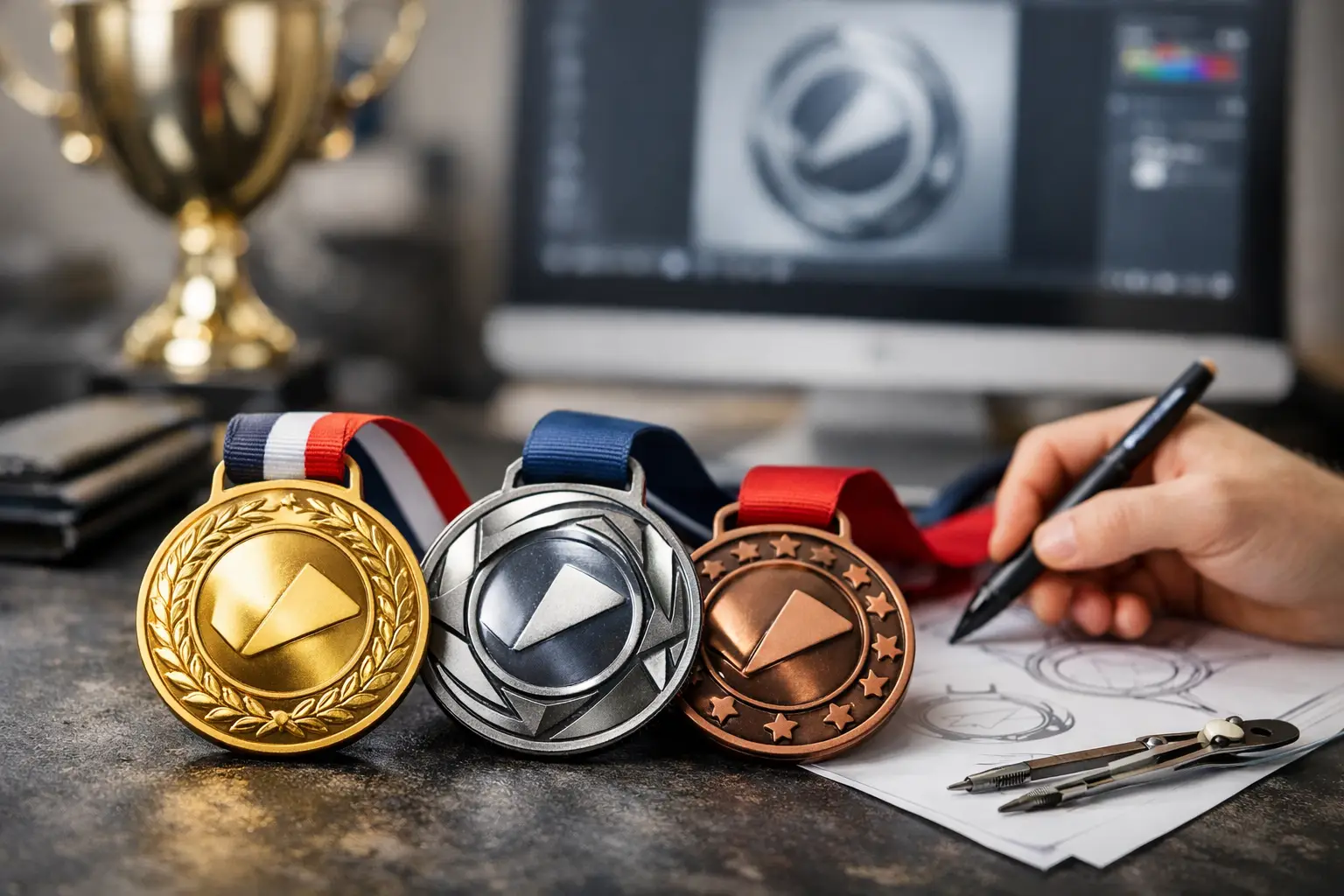
A medal presented after a championship game, a school tournament, or a full season stays with its recipient for a long time. Well-designed custom logo sports medals connect that memory to your league, school, municipality, or organization. They immediately identify the event, recognize the participants, and give your awards ceremony a more cohesive look.
For an organizer, the decision goes beyond simply choosing a design. You need to determine the level of customization, the material, the ribbon, the information to be engraved, and the production timeline. A little planning upfront goes a long way toward getting medals that are legible, durable, and suited to your participant count.
Why add a logo to a sports medal?
A logo transforms a generic medal into something that belongs to your organization. For a sports association, it maintains a consistent identity from one season to the next. For a school or community centre, it ties the award to a specific program. In a corporate setting, it can also reference the name of a fitness challenge, a team-building activity, or a wellness campaign.
This personalization also adds clarity. When a medal features a logo, the name of the event, and the year, it remains meaningful long after it was presented. This is especially useful for recurring tournaments, regional championships, races, sports galas, and interschool competitions.
That said, the logo shouldn't take up all the available space. A medal is a small canvas: a visual that's too detailed, lettering that's too thin, or too much text can compromise legibility. The best results often come from a clean composition, with a strong central image and secondary information that's clearly prioritized.
Choosing the right medal for your event
The right choice depends on your audience, budget, quantity, and the symbolic importance of the presentation. An introductory event for young participants doesn't call for the same finish as an annual championship or a volunteer recognition award.
Metal medals have a more traditional presence and a weight that's appreciated at official ceremonies. They're well-suited to competitions where gold, silver, and bronze categories need to be clearly distinguished. Antique-finish styles are often a great fit for combat sports, heritage tournaments, or events where a more classic look is desired.
Acrylic medals offer more freedom in terms of shape and colour. They can incorporate a team's colours, feature a printed visual, or take on a silhouette tied to the sport. They're a solid choice for clubs, school events, and promotional activities, provided you opt for sufficient thickness to ensure they hold up well.
Wood can work well for a trail race, an outdoor tournament, or an activity rooted in a local identity. The material has a distinctive character, but you'll need to account for limitations around fine details and natural surface variations. For some projects, combining materials can deliver a more striking result without stretching the budget.
Think about the ribbon from the start
The ribbon is part of the medal. A solid ribbon in the organization's colours is simple and effective. A printed ribbon featuring the event name or a custom design increases visibility — particularly for races, annual tournaments, and competitions with large numbers of participants.
Also consider the ribbon's width, its fastening system, and the age of the recipients. For a youth activity, comfort and ease of wear matter just as much as appearance. For a more formal ceremony, a ribbon coordinated with the logo's colours gives a more polished finish.
What information to include without overloading the design
The front face typically features the logo, the discipline, or the event title. The back is the natural place for variable details: participant name, category, ranking, date, or location. This layout makes information easier to read and allows a single production base to be used across multiple groups.
Before submitting your order, determine what should be identical on all medals and what needs to vary. A personalized engraving creates a more meaningful sense of recognition, but it requires an exact list of names and careful proofreading of spelling. If your timeline is tight, an identical medal for each participant paired with an engraved tag or plate may be more practical.
For a sporting event, the following elements provide a clear foundation:
- the organization's or event's logo;
- the name of the competition or season;
- the discipline, category, or level;
- the ranking, recipient's name, and date, if needed.
Not everything needs to be included. A participation medal can simply feature the logo, the activity name, and the year. Conversely, a championship medal benefits from specifying the category and placing achieved. The choice depends on the intended use and how long you want the keepsake to last.
Preparing a logo for engraving or printing
A clean file reduces corrections and improves the final result. Vector files are particularly well suited for logos intended for engraving, cutting, or printing, as they maintain sharp edges regardless of size. Formats with vector paths are preferable when available.
An image file can also be used, provided it is sufficiently sharp. A small logo pulled from a website or sent as a screenshot risks producing imprecise edges. For single-colour marking, it may be necessary to simplify gradients, shadows, or very fine details. This step doesn't diminish the logo — it adapts it to the actual medium of a medal.
Colour deserves the same attention. Colour printing can faithfully reproduce the visual identity of a club or sponsor. Engraving, on the other hand, relies more on the contrast of the material and the depth of the mark. It is therefore useful to choose the method based on the effect you're looking for, rather than solely from what the design looks like on screen.
Laser engraving, CNC, or printing: which process should you choose?
Laser engraving is well suited for precise text, individual names, and a wide range of materials. It provides clean, permanent marking on plaques, inserts, and certain medal surfaces. CNC engraving may be the better choice when a project calls for relief, a specific depth, or work on particular materials.
Printing or screen printing works well for coloured logos, detailed visuals, and custom ribbons. In some cases, a printed image is integrated into the centre of a medal while the variable text is engraved on the back. This combination offers great flexibility for events that need to balance a graphic identity with individual customization.
A personalization specialist can help guide the choice based on the material, quantity, and level of detail. At Mr. Trophy, laser engraving, CNC engraving, screen printing, and graphic work make it possible to tailor the solution to the chosen medal rather than forcing a single process across all projects.
Planning Ahead for Quantities, Categories, and Deadlines
The most costly mistakes often show up in the lists, not the design. Count your participants, alternates, categories, podium finishers, and a few extra units. A small reserve is useful if a last-minute registration comes in or if a name needs to be corrected after the ceremony.
For a competition with multiple levels, create a simple table indicating the model, finish, ribbon, and text associated with each category. For example, participation medals can use a common model, while the top three places receive distinct finishes. This preparation prevents mix-ups between batches and makes quote approval easier.
Turnaround time depends on model availability, the number of units, the type of marking, and the graphic complexity. An order with an approved logo and identical text generally moves faster than a batch with hundreds of different names. Don't leave the personalization to the last week — building in time for approval protects both the quality and the deadline of your event.
Making the Presentation a Cohesive Moment
A medal carries more weight when it's part of a larger whole. Trophies for winning teams, plaques for sponsors, podium posters, and promotional apparel can all carry the same logo and colours. This consistency creates a polished image, even for a neighbourhood tournament or an internal company event.
Finally, think about the person who will receive the medal. A correctly spelled name, an accurate date, and a clearly recognizable logo are small production details that add meaning to the achievement being recognized. Prepare your artwork, categories, and participant list with care — your event will leave behind a keepsake that athletes will want to hold onto.
You may also like
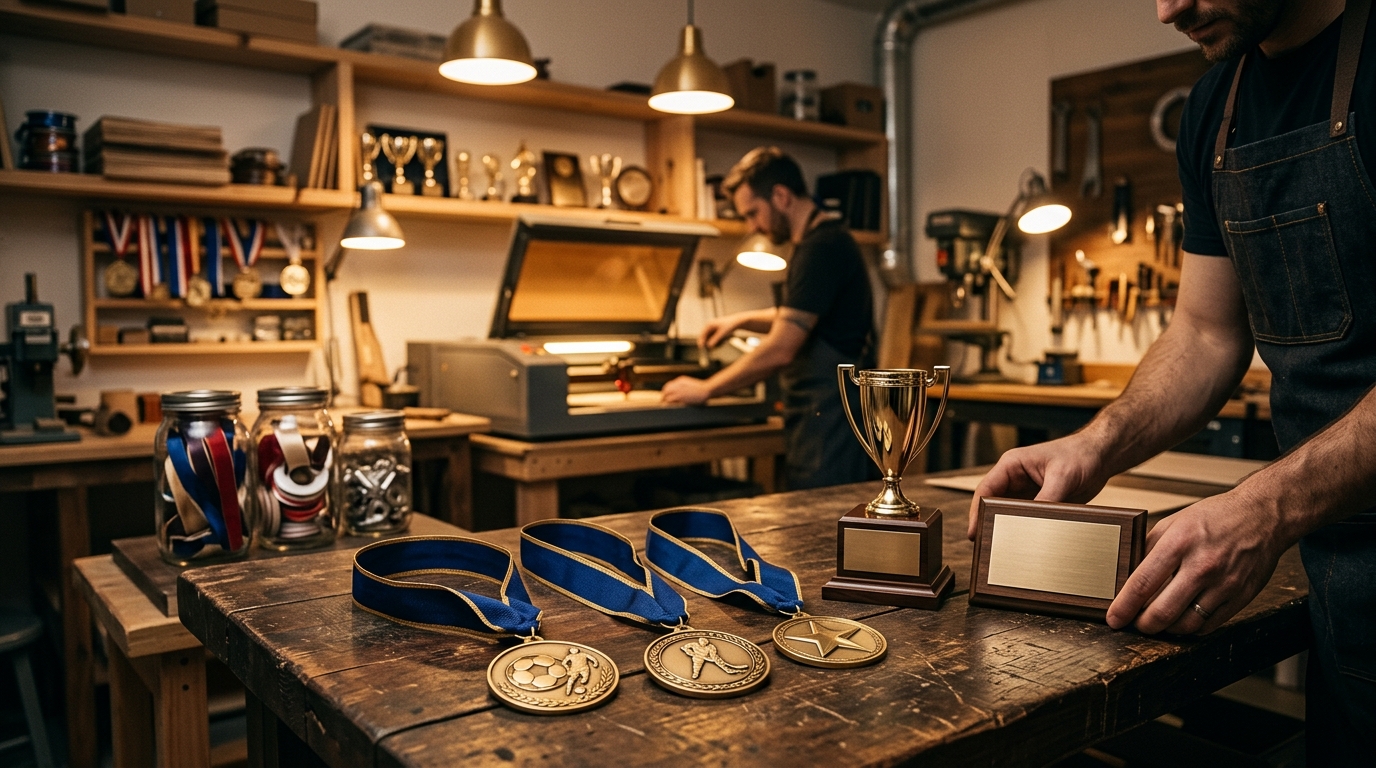
Participation Medals for Youth Sports: Recognizing Every Child the Right Way
Medal, small trophy or plaque: how to recognize every young athlete's season while respecting your association's budget. Practical workshop tips for ordering well.
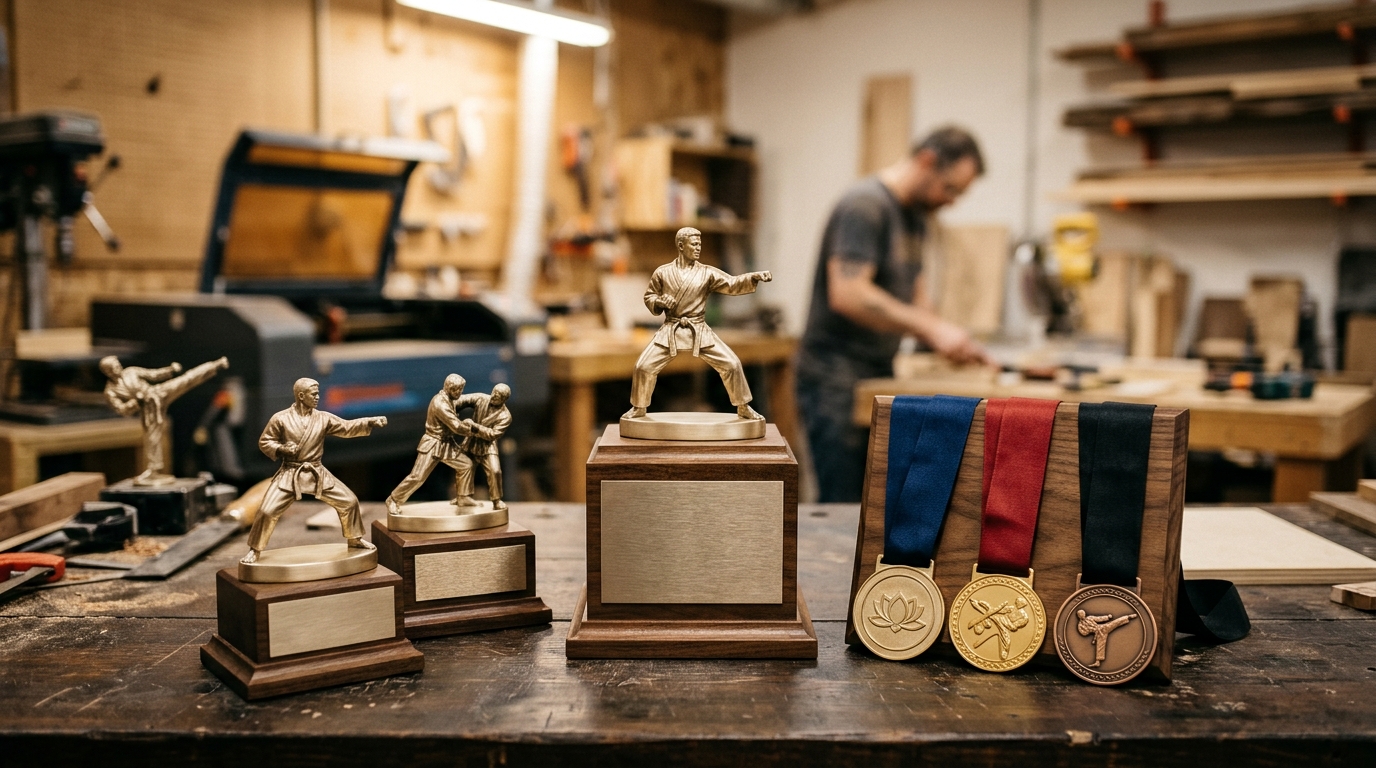
Trophies and Medals for a Martial Arts Tournament: A Guide for Karate, Judo and Taekwondo Clubs
Running a karate, judo or taekwondo tournament takes precise logistics, and that includes the awards. Here is how to choose medals, trophies and plaques that honour your athletes and respect your budget.
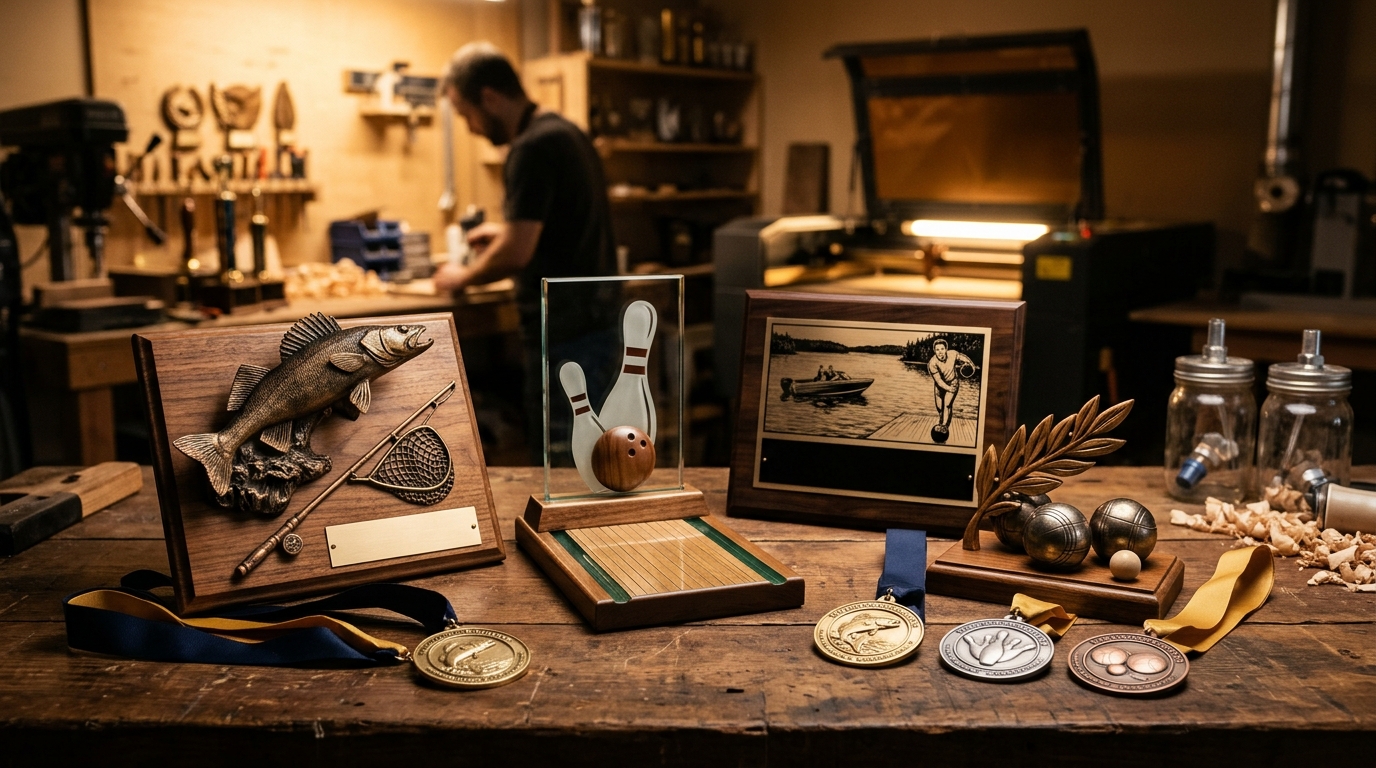
Trophies and Medals for a Fishing or Bowling Tournament: The Organizer's Guide
Fishing, bowling or pétanque tournament among friends, social clubs or coworkers: here is how to choose original, durable and well-engraved prizes. Mr Trophée explains the essentials for a successful awards ceremony.