
Year one, the employee recognition awards launch with fanfare, a budget line, and a leadership speech. Year two, the plaques are in a drawer, the gift cards are forgotten, and the programme quietly disappears. The problem is rarely recognition itself. The problem is design. Too many programmes are built around an HR calendar instead of a durable object. When the award is consumable, such as a gift card, a lunch, or a printed certificate, its motivational signal fades as quickly as the event that delivered it. When the award is durable and personalised, it keeps working on a desk or wall long after the announcement.
This analysis examines why that pattern happens and how to fix it. We will trace the quiet disappearance of employee recognition awards, diagnose the calendar-driven design, and explain why consumable formats fail in year two. We will then show why durable workplace recognition awards keep working, review what the evidence says about ongoing recognition, and offer criteria for awards that last. Finally, you will get a quick durability test and a practical way to make the award the memory of the programme.
The Pattern: Recognition Awards That Quietly Disappear
Most recognition programs do not fail loudly. They launch with an announcement email, a branded rollout, a first-quarter ceremony and genuine enthusiasm. By month 14, the same program is a line item nobody defends.
That gap is where the diagnosis usually goes wrong. The format did not hold up. A gift card, a team lunch, or an unframed certificate is consumed quickly, leaving nothing behind in the workplace to keep the program visible between cycles.
The decline appears first as small administrative decisions. The budget comes up for review and no one argues for it. The ceremony moves to a smaller room. Nominations thin out, because employees stop remembering the program exists between events. Recognition is widely treated as a retention lever, but a program nobody recalls cannot deliver that effect.
The thesis here is direct: employee recognition awards get abandoned when they are consumable. The fix is a format change, not a bigger budget or a new platform.
The Real Diagnosis: Built Around an HR Calendar, Not a Durable Object
The pattern has a cause, and it is structural rather than motivational. Most recognition programmes are designed as recurring events: an annual gala, quarterly shout-outs, a monthly draw. Each one must be scheduled, staffed, promoted and repeated. The programme's existence therefore depends entirely on someone remembering to run the next event.
Contrast that with a programme anchored to an object. A physical award sitting on a desk or mounted on a wall is a permanent, self-renewing prompt. It markets the programme every day without an HR administrator lifting a finger.
The staffing reality makes that difference decisive. As noted above, when the champion's departure ends a calendar-driven programme, the next event is simply never scheduled, a durable award on a desk does not require rescheduling.
Recognition gets funded because of engagement, not because of ceremonies. In the SHRM/Globoforce Employee Recognition Survey of 815 HR professionals, 40 percent named employee engagement a top challenge and 30 percent named culture management (with succession planning topping the list at 41 percent).
That data is from 2012 and is used here as directional context, not current market evidence. The durability argument in this article is reasoning from the survey's finding that ongoing, value-aligned recognition outperforms one-off gestures, not a measured result about year-one abandonment. That distinction is what separates formats that fail in year two from those that keep working.
Why Consumable Award Formats Fail in Year Two
If the programme runs on a calendar, the award format determines whether anything survives the cycle. Four common formats fail for the same structural reason: they leave no artifact behind.
Gift cards. The value is real, the object is invisible within days. Once spent, nothing remains in the workplace to signal that recognition happened, so the programme carries no physical memory.
Team lunches and experiences. Strong as a moment, weak as a monument. They generate one conversation and then leave nothing. The next cohort of employees never sees evidence that recognition exists at all.
Printed certificates. The closest thing to a durable format, but most are paper stock, unframed, and filed rather than displayed. A certificate that lives in a drawer is functionally consumable.
Cash bonuses and points platforms. High administrative cost, zero visibility. Employees rarely discuss bonus amounts, so the recognition signal stays private and cannot influence culture at scale.
The compounding cost is the deeper problem. Each consumable cycle requires new spend and fresh internal promotion to rebuild awareness the previous cycle failed to leave behind. That is why these programmes become the first line cut when budgets tighten: they must be defended from scratch every year, offering renewed cost without renewed evidence.
Why Durable Workplace Recognition Awards Keep Working
Durability has nothing to do with price. Workplace recognition awards are durable when they stay visible in the workplace for years. A framed engraved plaque on a wall qualifies; a five-hundred-dollar dinner does not.
The visibility mechanism
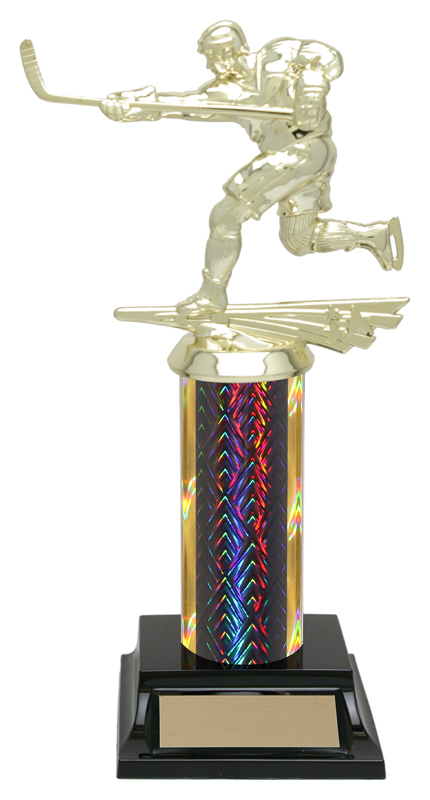
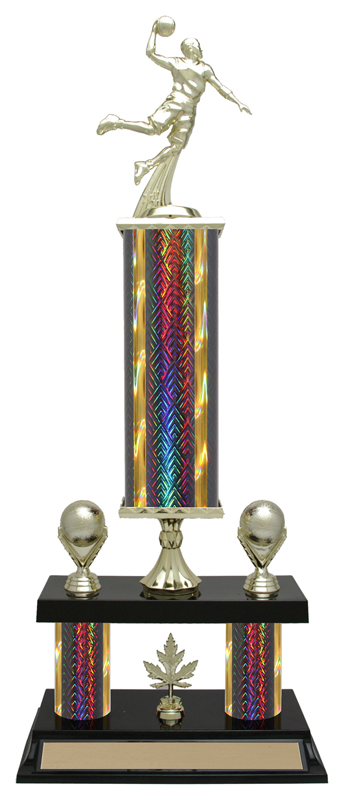
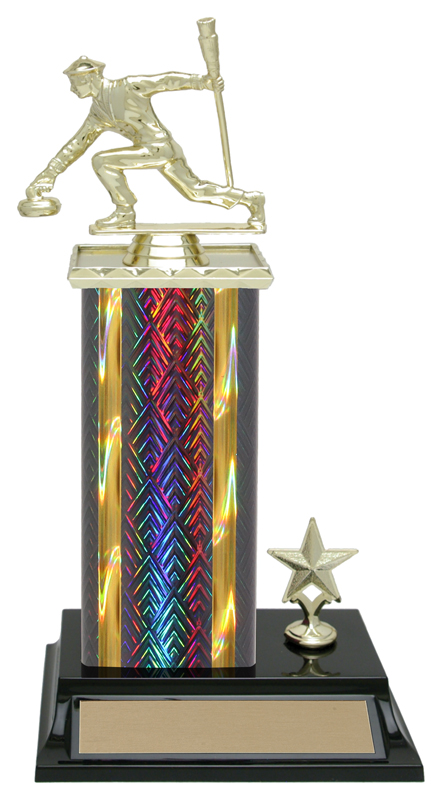
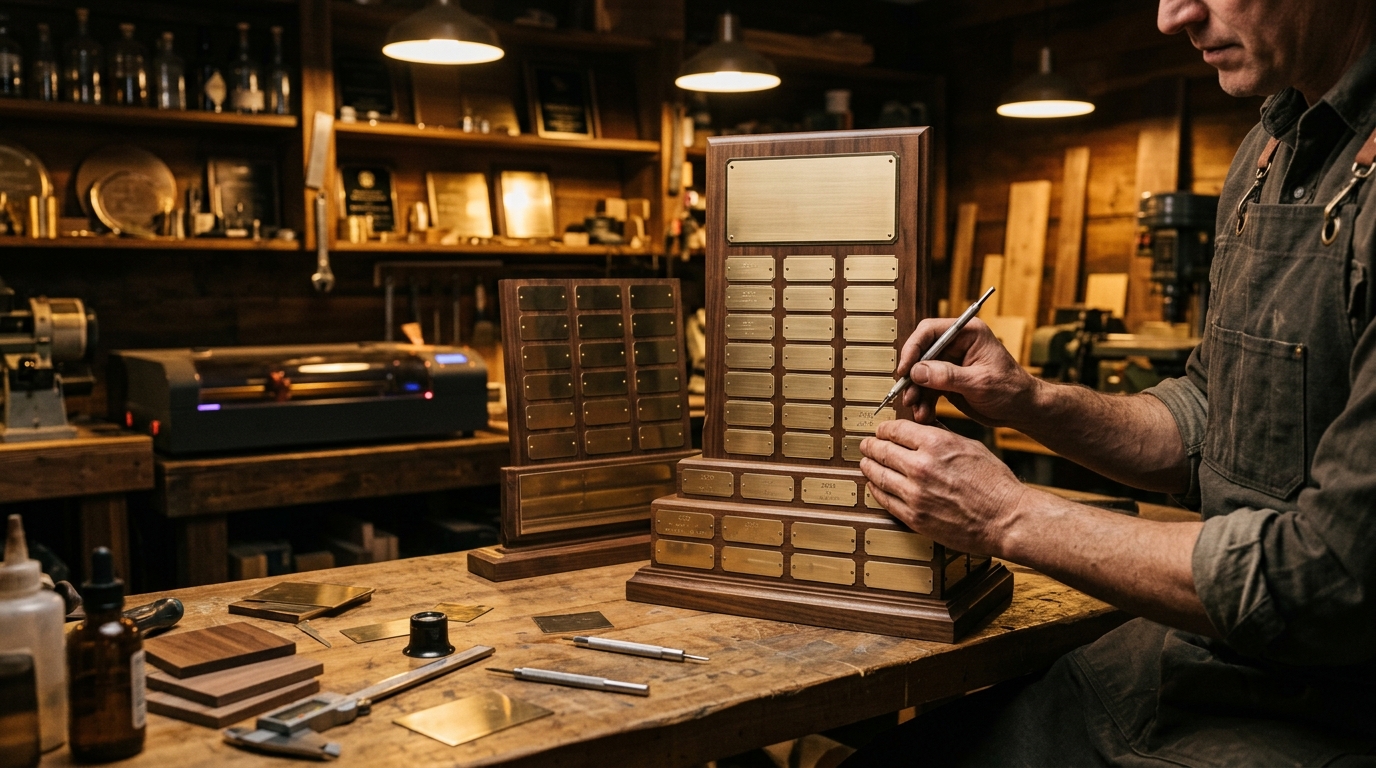
A trophy on a desk or a plaque in reception stays in sightlines every working day, an effect no calendar event can replicate. Formats built for display, personalised trophies and plaques produced by laser engraving, stay visible long after the ceremony.
In practice, new hires learn culture by reading artifacts before they read policy. A shelf of engraved awards tells them recognition is permanent here, not a campaign that ran once.
Why durable awards outlive champions
As noted above, reorganisations and budget cycles cannot end a programme whose evidence sits on every recipient's desk, a new executive has nothing to cancel, so the programme survives the departure of the person who championed it.
Value alignment works the same way. The SHRM/Globoforce survey of 815 HR professionals, conducted in 2012, found value-aligned recognition programmes outperformed those without a values connection. Engraving a specific value, project, or achievement onto a bilingual award makes that link permanent and legible. The evidence on ongoing recognition reinforces the same conclusion.
What the Evidence Says About Ongoing Recognition
The SHRM/Globoforce 2012 survey finding, that value-aligned recognition outperforms untethered gestures, also illuminates the give-and-receive dimension.
The same report found organisations spending more than 1 percent of payroll on recognition reported better results, framing recognition as a structural investment rather than a discretionary perk. It states the threshold but not the size of the difference.
Peer-to-peer recognition appeared as a core research question rather than a numbered finding; the report's give-and-receive finding, that empowering employees to both give and receive formal recognition improves results, is the closer fit. Peer-nominated physical workplace recognition awards sit naturally inside that model.
(Survey: 815 HR professionals, August 2012, directional context only.)
No published source in this research measured year-one abandonment, and none compared consumable with durable award formats. The durability thesis is therefore a reasoned inference from the finding that ongoing, value-aligned recognition outperforms one-off gestures. It is presented as inference, not as measured result.
The Format Fix: Criteria for Recognition Awards for Employees That Last
Durability is a design specification, not a price point. Five criteria determine whether an award keeps working after the ceremony.
Visibility
Choose formats built for sightlines, not storage. Trophies, framed plaques, and wall-mounted honour boards are displayed by default. Gift cards and paper certificates are not.
Specificity
Every award should carry four elements: the recipient's name, the achievement, the year, and ideally the company value it reflects. Blank generic awards read as merchandise rather than recognition.
Materials and permanence
Crystal, acrylic, metal, and hardwood are display-grade materials; paper and card are not. Laser engraving and colour printing produce text that remains legible through normal handling, which paper certificates rarely do.
Tiering without dilution
Design two or three formats for different achievement levels. Peer recognition and milestone awards then coexist without making the top honour feel routine.
Bilingual and regional fit
Quebec workplaces operating under Bill 96 need award text that reads naturally in both French and English. Bilingual engraving handled natively from the start prevents mismatched wording on an object people will read for years.
The format category is the point, not the vendor. A workshop such as Mr Trophée in Léry, Quebec produces personalised trophies, medals, plaques, and engraved honorary awards using laser engraving and colour printing for businesses and municipalities. Quebec buyers can browse the full catalogue of services and completed projects to see the formats in practice.
With the criteria set, the next step is testing what your organisation currently hands out.
A Quick Durability Test for Your Current Award
Criteria only matter if they are applied. Put the employee recognition award you handed out last cycle through five questions and answer each one honestly.
Will it still be visible in the workplace 12 months from now? If the answer is no, the format is the problem, not the effort behind the award.
Would a new hire starting next quarter know the programme exists by looking around the office? Recognition that leaves no trace cannot shape culture.
Can the award be explained without context? An engraved name, achievement, and year should make the story readable to anyone who walks past it.
What happens if your recognition champion leaves tomorrow? If the programme stops, it was calendar-dependent rather than object-dependent.
Would the award budget survive a hard quarter? A one-time engraved award carries no repeat logistics cost, which can make it easier to defend when every line is reviewed.
Two or more negative answers confirm the diagnosis: the format needs replacing, not the programme.
Make the Award the Memory of the Programme
If those five questions exposed a weak link, the answer is not a bigger budget or a new platform. Employee recognition awards are rarely abandoned because the idea failed. They are abandoned because the format was consumable and left nothing behind to sustain them. Consumable formats, as established above, leave nothing behind.
Three actions follow.
Audit and convert one tier. Score your current awards against the durability test. Then pick a single tier, whether peer recognition or a five-year milestone, and convert it to a permanent engraved physical format this cycle. One converted tier proves the model before you touch the rest.
Write the specification before the event. A generic award reads as merchandise; write the name, achievement, year, and company value it reflects before the event, and the award carries meaning.
Choose a supplier who can execute the details. Engraving, colour printing, and bilingual text determine whether an award still looks credible in five years. Mismatched French and English wording on a permanent object is a flaw people see every day.
Quebec and Canadian organisations can start with a quote rather than a commitment. A workshop like Mr Trophée's personalised trophies, plaques, and engraved awards handles laser engraving and colour printing with bilingual service and a best-price guarantee, reachable at 514-565-6665.
Conclusion
Employee recognition awards do not fail because recognition is a bad idea. They fail when the award is consumable, tied to a calendar, and gone before year two. Durable awards change that. They keep the programme visible, carry the recipient's achievement, and make recognition part of daily workplace memory. To make this real, audit one tier, convert it to a permanent engraved format, and write the specification before the event. Then choose a supplier who can handle engraving, colour printing, and bilingual details. Quebec and Canadian organisations can start with a quote from a specialist like Mr Trophée. Do not wait for another cycle. Convert one award this quarter, and let it become the memory that keeps your programme alive.
You may also like

Employee of the Year Awards: How to Create Recognition That Truly Means Something
A well-designed Employee of the Year award motivates the whole team, while a poorly planned one can create awkwardness. Here is how to choose the criteria, format and engraving for fair, lasting recognition.
Perpetual Trophy: Planning Engraving Year After Year
Trophy engraving: plan the surface, material and marking so your perpetual trophy stays legible year after year. A practical guide and checklist to review before you order.

Appreciation Gifts for Clients and Partners: When Recognition Goes Beyond the Employee
Partners, volunteers and clients deserve to be recognized too. Tax thresholds, gift cards and internal policies: the practical guide.