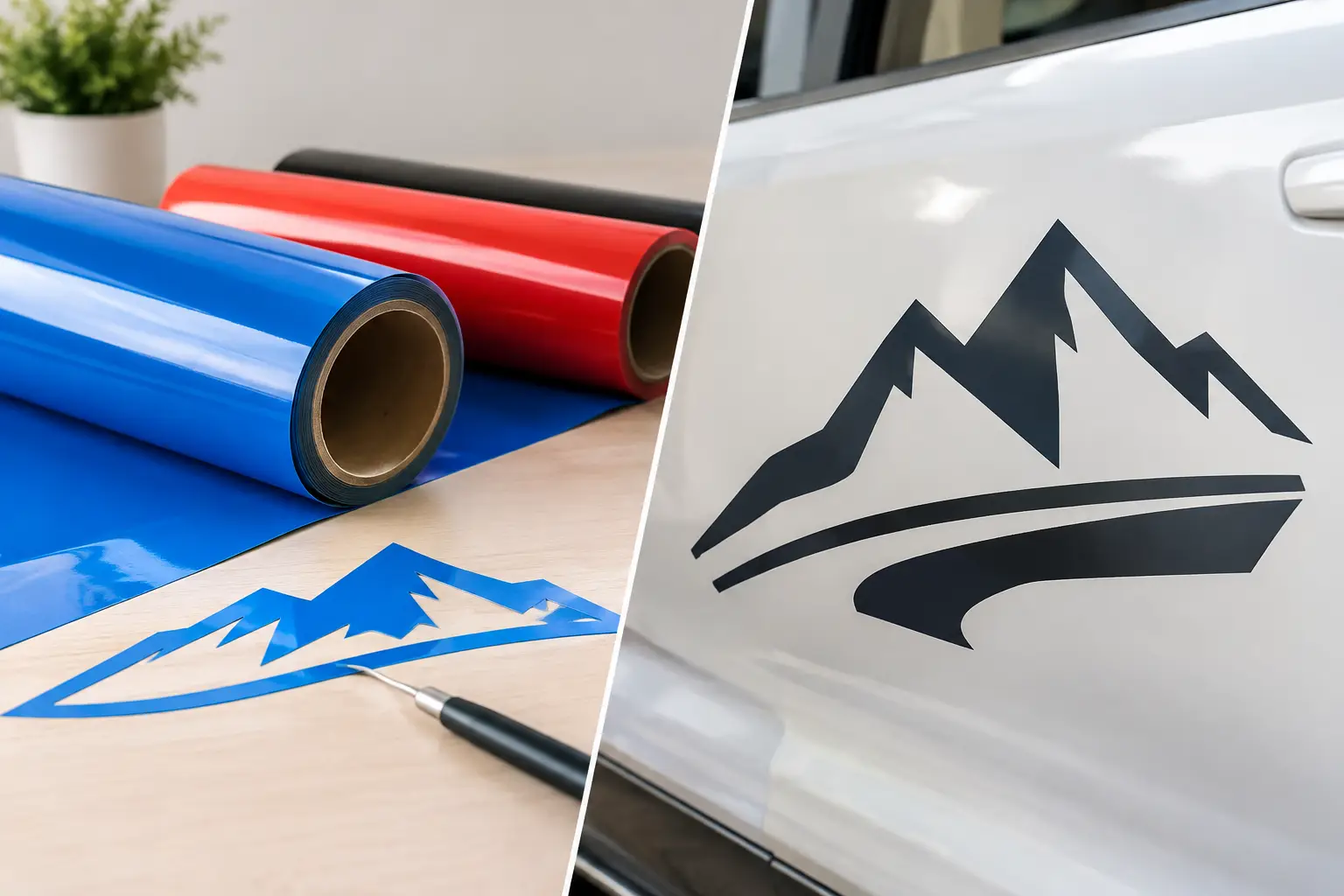
A storefront should clearly announce who you are before a customer even walks in. A service vehicle needs to remain readable at a distance, in the rain or in a busy parking lot. In these projects, the choice between cut vinyl or lettering affects appearance as much as longevity, budget and ease of maintenance. The two terms are often used together, sometimes as though they were synonymous. Yet they don't always refer to the same thing.
For a business, school, municipality, association or sports team, clearly defining your needs from the start prevents surprises during production and installation. The right product depends on the surface, the message to be displayed, the reading distance and the intended use.
Cut vinyl or lettering: understanding the difference
Cut vinyl is a self-adhesive material dyed throughout, cut into the desired shape using precision equipment. It can form letters, numbers, a simple logo, pictograms or decorative stripes. After cutting, the unwanted portions are removed and the design is transferred onto the surface using a transfer tape.
Lettering refers first and foremost to the visual result: words, information or an identity displayed on a window, door, wall, vehicle or sign. This lettering can be produced using cut vinyl, but also through digital printing, screen printing, engraving or raised letters, depending on the substrate and the effect desired.
In practice, when a client requests vehicle or window lettering, cut vinyl is often the most straightforward solution for business text, hours of operation, a phone number, a service name or a logo made up of solid colours. It delivers crisp edges and a professional appearance without requiring a full-background print.
This distinction is useful when requesting a quote. Saying you want lettering explains the objective. Specifying that you are considering cut vinyl helps guide the choice of material and production method.
When cut vinyl is the best choice
Cut vinyl is particularly well-suited to short, highly readable messages. It is commonly used to identify a reception area, meeting room, utility space, employee door or vehicle fleet. It is also effective for team names, numbers, sponsors and directional signage at sporting or community events.
Its main advantage is sharpness. Each letter is produced in a uniform colour, with no visible printing edge. For a visual identity made up of two or three strong colours, the result is clean, durable and easy to recognize. Opaque, metallic, frosted or reflective colours also make it possible to adapt the finish to the purpose of the project.
Cut vinyl is also a strong option when only part of a surface needs to be marked. On a storefront window, for example, it lets light in and preserves the transparency of the glass around the applied elements. On a vehicle, it can identify the company without covering the entire body panel.
It does, however, have its limitations. Gradients, photographs, detailed illustrations, and logos with very subtle colour variations don't always reproduce well when cut. In these cases, printed vinyl is often the more appropriate choice. A combination of both methods can also be considered: a printed logo for the details, paired with cut lettering for the name and contact information.
Choosing Based on Surface and Environment
The surface matters just as much as the visual. Vinyl intended for an interior window doesn't have the same requirements as marking applied to a truck used year-round in Quebec. Exposure to sunlight, temperature fluctuations, salt, frequent cleaning, and abrasion all influence the choice of adhesive and film.
Storefronts and Glass Doors
For a storefront, lettering must serve two functions: clearly identify the location and maintain visibility from inside. Business hours, logos, services offered, and access instructions are generally well suited to cut vinyl. Frosted vinyl can define a private area while still allowing light through, particularly in offices, clinics, meeting rooms, or educational facilities.
It's important to determine whether the vinyl will be applied to the outside or inside of the glass. An interior application offers greater protection against the elements, but may sometimes require a mirrored version of the artwork. An exterior application often allows for more direct readability and truer colours when viewed from the street.
Vehicles and Trailers
Vehicle lettering needs to be read quickly. A phone number that's too small, a web address placed too low, or a cluttered logo all lose their effectiveness once the vehicle is in motion. Effective marking prioritizes the organization's name, its primary service, and a clear means of contact.
For a car, a van, or a trailer, the shape of the body panels must be taken into account before production. Mouldings, handles, seams, curves, and heavily exposed areas don't all accept vinyl in the same way. Quality materials and careful surface preparation help maintain the adhesion and appearance of the lettering.
Walls, Panels, and Interior Spaces
In offices, schools, sports facilities, and municipal buildings, lettering often serves to guide visitors. It can identify offices, rooms, restricted areas, entrances, locker rooms, or safety instructions. On a painted wall, the quality of the paint, its curing time, and the texture of the surface should all be verified before application.
For permanent needs or surfaces subject to heavy use, a rigid sign, an engraved plate, or a Lamicoid product may be more suitable than vinyl. Vinyl excels for wayfinding and information that changes over time. An engraved plate is often the better choice when durable, resilient, and easy-to-clean identification is required.
Designing Lettering That's Actually Readable
An effective project depends on more than just the chosen font. Information hierarchy is key. The business or service name should be seen first, followed by the information that helps the public take action: phone number, location, hours, directions, or website. Too much text turns a storefront or vehicle into a sign that's hard to read.
Highly decorative fonts may look appealing on screen but become less legible from a distance. Simple letterforms, with sufficient contrast between the vinyl and the surface, produce better results. On a white van, light-coloured lettering risks disappearing. On a dark window, white, frosted, or coloured vinyl can offer greater visibility depending on the lighting.
Logos must be provided in a high-quality file. A vector file allows for precise outlines, especially for small letters and symbols. When artwork is only available as a low-resolution image, a graphic adaptation may be necessary before cutting or printing.
Preparing for production without delaying the project
To receive an accurate recommendation, gather the relevant information before requesting a quote: approximate dimensions, photos of the surface, final text, logo, desired colours, and deadline. For a vehicle, a photo taken from each side helps assess the available areas. For a storefront, the glass measurements and the presence of any frames, handles, or existing decals are important.
Text validation deserves particular attention. An incorrect phone number, address, sponsor name, or opening time can lead to a complete redo of the lettering. In an institutional context, it is also useful to confirm bilingualism, accessibility, and internal signage requirements before production begins.
Installation must be planned in a suitable environment. A clean, dry surface free of wax, dust, or residue promotes a uniform application. On certain substrates, the required rest time following a recent paint job or specific cleaning must also be respected.
A solution tailored to the message, not just the material
The choice isn't simply a matter of pitting cut vinyl against lettering. Lettering is the communication need, while cut vinyl is often one of the most effective ways to achieve it. For clear identification, a professional storefront, a service vehicle, or interior signage, it offers a precise and versatile solution.
When the artwork includes photos, gradients, or a large number of colours, digital printing may be the better option. When structural durability is the priority, an engraved plate or rigid sign may be more appropriate. The best result comes from a choice based on actual use, the surface, and the expected level of visibility.
Before having your next sign produced, take a moment to look at your project from the distance where your audience will see it. If the message remains clear within a few seconds, the lettering is on the right track.
You may also like
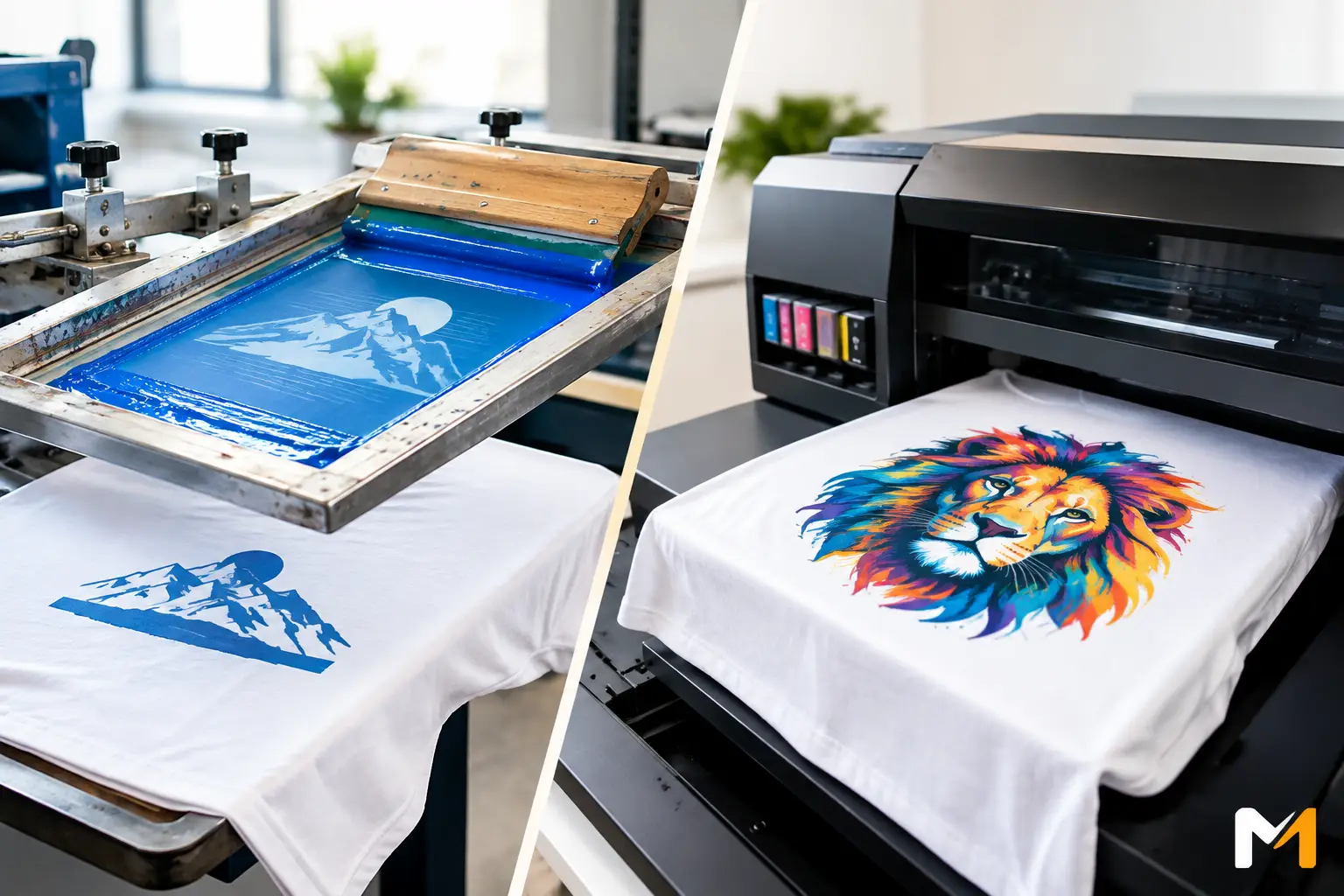
Screen Printing vs. Digital Printing: Which One Should You Choose?
Screen printing vs. digital printing: choose the right technique for your apparel, signs and promotional items for a durable, precise result.
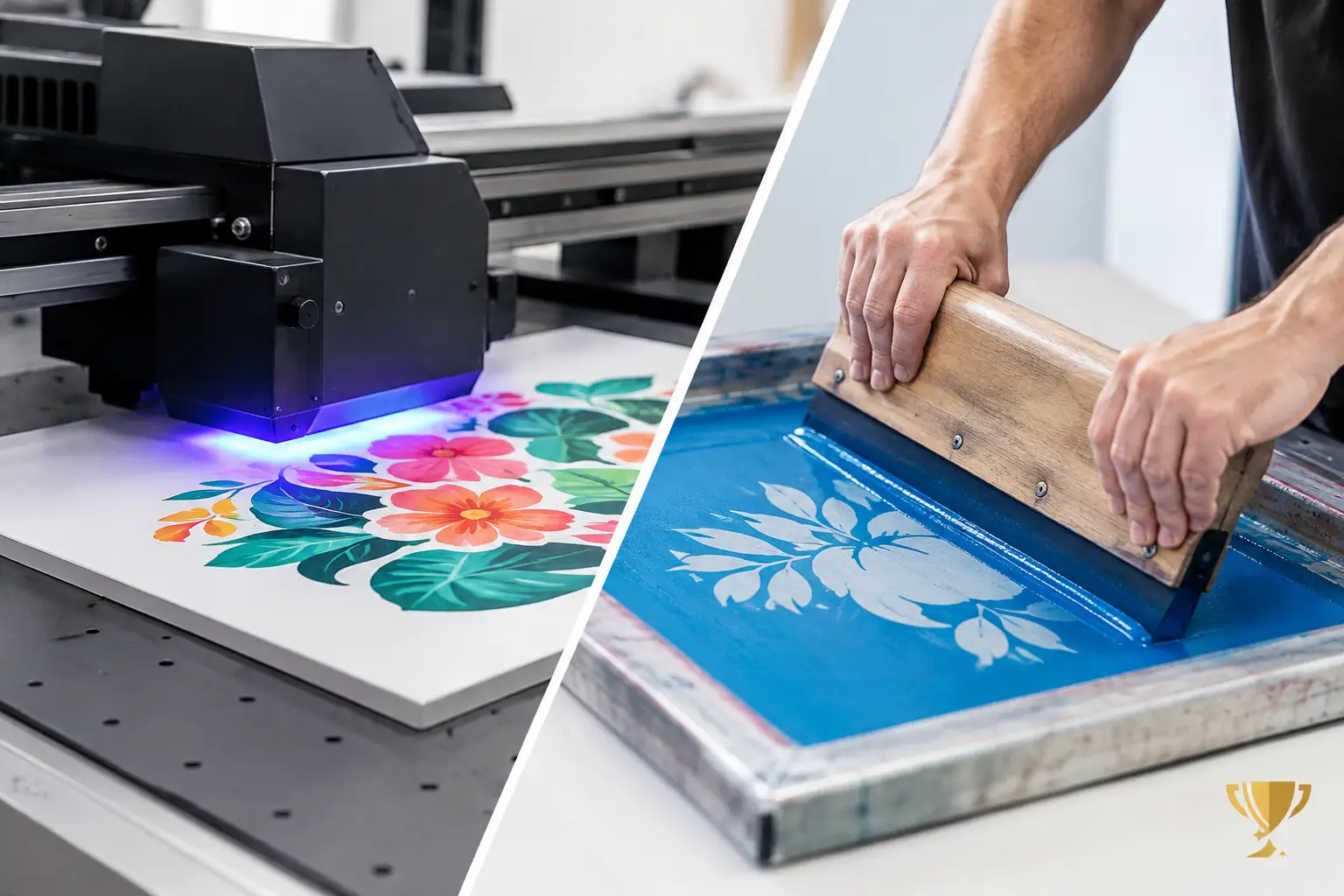
UV vs. Screen Printing: Which Marking Method Should You Choose?
UV vs. screen printing: compare precision, colours, durability and costs to choose the right marking method for your trophies, items and professional signage.
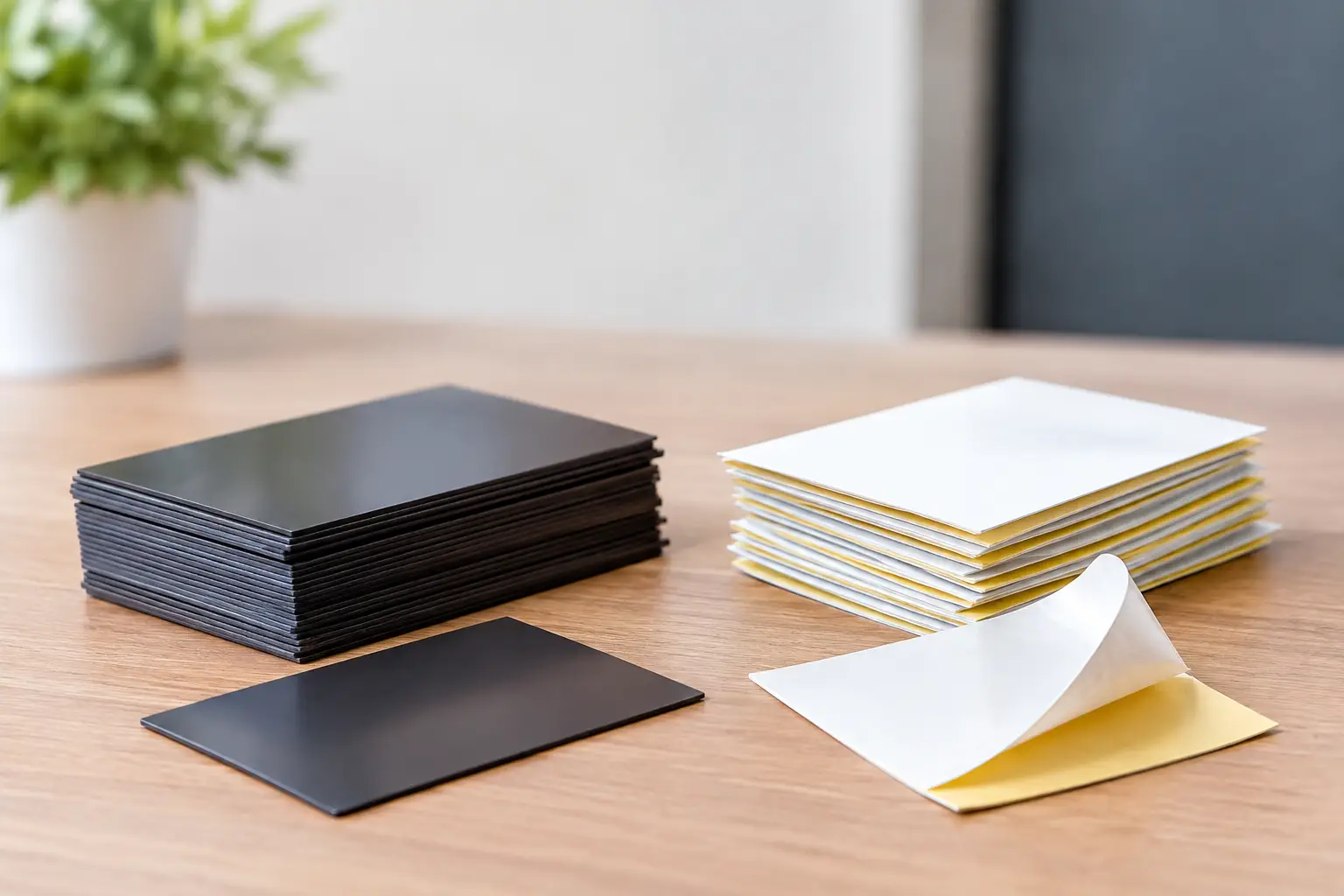
Magnetic Plaques or Stickers: Which Should You Choose?
Magnetic plates or stickers: compare hold, application, reusability and finish to choose the right signage for each professional use.