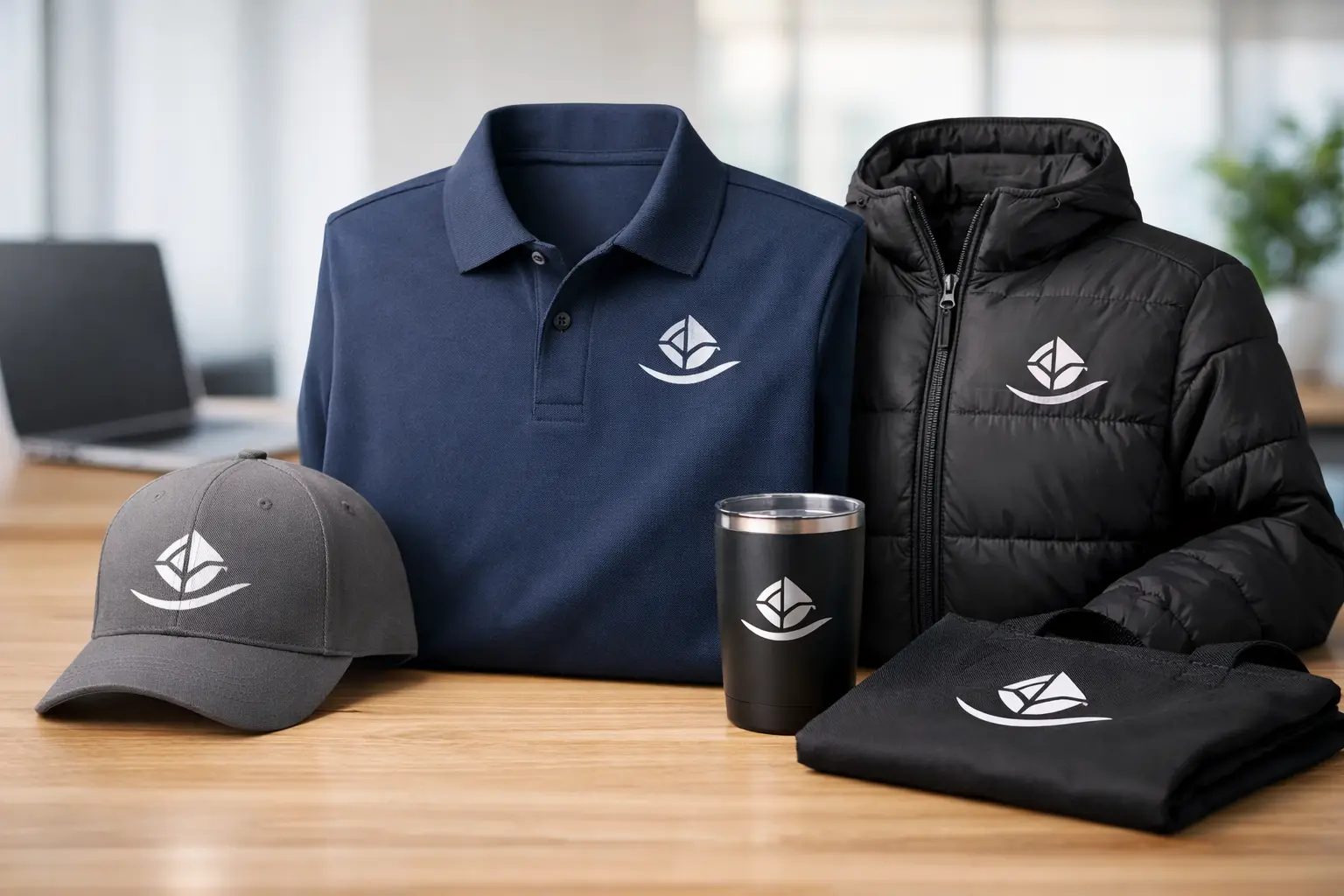
A polo shirt bearing a well-reproduced logo does more than dress a team. It instantly identifies the person at the reception desk, creates a consistent presence at a trade show, or makes a group recognizable on a job site or during a community activity. The search for custom logo corporate apparel meets a concrete need: bringing together brand image, workplace comfort, and durability in a single product.
For a business, a school, a municipality, an organization, or a sports association, the right garment depends first on actual use. An item distributed to a team working outdoors doesn't have the same requirements as a t-shirt given to volunteers for a one-day event. The logo must remain legible, the garment must suit the people wearing it, and the decoration must uphold the organization's image through repeated washings.
Start with the use, not just the garment
The catalogue matters, but the most useful question is simple: under what conditions will this garment be worn? That answer guides the choice of fabric, cut, colour, and personalization method.
For reception, sales, or public-facing roles, polos, shirts, light jackets, and understated sweaters give a polished appearance. Colours should align with the visual identity and provide enough contrast with the logo. A subtle chest decoration is often appropriate, while a back addition can be useful for a team that moves around or works in large spaces.
For events, fundraisers, day camps, or tournaments, the t-shirt remains a practical choice. It's affordable, easy to distribute by size, and effective when the design needs to be seen from a distance. A large logo, the event name, and the year can form a clear identifier, provided the print area isn't overcrowded.
Technical, maintenance, delivery, or field teams often need more durable garments: fleeces, jackets, workwear, or layers suited to the weather. In this case, the priority is choosing an item that will hold up to frequent use. The logo should not restrict movement, be hidden by protective equipment, or be placed in a high-friction area.
Custom logo corporate apparel: choosing the right decoration method
How a logo looks depends as much on its graphic file as on the technique selected. An image provided in low resolution, with very fine details or colours that are too similar, can lose legibility once applied to fabric. Careful graphic preparation avoids blurry outlines, illegible small text, and colour inconsistencies with the brand.
Screen printing is a relevant solution for many runs of t-shirts, sweatshirts, and promotional items. It is particularly well suited to designs with defined colours and larger quantity orders. Its clean results allow a logo, message, or event graphic to be reproduced consistently across an entire batch of garments.
The choice of garment matters just as much. A white logo on a dark fabric generally offers excellent visibility, whereas a complex logo on a patterned fabric can become difficult to read. You also need to consider the garment colour based on dirt, the season, and the team's habits. A white t-shirt is very visible during a summer campaign, but it isn't always the most practical choice for an everyday work environment.
A well-planned custom corporate clothing project with a logo also accounts for placement. The left chest remains the standard for a professional identity. The back allows you to display a team name, department, sponsor, or useful information for the public. The sleeve can carry a complementary detail, provided the main logo retains a prominent position.
Designing a visual that gets recognized quickly
A garment is not a poster. People see it in motion, sometimes from a distance, and often for just a few seconds. The visual therefore needs to be understood at a glance.
The organization's logo should remain the central element. When adding a department name, an address, a slogan, or partner logos, a clear hierarchy must be established. Too much information reduces the impact of the branding and makes details harder to read. In most cases, a clean logo on the front and functional information on the back produce better results than an accumulation of messages on a single side.
Very thin fonts and small text require particular attention. An element that reads perfectly on screen may no longer do so on a garment, especially in a small area. The graphic work must account for the final print size, the type of fabric, and the distance from which the garment will typically be seen.
For an organization that orders regularly, it is useful to keep an approved version of the logo along with production parameters: colours, dimensions, placements, and garment styles. This consistency makes restocking easier for new employees, sports seasons, or annual editions of an event.
Planning quantities, sizes, and lead times
Ordering custom clothing becomes much simpler when it is approached as an identification project rather than a last-minute purchase. Sizes should be collected early, a few extra units should be set aside, and the information that needs to appear on each item should be confirmed in advance.
A size range that is too narrow can create problems as soon as a new volunteer or employee joins. For a public-facing activity, it is better to plan for a sufficiently wide range of sizes. For a stable team, an individual size survey limits surplus stock and improves everyone's comfort.
Lead times depend on factors such as the chosen style, availability of sizes and colours, the number of garments, graphic preparation, and the decoration technique. Having a visual approved before production begins prevents last-minute corrections. For a conference, tournament, or ceremony, it is wise to distinguish between the date of the event and the date by which the garments need to be received and checked.
The following information typically speeds up a quote request:
- the type of garment needed and its intended use;
- the total quantity and approximate size breakdown;
- the desired colours for both the textile and the logo;
- the decoration locations, for example chest, back or sleeve;
- the date by which the order needs to be ready.
This preparation leads to a more accurate quote and makes it easier to compare options based on actual priorities. A large run destined for an event does not follow the same criteria as a small order of presentation garments for a board of directors or a sales team.
Matching Apparel to Your Other Branding Tools
Custom clothing becomes more effective when it is part of a cohesive whole. An association can carry the same colours across its medals, banners and volunteer t-shirts. A company can match its team polos to door plaques, name badges and office signage. This consistency helps the public recognize the organization without making every item look identical.
It is also a practical way to consolidate customization needs. At Mr Trophée, support can cover promotional clothing, graphic design and complementary products such as trophies, plaques, medals or identification items. For a gala, a tournament or an open house, this coordination reduces colour and presentation discrepancies between the various elements.
Clothing does not replace the identification tools an organization needs, but it gives the brand a human presence. A clearly identified team reassures visitors, guides participants and reflects well on the people representing the organization.
Caring for Your Decoration to Extend Its Life
Even a well-chosen garment needs to be cared for properly. Care instructions may vary depending on the fabric and decoration method, but a few practices generally apply: wash the garment inside out, avoid excessive heat and never iron directly over the decorated area. These steps help preserve the colours and sharpness of the design.
Before distributing a new order, it can be worthwhile to share brief care instructions with your teams. This is especially relevant for garments given to volunteers, students or seasonal employees who may not be familiar with the recommendations associated with decorated apparel.
A well-thought-out corporate garment becomes a tool for work, representation and team cohesion. By defining the intended use, the design, the sizes and the timeline before launching production, you give your logo a clear place on items your teams will actually want to wear.
You may also like

Examples of Awards for a Corporate Gala
An example of corporate gala awards for choosing custom trophies, plaques, and medals based on your honours, your budget, and a clear image.
How to Choose the Right Custom Keychains for Your Association
Custom keychains for associations, durable and well-crafted, to thank volunteers, identify your members, and support your activities.

2027 Corporate Gifting Trends to Watch
2027 corporate gifting trends prioritize practicality, sustainability, and personalization. Concrete ideas for your teams and successful events.