September 12, 2026
Customized Trophies in Canada: A Complete Guide for Corporate and Sports Buyers
Every year, thousands of Canadian buyers order custom trophies on a rush basis, pay avoidable rush fees, and receive pieces that don't match the occasion. The problem isn't a lack of options. It's a lack of method.
This guide offers a different approach. Rather than a product catalogue, you'll find here a decision-making framework built around three fundamental variables: the occasion, the format, and the delivery timeline. Mastering these three parameters means ordering with precision, without last-minute compromises.
You'll learn how to identify the right material based on the sporting, corporate, or institutional context, how to calculate your actual order deadline before even contacting a supplier, and how to avoid the most common mistakes that cost Canadian organizations time and money. Whether you're managing an annual awards ceremony, a youth tournament, or a corporate recognition program, this guide gives you the tools to make a purchasing decision that is informed, efficient, and repeatable.
Why three variables are enough to structure any trophy purchase
Most custom trophy purchasing mistakes in Canada share a single root cause: the buyer opens a catalogue before defining their context. They choose a model, then discover that the production timeline doesn't align with their event date, or that the selected material doesn't suit the expected level of prestige. The result: rush fees, quality compromises, or both.
A simple three-variable framework eliminates this problem at the source.
The occasion determines the required level of prestige and volume. The format and material follow directly from the occasion. The delivery timeline confirms that the first two choices are achievable within the time available.
Market data for 2025–2026 confirms that this is structurally a group purchase: 47% of trophy orders involve between 11 and 50 units. It's almost never a one-off purchase. It's a decision that commits a group, a budget, and a schedule.
The order of approach matters as much as the choices themselves. Selecting a material before knowing the available timeline is the leading cause of avoidable rush fees. These added costs don't stem from a genuine emergency; they stem from an incorrect sequence.
This guide follows the logical order: occasion first, format second, timeline last. Each section builds on the previous one, with no backtracking.
Variable 1: the occasion determines everything else
Every purchasing occasion comes with its own set of rules. Before looking at a single catalogue, identify which of these four categories your event falls into.
Sporting: volume, durability, immediate readability
Youth leagues, amateur tournaments, and professional competitions share a common priority: distributing a large number of visually recognizable units. The classic engraved trophy, often made of metal or resin, meets this need. Durability matters as much as aesthetics, since trophies travel, are handled by entire teams, and must withstand transport.
Corporate: Prestige and Permanence
A performance award, a service recognition, or a retirement gift signals lasting symbolic value. A standard sports cup does not carry that message. Corporate occasions call for materials such as crystal, glass, or engraved plaques, which convey the significance of the recognition and display proudly in an office for years to come.
Academic and Municipal: Protocol from the Moment You Order
Graduation ceremonies and municipal or government distinctions add a layer of complexity that is often overlooked. The official Canadian protocol for events and ceremonies governs the use of official symbols. Bilingualism, coats of arms, and formats required by the relevant jurisdiction must be confirmed before production, not after.
The Cross-Over Mistake to Avoid
Applying the criteria of one occasion to another leads to ill-suited results. An economical acrylic is perfectly appropriate for an internal soccer tournament; that same material, presented at a corporate leadership gala, diminishes the perceived value of the award. The first decision is not the material: it is the occasion.
Sporting Occasions: Youth, Amateur, and Professional
In the Canadian sports context, the cup remains the go-to format for team sports, and that choice is not arbitrary. It is visually recognizable the moment it is handed out, stacks easily for group distribution, and adapts to the budgetary realities of volunteer leagues managing their purchases down to the last unit.
What sets a well-structured sports order apart from a rushed one is the management of award tiers. Most tournaments distribute trophies for 1st, 2nd, and 3rd place, as well as for participation. Visual consistency across these tiers matters as much as the centrepiece: if the champion's trophy is stunning but the participation awards look like they belong to an entirely different graphic universe, the whole presentation loses its symbolic impact. Browsing the full trophy and medal catalogue makes it possible to select product lines that complement one another from the start.
For regional tournaments in Quebec, custom trophies frequently incorporate bilingual engravings or sponsor logos. These elements require proof approval before going into production — a non-negotiable step to avoid irreversible errors on an engraved piece.
Leagues working with tight budgets have a concrete advantage: suppliers like Mr Trophée set no minimum order quantity, which means you can purchase exactly the units you need without generating unnecessary surplus.
Finally, for high-volume individual disciplines like track and field or swimming, medals often outperform trophies. They are easier to transport, to customize by event, and to distribute in large numbers over the course of a single competition day.
Corporate and Institutional Occasions
The corporate and institutional setting demands standards that the sporting context does not. Here, the format is not merely a matter of aesthetics: it is a signal of value directed at a person, an organization, or a community.
The plaque remains the reference format for corporate and municipal recognition. Its readability as a permanent display piece, its visual authority in a lobby or boardroom, and its durability make it a choice that is hard to beat for anything meant to last.
For years-of-service recognition programs, the material should evolve alongside the milestones. Offering the same entry-level acrylic at 5 years and at 20 years sends a message that runs counter to the intention. A logical progression follows the symbolic value: acrylic at 5 years, metal or engraved plaque at 10 years, crystal at 20 years. The material communicates before the text is even read.
Municipal and government organizations should verify their internal purchase approval thresholds before finalizing a format. Some departments require an official quote beyond a certain amount. Confirming these constraints in advance prevents having to restart the process once a format has been chosen.
On the technical side, laser engraving of corporate logos or coats of arms on crystal or metal demands a level of precision that not every supplier can guarantee. Requesting examples of similar work before confirming a large order is a justified precaution. Quality of execution is just as decisive a criterion as the unit price.
For galas and sector-specific awards of excellence, a higher material budget is entirely warranted. Crystal and glass convey an immediate perceived value that the recipient feels in their hands before they even read their name — which is particularly important when the award also represents the image of the organization presenting it.
Variable 2: Choosing the Right Format and the Right Material
The choice of material is the variable that translates context into a tangible object. In 2025–2026, the custom trophy market is formally segmented by material, and this segmentation directly determines pricing: metal, crystal, acrylic, resin, wood, and glass each occupy distinct price and prestige ranges. Knowing these ranges before ordering prevents overpaying for a context that does not justify it, or defaulting to an unsuitable material out of habit.
The most expensive material is not always the best choice. A high-quality acrylic with precise laser engraving can visually outperform a low-end metal trophy while costing less per unit. This value for money makes acrylic the dominant choice for mid-volume orders.
Durability is a criterion that is often overlooked. A trophy destined for a hall of honour for twenty years requires structural resilience that an annual tournament award does not. Crystal and metal hold up well over time in controlled indoor environments; resin and certain acrylics can yellow or warp under prolonged exposure to direct light.
Engraving precision varies depending on the substrate. Crystal and metal reproduce complex logos with maximum sharpness. Wood is better suited to simple text and organic patterns; fine details tend to get lost in the grain.
Finally, verify the compatibility between the material and its display location — whether a desk, a display case, or a trophy room — before confirming the order. A material ill-suited to its display environment is the leading source of disappointment after delivery.
Comparative material matrix: cost, prestige, and recommended use
Here is a summary of the five materials organized by increasing prestige level and recommended use.
Metal (zinc, pewter, brass): high prestige, excellent durability. The metal cup remains the most recognizable symbol in team sports. The unit price ranges from moderate to high depending on the finish (gold, silver, bronze) and the thickness of the piece. It is also the standard for honour plaques in institutional settings.
Crystal and glass: maximum prestige. Recommended for corporate galas and sector excellence awards, these materials offer the most precise laser engraving, ideal for complex logos or fine fonts. High unit price. Worth noting: their fragility requires careful individual packaging and supervised distribution during ceremonies.
Acrylic: optimal value for money for volume orders. Compatible with colour printing and custom cuts, it delivers a contemporary visual result without straining the budget. Mid-range prestige, but a well-designed acrylic with precise engraving can visually outperform a low-end metal trophy.
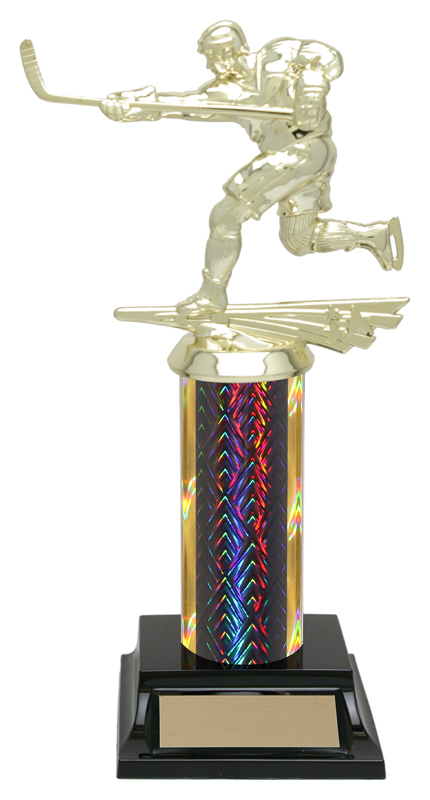
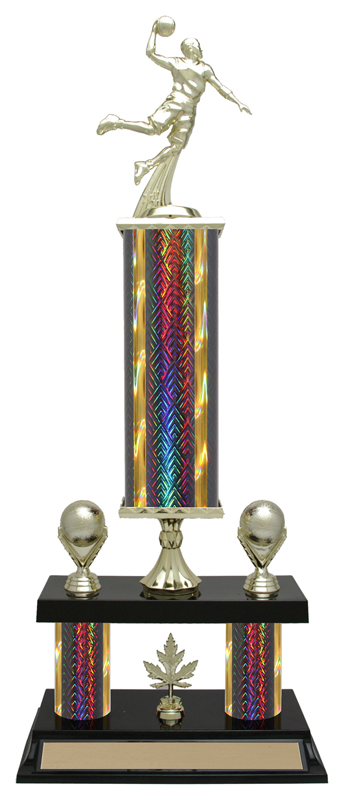
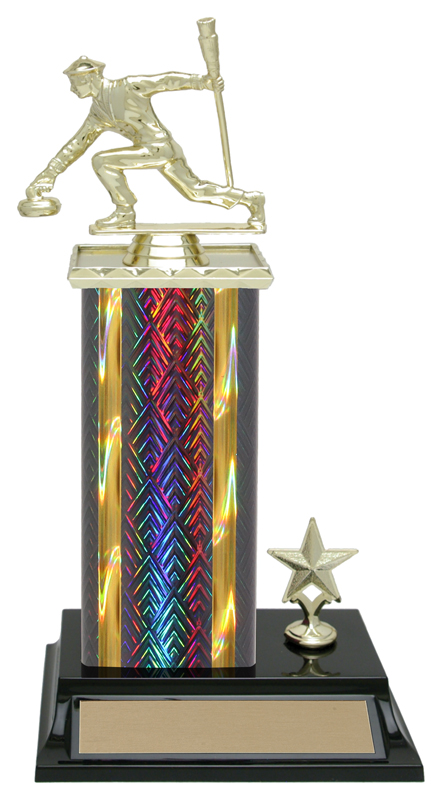
Resin and polyresin: maximum shape flexibility. Sports figurines, discipline-specific forms, custom three-dimensional designs: no other material offers this freedom of design. Low to mid unit price, mid-range prestige. Very common in youth leagues across Canada.
Wood: natural aesthetic, high durability. Well-suited to environmental, artisanal, or cultural recognition. Engraving on simple text is clean and elegant; complex logos or small characters are less well-suited. A niche positioning that is growing, particularly within organizations with a sustainability mandate.
Material
Prestige
Budget
Primary Use
Metal
High
Moderate to high
Sports cups, plaques
Crystal/glass
Maximum
High
Galas, corporate awards
Acrylic
Medium
Low to medium
Volume orders, mid-range budgets
Resin
Medium
Low to medium
Youth leagues, sports-themed shapes
Wood
Medium
Medium
Artisan or environmental recognition
Variable 3: lead time, the most overlooked variable
Once the material is selected, the third variable comes into play — and it's the one that generates the most avoidable extra costs: lead time.
Catalogue orders: 2 to 3 weeks, no less
For a standard order, plan for two to three weeks between product selection and receipt. This window covers reference confirmation, engraving preparation, and shipping. The common mistake: confusing the order date with the delivery date — a mix-up that is often at the root of rush requests.
Custom orders: 5 to 6 weeks of production
As soon as an order includes a company logo, complex engraving, or a custom format, the lead time extends to 5 to 6 weeks. The practical rule: identify your ceremony date, then count back six weeks to set your order deadline.
Proof approval: a non-negotiable step
No custom order goes into production without prior approval of the proof. This approval window — which your supplier will communicate at the time of ordering — must be built into the schedule from the very start. A late approval pushes back the entire production timeline.
Rush fees: a predictable mechanism, and therefore avoidable
Rush fees apply as soon as an order falls outside the standard production window. Understanding this mechanism in advance is enough, in the vast majority of cases, to avoid it entirely.
Ordering off-season: a real advantage
Demand typically peaks at the end of sports seasons, during graduation season, and at the end of the corporate year, which puts suppliers under strain and reduces model availability. For a recurring annual ceremony, ordering off-season offers a better selection of stock and priority handling, with no added cost.
How to calculate your actual order lead time
Knowing the components of the lead time isn't enough: you need to put them together in the right order, working backwards from the end.
The method is to work back through the calendar from the event date. First, subtract the delivery lead time (2 to 3 weeks for a catalogue order, 5 to 6 weeks for a custom order), then the proof approval window your supplier will confirm, then a reasonable buffer — to be confirmed with your supplier depending on the time of year. The resulting date is the actual deadline for placing your order.
Concrete example: ceremony on June 15. Custom order with logo: 5 weeks of production, plus the proof approval window confirmed by the supplier, plus a reasonable buffer. The order must be placed well enough in advance to avoid rush fees.
During periods of high demand, allow for additional lead time and check with your supplier for current turnaround times.
If a tight deadline is unavoidable, the best approach is to contact the supplier directly to learn about rush processing options. Mr Trophée can be reached by phone, text, or email for situations like these.
Finally, documenting this timeline in a shared file with the organizing team turns a good one-time decision into a repeatable process. The next edition of the event starts with an order date already established, eliminating one of the most common causes of last-minute orders.
Buying in Volume: What the Data Reveals About Group Orders
Once the order timeline is established, the question of volume becomes central for most Canadian organizations.
As mentioned above, 47% of trophy orders involve between 11 and 50 units, confirming that group ordering is the norm. Group ordering also offers an often-overlooked advantage: visual consistency across formats. Planning the championship trophy, participation medals, and MVP plaque all at once ensures a unified look and feel. An organization whose recognition items all share the same colour palette and typography projects a more professional image than one that orders each format separately at different times.
The absence of minimum quantities at specialized Canadian suppliers is a real advantage for small sports associations and SMEs. An 18-player hockey league doesn't have to pad its order to meet an artificial threshold — it orders exactly what it needs, with no surplus.
For multi-team or multi-department organizations, consolidating needs into a single annual order reduces the number of proofs to approve, simplifies invoicing, and centralizes communication with the supplier.
Finally, for multi-tier recognition programs (participation, honour, excellence), defining the full range from the very first order protects aesthetic consistency over multiple years. Adding an intermediate tier two years later without the original visual reference almost always produces a mismatched result.
Engraving and Proof Approval: Reducing Revision Cycles
Once the group order is structured, the quality of the final result depends entirely on the rigour of the engraving and approval process.
Engraved trophies remain the standard for customization in Canada. First name, title, date, logo — each element added enhances perceived value but also increases production complexity. Planning these elements in advance prevents unnecessary back-and-forth.
File Format: A Technical Decision with Real Consequences
For any logo, submit a vector file (.AI, .EPS, or .SVG). This type of file describes mathematical shapes rather than a pixel grid: it scales without any loss of quality and ensures crisp lines on metal, crystal, and acrylic. A low-resolution JPEG or PNG produces jagged edges when laser engraved, and often requires the supplier to do manual cleanup, which extends production timelines.
Proof approval: an irreversible step
Laser engraving removes material; any correction after production requires the complete replacement of the piece. Approving the digital proof before production is therefore non-negotiable, as detailed in the section on timelines: it allows you to verify spelling, alignment, and legibility at the actual scale of the trophy before any production commitment is made.
Name lists and multilingual content
For orders involving multiple award recipients or team members, submit a complete, verified name list from the outset. Each name must be confirmed by a representative of the organization, not solely by the supplier. A name correction after engraving means a new piece — and additional cost and lead time.
For custom trophies featuring both French and English elements, proofreading of the proof in both languages must be carried out by a representative of the ordering organization. The supplier validates graphic quality; linguistic responsibility belongs to the client.
Choosing a Canadian supplier: the criteria that truly matter
Once the proof is approved, choosing the right supplier becomes the last variable to lock in. Here are five criteria that distinguish a reliable partner from a simple catalogue vendor.
Geographic proximity. A supplier based in Québec or Canada handles last-minute corrections in hours, not days. With a foreign importer, every exchange across time zones adds delays that your event calendar cannot always absorb.
Demonstrated laser engraving quality. Engraving precision varies significantly from one supplier to another. Before any major order, ask for examples of comparable work: complex logos, small text, coats of arms. A competent supplier shares these references without hesitation.
Multichannel customer service. The ability to reach a supplier quickly by phone, text, or email is a concrete indicator of responsiveness. If an issue comes up two weeks before your gala, you need a same-day response — not one that takes 48 hours.
Best price guarantee. This commercial commitment means you don't have to collect multiple quotes just to validate your budget. Mr Trophée (info@trophee.ca) offers this guarantee for the Canadian market and makes its catalogue available online so you can explore options before even contacting a representative.
Integrated proof approval process. A supplier who consistently submits a visual proof before production has structured their process to protect the buyer. This is an operational maturity that directly reduces the risk of irreversible errors on an engraved piece.
These five criteria, evaluated together, allow you to choose a custom trophy supplier with the same rigour as you would apply to format or timeline decisions.
Quick recommendations by buyer profile
Once a supplier has been selected, the final step is applying the right set of decisions based on your specific profile. Here are condensed recommendations for the five most common situations in Canada.
Youth sports association (moderate budget, average volume) Opt for metal or resin cups with standard engraving. Order 3 to 4 weeks before the ceremony and limit proof approval to the main trophy only. For lower tiers (participation, 2nd and 3rd place), a collective approval is sufficient.
Corporate organization (medium to high budget, prestige required) Favour plaques or crystal for individual recognition awards. A proof is mandatory before production, particularly for engraved company logos. Place your order 5 to 6 weeks before the event; any shorter lead time exposes the organization to avoidable rush fees.
Academic institution (high volume, strict budget constraints) Acrylic or mid-range metal offers the best value for large volumes. The most effective logistical decision remains consolidating all awards for the academic year into a single annual order, which reduces administrative costs and standardizes the visual presentation.
Municipal or government organization (protocol constraints, bilingualism) Choose metal or crystal plaques incorporating official coats of arms. Internal proof validation by the relevant department must be completed before any approval is sent to the supplier. Allow a minimum of 5 to 6 weeks and confirm current lead times with your supplier, as this type of order leaves no room for unexpected delays.
Single-event or gala organizer (flexible budget, maximum visual impact) High-end crystal or glass is the clear choice for maximizing perceived value. Allow a minimum of 6 weeks and build an explicit buffer into your timeline for proof revisions, which are common on fully custom designs.
The most common purchasing mistakes and how to avoid them
Even with the right buyer profile identified, certain recurring mistakes can derail well-intentioned orders. Here they are, in order of how frequently they actually occur.
Ordering too late remains the most costly mistake. Rush fees apply as soon as an order falls outside the standard production window — a documented timeline anchored to the ceremony date makes them entirely avoidable.
Choosing the material before defining the display context leads to visible mismatches. A contemporary acrylic trophy, perfectly acceptable for an internal sports tournament, can look out of place in an institutional hall of honour where pieces have been on display for decades. Display context comes before material selection, always.
Neglecting to proofread names and titles on the proof is the direct cause of rework that wasn't budgeted for. As noted in the section on engraving, every name must be approved by an organization representative before production begins.
Underestimating the customization budget creates surprises at the end of the process. The catalogue price is the base price, without engraving or graphic file processing. Including these line items in your initial budget estimate avoids last-minute adjustments.
Overlooking custom trophy and medal alternatives sometimes leads to suboptimal choices. In high-volume individual disciplines, a quality engraved medal offers greater practical and symbolic impact than a lower-end trophy, at equivalent or lower cost.
What You Should Do Before Your Next Order
Avoiding costly mistakes is a good foundation. Knowing exactly what to do before placing your next order is even better.
Here is the five-step sequence:
1. Define the occasion first. The sports, corporate, academic, or municipal context brings its own requirements, as detailed in Variable 1: it is the starting point for every consistent purchasing decision.
2. Choose the material based on three specific criteria. The level of prestige required, the intended display context, and the actual budget. Not based on habit or your last purchase. Crystal for an excellence gala; quality acrylic for a high-volume tournament. The right material is the one that fits the context, not the most familiar price point.
3. Calculate your timeline by working back from the event date. Apply the method from the section on lead times: delivery time, proof approval, and a reasonable buffer confirmed by your supplier. The resulting date is your order deadline.
4. Contact Mr Trophée for a structured quote. By phone, text, or by submitting your request directly through the contact form or by email at info@trophee.ca. This gives you access to the best price guarantee in Canada and a quote organized around your three variables: occasion, format, and timeline.
5. Document your order in a reusable file. Occasion, selected material, quantities, timelines, approved graphic files. This file eliminates guesswork for future editions of your event and reduces your ordering time with each cycle.
Conclusion
The method is there; the next step is to put it into practice.
Buyers who document their process from the very first order save time with every subsequent edition. Those who contact their supplier too late end up dealing with avoidable compromises.
You now have the tools to order methodically, whether it's for a sports tournament, a corporate gala, or an institutional awards ceremony.
Send your request to Mr Trophée before your deadline becomes a constraint. Every well-planned order is a trophy presented with pride, not under stress.
You may also like

Engraving Text Ideas for Trophies and Plaques: Sports, School and Corporate
Finding the right words for an engraved plaque or trophy is often harder than it looks. This guide brings together proven phrases, layout tips, and concrete guidelines to help you personalize your pieces with style.
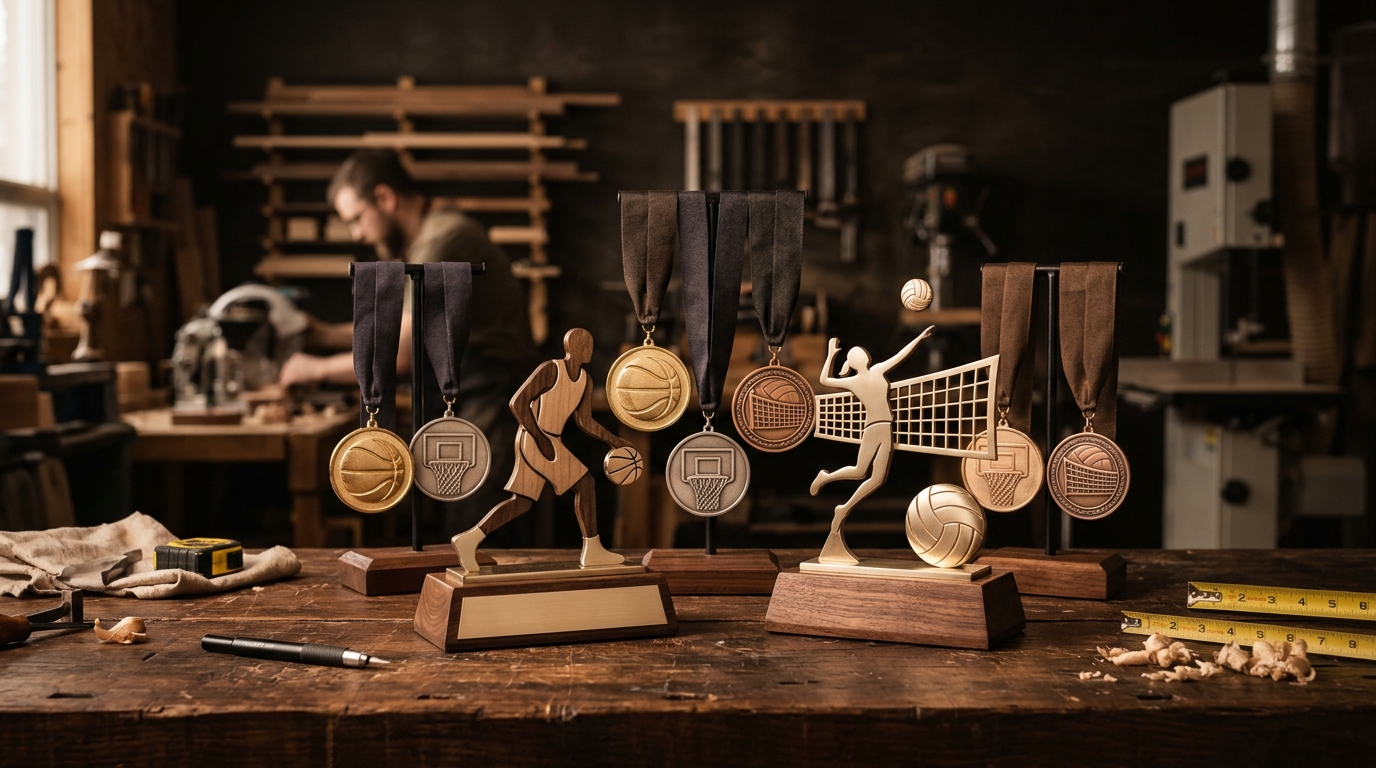
Trophies and Medals for a Basketball or Volleyball Tournament: A Guide for Organizers
Organizing a basketball or volleyball tournament? Here is how to choose trophies, medals and individual awards without going over budget.

Trophies and Awards for a Golf Tournament: The Organizer's Guide
Charity event, corporate outing or friendly get-together: learn how to choose trophies, plaques and skill prizes for a successful golf day. Our workshop tips for budgeting and engraving with confidence.