
A hard-to-read door plate, a peeling pictogram, or a faded outdoor panel can quickly create wayfinding and image problems. The choice between engraved or printed signage goes beyond aesthetics: it comes down to the installation location, frequency of use, maintenance requirements, and expected lifespan.
For a school, municipality, business, sports association, or healthcare facility, the right solution is one that stays clear, consistent with the visual identity, and suited to its environment. Laser engraving, CNC engraving, printing, or screen printing: each process meets specific needs.
Engraved or printed signage: two finishes, two approaches
Engraved signage involves removing or marking a material to create durable text, numbers, logos, or symbols. Depending on the material and desired result, the work can be done by laser or CNC. Lamicoid, aluminum, acrylic, two-layer plastic, wood, and metal plates are among the common substrates.
Printing, on the other hand, deposits information onto the surface of the substrate. It is particularly well suited to rich visuals, colour logos, photos, gradients, or messages that need to be updated frequently. Screen printing is also a relevant option for certain runs, especially when colours need to be consistent and sharp across many copies.
The difference shows in the finish, but is felt most in everyday use. Engraving creates a mark that is integrated into the substrate. Printing offers greater graphic freedom and can be more cost-effective when the content includes multiple colours or detailed elements.
When should you choose engraved signage?
Engraving is often the go-to choice for long-lasting identification. It works very well for door plates, room numbers, office nameplates, equipment tags, locker markers, directional panels, machine identification, and commemorative plaques.
For high-traffic areas
In a gymnasium, school, workshop, office building, or municipal facility, plates are touched, cleaned, and sometimes exposed to impacts. Engraved signage on a suitable material generally holds up better to repeated use than a surface marking. Characters remain legible even after many cleanings, because they are part of the substrate rather than simply applied to it.
It is also a smart choice for spaces where information needs to stay in place for several years: meeting rooms, executive offices, classrooms, technical access points, electrical rooms, or identified workstations.
For a clean and professional look
An engraved plate delivers a precise, structured appearance. The contrast of a two-layer material, such as Lamicoid, makes letters and pictograms stand out clearly. This solution is especially valued in institutional and professional settings where legibility is the top priority: schools, clinics, administrative offices, residences, factories, and sports facilities.
Engraving can also be used on metal, wood, glass or acrylic when signage needs to complement a higher-end décor. A recognition plaque, welcome panel or room identification sign can then share the same finishing style as a trophy, an honour plaque or a corporate gift.
For information that doesn't change often
Engraved signage is a worthwhile investment when names, numbers or instructions are stable. A building name, locker room identification, a safety regulation or a room number doesn't require regular updating. In this context, durability fully justifies choosing engraving.
On the other hand, if position holders change every year or schedules are updated frequently, it may be more practical to use a system with interchangeable inserts or renewable printing.
When is printing the best solution?
Printing is recommended when colour and graphic flexibility are the priority. It allows for the inclusion of a detailed logo, a complete visual identity, illustrations, photographs or promotional messages without limiting the design to one or two contrasting shades.
To put visual identity front and centre
Businesses, events, associations, sponsors and sports teams often need signage that faithfully reflects their colours. Printing makes it possible to display a complex logo, campaign visuals, participant photos or promotional elements with great precision.
It is well suited to temporary welcome panels, tournament posters, event display stands, sponsorship panels and internal communication materials. For a recruitment campaign, an open house or an awards ceremony, the visual can be designed to attract attention just as much as to inform.
For temporary or evolving content
A promotional panel doesn't always need to last ten years. If its message relates to a sports season, a fundraiser, a school activity or a limited-time offer, printing is often the most practical choice. It allows for the quick production of a visual support that is consistent with the current campaign, without over-investing in a solution designed to last permanently.
Printing can also simplify the management of multiple versions of the same panel: schedules, room layouts, event instructions, team names or information boards. That said, the substrate and surface protection should be chosen based on exposure to sunlight, moisture, abrasion and cleaning products.
For large formats and detailed visuals
An evacuation plan, site map, illustrated menu or exhibition signage sometimes contains a great deal of information. In these cases, printing offers a level of precision that is difficult to achieve through engraving, particularly for small text, colour codes and images.
Readability remains essential. A sign packed with information must be designed with a clear hierarchy: a visible title, easy-to-understand pictograms, sufficient contrast, and text that can be read from the intended distance. A beautiful visual cannot replace good wayfinding function.
The criteria that should guide your choice
The first criterion is the environment. For outdoor use or in locations exposed to harsh weather, temperature fluctuations, and UV rays, the material and process must be chosen carefully. An engraved plate on a durable substrate is often the preferred option for permanent identification. Outdoor printing remains possible, provided the right substrate and appropriate protection are used.
The second criterion is how long the message needs to last. For fixed information, engraving provides permanence. For seasonal, promotional, or frequently updated messaging, printing can be more flexible and more cost-effective.
The third criterion is the level of graphic customization. A simple office number or room name is well-suited to engraving. A sign that needs to incorporate multiple logos, brand colours, and imagery will often be best expressed through printing or screen printing.
Finally, consider installation. A door plate may require mounting holes, adhesive, standoffs, or a specific wall-mounting system. A directional sign must be visible along the actual path visitors travel. Before production, it is helpful to specify the dimensions, mounting location, reading distance, final content, and number of units required.
Combining engraving and printing for a cohesive signage system
The choice is not always exclusive. Within a single facility, it is common to combine processes. A company might use engraved door plates for permanent offices while using printed panels for reception, internal communications, and events. A school might durably identify its spaces with engraved Lamicoid while using printed panels for competitions, performances, and fundraising campaigns.
This approach makes it possible to maintain a consistent visual identity while matching each medium to its function. Colours, typography, pictograms, and tone of messaging can remain uniform even when production techniques differ.
Preparing a signage request without wasting time
A clear request makes it easier to select the right medium and speeds up production. Indicate the intended use — indoor or outdoor — approximate dimensions, the number of plates or panels, desired colours, and the mounting method. If your organization has a logo, provide a high-quality file whenever possible to ensure sharpness in the marking or printing.
For projects involving multiple products, it is helpful to consolidate your needs: door plates, directional signage, name badges, welcome panels, trophies, or promotional apparel. A single specialist can then harmonize formats and visuals while adapting materials to each specific use.
At Mr Trophée, laser engraving, CNC engraving, screen printing and graphic design allow us to handle everything from a single plaque to a complete identification program. The right starting point is always the same: choose signage that your visitors understand immediately and that your team will be happy to keep in place.
You may also like
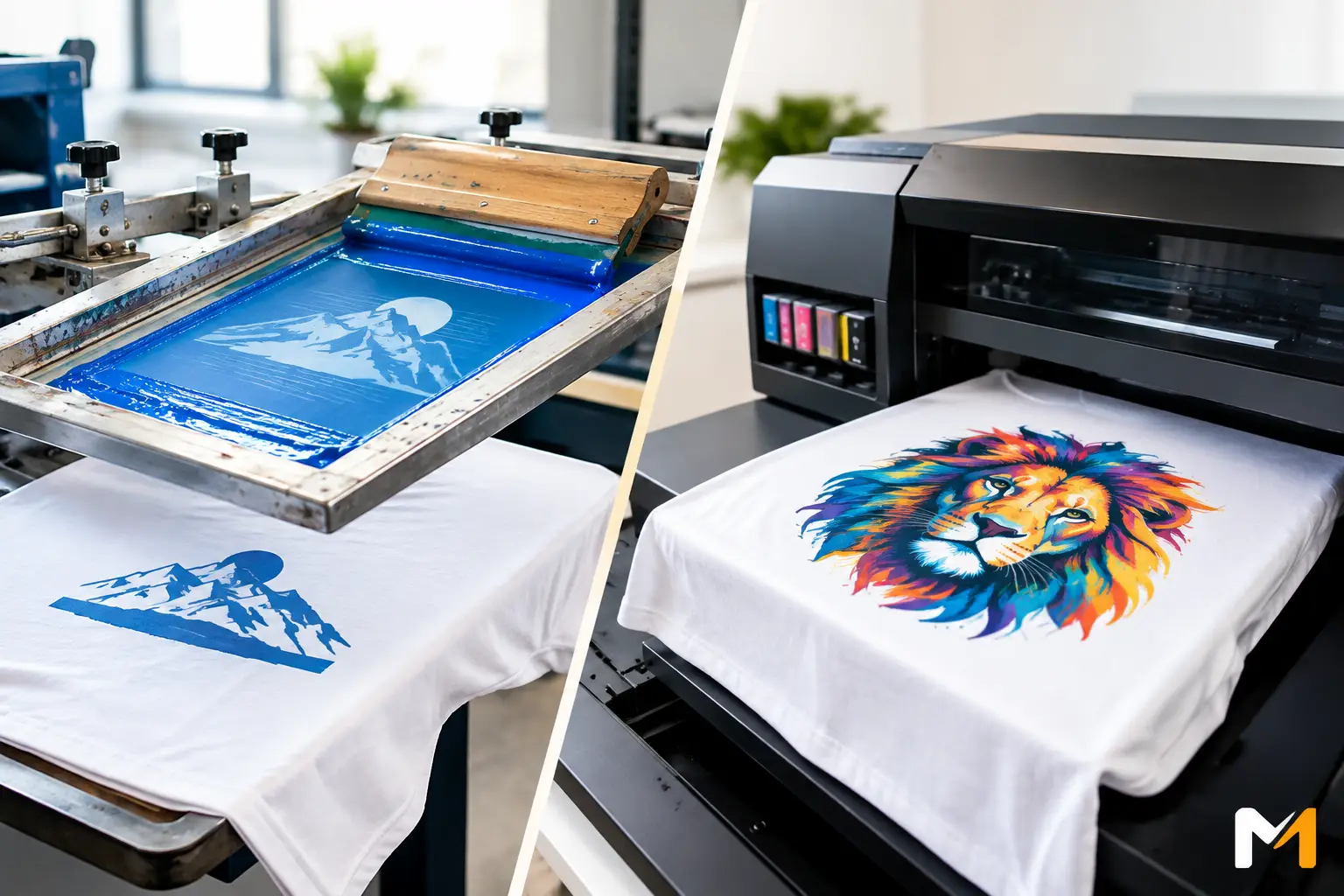
Screen Printing vs. Digital Printing: Which One Should You Choose?
Screen printing vs. digital printing: choose the right technique for your apparel, signs and promotional items for a durable, precise result.
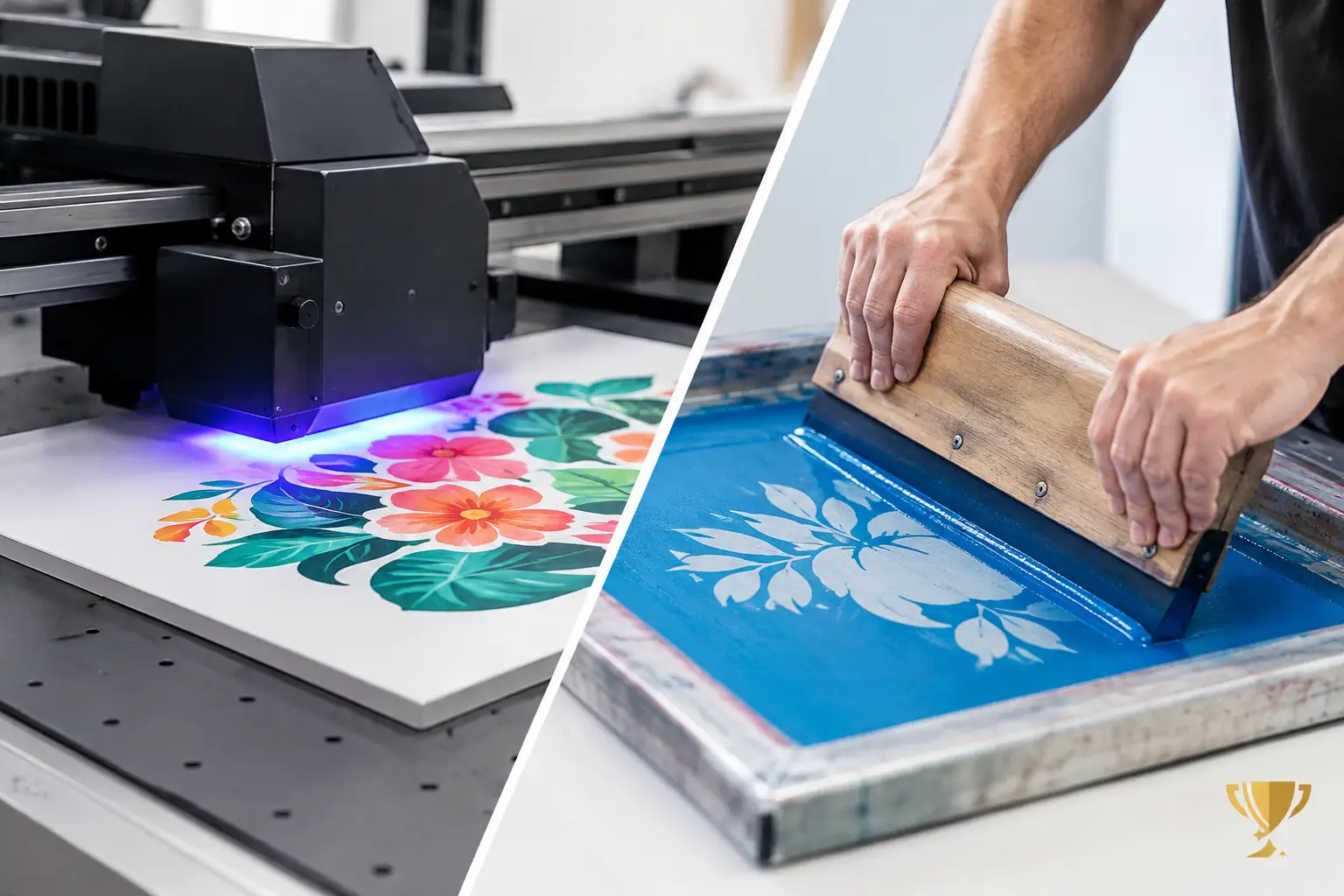
UV vs. Screen Printing: Which Marking Method Should You Choose?
UV vs. screen printing: compare precision, colours, durability and costs to choose the right marking method for your trophies, items and professional signage.
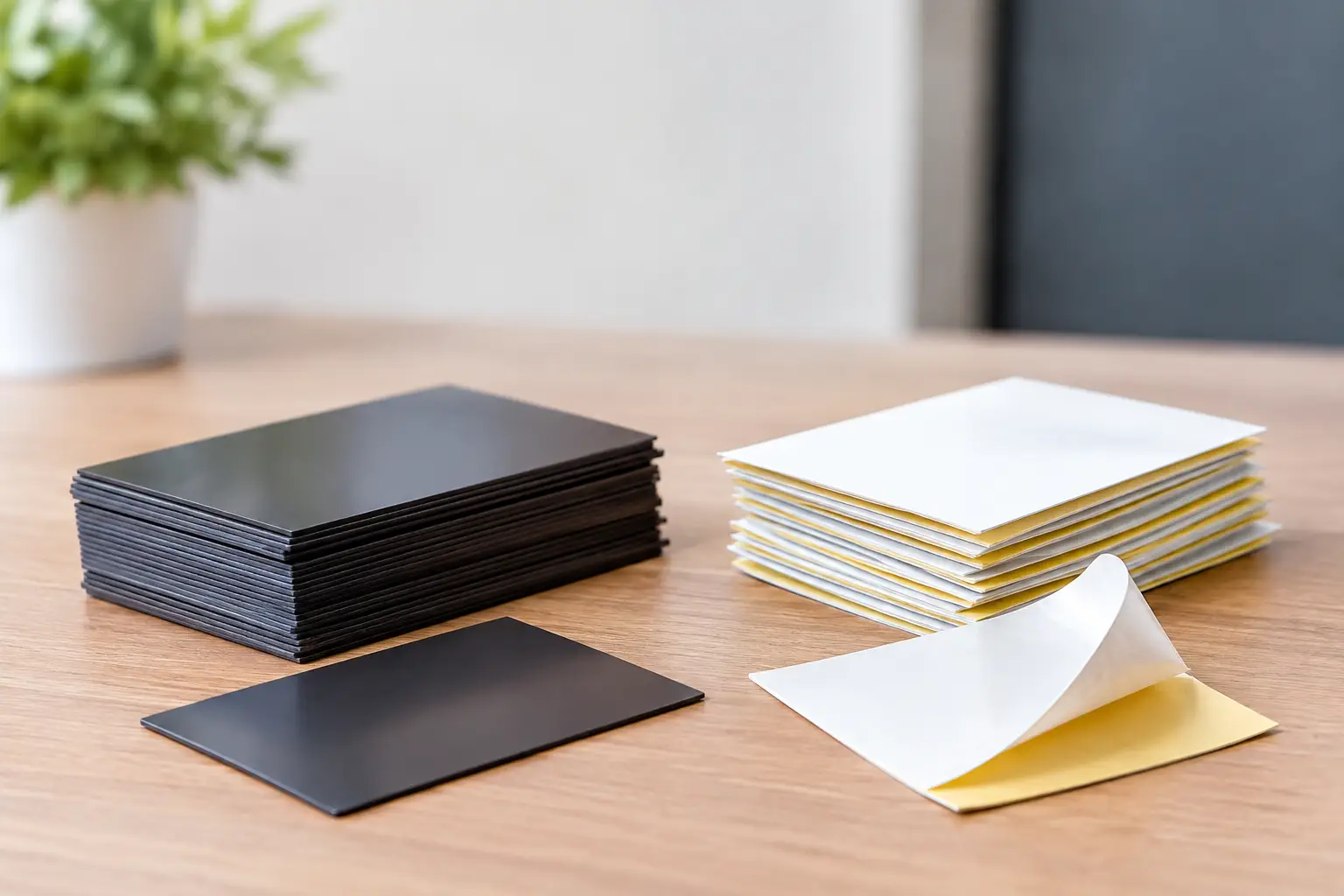
Magnetic Plaques or Stickers: Which Should You Choose?
Magnetic plates or stickers: compare hold, application, reusability and finish to choose the right signage for each professional use.