An engraved and printed nameplate seems simple to order, until it has to remain legible on a glass door, distinguish workstations, or properly represent your organization at an event. The right choice depends just as much on the substrate and marking method as it does on the name being displayed. For a school, municipality, business, or association, it is a tangible piece of identification that must be clear, durable, and consistent with the organization’s image.
A nameplate or badge can be used to identify a person, an office, a room, a role, or a piece of equipment. It can be mounted on a door, placed on a counter, worn at a conference, or integrated into indoor signage. Before choosing a model, it is essential to define its actual use and not just its appearance.
When to Choose an Engraved and Printed Nameplate
Engraving and printing do not produce the same results. They meet distinct needs, even when combined in the same project. An engraved plaque is particularly well suited to permanent installations, high-traffic environments, and information that rarely changes. The text is etched or marked directly into the material, providing clean, long-lasting identification.
Printing is particularly useful when the artwork includes a full-colour logo, fine graphic details, pictograms, or specific visual branding. It also provides a consistent look across event name tags, name badges, or campaign displays. Depending on the chosen substrate, screen printing can be a practical option for production runs sharing identical graphic elements.
In many cases, the best solution combines both approaches. For example, a desk plate can be engraved with the name and title, and then printed with a logo. For a front desk or reception area, a nameplate can also be made with a permanent base in the organization’s colours and an interchangeable insert for employee or visitor names.
Start with the Location and Duration of Use
A name badge intended for a one-day conference does not have the same requirements as a plaque installed in a school hallway for several years. Keeping this distinction in mind prevents choosing a material that is too fragile or, conversely, paying for a solution that is more permanent than needed.
For office doors, meeting rooms, classrooms, healthcare spaces, or administrative offices, the priority is generally legibility from a distance. There must be sufficient contrast between the background and lettering, especially in hallways with varying lighting. An overly decorative font may look appealing on screen, but it becomes difficult to read when walking past a door.
In facilities where occupants change regularly, a plate with an interchangeable insert or window can reduce replacements. It is a practical option for schools, clinics, municipal buildings, and large administrative teams. For permanent roles, a plate customized with each specific name offers a more permanent finish.
Wearable name tags require a different approach. You need to consider the fastening system, comfort, and visibility during interactions. A traditional pin backing works well in many settings, while a magnetic backing avoids piercing certain fabrics. For uniforms, promotional apparel, or staff wearing badges all day long, weight and dimensions become essential factors.
Materials: Choosing Based on Use, Not Just Colour
Lamicoid is often selected for door signs, room identification, and indoor applications. This layered material reveals a contrasting core colour when engraved. It provides a clean, professional finish for names, titles, room numbers, and functional signage. It is available in a variety of colour combinations, making it easy to match existing signage.
Aluminium and other metals are ideal when aiming for a more institutional look or greater durability. They can be used for directional signage, equipment identification plates, professional offices, or any installation where longevity is a priority. However, the chosen finish must withstand its operating environment: humidity, frequent cleaning, sun exposure, or regular handling.
Acrylic delivers a sleek, contemporary look that works particularly well in offices, reception counters, and corporate spaces. Clear, frosted, or coloured materials open up more design possibilities, but require careful attention to contrast. Light lettering on a light background, no matter how elegant, can quickly compromise readability.
For events, name tags can also be crafted on lighter materials suited for temporary use. In these cases, fast turnaround times, easy distribution, and adequate space for the person's name, organization, and job title often take precedence over long-term durability.
The Importance of Mounting and Fasteners
The mounting method is an integral part of the product. A door plate can be installed using suitable adhesive backing, screws, standoffs, or a sliding wall bracket. The right choice depends on the surface, whether the installation is permanent, and whether the information will need updating down the road.
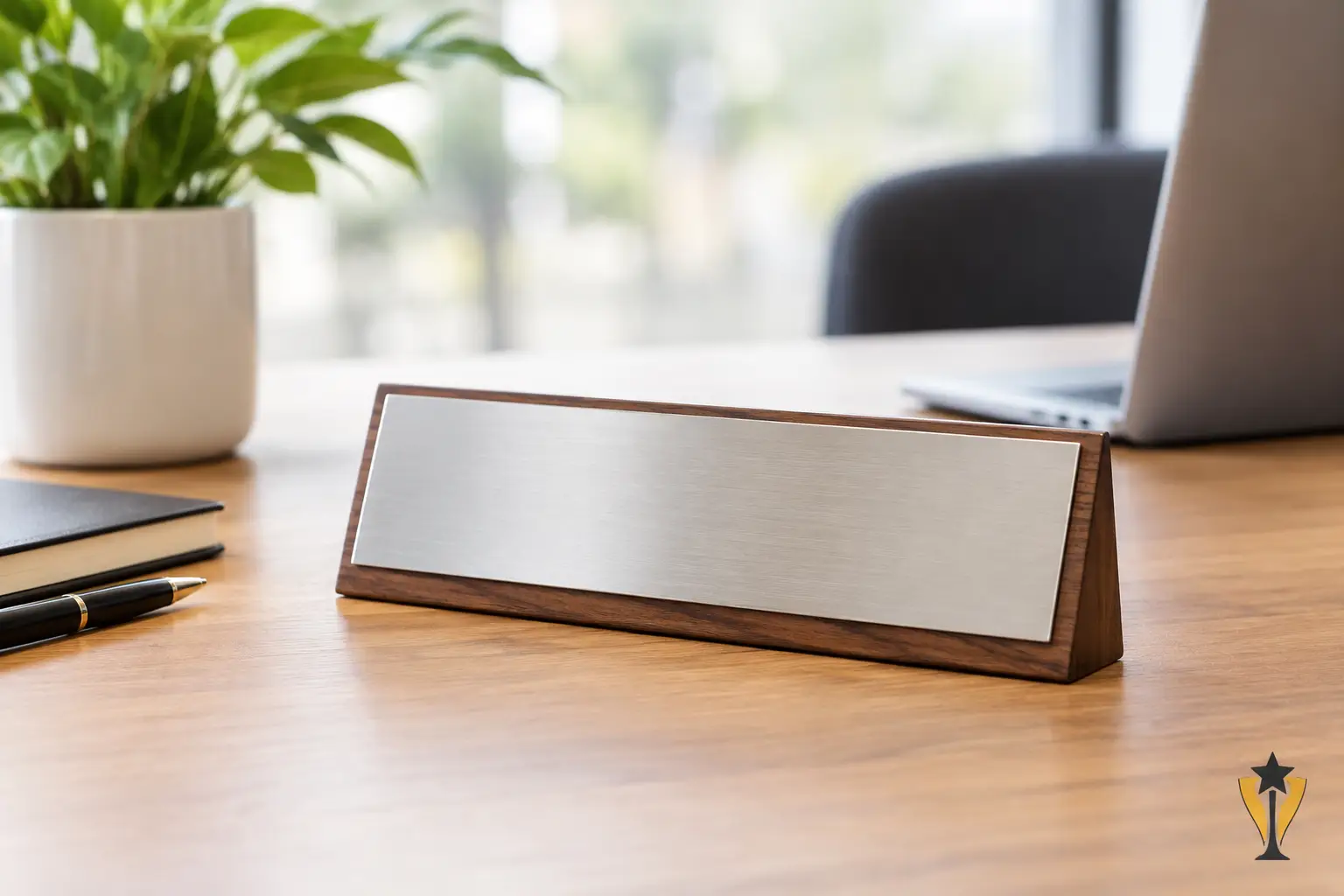
For a desk name plate, an angled base or a counter stand allows easy reading on either side of a reception desk. For a personal badge, you'll need to choose between a pin, a magnet, or another garment-friendly attachment. Specifying this detail right from the quote request helps prevent last-minute adjustments.
Preparing Clear Information for Customization
Customization goes much more smoothly when your data is organized from the start. For team orders, providing a spreadsheet with names, titles, departments, and quantities helps minimize transcription errors. It is also helpful to specify any accents, preferred capitalization, bilingual titles, and language order.
In Quebec and Canadian organizations, both French and English versions may be required on the same plaque or depending on where they are installed. Sufficient space must therefore be planned to maintain a readable font size. Excessively shrinking the lettering to fit two languages onto a small surface undermines the primary purpose of a nameplate: to be read quickly.
A high-quality logo file is just as important. A vector logo is preferred for engraving, printing, and precise cutting. If only an image file is available, a graphic review may be required to ensure crisp results. Very fine details, gradients, and similar colours need to be evaluated based on the chosen production method.
Before production, the proof should confirm spelling, layout, dimensions, and colours. This step is especially helpful for orders featuring many unique names, such as those for a board of directors, a sports team, school staff, or an event committee.
Adapting the format to the context of use
A reception desk nameplate isn't designed the same way as a locker plate, and room identification doesn't need the same level of detail as a conference badge. For a door, a person's name can be accompanied by their title, department, and room number. For an event, the name must remain the primary piece of information, followed by the organization or role.
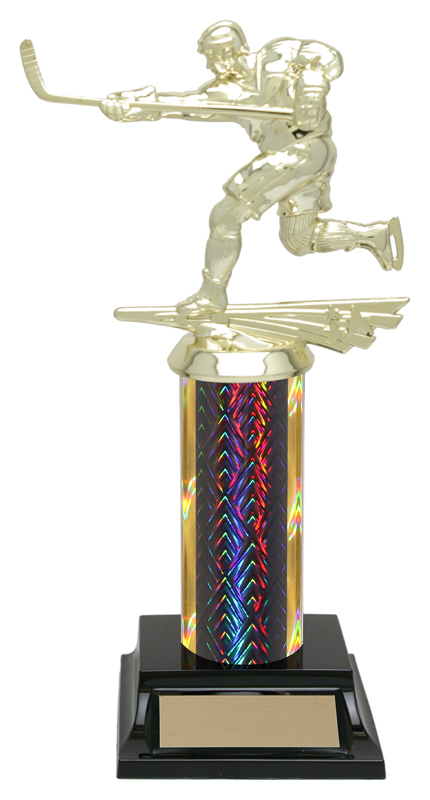
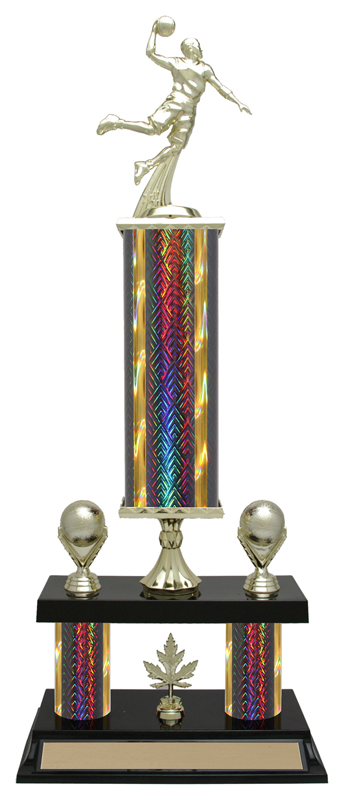
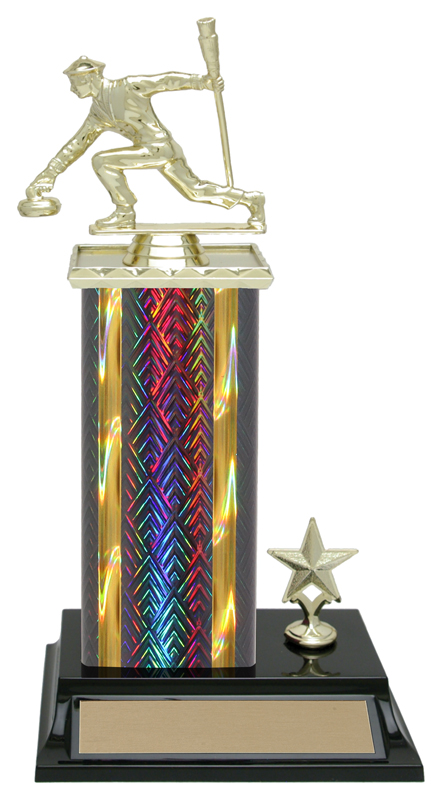
Organizations that also order trophies, recognition plaques, medals, or promotional apparel benefit from maintaining consistent visual cues: typography, logo, colours, and tone. This consistency creates a more professional look across the board, whether for an annual awards ceremony or everyday signage.
At Mr Trophée, our laser engraving, CNC engraving, screen printing, and graphic design capabilities allow us to guide each project toward a solution tailored to the material and desired level of customization. A detailed quote request—including quantities, format, and deadline—helps select a realistic production method.
Planning for changes before ordering
The cost of a nameplate doesn't depend solely on the number of units. Dimensions, material, colour, mounting type, the inclusion of a logo, and whether each plate features a different name all influence production. A large run of identical plates does not require the same preparation as a series of fifty distinct names, titles, and departments.
Turnover must also be considered. If positions change frequently, replaceable inserts or title-only plates can be more cost-effective in the long run. Conversely, for an honorary award, an executive office, or an officially named room, a permanently engraved plaque offers a more suitable presentation.
The best nameplate is one that remains legible, accurate, and suited to its environment long after it has been installed. By outlining the intended use, expected lifespan, required information, and installation constraints right from the start, you give the workshop everything needed to produce signage that does its job properly.
You may also like
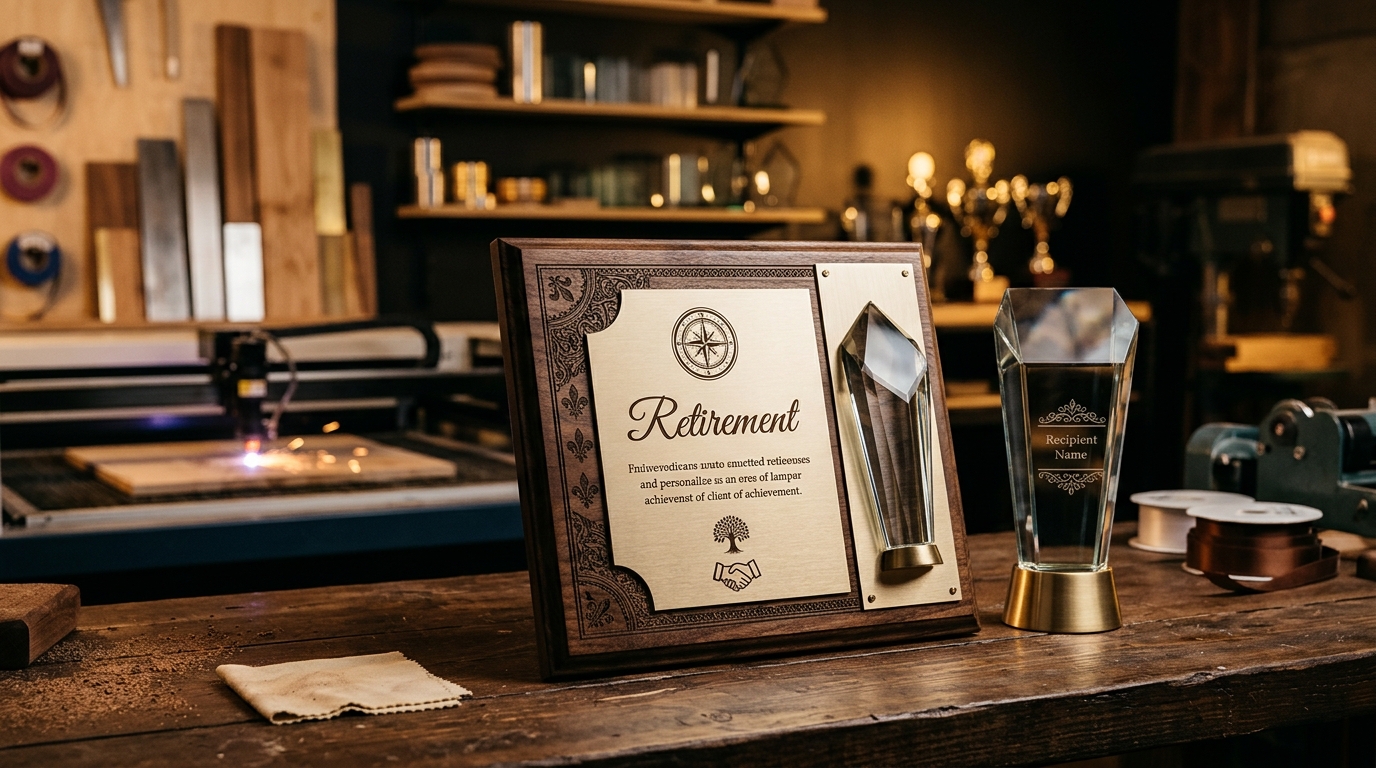
Retirement Gifts: Engraved Plaques and Trophies to Honour a Career
A retirement deserves a keepsake worthy of a whole career. Here is how to choose, word and order an engraved plaque or trophy that will truly touch the person being honoured.

Sanitary Signs for Public Spaces and Workplaces
Choose clear, durable washroom signs suited to your spaces to guide visitors, support hygiene and reduce errors.
Trophies, Medals and Engraved Plaques in Léry, Quebec: Everything You Need to Know About Mr Trophée
Discover Mr Trophée, the Léry, Quebec workshop specializing in custom trophies, medals and plaques using laser engraving and colour printing. Local, friendly service at the best guaranteed price in Canada.