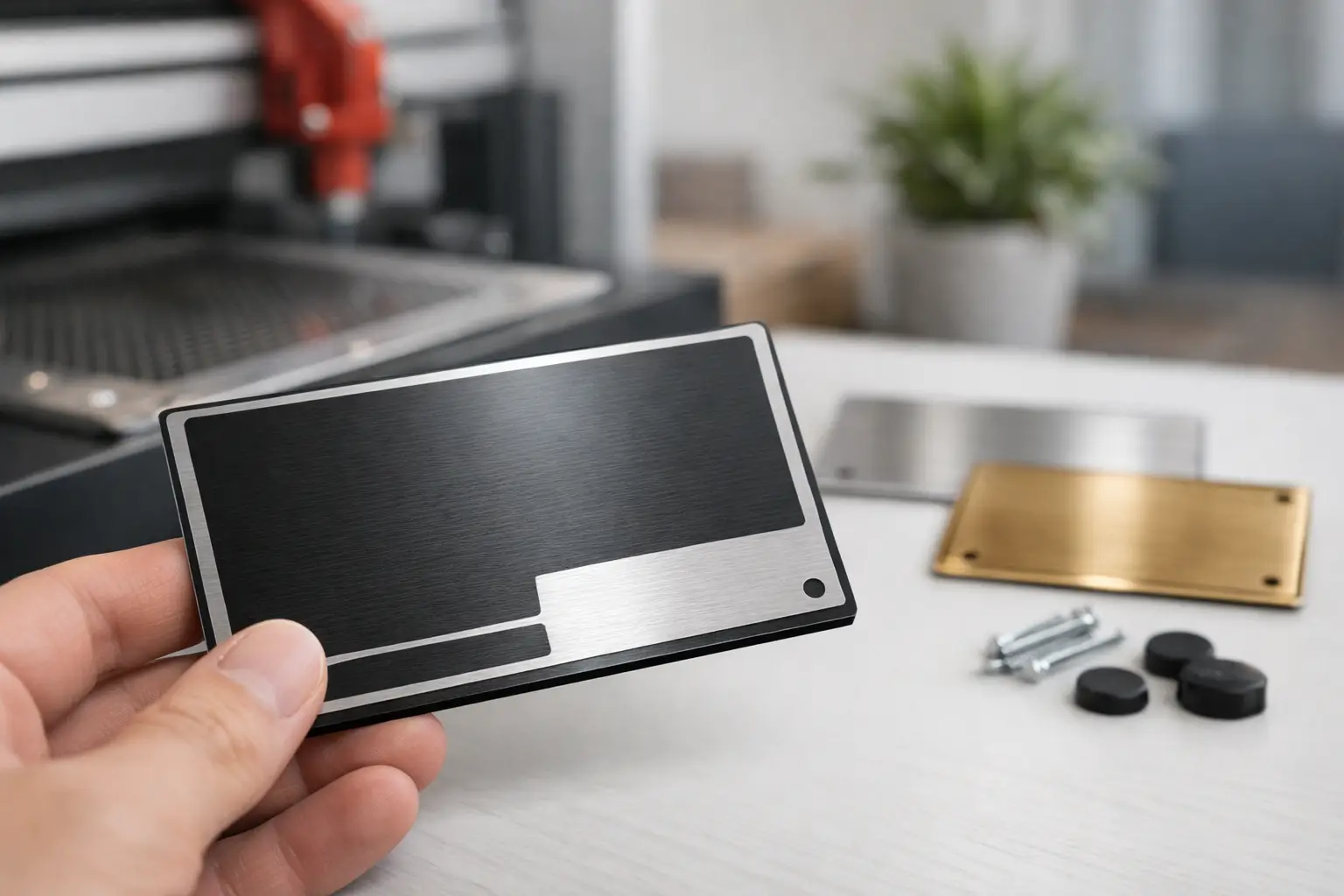
A custom-engraved Lamicoid sign must remain legible after hundreds of uses, regular cleaning, or several Canadian winters. Whether you're identifying a door, an electrical panel, a locker, a piece of equipment, or a workspace, the result depends as much on the material and contrast as on the engraved text itself. A well-made sign communicates information at a glance, with no explanation required.
Lamicoid is particularly valued when identification needs to be durable, precise, and easy to reproduce across a series of signs. It suits offices, schools, municipal buildings, and sports facilities just as well as workshops, warehouses, and technical equipment. Its appeal isn't purely decorative: it helps organize a space, reduce errors, and project a professional image.
Why choose a custom-engraved Lamicoid sign
Lamicoid is a multi-layer plastic laminate designed for engraving. Its surface has one colour, while the layer beneath it has another. The engraving process removes the top layer, revealing the background colour. The lettering is therefore embedded in the material itself, rather than printed on its surface.
This construction provides sharp contrast and solid resistance to everyday wear. A white-engraved black sign, for example, remains a classic choice for rooms, office doors, and technical identification. Combinations such as white on black, black on white, blue on white, red on white, or gold on black each serve very different needs: visibility, alignment with a graphic identity, colour coding, or an institutional look.
For an organization, custom production eliminates compromise. A department name, a room number, a safety notice, a logo, or an equipment reference can all be composed using the terminology actually used on-site. This consistency is particularly useful when multiple buildings, divisions, or teams need to use the same signage system.
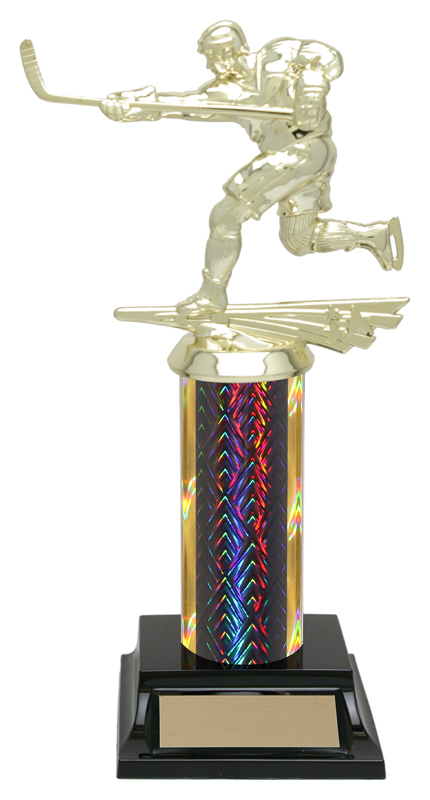
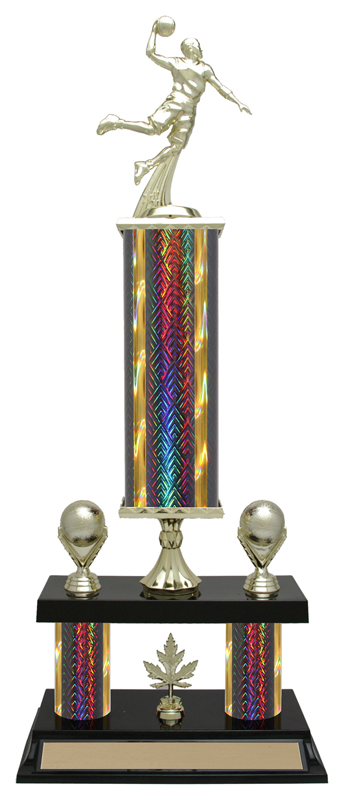
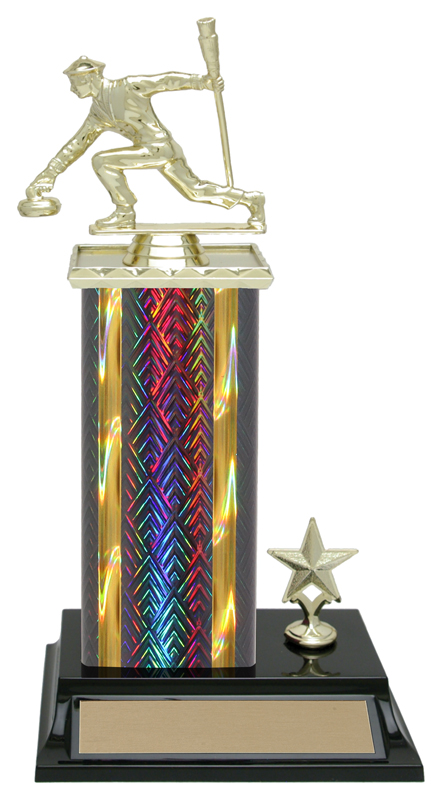
CNC engraving is often the preferred method for Lamicoid signs, especially when dimensions, cutouts, or mounting holes must be very precise. Depending on the project, other marking and customization processes can complement the overall package — for example, panels, trophies, medals, or promotional apparel that match the organization's identity.
Defining the application before the format
A door sign and an equipment label don't have the same requirements. That's the first decision to make, before choosing a colour or a typeface. A sign intended for a hallway must be readable from several metres away. A sign on an electrical enclosure, on the other hand, should present concise information, visible at close range and suited to its working environment.
For offices, meeting rooms, classrooms, and community spaces, a horizontal format is often preferred, featuring the name of the location and, if needed, a function or number. In facilities where assignments change frequently, it may make sense to use a permanent holder with a replaceable insert. Conversely, a stable department name can be engraved directly onto a more permanent sign.
In a workshop or mechanical room, plaques are frequently used to identify controls, circuits, valves, machinery, or storage areas. The text should be short, accurate, and standardized. Wording that is too lengthy reduces the character size and can make the text harder to read. It is better to use terminology familiar to the teams and to verify technical references before production.
Sports clubs, schools, and associations can also use Lamicoid for change rooms, lockers, reserved spaces, honour boards, sponsor plaques, or equipment labels. For these applications, it is wise to harmonize the colours with those of the team or event, without sacrificing the necessary contrast.
Legibility: contrast before aesthetics
Colour is a functional choice. A dark background with light lettering is generally easy to read, but lighting, distance, and the size of the plaque all influence the decision. In a poorly lit environment, a low-contrast combination can become difficult to distinguish. For outdoor signage or surfaces exposed to dirt, very light colours may also require more maintenance.
The choice of typography deserves the same attention. Simple characters, sufficiently spaced and free of fine details, are better suited to short text and small formats. A logo can be engraved with precision, but a clean file must be provided and its finest elements must remain visible at the chosen size. A proof allows this balance to be validated before placing a large order.
Dimensions, thickness, and mounting
Dimensions should match the available space, the number of lines, and the reading distance. A plaque that is too small forces tight typography. A plaque that is too large can look disproportionate on a door or piece of equipment. For a series, it is useful to establish one or two standard formats: this simplifies future orders and maintains a consistent presentation.
Thickness depends in particular on the expected rigidity and the mounting method. A lightweight plaque may be suitable for a locker or an interior partition. A more exposed application or a larger panel may call for a more rigid material. Mounting can be achieved with holes, screws, adhesive, or a specific bracket. This detail must be decided from the outset, as the placement of perforations affects the available area for text and the logo.
Information to prepare for an efficient order
A clear order speeds up plaque production and reduces the need for corrections. Whether for a one-time project or a multi-site rollout, it is recommended to gather the following elements:
- the number of plaques and quantities per label;
- the desired dimensions or the space constraints of the location;
- the colour combination and the type of finish required;
- the exact text, including accents, numbers, abbreviations, and capitalization;
- the logo in a usable file format, if applicable;
- the mounting method, as well as the date by which the plaques are needed.
For a series of names, a list reviewed by a single person in charge reduces duplicates and spelling errors. This method is particularly useful for schools, municipalities, leagues and businesses that order dozens of name plates. If the need comes up every year, keeping approved formats, colours and graphic files on hand also allows new additions to be produced more quickly.
Thinking About the Real Environment of Use
Lamicoid performs very well in many indoor applications and some outdoor ones, but the right material always depends on the exposure. Direct sunlight, humidity, temperature variations, cleaning products, friction and impact risks all need to be taken into account. A plate installed in an entrance hall is not subject to the same conditions as a label mounted near a production area.
For demanding environments, it is best to specify the installation conditions from the start of your price request. The choice of colour, thickness, adhesive and fastening method can then be adjusted accordingly. When identification must comply with internal standards, safety codes or building nomenclature, these references should be included in the production file.
Maintenance also needs to be planned for. An engraved plate cleans up easily with suitable products and a non-abrasive cloth, but overly aggressive cleaning can affect its appearance over time. In high-traffic areas, a colour that is tolerant of smudges and dust may be more practical than a finish chosen purely for its looks.
Consistent Signage, From the First Room to the Last Piece of Equipment
A single plate serves a simple purpose. A consistent series contributes to the complete organization of a space. Same format, same margins, same colours, same wording — these details make it easier for employees, visitors, students and suppliers to find their way around. They also strengthen an organization's credibility during an event, an inspection or the welcoming of new members.
At Mr Trophée, Lamicoid plate projects can be part of a broader package that includes signage, custom engraving, recognition plaques, medals and promotional items. This continuity is valuable when an organization wants to coordinate its operational signage with its recognition activities or brand image.
Before production begins, take a few minutes to observe the actual location, measure the available surface and proofread every label. That preparation turns a simple plate into a reliable identification tool, built to last.
You may also like
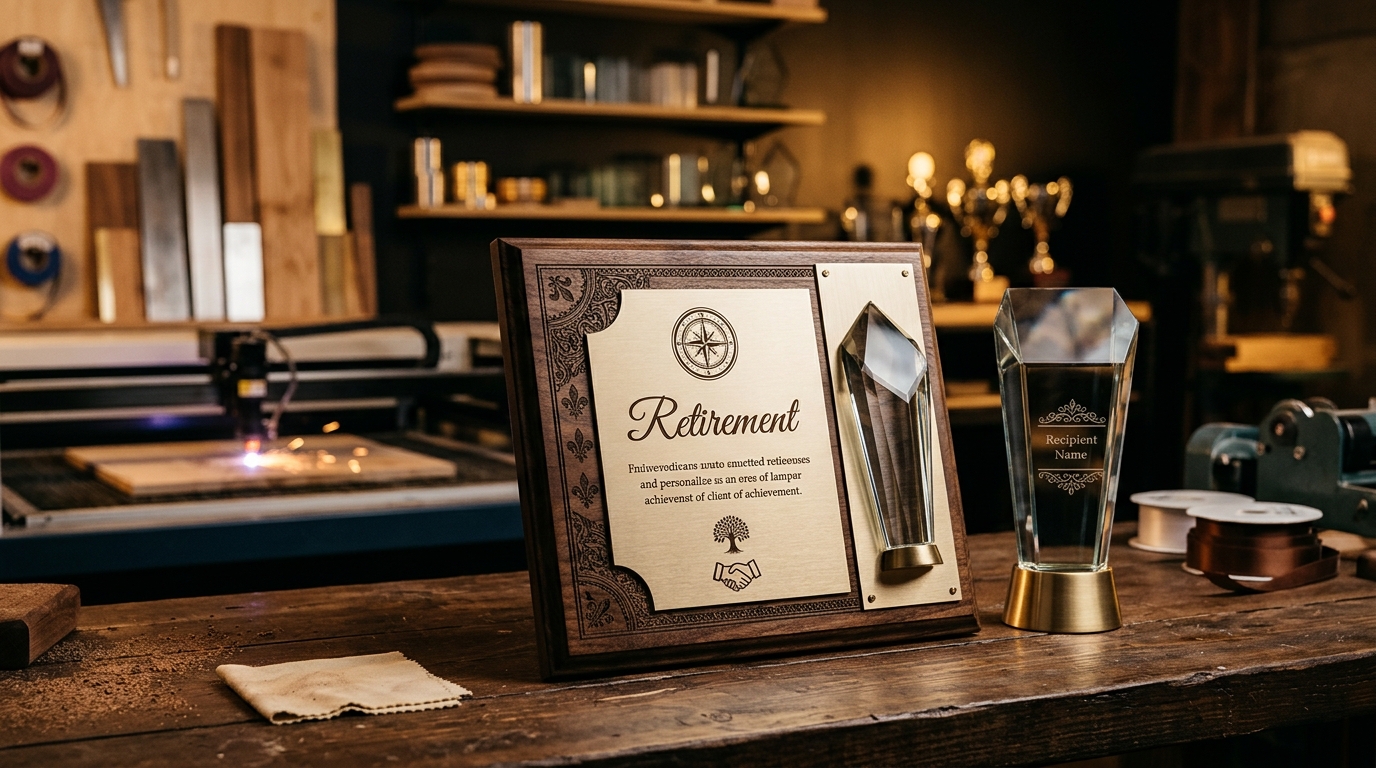
Retirement Gifts: Engraved Plaques and Trophies to Honour a Career
A retirement deserves a keepsake worthy of a whole career. Here is how to choose, word and order an engraved plaque or trophy that will truly touch the person being honoured.
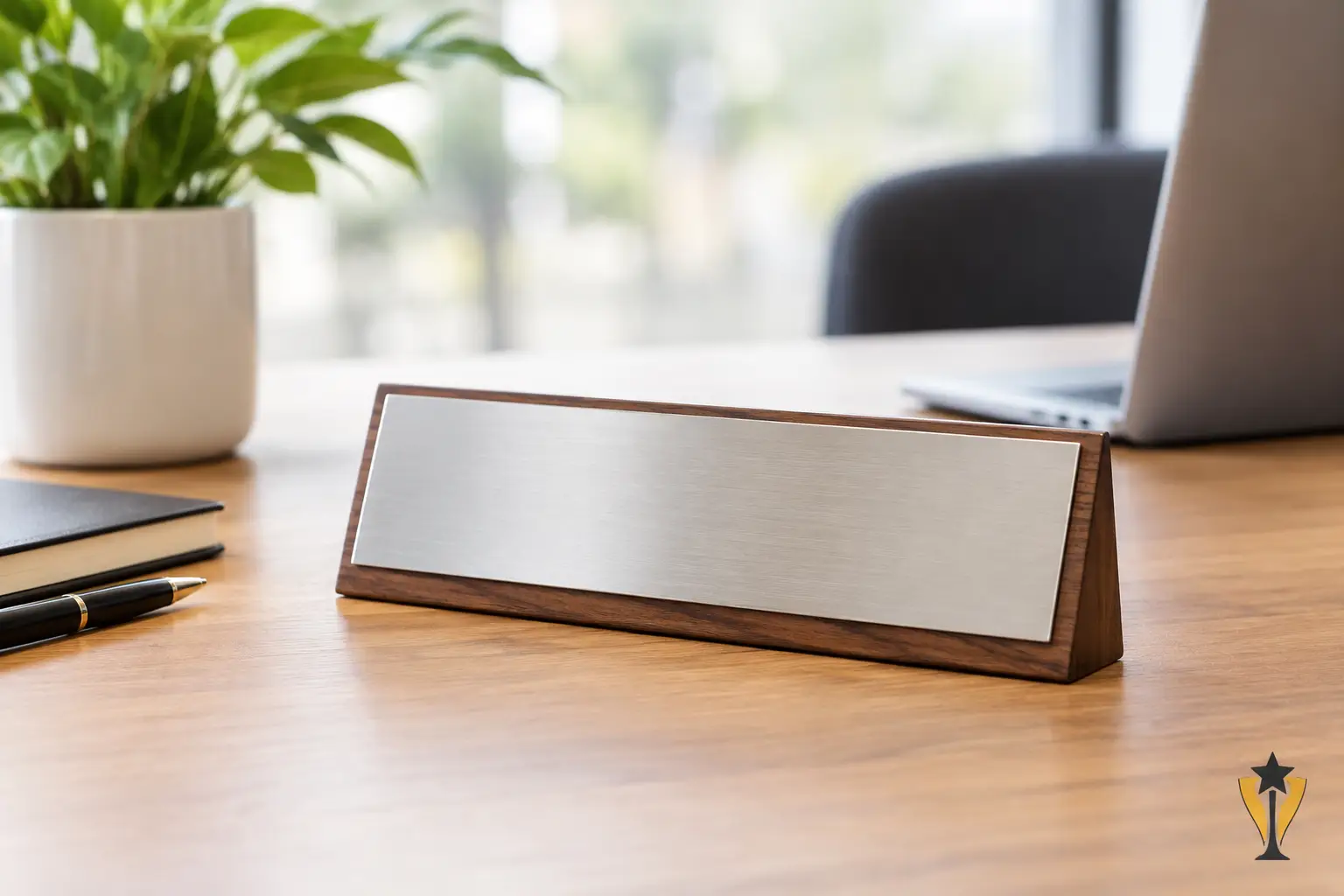
Engraved and Printed Nameplates for Your Spaces
Choose an engraved or printed name badge for offices, events, and facilities: materials, legibility, durability, and professional customization.

Memorial Plaques: How to Pay Tribute with Care and Durability
A tribute to a loved one, a volunteer or a place: here is how to choose the message, material and mounting for a memorial plaque that will stand the test of time.