A plaque installed at a building entrance, on a room door, or near equipment needs to remain readable and consistent with your organization's image. Whether to go with an acrylic or aluminum plaque depends less on aesthetic preference than on the location, intended use, mounting method, and type of marking required. A temporary door plaque has different requirements than permanent outdoor signage or a commemorative plaque presented at a ceremony.
Acrylic or aluminum plaque: the key differences
Both acrylic and aluminum meet the needs of custom signage, identification, and recognition. However, they produce different visual effects and age differently. The decision should be made based on actual conditions of use, not solely from a catalogue photo.
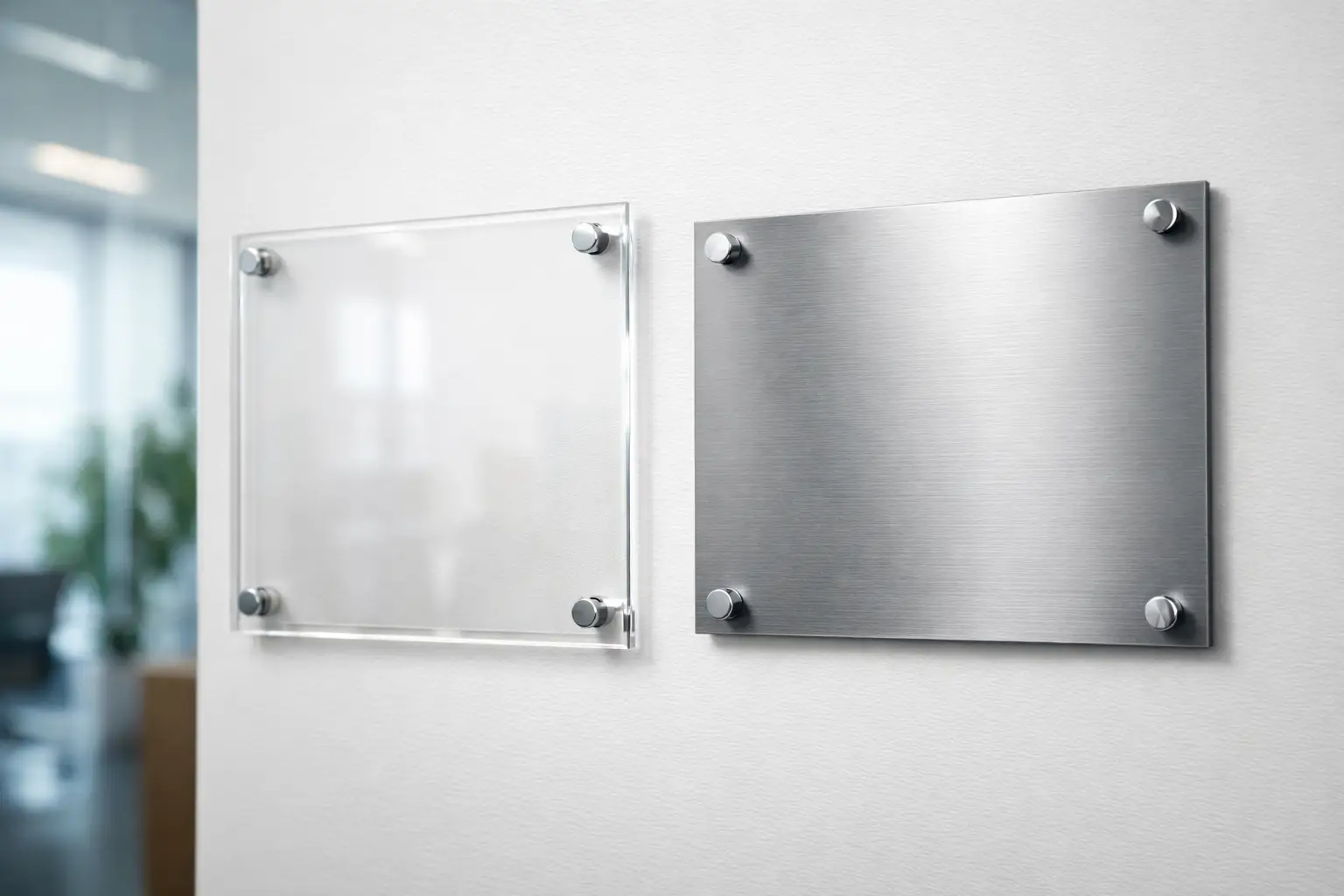
Acrylic plaques are made from a rigid material, often referred to as PMMA. Available in clear, white, black, frosted, or coloured finishes, they deliver very clean, contemporary results. They are particularly well-suited for offices, meeting rooms, reception counters, shared workspaces, and display stands. Their polished edges and the option to mount them on standoffs make it easy to add dimension to interior signage.
Aluminum offers a more technical and institutional presence. Its finish can be brushed, anodized, satin, matte, or coloured depending on the product selected. It is a natural fit for door numbers, name plates, identification panels, instructions, equipment markings, and outdoor applications. Its metallic appearance also conveys a sense of permanence, which is often sought by municipalities, schools, associations, and businesses.
When to choose an acrylic plaque
Acrylic is an excellent choice when visual presentation is just as important as the information being displayed. In a corporate reception area, a clinic, a training centre, or an event space, it allows logos, brand colours, pictograms, and multiple levels of text to be incorporated with elegance.
A clear plaque, for example, can be printed or engraved on the reverse side to protect the marking and maintain a smooth front surface. Paired with metal standoffs, it creates a floating effect that works particularly well for directories, directional plaques, or corporate displays. A black acrylic plaque with white or contrasting engraving remains highly readable on doors and workstations.
This material is also a strong choice for recognition plaques. Mounted on a wood base, on a trophy support, or as part of a custom award, acrylic offers cut-out shapes, transparency effects, and layering that are difficult to achieve with a standard metal plaque. CNC cutting and laser engraving allow names, dates, categories, signatures, and graphics to be personalized with precision.
Acrylic does require some care, however. Its surface can scratch if subjected to frequent rubbing or cleaned with abrasive products. It can also crack under a significant impact, especially near mounting holes. For high-traffic areas, workshops, or heavily used doors, it is important to choose an appropriate thickness and a reliable mounting system.
The Most Suitable Uses for Acrylic
Indoors, acrylic is often chosen for desk plaques, room signage, welcome panels, directories, donor plaques, awards, and promotional displays. It also works well in settings where the visual identity needs to feel light, modern, and personalized.
For outdoor use, it can work if the location is sheltered and if the materials, inks, and hardware are selected to withstand UV exposure and moisture. However, it is not always the first choice for a plaque exposed year-round to rain, frost, de-icing salt, or temperature fluctuations.
When Aluminum Becomes the Better Choice
Aluminum is preferred when a plaque needs to withstand prolonged use, regular handling, or outdoor exposure. A civic address number, a rules plaque, machinery identification, or parking signage all benefit from its stability and professional finish.
Anodized aluminum is particularly well suited to engraving. The marking process removes the surface layer and reveals a contrasting colour, resulting in clean, long-lasting text. This technique works well for small identification plaques, serial tags, equipment plates, room name signs, and signage requiring fine lettering.
For more complex visuals, screen printing or digital printing can complement engraving. Logos, safety pictograms, colour codes, or detailed information can all be incorporated into the plaque. The choice of method will depend on the level of detail, the quantity required, the desired contrast, and the conditions of exposure.
It is also worth distinguishing between a solid aluminum plaque and an aluminum composite panel. The composite, made up of thin aluminum sheets around a core, is commonly used for larger-format signs and panels. It is lightweight and stable, but does not always offer the same engraving depth or finish as an anodized aluminum plaque. This distinction is worth clarifying when requesting a quote.
The Most Suitable Uses for Aluminum
Aluminum is particularly well suited to durable door plaques, outdoor signage, technical plates, building identification, instruction panels, construction plaques, address numbers, commemorative plaques, and equipment labelling. In industrial, educational, municipal, or sports environments, it reliably meets the need for clear information that lasts.
Its look may be more understated than that of clear acrylic, but that restraint is often an advantage. A brushed aluminum plaque with black text, or an anodized plaque with contrasting engraving, remains easy to read and fits into a wide range of settings without looking dated.
Comparing Finish, Legibility, and Maintenance
The finish directly influences the reading experience. A glossy acrylic plaque draws more attention but can reflect lighting from a lobby or large window. A frosted, matte, or reverse-printed finish reduces this issue. Brushed aluminum can also create glare, while a satin or matte anodized finish often allows for more consistent readability.
Contrast deserves particular attention. Light grey text on a silver background may look elegant up close but become difficult to read from a distance. For a directional sign, a safety notice, or a publicly accessible identification plaque, contrast must take priority over decorative effect. Character size, font choice, and reading distance matter just as much as the material.
In terms of maintenance, aluminum generally holds up well to regular cleaning with a soft cloth and a non-abrasive product. Acrylic requires the same care, with harsh solvents strictly to be avoided as they can damage its surface. In both cases, an appropriate finish reduces fingerprints and makes day-to-day upkeep easier.
Think about the marking method before choosing the material
The material and the customization should be decided together. Laser engraving is well suited to precise text, individual names, and small logos. CNC engraving is useful when depth of material or a specific cut is required. Screen printing works well for production runs featuring solid colour blocks, while graphic design ensures that logos, text, and pictograms remain proportional to the plaque's format.
For a recognition plaque, it is also important to anticipate information that may need to be added each year: the recipient's name, date, category, sponsor, or sporting result. A large main plaque with small interchangeable sub-plates may be more practical than a piece that is entirely remade for each edition. For shared offices, replaceable inserts or modular door plaques also simplify staff changes.
At Mr. Trophy, customization can bring together laser engraving, CNC, screen printing, and graphic design to tailor the plaque to its context, rather than forcing a single template into every application.
Mounting, format, and environment: the details that prevent mistakes
A well-designed plaque can fall short if its installation is poorly planned. Exposed screws give a functional and solid look, particularly on aluminum. Standoffs suit acrylic reception plaques or directories that call for a raised effect. Double-sided adhesive offers a clean installation on a smooth surface, but compatibility with the wall, door, humidity level, and the weight of the plaque should be verified beforehand.
The format must match the amount of information. A simple name and room number can fit on a small plaque. A map, a set of rules, or a list of services requires more space and sometimes a clear graphic hierarchy. Before production, it is helpful to provide the final text, the logo in good quality, the desired dimensions, the background colour, and the intended mounting method.
For outdoor use in Canada, keep seasonal constraints in mind. A plaque exposed to sun, cold, snow and maintenance products should be selected with a safety margin. In that case, aluminum, durable engraving and weather-resistant hardware are often wiser choices than a solution picked solely for its initial appearance.
Making the Right Choice for Your Project
Choose acrylic if your priority is modern indoor signage, a transparency effect, a high-end presentation or a visually distinctive recognition plaque. Go with aluminum when durability, resilience, long-term readability and outdoor exposure are the main concerns.
The best project often starts with a simple question: what will this plaque still need to do in two, five or ten years? By clarifying its location, content, level of exposure and mounting method from the outset, you end up with a plaque that stays readable, relevant and true to your organization long after it's been installed.
You may also like
Screen Printing vs. Digital Printing: Which One Should You Choose?
Screen printing vs. digital printing: choose the right technique for your apparel, signs and promotional items for a durable, precise result.
UV vs. Screen Printing: Which Marking Method Should You Choose?
UV vs. screen printing: compare precision, colours, durability and costs to choose the right marking method for your trophies, items and professional signage.
Magnetic Plaques or Stickers: Which Should You Choose?
Magnetic plates or stickers: compare hold, application, reusability and finish to choose the right signage for each professional use.