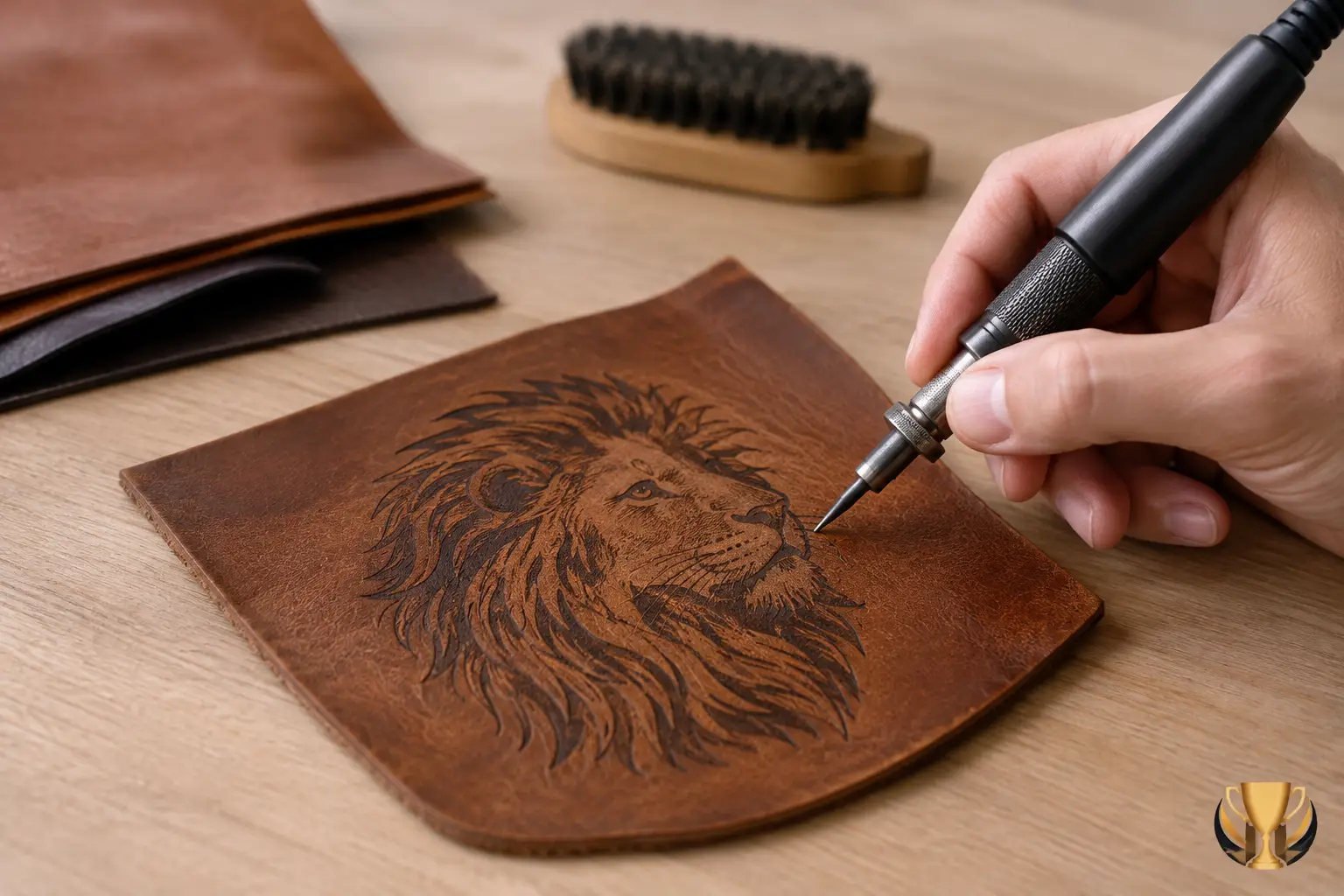
A briefcase sleeve presented to an employee, a wallet given to a graduate or patches for a sports team don't send the same message when they're simply printed as when they're precisely personalized. Can leather be engraved? Yes, but the result depends mostly on the type of leather, the technique chosen and the level of detail in the artwork. Leather is not a uniform material: its finish, tanning, colour and thickness all directly affect how crisp the marking will be.
For a recognition project, a corporate gift or a promotional item, the right question isn't just "can it be done?", but rather "which method will produce a marking that is durable, legible and consistent with the item?"
Can leather be engraved with precision?
Leather engraving is possible on many items: wallets, key chains, notebooks, tags, bracelets, cases, bags and travel accessories. It can be used to mark a name, initials, a date, a team number or an organization's logo. Depending on the process, the marking can be dark, slightly recessed, textured or simply tone on tone.
Laser engraving is often chosen for small personalized runs and detailed artwork. The beam removes or transforms a thin layer of material on the surface. It can reproduce precise typography, variable numbers and well-prepared logos. It's a great solution when an organization wants, for example, to personalize several volunteer gifts with the same logo and different names.
However, "leather" can refer to very different materials. Genuine vegetable-tanned leather won't react the same way as finished or pigmented leather, or leather treated with a protective coating. Some artificial leathers and faux leathers designed for lasers even produce more consistent contrast than certain natural leathers. The actual item therefore needs to be assessed, rather than relying solely on its commercial description.
The type of leather changes everything
Full-grain leather retains the natural characteristics of the hide: grain, pores, variations in shade and sometimes small marks. These features make it a sought-after material for high-end gifts, but they also cause the look of an engraving to vary slightly from one item to the next. This variation is normal and adds to the character of the product.
Vegetable-tanned leather is generally prized for hot stamping, embossing and certain types of engraving. It develops a patina over time and takes recessed impressions well. When chosen properly, it suits belts, cases, key chains and handcrafted pieces that are meant to gain character with use.
Chrome-tanned, very soft or heavily finished leathers call for more caution. A thick finish can prevent the marking from defining itself clearly or cause a less predictable colour reaction under the laser. A dark-dyed leather can also produce a subtle contrast, which suits an elegant personalization, but not always a logo that needs to be read quickly from a distance.
Finally, materials sold as synthetic leather, vegan leather or imitation leather don't all behave the same way. Some are specifically designed for laser engraving and reveal a layer of contrasting colour. Others can melt, discolour or release unsuitable fumes. A technical validation of the material is essential before production.
Laser, Hot Stamping or Printing: Choosing the Right Finish
Laser engraving offers great flexibility for names, dates, logos and fine illustrations. It is especially practical for an order that includes individual information: award recipients, board members, league players or event guests. The graphic file must be clean, however. Lines that are too thin, very tight details or a low-resolution image can lose legibility once reproduced on the grain of the leather.
Hot stamping or pressure marking creates a more traditional recessed effect. A die applies heat and pressure, sometimes with a metallic foil. This approach is well suited to runs of items bearing the same emblem, such as planners, gift boxes or corporate accessories. It usually requires more structured preparation than laser engraving, but it creates a very distinctive visual signature.
Printing can be preferable when the project calls for bold colours, a large logo or a visual reproduction that must not alter the texture of the item. It does not replace the tactile quality of an engraving, but it better meets certain promotional visibility needs. The choice depends on the intended use: a keepsake will often favour material and relief, while a campaign product will sometimes seek immediate graphic impact.
What to Check Before Engraving a Leather Item
A successful engraving starts before the machine. First, you need to specify whether the item is made of genuine leather, bonded leather or a synthetic material, then determine its colour, its finish and the area actually available for marking. A small curved surface, a seam close to the logo or a flexible flap can limit the size and placement.
The content to be engraved deserves the same attention. For plaques, trophies and medals, the text is often structured according to familiar formats. On leather, space is sometimes more limited. A full name, a job title, the date, the logo and a message of thanks will not always fit with the same visual strength. It is better to establish a clear hierarchy: the organization's name, for example, can accompany the logo, while the recipient's name becomes the main element.
A good vector file is ideal for logos. For images, a sharp, high-contrast version helps preserve the outlines. Before launching a large quantity, a sample or a test on a comparable area makes it possible to confirm the colour, depth and rendering of the detail. This step is particularly useful when the client supplies their own items, since the exact composition of the material may be unknown.
The Limits to Accept for a Professional Result
Natural leather will never deliver the absolute uniformity of a metal plate or a Lamicoid panel. The grain can slightly alter the fineness of the lines. A softer area can absorb pressure differently. A dark shade can reduce contrast. These are not necessarily flaws, but constraints to be built into the design.
It's also important to avoid assuming that deeper means better. An engraving that is too aggressive can weaken a thin layer of leather, alter its finish or produce less crisp edges. Likewise, a logo designed for a large sign will often need to be simplified before it is applied to a key chain. Production know-how means adapting the artwork to the item, rather than forcing the item to reproduce the artwork without adjustments.
For everyday use, engraving generally holds up better than a surface marking that can wear off through rubbing. It does not, however, stop leather from aging. Prolonged exposure to sunlight, moisture, oils and cleaning products can change the colour of the item around the marking. Care suited to the type of leather will preserve the overall appearance of the gift or accessory.
Useful applications for organizations and gifts
Engraved leather easily finds its place in recognition programs. A personalized notebook can celebrate an employee's years of service. A key chain can accompany the presentation of a sports award. A case or card holder can become a understated, practical farewell gift for a committee member, a teacher or a business partner.
For schools, associations and municipalities, there is also the benefit of being able to coordinate several items: main trophy, medals, commemorative plaques and small personalized gifts. The logo, typography and tone of the message can stay consistent from one item to the next. This continuity adds more value to a ceremony, even when the items presented come in different formats.
At M. Trophy, the assessment of an engraved leather project takes into account the item, the marking method, the artwork and the quantity requested. A single order and a series intended for a gala don't necessarily call for the same production approach.
Leather lends itself very well to personalization when we respect what it is: a living, textured and sometimes unpredictable material. By choosing a compatible item, suitable artwork and an appropriate marking technique, you end up with an object that doesn't just carry a name or a logo, but that people want to keep.
You may also like
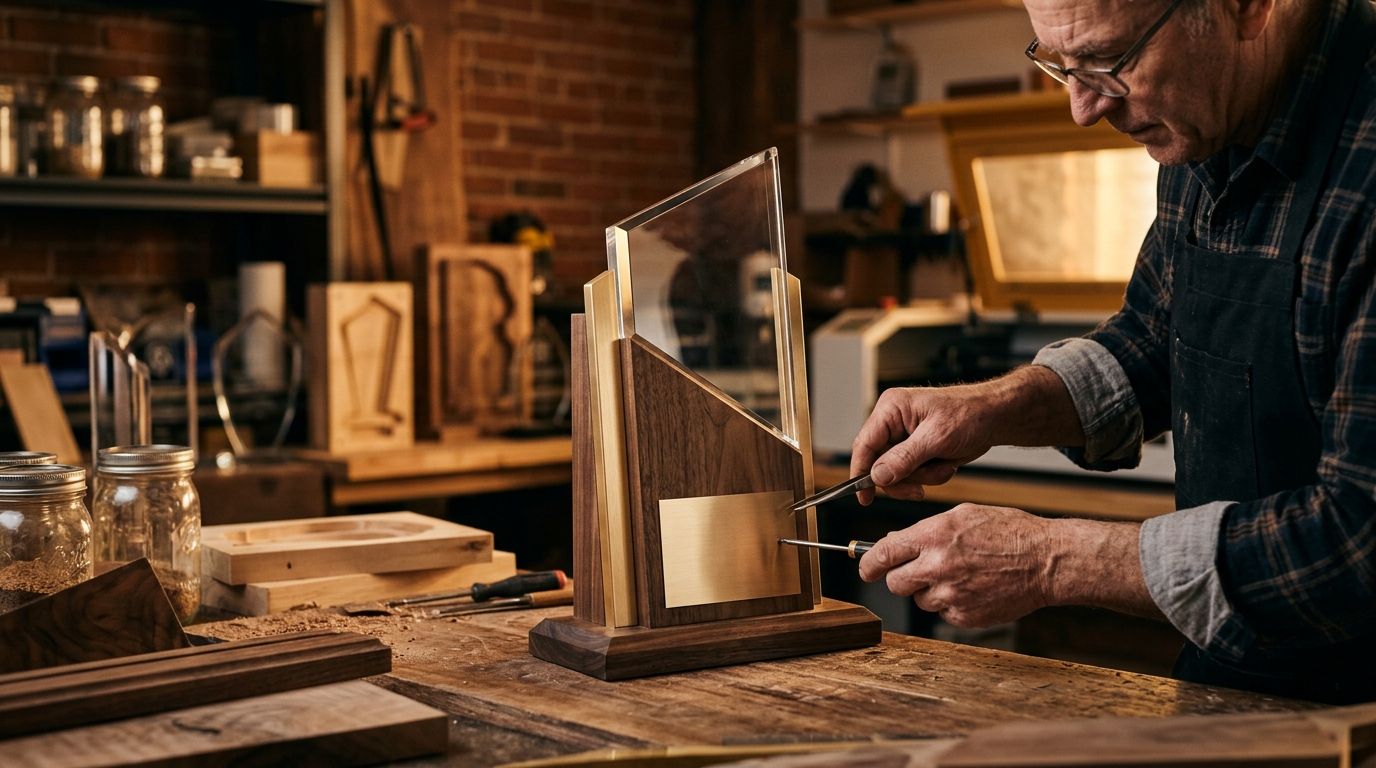
What to Engrave on a Trophy or Plaque: Wording, Length and Examples
Engraved text turns a simple object into a lasting keepsake. Here is how to choose the right words and the right length, and how to avoid mistakes that can't be undone.
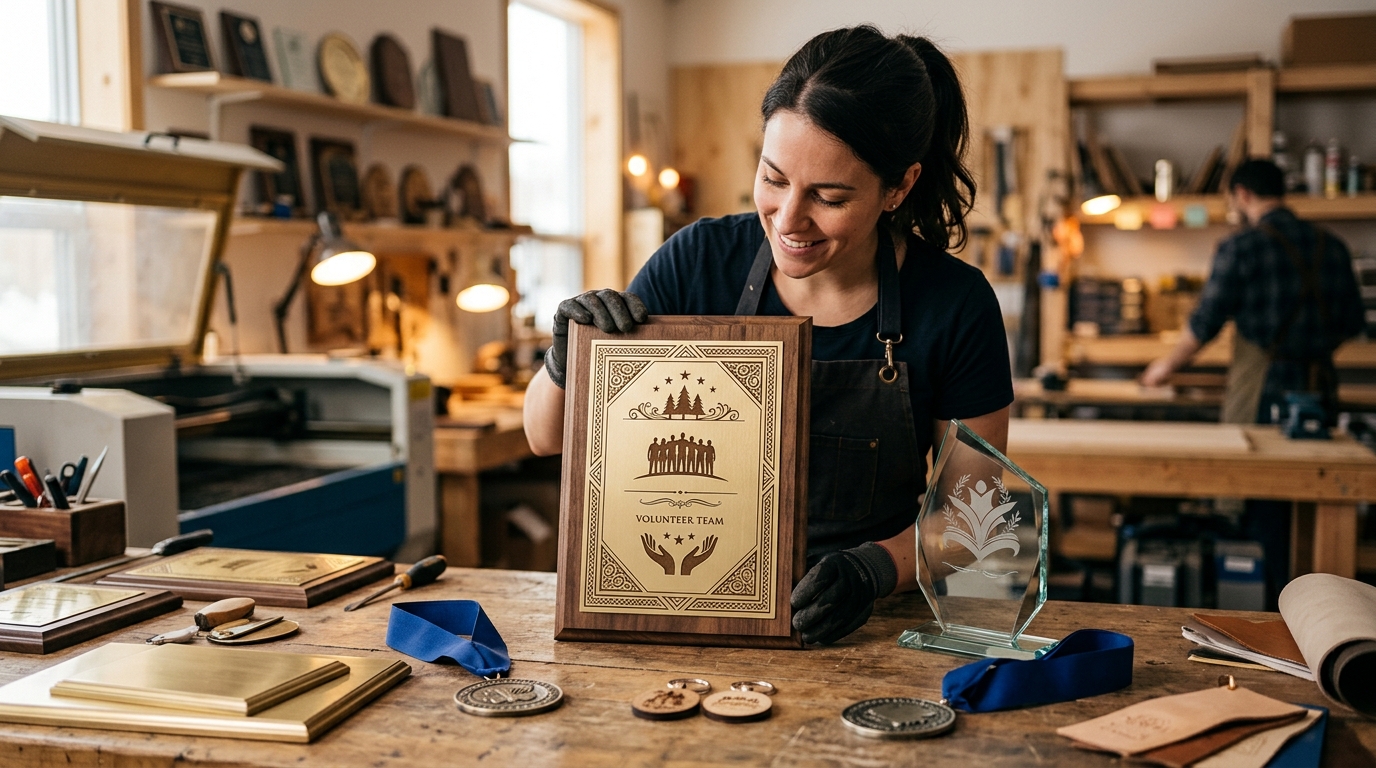
Thanking Your Volunteers: Plaques and Awards That Truly Mean Something
Volunteers keep your activities running, but a thank-you email is quickly forgotten. Here is how to choose an engraved plaque, medal or gift that truly recognizes their commitment.
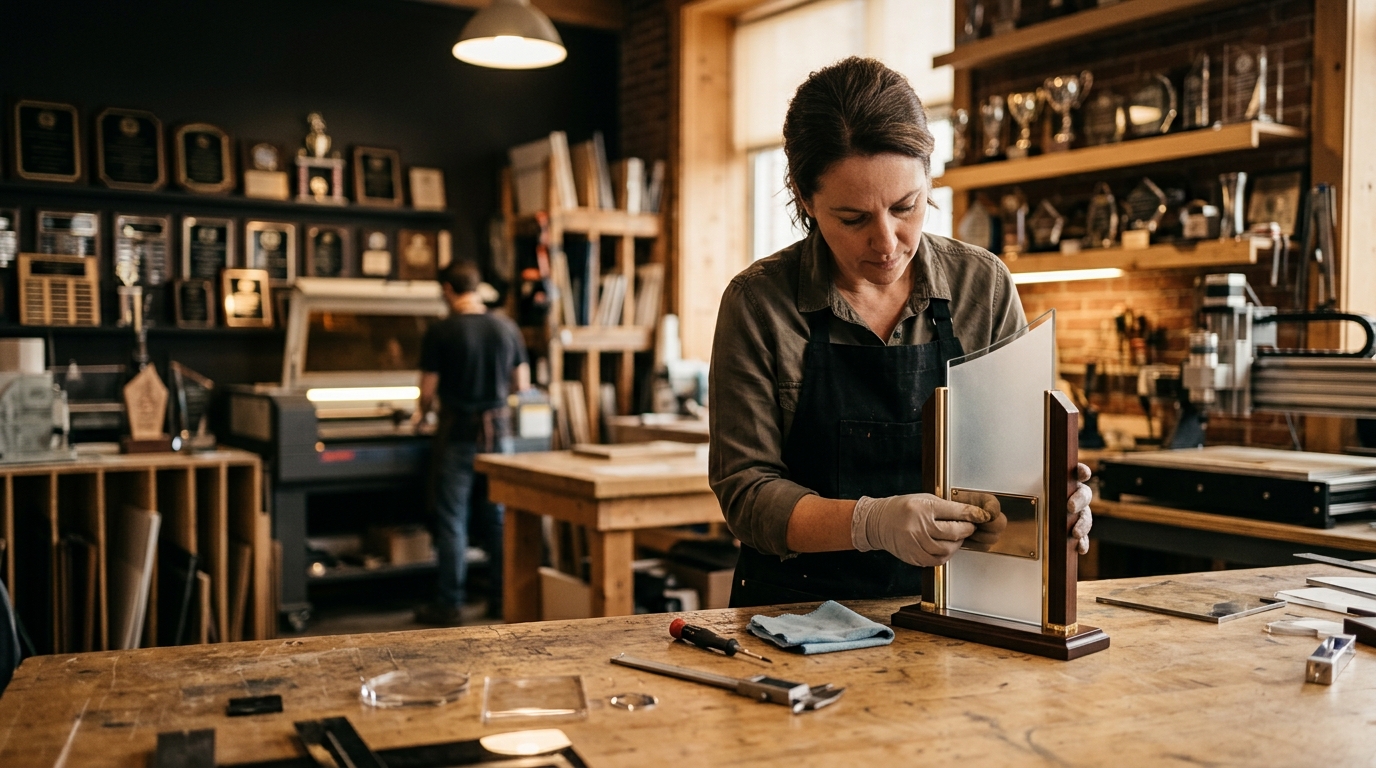
Ordering Custom Trophies: How Much Time to Plan and How to Stay on Schedule
Gala in three weeks? League final this Saturday? Here is a realistic timeline for a custom trophy order, plus our tips for saving time without sacrificing quality.