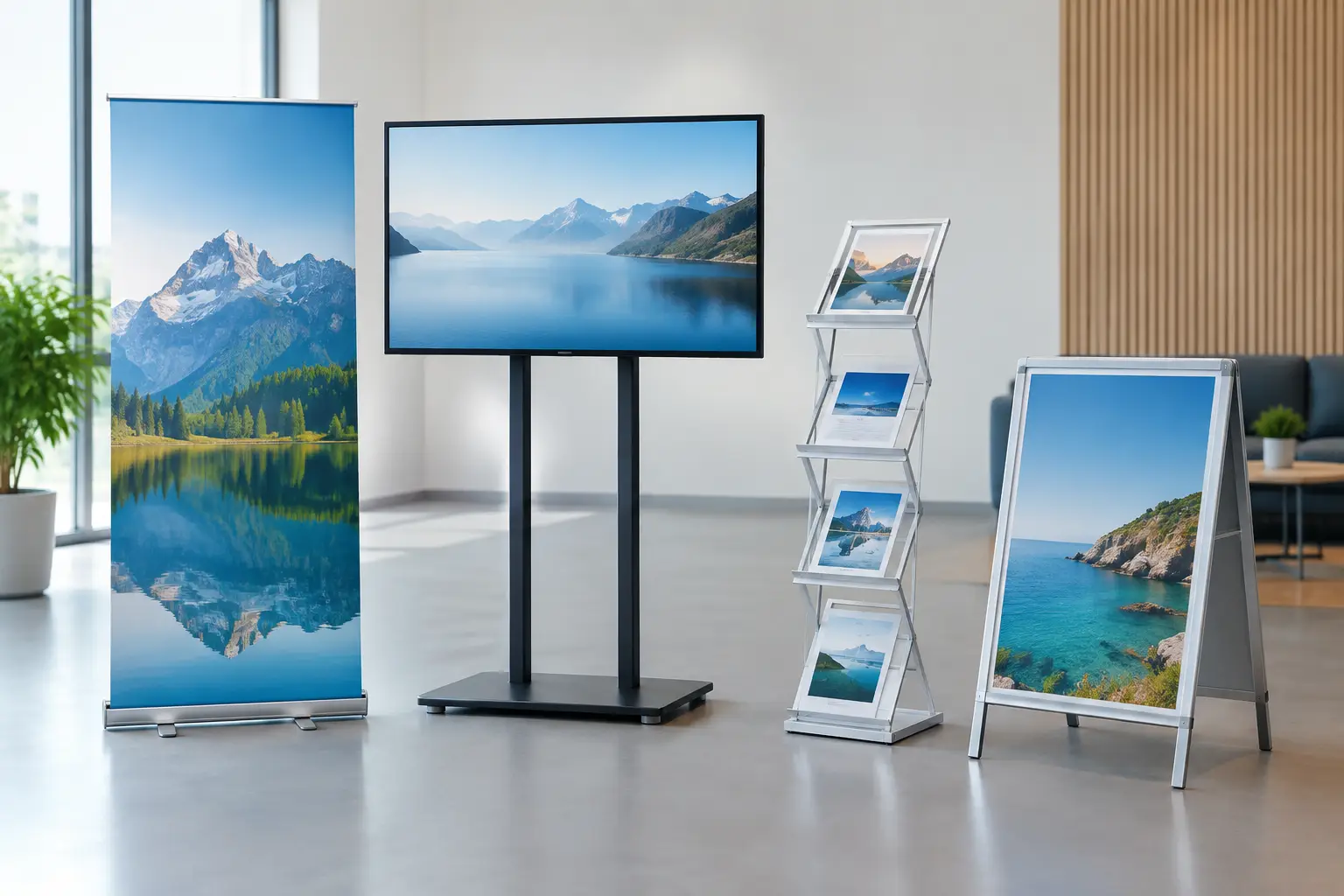
A poor display choice often goes unnoticed until it's too late: a poster warping in a hallway, a schedule that's hard to read at the front desk, temporary signage that doesn't hold up during a tournament. To select the best display solutions, you first need to consider the actual use of the message: where will it be seen, how long does it need to stay in place, and what image should it project?
In a school, a municipality, a business, or a sporting event, the display medium is part of the communication itself. It protects information, makes it easier to find, and can reinforce an organization's visual identity. An effective solution isn't necessarily the most impressive one: it needs to suit the location, the content, and how often it will need to be updated.
Define the purpose before choosing the medium
The first consideration is how long the display will be needed. Permanent information — such as a room name, a safety rule, or an office identifier — calls for a stable material and a professional finish. An engraved plaque, a laminated plastic sign, or rigid signage will serve this purpose far better than a printed poster.
On the other hand, a menu, a game schedule, a seasonal promotion, or a ceremony program needs to be replaceable quickly. Snap frames, poster holders, and displays with sheet inserts are much more practical in these cases. They allow you to maintain a clean presentation without having to redo the entire display every time something changes.
Reading distance matters just as much as duration. A message read from a few steps away can include details, names, or a room number. A sign viewed from a parking lot or the far end of a gymnasium needs larger characters, strong contrast, and very brief content. The best display medium won't make up for information that's too dense, but it does help make the message visible under the right conditions.
Finally, ask yourself whether the display is meant to guide, inform, recognize, or sell. A directional plaque, a fundraising campaign poster, and an honour board don't serve the same function or carry the same visual presence. Making this distinction helps you avoid choosing a product simply because it seems versatile.
The best display solutions by environment
Engraved plaques and permanent signage
Plaques are a reliable solution for doors, offices, meeting rooms, equipment, lockers, workstations, and restricted areas. They can include a name, a title, a number, a pictogram, or an organization's logo. For facilities where information changes infrequently, they deliver a more durable and polished result than a temporary label.
Engravable plastic such as Lamicoid is a popular choice for interior signage. Lightweight, easy to read, and available in a wide range of colour combinations, it works well for door plates, room identifiers, safety panels, and equipment markers. The engraving reveals a contrasting colour underneath, making the information easy to read day in and day out.
Metal, aluminum, or acrylic may be a better fit when a more institutional or decorative finish is desired. An engraved metal plaque can honour a named room, a donor, a building, or a significant achievement. The material should be chosen based on exposure to moisture, impact, and cleaning products.
Poster Frames and Holders for Changing Content
For communications that change frequently, a poster frame holder reduces preparation time. It works well for schedules, notices, menus, instructions, special offers, and event information. In a community centre or a school, it allows administrative staff to swap out the document without removing the wall mount.
A wall-mounted model is appropriate when circulation space is limited. On a counter, a tabletop easel sign holder puts information at eye level for the customer or visitor: reception desk, checkout, registration table, or exhibition booth. For a document viewed up close, the stability and transparency of the sign protector make a real difference.
These formats require graphic discipline. If the inserted document is cluttered, the frame will not solve the problem. A clear hierarchy, adequate margins, and colours consistent with the brand identity remain essential.
Floor-Standing Displays for Events and Open Spaces
Floor-standing displays are useful where a message needs to be moved, seen quickly, or set up without wall mounting. They are commonly found at the entrance of a gala, near a registration table, in a lobby, at a trade show, or outside a conference room. Their advantage is straightforward: they bring information to the right place, even in a temporary space.
A lightweight stand is easy to transport, but may be less suited to a high-traffic area or outdoor use. For a tournament, an open house, or a municipal event, the base must be stable enough to withstand movement, vibration, and, depending on the location, wind. It is best to confirm installation conditions before selecting the format.
Retractable banners can be used to promote a sponsor, showcase a team's values, or identify a booth. They offer a large graphic surface and pack away easily. Their content should, however, be designed to be read standing up and from a distance: a logo, a strong headline, a relevant image, and a few key details are generally enough.
Counter Displays and Close-Range Signage
At a clinic reception desk, a retail counter, or a banquet welcome table, a small display can be more effective than a large panel. Card holders, rigid sign inserts, and acrylic blocks serve to convey an instruction, display a price, direct visitors to a form, or highlight a customization option.
Clear acrylic gives a discreet, tidy appearance. A coloured or printed holder, on the other hand, can draw more attention to a promotion or campaign. The right choice depends on the role of the message: blending the information into the surroundings or making it stand out immediately.
Materials, Printing, and Engraving: What Really Makes the Difference
The material affects both the lifespan and the perceived quality of a sign. Cardboard or laminated paper may work for a one-time indoor display. Rigid plastic holds up better to handling. Aluminum and certain composites are better suited for signage exposed to the elements, while glass or acrylic can give a higher-end finish in an entrance hall or recognition room.
The marking method should be chosen based on the substrate. Printing works well for colour visuals, photos, promotional campaigns, and messages that will be replaced over time. Screen printing suits certain repeat productions on specific surfaces. Laser or CNC engraving is particularly relevant when text, numbers, or logos need to remain legible for a long time on a plaque, trophy, medal, or identified object.
For a honour roll, a commemorative plaque, or signage representing your organization, the accuracy of names and dates deserves careful review before production. A mistake on a temporary document is easy to fix. On an engraved plaque, it may require starting over entirely.
Preparing signage that will actually be useful
Before requesting a quote, gather the details that guide production: desired dimensions, installation location, quantity, deadline, logo, final text, and if possible, a photo of the intended spot. This preparation speeds up the product selection process and helps prevent unpleasant surprises related to mounting hardware or legibility.
Also consider consistency across your various materials. An organization can use the same colours, fonts, and icons on its door plaques, event posters, medals, and promotional apparel. This continuity makes spaces easier to navigate and presents a more professional image, even when the products serve very different purposes.
Mr Trophée supports this type of project with engraving, signage, printing, and graphic design solutions tailored to the needs of organizations and individuals alike. Whether for a single panel or a series of identified plaques, a conversation about the intended use helps you choose a substrate that is durable, legible, and consistent with your image.
Good signage rarely starts with the question "which format looks best?" Start instead with the action you expect from the person who will see it: finding a room, signing up, following a guideline, recognizing a name, or stopping at your booth. The right medium makes that action easier.
You may also like

Custom Medals from Your Drawing or Logo at the Best Price
Have a logo, a sketch or a child's drawing? Mr Trophée turns it into a one-of-a-kind custom medal at the best price guaranteed in Canada.

Notice: Professional Embroidery for Your Teams
Helpful professional embroidery advice: thread quality, wash durability, garment selection, logos, lead times, and pre-production checks for your teams.
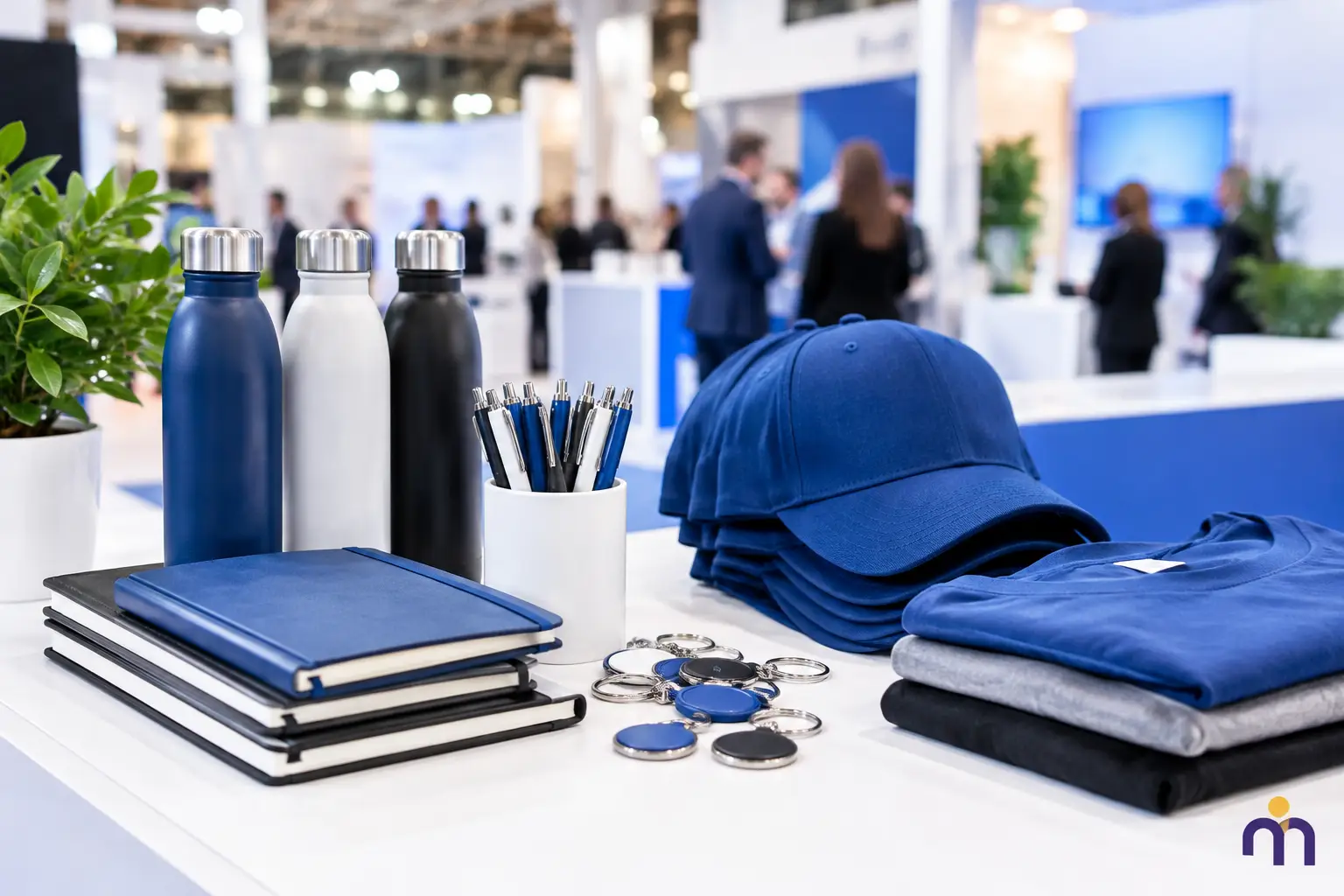
Best Promotional Products for Trade Shows
Choose the best promotional items for trade shows: useful, personalized giveaways tailored to your booth traffic, budget, and realistic timeline.