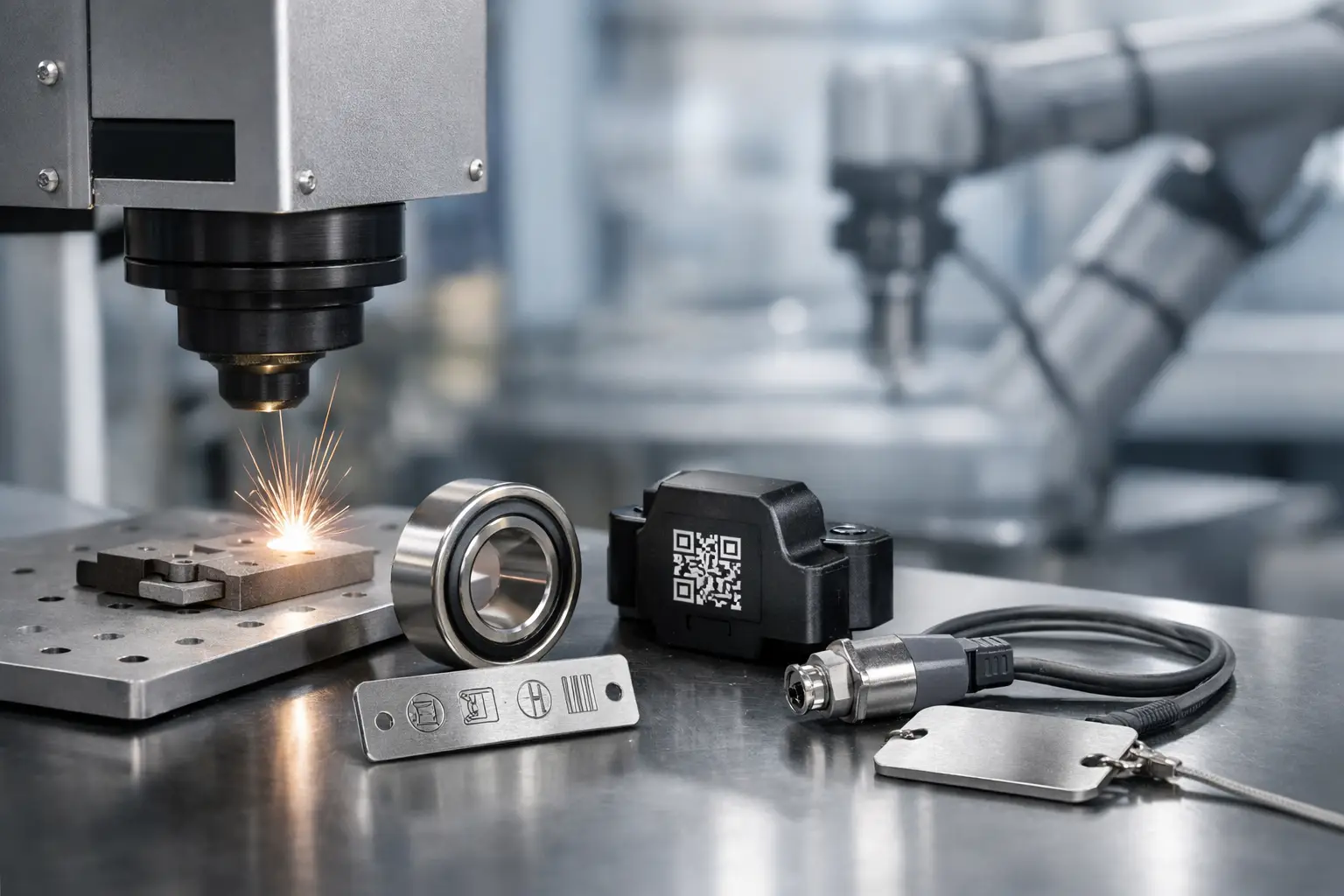
An erased serial number on a machine, an unmarked door, or an illegible plate in a workshop all create avoidable delays. Industrial marking turns essential information — equipment names, instructions, codes, logos, or safety indicators — into durable, visible identification suited to its environment. For a school, a municipality, a factory, a sports association, or a business, it is less a minor detail than a practical tool for better organizing spaces and protecting assets.
The right choice depends on more than just the text to display. The material, usage constraints, cleaning frequency, weather exposure, and reading distance all determine the appropriate solution. A temporary label may work for a short-term inventory. For equipment used daily or permanent signage, engraving and rigid plates generally offer a more reliable answer.
What is industrial marking used for?
Industrial marking covers all applications where information must remain associated with an object, a location, or a piece of equipment. It can identify a machine, an electrical panel, a control board, a workstation, a door, a storage area, or an asset belonging to the organization. It also supports inventory management, maintenance, and compliance with certain internal procedures.
In a shared environment, it provides immediate reference points. A school can distinguish its rooms, sports equipment, and directional signs. A municipal department can label rooms, facilities, or technical equipment. A business can affix capacity plates, asset identifiers, or instructions to specific surfaces.
It can also support branding. An engraved plate with a logo on a display stand, a desk, or a promotional product adds a consistent and professional finish. This aspect is particularly useful when an organization orders signage, corporate gifts, promotional apparel, and recognition items together.
Engraving, plates, or signage: choosing based on use
There is no single method that works for every request. An effective solution starts with the actual use of the product, not just its appearance.
Laser engraving for detail and permanence
Laser engraving is the right choice when names, numbers, logos, codes, or small characters need to be reproduced with precision. Depending on the material, it allows for clean marking on surfaces such as metal, plastic, glass, leather, or certain laminated materials. It is often chosen for identification plates, equipment labels, trophies, personalized gifts, and parts requiring a refined finish.
Its main advantage is precision. That said, results depend on the material and the desired contrast. On a dark surface, a light marking can be very legible. On polished metal or a transparent surface, character size, surface treatment, or fill colour may sometimes need to be adjusted to maintain comfortable readability.
CNC engraving for plates and technical materials
CNC engraving is particularly well-suited for rigid plaques, Lamicoid products, and durable signage needs. It cuts information directly into the material and, depending on the product, reveals a contrasting colour layer beneath. This approach is commonly used for door plates, equipment identifiers, button markers, control panels, and directional signage.
Lamicoid offers a practical advantage: it comes in a range of colours, holds up well under everyday use, and delivers clean readability. It is a solid fit for offices, schools, municipal buildings, sports facilities, and production spaces. That said, material selection should account for specific conditions — particularly if the plate will be exposed to sunlight, moisture, or heavy-duty cleaning products.
Screen Printing When Colour Serves a Functional Purpose
Screen printing is a useful option when a project calls for solid colour fills, repeated visuals, or a specific graphic identity. It can be relevant for panels, promotional items, apparel, and surfaces where colour is part of the information or the brand. A well-chosen colour improves visual hierarchy, but it does not replace a legible layout.
For instructions, pictograms, or signage meant to be read from a distance, contrast remains the top priority. A polished graphic identity becomes ineffective if the text is too small or if the colours blend into the background.
Criteria That Help Avoid Ordering Mistakes
Before requesting a quote or submitting a file, it helps to clarify what the marking needs to accomplish. This step reduces corrections, limits delays, and makes it easier to select the right process.
First, define the environment. A plate mounted in a meeting room has very different requirements than an identifier installed in a workshop, on a vehicle, or outdoors. Temperature, humidity, abrasion, UV exposure, cleaning methods, and handling are all details worth communicating from the start.
Next, readability should be considered in terms of viewing distance. On a small equipment plate, compact characters may be sufficient. For a door, a hallway, or a high-traffic area, text needs to be larger and more direct. A label like "Meeting Room" is often more effective than a lengthy administrative description. Pictograms can complement text when they are widely recognized by all users.
Finally, think about mounting. Adhesive backing, screws, mounting holes, standoffs, and grooves each address different constraints. The mounting method must be compatible with the installation surface and the expected level of permanence. A plate that will be replaced regularly is not installed the same way as one intended to stay in place for several years.
Preparing a Clear Industrial Marking Project
A solid production file does not need to be complicated. It simply needs to include the information that affects the outcome: quantity, dimensions, preferred material or intended use, exact text, logo, colours, mounting method, and deadline. For organizations, compiling these details into a single table is helpful — especially when multiple names, numbers, or locations are involved.
Proofreading deserves special attention. A date, a code, or an engraved name cannot be corrected as easily as a digital document. For plate series, it is best to validate a consistent structure: same font, same number format, same margins, and the same abbreviation rules. This consistency then makes additions and replacements easier.
Logo files should be provided in the highest quality possible. A vector graphic is ideal for maintaining sharp outlines, but a graphics team can also assist with the preparation or adaptation of a file. In a project combining plaques, panels, trophies, or medals, this graphic validation helps preserve a consistent visual identity across all materials.
Think about the lifecycle, not just the installation
The cost of labelling is not limited to its production. A solution that is economical to purchase can become costly if it needs to be replaced frequently, if it peels off, or if the information quickly becomes difficult to read. Conversely, an engraved plaque may be a better choice for durable equipment or a high-traffic location.
It is also important to plan for changes. In a building where offices change frequently, interchangeable holders may be more practical. For a machine, a technical room, or a commemorative plaque, permanence is generally the goal. The right balance therefore depends on the rate of updates just as much as on the expected durability.
At Mr Trophée, the combination of laser engraving, CNC engraving, signage, screen printing, and graphic design makes it possible to guide a project toward a medium that suits its intended use. The goal is not to multiply techniques, but to produce identification that is clean, long-lasting, and adapted to real-world conditions.
A well-designed plaque goes unnoticed because it immediately answers the essential question: what is it, who does it belong to, and what should you know before using it? It is this simplicity — achieved through a precise choice of material, process, and message — that gives labelling its full value.
You may also like

Industrial Equipment Identification Guide
Industrial Equipment Identification Guide: Choose plates, materials, and engraving to ensure safety, tracking, and long-lasting readability in the plant.
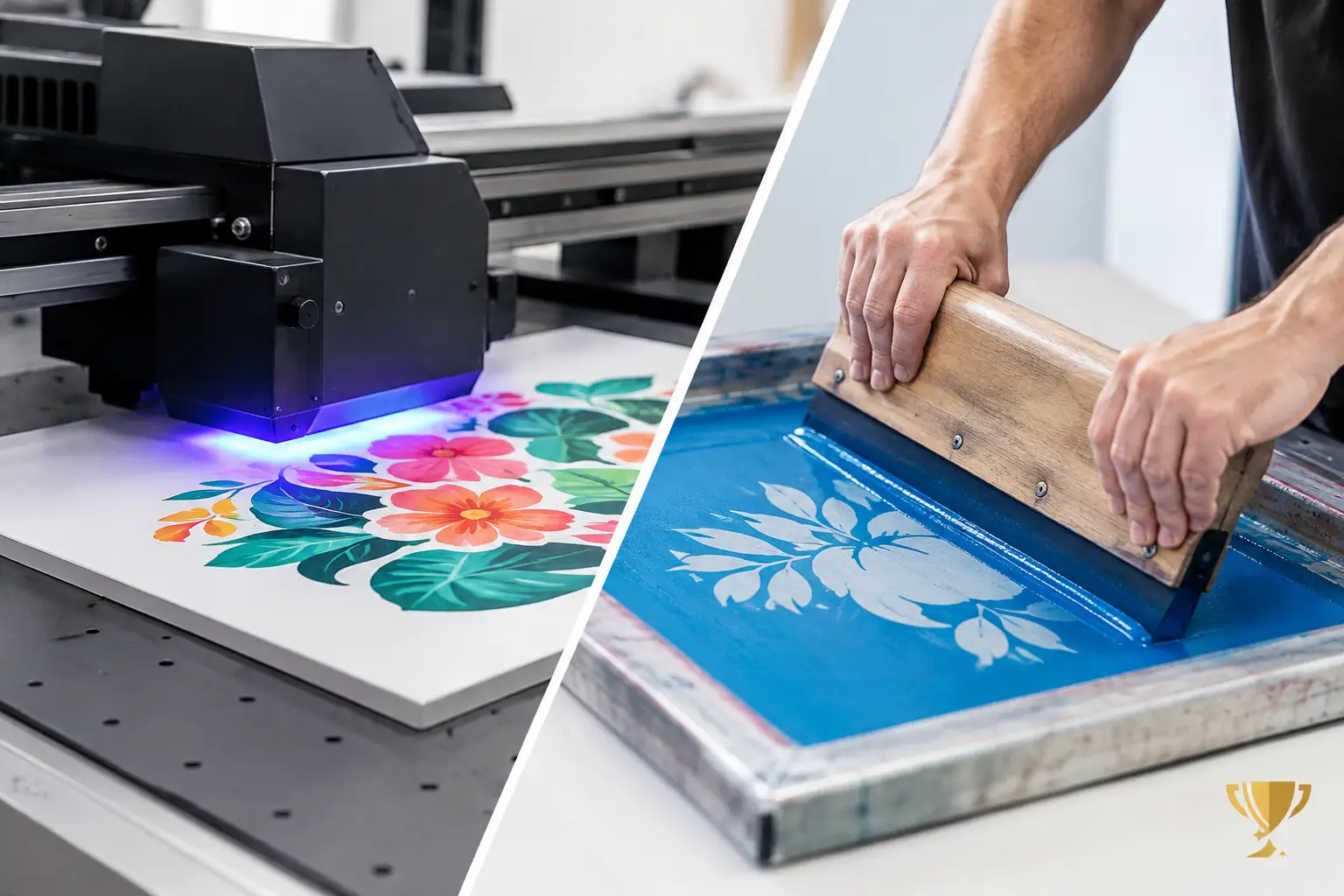
UV vs. Screen Printing: Which Marking Method Should You Choose?
UV vs. screen printing: compare precision, colours, durability and costs to choose the right marking method for your trophies, items and professional signage.
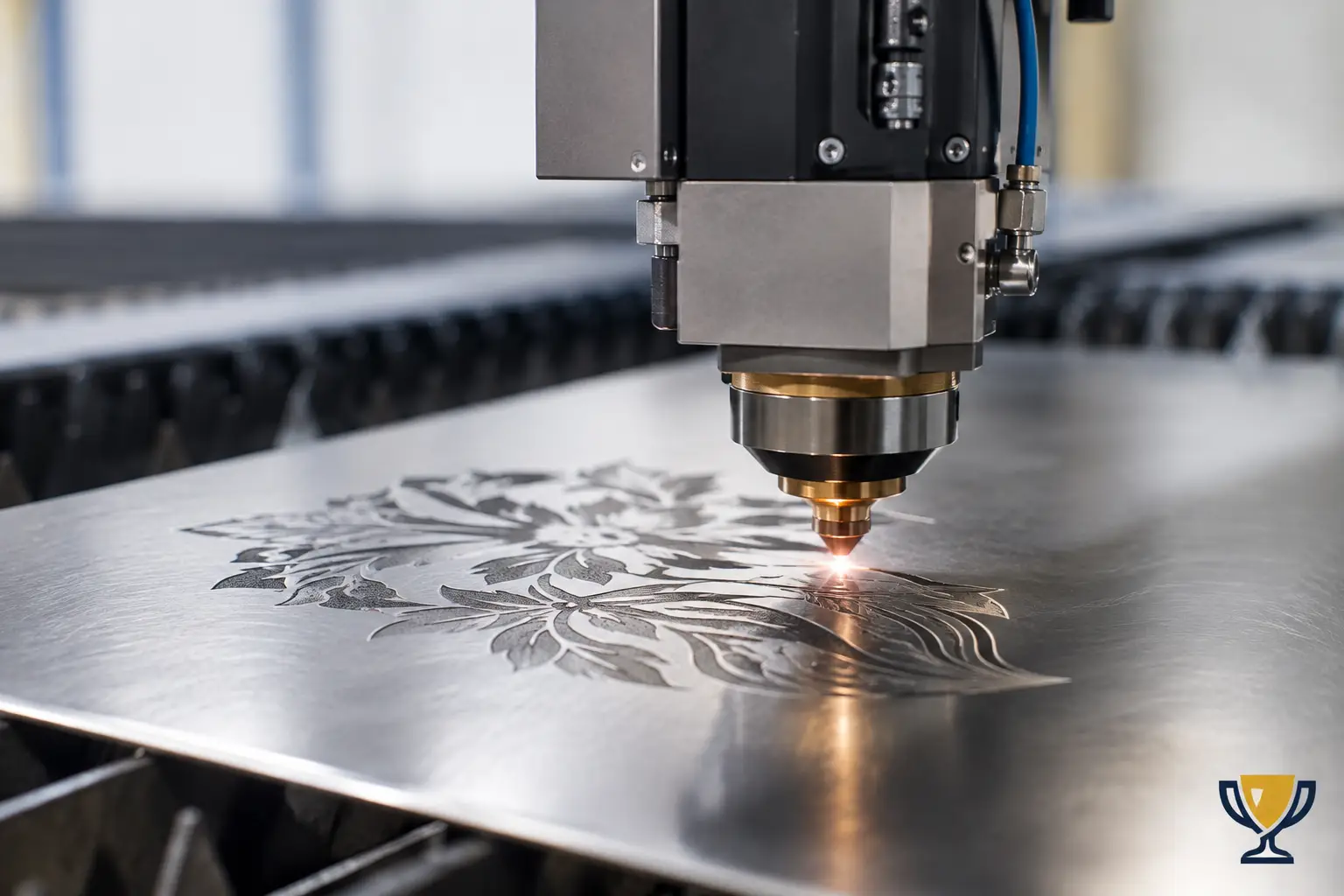
Which industrial engraving method is right for your needs?
Industrial engraving provides durable identification for your equipment, plaques, trophies and signs. Compare laser, CNC and the right materials for your projects.