Large-format event printing isn't just about blowing up a logo on a banner. At the entrance of a tournament, in an awards hall, or at a convention venue, it needs to guide visitors, give partners visibility, and support the organization's image from the very first seconds. The right display makes a professional impression. A visual that's too busy, poorly sized, or placed in the wrong spot quickly becomes invisible.
For an organizer, the right choice depends on the venue, the length of the event, the reading distance, and the other elements to coordinate: trophies, medals, recognition plaques, promotional apparel, directional signage, or table identification. Preparing your printing early enough allows these elements to be treated as a cohesive whole rather than a series of last-minute purchases.
Defining the role of each large-format event print
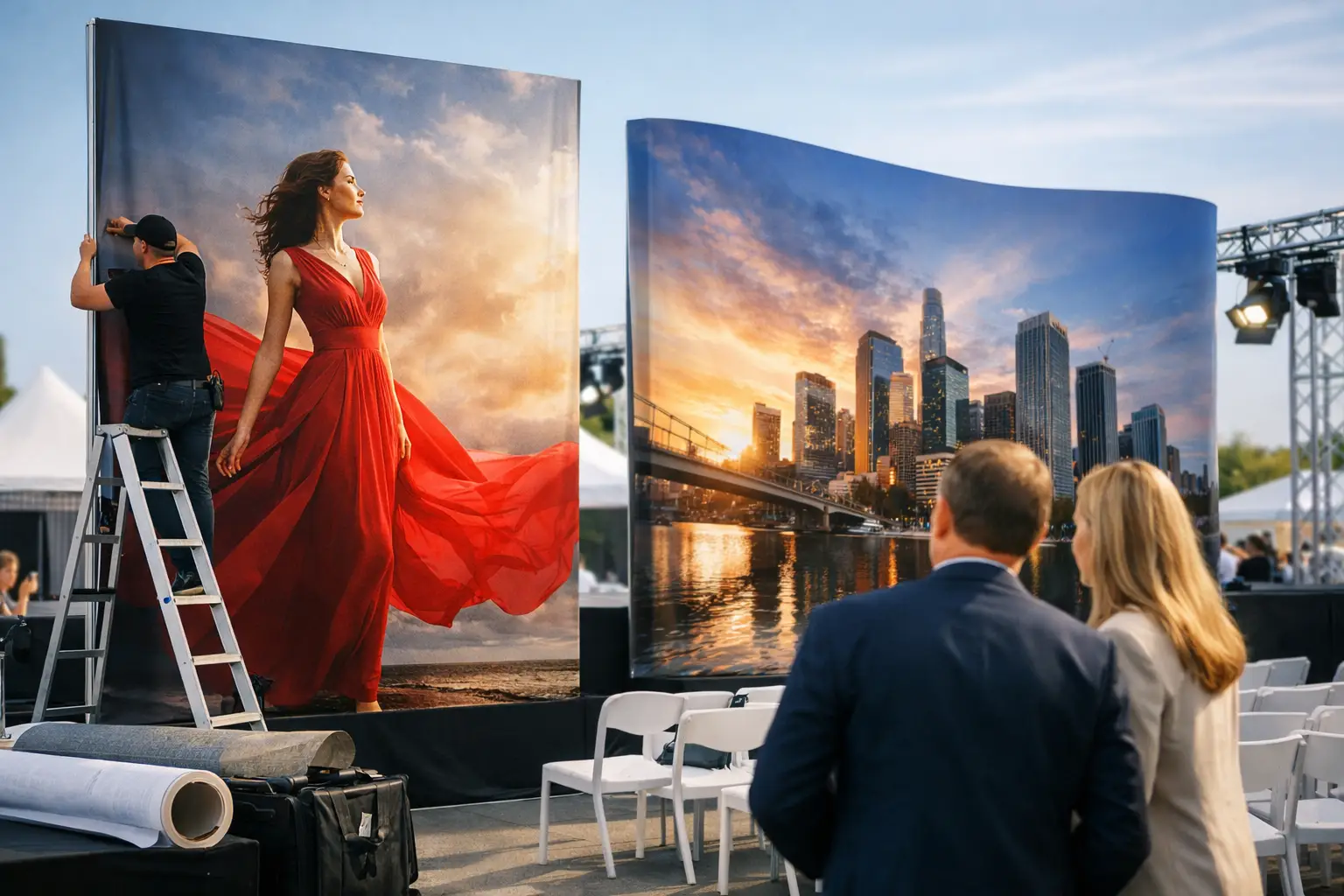
Before choosing a format or material, you need to determine what the display is meant to accomplish. A photo wall doesn't have the same requirements as a welcome banner. The former needs to showcase logos in photos and withstand repeated foot traffic. The latter needs to be read quickly, often from several metres away.
At a sporting event, prints can announce sponsors, identify registration areas, point to fields, and frame the podium. For a school, a municipality, or an association, they also serve to recognize volunteers, present guidelines, or distinguish ceremony spaces. In a corporate setting, they can accompany an awards presentation, a product launch, or a training day.
It's useful to divide your needs into four distinct functions: welcoming, wayfinding, promoting, and creating atmosphere. This distinction prevents you from expecting a single banner to display the schedule, directions, rules, and the full list of partners all at once. One message per display is generally more effective.
Welcome and identification
At the entrance, the event name, date, and visual identity must be immediately recognizable. A vertical banner, a rigid panel, or a sign installed near the access point can fill this role. If the venue is hosting multiple activities, add a simple indication such as "registration," "team check-in," or "medal presentation."
Wayfinding and practical information
Directional signage is often more useful than large-scale décor. Arrows, room numbers, schedules, parking areas, and reserved access points should be placed at the moment a visitor needs to make a decision, not only at the entrance. For these uses, contrast and legibility take priority over graphic effects.
Partner and brand visibility
Sponsor logos require careful management. They must be provided at sufficient resolution, respect brand colours, and be given placement proportional to the partnership agreement. A background that's too busy or logos of uneven sizes quickly give an improvised impression. A photo wall or a dedicated banner allows them to be showcased without cluttering informational displays.
Choosing the display based on venue and duration
The term large format covers several materials. The choice shouldn't be based on price alone, as the environment completely changes what's needed for production.
Indoors, a retractable banner is practical for a booth, a conference or a ceremony held in a hall. It's easy to transport, quick to set up and can be reused if the dates and information remain general. A rigid panel is better suited to a welcome area, a sponsorship table or signage that needs to stand perfectly upright.
Outdoors, resistance to wind, moisture and handling becomes a priority. A tarp with grommets can be secured to a fence or structure, provided the attachment points are planned for. A micro-perforated material can reduce wind load in certain locations, but it slightly affects the visual result. You therefore need to weigh image quality against installation conditions.
For a one-day event, a temporary support may be sufficient. For a sports league, an annual festival or a series of activities, it's better to plan for a reusable product, a carrying case and a graphic version without dates. Variable elements, such as the schedule or the list of finalists, can then be printed separately.
Preparing a file that prints correctly
A large visual reveals flaws that aren't always visible on screen. An image pulled from a website or sent through a messaging app is rarely suited to large-format printing. It can become blurry, pixelated or imprecise once enlarged.
The ideal file is designed at the final size or at a clearly indicated scale. Logos are preferably provided in vector format, which allows them to be enlarged without any loss of sharpness. For photos, the useful resolution depends on the format and the viewing distance: an image intended for a backdrop seen from several metres away doesn't require the same density as a poster viewed up close.
Plan for safety margins as well. Text placed too close to the edge risks being obstructed by a grommet, a seam, a hem or a mounting system. Essential elements must remain within a protected inner zone. If the visual includes a background that needs to extend to the edges of the support, a bleed must be included in the file.
Colour management deserves the same attention. Colours displayed on a screen don't always reproduce identically on a printed material. When a corporate colour is critical, a validation with the supplier or a sample can prevent surprises. This step is particularly relevant for organizations that must adhere to an established visual identity.
Designing to be read, not just seen
The most common mistake is scaling down an information page to fit a large banner. The result contains a lot of text, but no one reads it. A large-format event print must first be understood in motion and from a distance.
Limit the main information to a title, a visual landmark and, if needed, a short instruction. Fine characters, decorative fonts and low contrast lose their effectiveness in a gymnasium, an arena, a bright lobby or an outdoor venue. Sufficiently large letters, a simple font and strong contrast remain the most reliable choices.
Think about the actual flow of visitors as well. A tall poster can be hidden by a lineup. A floor banner can be blocked by furniture. A photo wall placed facing a window can produce images that are difficult to use. A quick walk-through of the venue, even with a few photos taken on a phone, helps you choose the size and placement with greater precision.
Coordinating signage with the other elements of the event
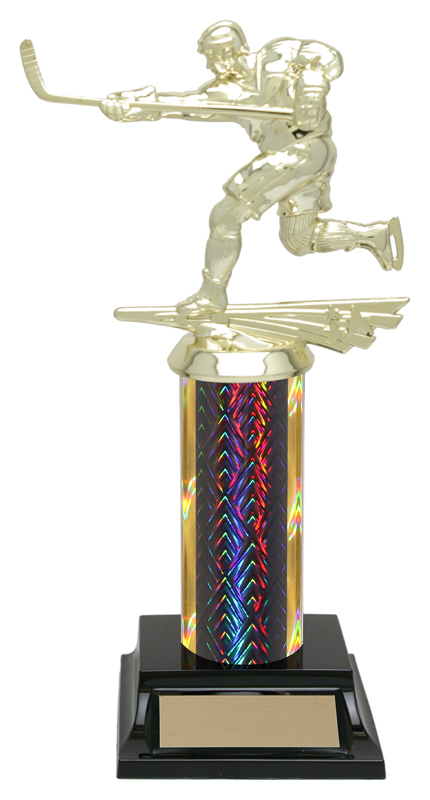
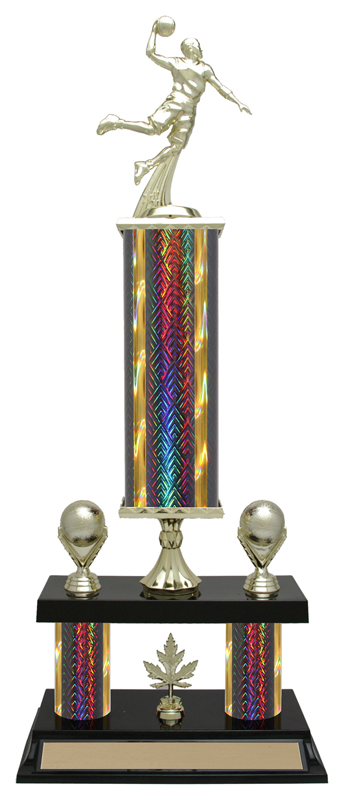
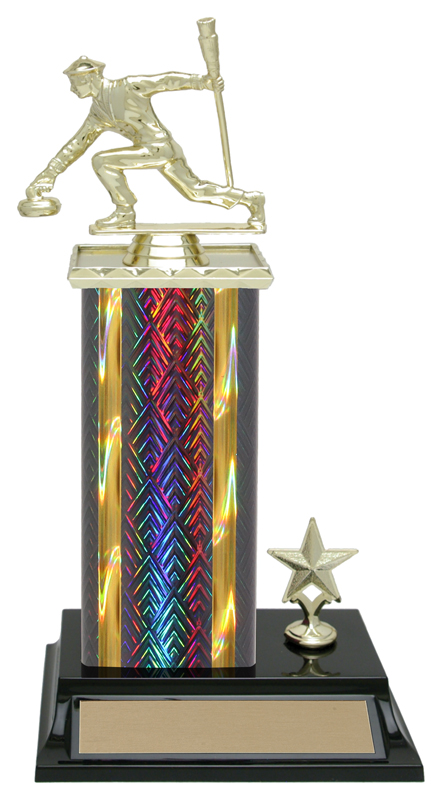
Large-format printing is more effective when it reflects the same visual identity as the rest of the event. The colour of the banners can echo the medals, custom trophies, plaques presented to volunteers or the branded apparel worn by the welcoming team. This consistency is particularly valuable for ceremonies where photos will be kept and shared.
It is not necessary to print the same thing everywhere. The logo, colours and typography can remain consistent while each item fulfils its own purpose. A banner introduces the event, a table sign identifies the categories, panels guide participants, and awards recognize achievements. The result looks organized without being repetitive.
A supplier who can handle printing, signage, graphic design and recognition products can simplify the planning process. At Mr. Trophy, this continuity makes it possible to align files intended for trophies, medals, plaques, signage and promotional apparel, while taking into account the production requirements specific to each item.
Planning the production and installation timeline
Most problems do not come from the printing itself, but from information received too late. Partner logos, winners' names, dates, graphic approvals and venue dimensions should all be confirmed before production begins. A last-minute correction can mean a new file, a new round of approval or reprinting an entire piece.
To reduce this risk, set a visual freeze date ahead of the event. Allow time for file verification, production, delivery and installation. If certain details remain variable, consider an interchangeable element rather than delaying the entire order.
On the day of the event, have the right installation materials on hand: fasteners, bases, weights, tape suited to the floor or walls, and a person responsible for setup. A quality display loses its value if it is creased, poorly tensioned or placed in a low-visibility area.
Good large-format printing does not try to say everything. It provides the right landmark, in the right place, at the right time, then lets participants enjoy the event and the people it celebrates.
You may also like
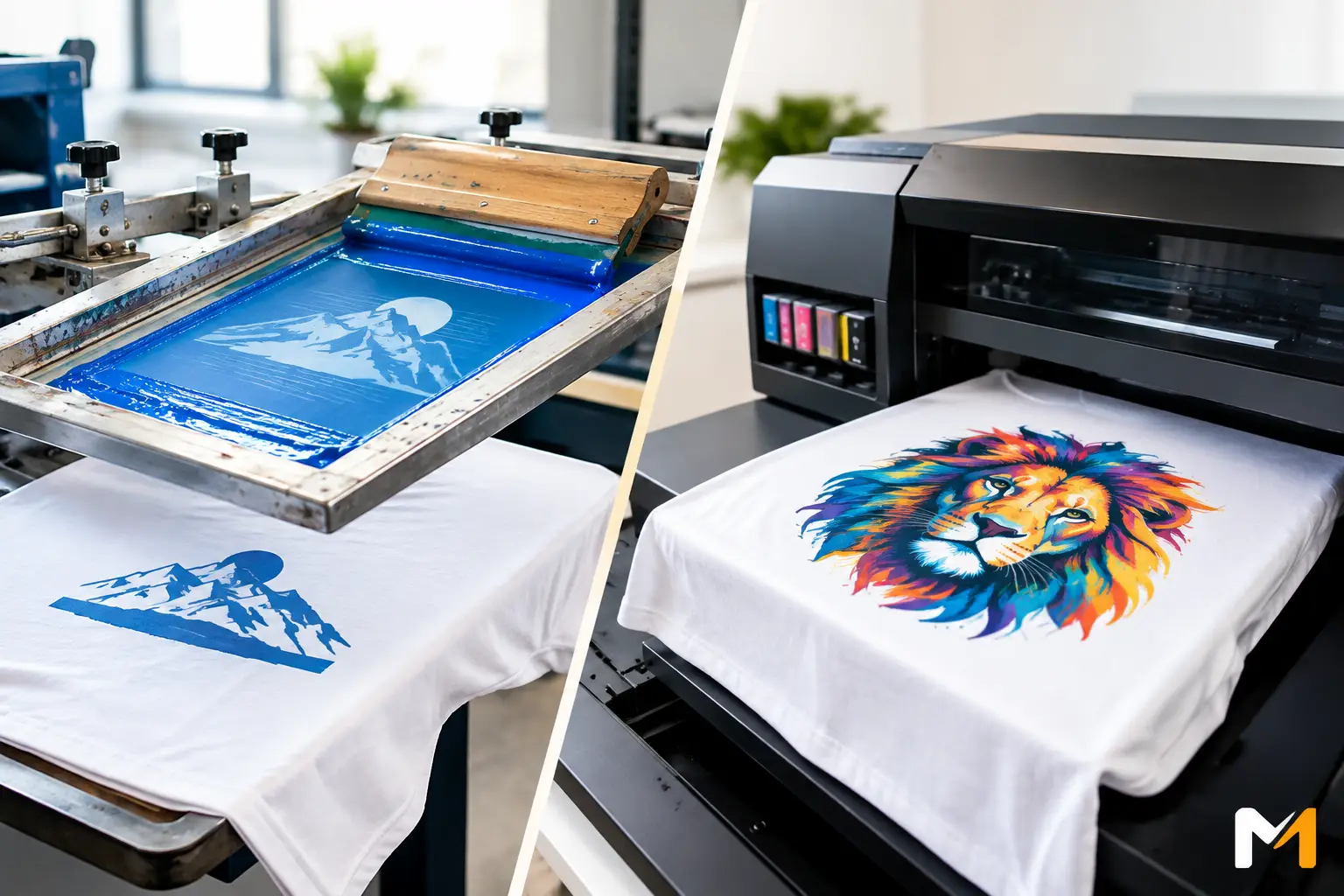
Screen Printing vs. Digital Printing: Which One Should You Choose?
Screen printing vs. digital printing: choose the right technique for your apparel, signs and promotional items for a durable, precise result.
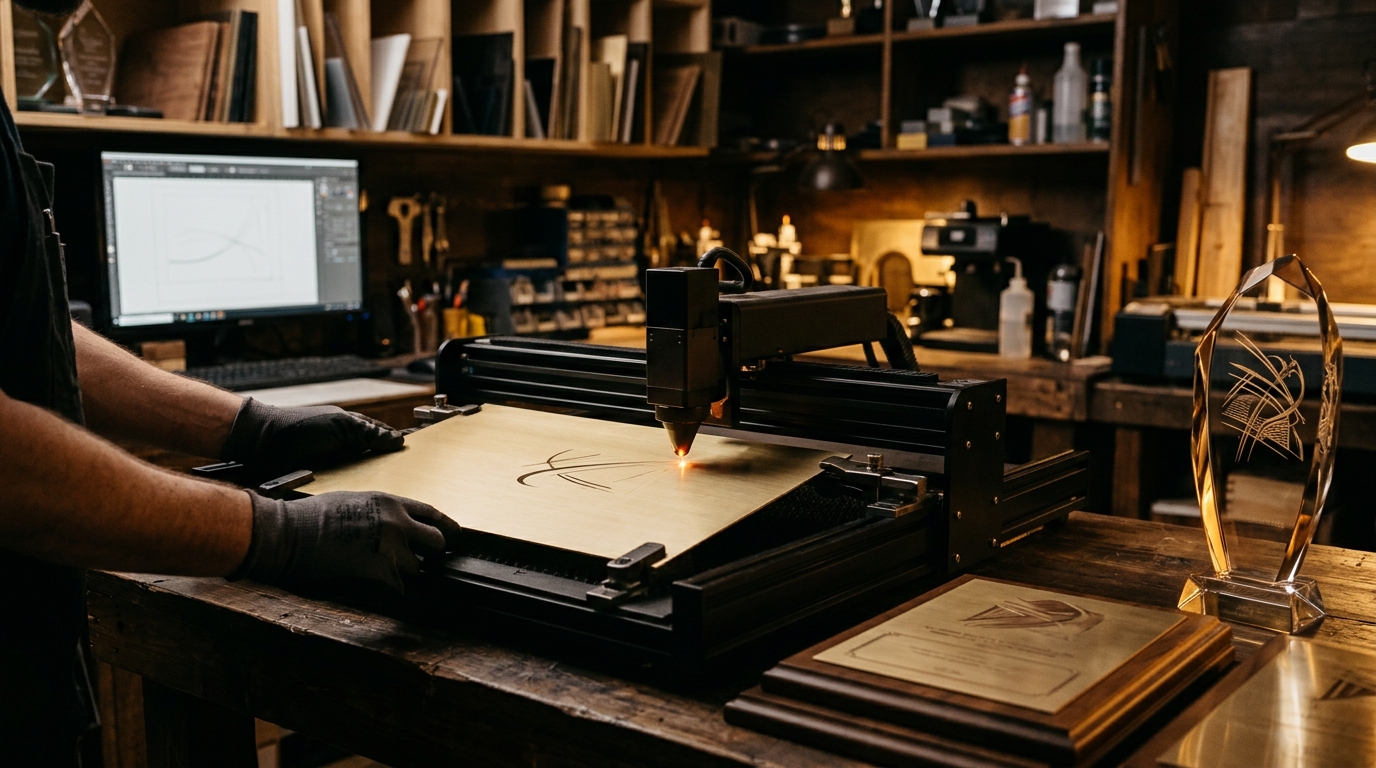
Preparing Your Logo for Laser Engraving and Printing: File Formats and Best Practices
A good file is half of a great trophy. Here are the formats, resolutions and tips to know so your logo looks sharp on your plaques, trophies and medals.

How to Choose the Right Custom Keychains for Your Association
Custom keychains for associations, durable and well-crafted, to thank volunteers, identify your members, and support your activities.