
A recognition program can stall for months when it has no anchor. An employee recognition day solves that problem by forcing three decisions: a date, a budget, and a finished list of names. Once those are fixed, the rest of the plan has something to organize around.
This guide is an operational walkthrough for intermediate planners who want a single-day ceremony built around physical awards, not digital badges. You will learn how to lock the date, budget, and name list before anything else; choose an award mix for a one-day event; work backward from the ceremony for engraving and production lead time; and build a presentation flow that lands. We will also cover employee recognition day ideas that fit your budget and team size, where Employee Appreciation Day 2026 fits in your calendar, common failure points, and how to make the one-day format repeatable next year. The goal is a ceremony that feels deliberate, finishes on time, and gives people something lasting to hold.
Lock the Date, the Budget and the Name List Before Anything Else
An open-ended "we'll do something this quarter" rarely survives contact with a busy calendar. A fixed date does the work for you: it forces a deadline for the budget approval, the award order and the final name list, and that deadline is what stops a recognition program from drifting.
Date selection is a production decision, not just an HR one. Start at the ceremony and count backwards:
Ceremony date
Name-list freeze
Artwork proof approval
Engraving and production
Delivery or pickup
Confirm each milestone is realistic before you announce the date. An announced date you cannot meet is worse than no date at all.
Then set one budget line covering awards, engraving, presentation materials and pickup or delivery. A single approved number removes the piecemeal sign-offs that stall an order in the final week.
Close the name list early and in writing: full name, exact spelling, job title, recognition category and award format per person. Freeze it at the cut-off, with one named person authorized to approve exceptions.
Finally, assign one owner and one backup. Three decision makers and no owner is how awards get ordered twice, ordered wrong, or not ordered at all.
Lock these three things and the award mix, the lead time and the run of show all have something solid to hang on.
Choosing the Award Mix for a One-Day Ceremony
With the date fixed and the name list closed, the next decision is what each person actually receives. Start from categories, not objects. Years of service, above-and-beyond performance, team achievement, leadership, and retirement or departure each carry different weight, and the award should reflect that difference.
Match the physical format to the category:
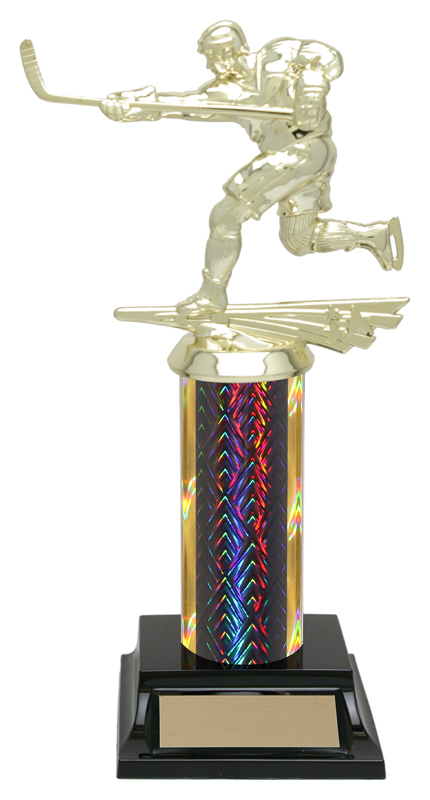
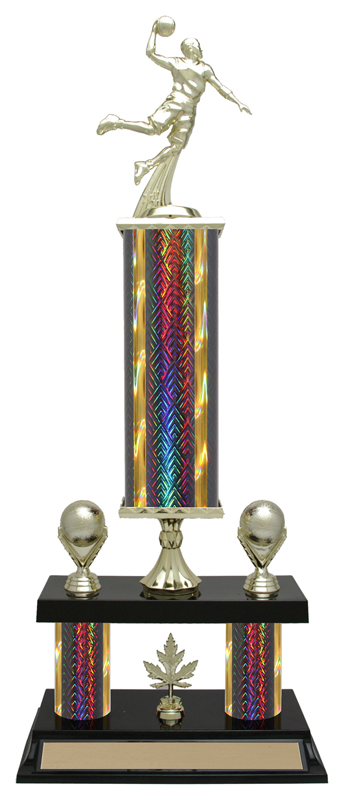
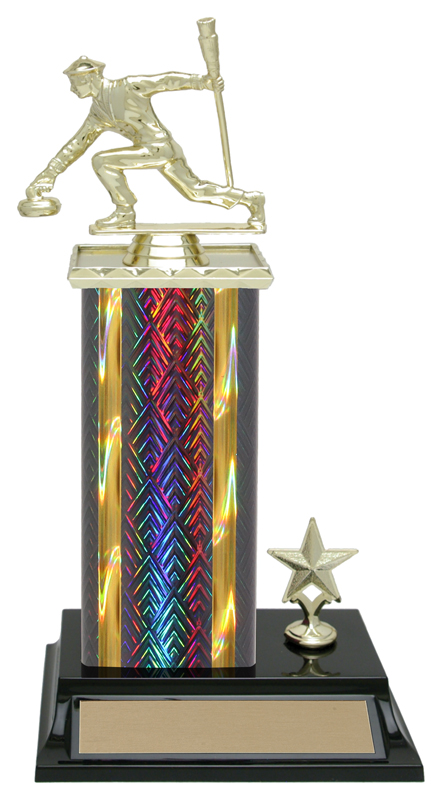
Trophies and honorary awards for headline recognition, leadership and above-and-beyond moments.
Plaques for service milestones, where years and dates need to be read clearly.
Medals for team or peer-voted categories, easy to wear and photograph.
Engraving for items people already own or use daily.
Mr Trophée produces personalized trophies, medals, plaques, engravings and honorary awards at its workshop in Léry, Quebec, using laser engraving and colour printing, so a mixed-format order stays with one supplier and one consistent look. Learn more about the workshop if you need bilingual engraving text for a team, municipality or organization working in both French and English.
Keep the visual family consistent across tiers: same material, finish and typography, so a lower-tier award never reads as a mistake beside a top award. Then order a small buffer of generic or unengraved units. Surprise names surface in the final week almost every year, and a reserve unit protects the ceremony without reopening the whole order.
That mix becomes the basis for the reverse timeline, since each format carries its own production and engraving time.
Working Backwards from the Ceremony: Engraving and Production Lead Time
Once the award mix is set, the ceremony date stops being a date and starts being a deadline. Build the plan backwards from it, giving every milestone its own entry on the internal calendar:
Ceremony day.
Delivery or pickup, with a buffer for the venue.
Engraving and production start.
Artwork proof approval.
Name-list freeze.
The freeze is the hard gate. Every change after that point risks a re-cut, a mismatched plate, or an award that arrives after the event it was made for.
Confirm the production window with your supplier at quote stage, and record it as a fixed date rather than a range. Ask specifically how long engraving adds to the order, and get the answer in writing. Mr Trophée produces personalized trophies, medals, plaques and engravings from its Léry, Quebec workshop using laser engraving and colour printing, so one quote can cover a mixed order.
Then proof everything in writing, every name, exact spelling, title and category, before engraving starts. A misspelled name on a plaque cannot be quietly corrected, and re-cutting costs money plus the week you do not have. Reviewing past recognition projects helps you spot formats that hold up under close reading.
Finally, plan for exactly one late addition. Keep one unengraved unit or a fast-turnaround option in reserve rather than reopening the entire order for a single name.
Building the Presentation Flow: A Run of Show That Lands
With the production window locked, the final planning task is the ceremony itself.
Choose the shape first. A single stage with one presenter, table-by-table handouts, or a display table with a short program. The shape dictates how awards are grouped and in what order they appear, so decide it before drafting a script.
Group awards by category, not alphabetically. Service milestones, above-and-beyond performance, team achievement, leadership, and retirement each carry different weight. Grouping by tier lets the room understand what each award means and lets the ceremony build instead of ramble.
Write 20 to 30 second callouts per recipient: name, one specific contribution, the award. Specific beats long, and it keeps a 40-person ceremony under an hour.
Sequence the program deliberately. Welcome and framing, awards by category, one short speaker, closing photo moment. Place the highest-weight award last so the room leaves on the strongest note.
Assign every role in advance. Who calls names, who hands over the award, who photographs, and who looks after the recipient who is not in the room. Rehearse the handoff so the award moves from table to stage to recipient to photo without blocking the next name.
A run of show that finishes on time is what makes the day feel deliberate rather than improvised.
Employee Recognition Day Ideas That Fit Your Budget and Team Size
Your run of show scales with the room. Match the format to team size rather than ambition.
Under 25 employees. One ceremony, one award format. Engraved awards handed out individually, a group photo, and a shared meal. Simple formats executed well beat complicated ones executed loosely.
25 to 100. Use a tiered award mix with named categories and a short program. Lay the awards out on a display table before the ceremony so people can see what is being given.
Multi-site or shift-based operations. Run the same ceremony twice on the same day, or ship engraved awards to each site with a printed script and a designated presenter. The moment should be identical everywhere.
Municipalities and public organizations. Pair the ceremony with a council-facing or public moment, and choose plaques or honorary awards that can be displayed in a lobby or meeting room long after the day.
Low-budget version. Fewer, better awards. One engraved plaque for a team plus individual medals for the rest often reads as more deliberate than 40 identical trinkets nobody keeps. A large-scale study links recognition to significantly higher employee engagement, so the quality of the gesture matters more than the volume.
Set the format first, then give it a date. The next section covers choosing that date, including where employee appreciation day 2026 fits in your calendar.
Where Employee Appreciation Day 2026 Fits in Your Calendar
Whatever format you chose above has to land on a date, and the date is where most programs come apart.
Confirm the Date Before You Commit
If you plan to anchor to a national appreciation day, verify the exact date and the sponsoring organization on the sponsor's own site before you print invitations or book a room. These observances shift year to year and are listed inconsistently across third-party calendars. Some are sector-specific as well: Public Service Recognition Week is celebrated during the first week of May and honours government employees, so it fits municipalities and public organizations rather than a general corporate audience.
Anchoring to an external date has one real advantage: nobody has to negotiate it internally. The date already exists, so the budget conversation starts from a deadline rather than a preference.
If the National Date Does Not Fit
Pick your own date and declare it fixed for the next three years. The mechanism that makes this work is the fixed date, not the specific date.
Then publish it internally at least one quarter ahead so managers can plan shifts, travel and coverage. Avoid stacking recognition day against quarter close, a major deadline or your peak service period. A ceremony that competes with work gets skipped, and a skipped ceremony is a program that drifts again.
Failure Points That Sink a One-Day Awards Event
Wherever the date comes from, five failure points tend to sink a single-day awards event. All five are preventable, and all five get more expensive to fix the closer you get to the ceremony.
Names changed after the freeze. Late edits are the most common reason an award arrives wrong, late, or with a misspelling engraved into it permanently. Once the list is closed, only one named person should authorize exceptions, and every exception should be logged.
Award tiers that do not match the recognition. A 20-year service award that looks smaller than a peer-voted medal tells the room the milestone mattered less. Compare scale, material, and finish across tiers before approving the order.
Ordering too late. Production and engraving take time. A rushed order removes the proofing step, and proofing is your last chance to catch a wrong title or a duplicated name before the work begins.
No owner for the run of show. The awards arrive, the room is booked, and nobody knows who calls names or hands over the award. One owner plus a backup, with roles confirmed in writing, closes that gap.
Forgetting the people who are not in the room. Remote staff, night shifts, and anyone on leave belong on the list. Present their award on another day or arrange delivery, but do not drop them quietly.
Prevent these five and the ceremony holds together. Making it repeatable is the next step.
Make the One-Day Format Repeatable Next Year
The failure points are behind you. What turns this year's event into an annual fixture is the documentation nobody wants to write. Do it anyway.
Write down what you actually did: the date, the budget line, the award mix by category, the supplier, the production window, and the run of show. Next year's plan is this year's document with new names. Book the same date for next year before the room clears, because a recurring date removes the annual debate about whether and when to hold recognition at all.
Keep the award mix and the visual family stable. Change only the categories and the names. Consistency is what makes the awards recognizable as yours, so a returning recipient knows exactly what a service plaque or a peer-voted medal represents.
Reuse the reverse timeline as a template: name-list freeze, proof approval, engraving and production, delivery or pickup, ceremony. Fill in the dates and most of the planning is done.
For awards, engraving and honorary pieces, Mr Trophée in Léry, Quebec produces trophies, medals, plaques and engravings using laser engraving and colour printing, with bilingual service and a best-price guarantee. Browse their full range of recognition products or call 514-565-6665 to lock in next year's order before the calendar fills.
Conclusion
A recognition day lands when the date, budget, and name list are locked first, the award mix fits a one-day ceremony, and the reverse timeline protects engraving and production. The run of show should feel intentional, and the five failure points should be prevented before they start. Then document everything: date, budget line, award mix, supplier, production window, and run of show. That document is next year's plan. Your next step is simple: write the recap and book the same date before the room clears. For awards, engraving, and honorary pieces, Mr Trophée in Léry, Quebec offers trophies, medals, plaques, and engravings with laser engraving and colour printing, bilingual service, and a best-price guarantee. Browse their range or call 514-565-6665 to lock in next year's order. Make recognition a fixture, not a one-off.
You may also like

Employee of the Year Awards: How to Create Recognition That Truly Means Something
A well-designed Employee of the Year award motivates the whole team, while a poorly planned one can create awkwardness. Here is how to choose the criteria, format and engraving for fair, lasting recognition.

Appreciation Gifts for Clients and Partners: When Recognition Goes Beyond the Employee
Partners, volunteers and clients deserve to be recognized too. Tax thresholds, gift cards and internal policies: the practical guide.

Why Employee Recognition Awards Get Abandoned After Year One
Employee recognition awards fail when they are consumable. Learn why durable, personalised awards keep recognition visible and how to fix your program.