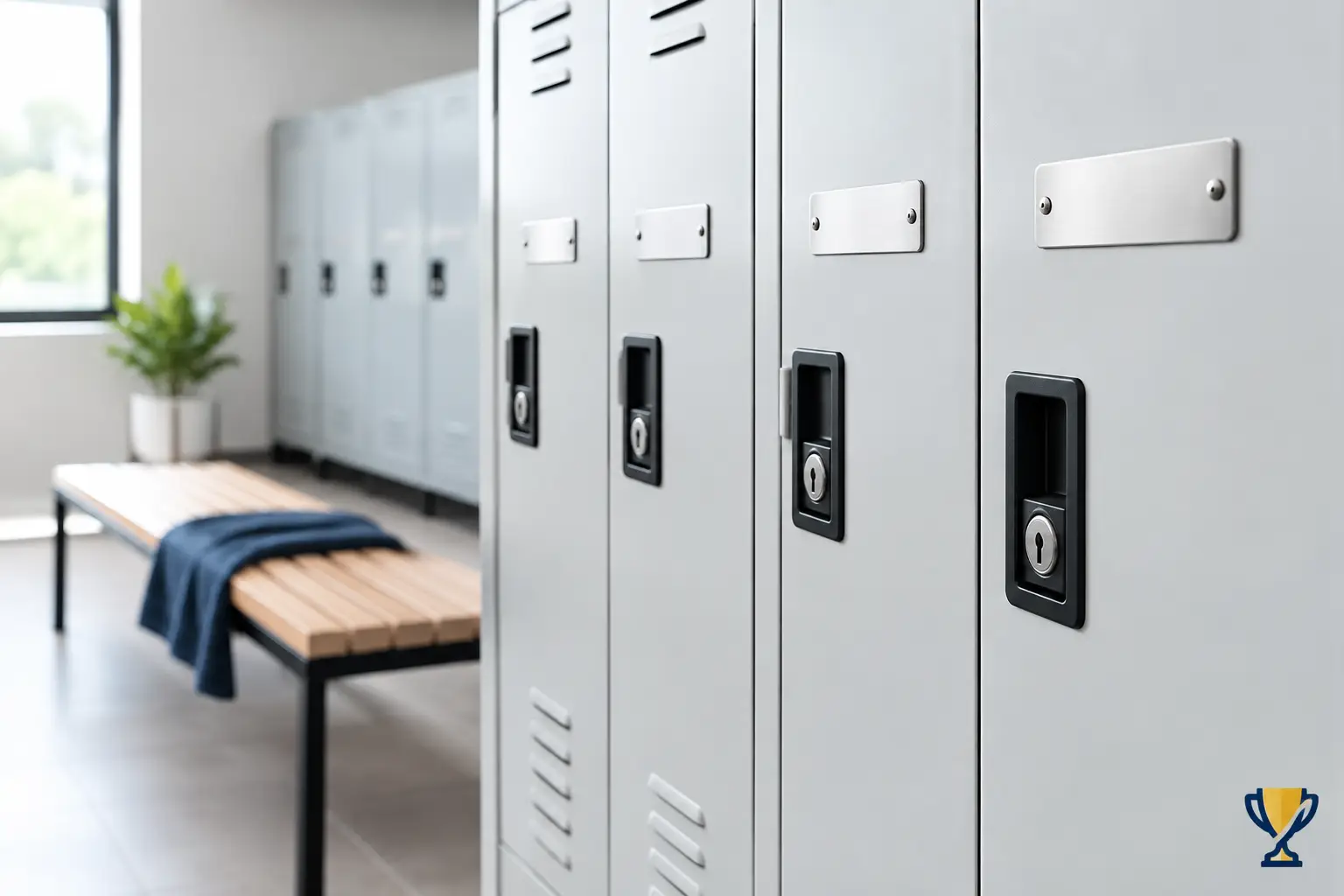
A clearly identified locker room prevents mistakenly assigned lockers, speeds up arrivals before practice, and gives facilities an orderly appearance. This locker room plate guide helps schools, sports teams, businesses, and municipalities choose plates tailored to their actual use, their environment, and their identification system.
A locker room plate isn’t just a label. It must stay legible after hundreds of door openings, withstand cleaning, and blend in seamlessly with existing lockers and furniture. Depending on the project, it can display a locker number, a name, a role, an organization’s logo, or a combination of these details.
Locker Room Plate Guide: Defining Your Needs
Before choosing a material or an engraving process, you need to determine whether the identification is permanent or needs to change regularly. A sports centre that assigns the same lockers to its staff year-round does not have the same needs as a school where students switch locker rooms every term. This distinction influences both the format and the mounting method.
The type of user matters too. In a team locker room, a simple number may be enough if an assignment list is posted nearby. In a staff room or corporate changeroom, a nameplate adds a professional touch and makes organization easier. For shared facilities, permanently engraved numbers are often the easiest option to manage.
Number, Name, or Full Identification
A numbered plate is ideal for lockers assigned through an internal registry, school locker rooms, and high-turnover facilities. It is quick to spot and reduces the risk of mix-ups during assignment. Number sequences should be planned carefully, especially when lockers are spread across multiple rooms, sections, or floors.
Nameplates are useful for offices, plants, municipal services, private clubs, and teams with assigned spots. They can include the first and last name, job title, or department. When assignments change frequently, it is best to opt for an interchangeable solution rather than remaking every plate with each reorganization.
Full identification can combine the locker number, zone name, and a pictogram. This approach is particularly practical in sports complexes, schools, and community centres where multiple groups use the building. It reduces on-site inquiries and improves wayfinding without cluttering the space with extra signs.
Choosing the Right Material for Locker Room Plates
The material must match the intensity of use and the room's specific conditions. A dry corporate changeroom allows for more options than a room adjacent to a pool, an arena, or showers. Humidity, cleaning products, temperature fluctuations, and impacts must all be taken into account from the start.
Lamicoid and engravable plastics are common solutions for locker plates. Available in several colour combinations, they provide sharp contrast once the surface layer is engraved. They are well suited for numbers, names, and directional plates, while allowing you to match the colours of a school, team, or business.
Anodized aluminum is popular for its clean, understated look and its durability in high-traffic areas. It pairs easily with metal lockers and can provide a more institutional or corporate finish. Stainless steel is an option worth considering when a project demands a higher-end look or increased resistance in demanding environments. While its cost is generally higher, it can easily be justified for permanent installations.
Acrylic can also be ideal for projects where visual appeal is a top priority, such as in a club locker room, a fitness centre, or an employee lounge. However, thickness, finish, and mounting hardware should be chosen carefully to ensure the edges and surface maintain their sleek appearance over time.
Engraving, printing, or applied colour
Laser or CNC engraving creates a durable mark directly into the plate. For daily-use locker numbers and names, this method ensures consistent legibility without relying on a sticker that could peel off. Choosing between laser and CNC depends, among other factors, on the material, the desired look, and the volume of plates to produce.
Screen printing can be a great option for integrating a logo, a specific colour, or more complex artwork. In some projects, an engraved plate is paired with printing to combine the durability of identification with the impact of branding. The right process therefore depends on the level of detail, the colours, and the intended use.
Designing plates that are readable at a glance
In a locker room, people glance at plates quickly, often while carrying a gear bag or navigating a busy hallway. A font that is too thin, insufficient contrast, or an undersized format makes finding a locker unnecessarily difficult. The number should remain the most prominent element when the primary goal is finding a locker.
Consistency is also key. All plates in a given area should use the same format, font, placement, and numbering system. A sequence running from 1 to 50 may seem simple, but a project with Sections A, B, and C, separate locker rooms, and accessible lockers may require a more detailed naming system.
For bilingual organizations, generic terms can be displayed in both French and English when it benefits visitors and staff. There is no need to overcrowd each plate. In many cases, terms such as “Personnel / Staff” or “Équipement / Equipment” are plenty, while names and numbers remain universal.
Privacy must also be taken into account. A plate displaying the full name of a child, employee, or member is not always desirable in a public space. Initials, numbers, or interchangeable plates offer more discreet alternatives.
Mounting and placement: Details that last
Even the best material won't deliver the expected result if the plate isn't properly mounted. Screws provide a reliable hold on many door types and make individual replacements easy when needed. They are particularly well suited for metal lockers, change room benches, and permanent installations.
Industrial adhesive can work well on smooth, clean surfaces, especially for small, lightweight plates. It speeds up installation and avoids drilling into certain furniture, but surface preparation is critical. Dust, moisture, or cleaning products can reduce adhesion over time. In high-humidity areas or spots subject to impacts, mechanical fastening is often the safer choice.
Placement should be consistent from one locker to the next. Centring the plate on the door or placing it in the upper right-hand corner makes it easier to visually scan an entire row. Before full production, a sample plate helps confirm the size, mounting height, and visibility from a distance.
Preparing a plaque order without slowing down your project
A well-prepared order ensures plates are produced accurately and minimizes revisions before installation. To get a clear quote, gather the following details:
- the total number of plates and exact numbering sequence, including any duplicates or reserved ranges;
- the desired dimensions and a photo of the existing lockers or furniture;
- the material, colour, engraving style, and graphic elements to include;
- the intended mounting method, such as screws, pre-drilled holes, or adhesive;
- the installation date or facility opening date.
A thoroughly checked data file is especially helpful for personalized name runs. Accents, apostrophes, hyphens, and numbers should all be confirmed before production begins. For a school or sports organization, it is wise to plan for a few blank plates or extra numbers to handle last-minute changes.
Matching production to your project
A supplier capable of handling engraving, graphic design, and signage can simplify projects that go beyond simple locker plates. The same colours, fonts, and logos can be carried over to change room plaques, room signage, equipment tags, medals, or promotional items for an event. This consistency is valuable for schools, municipalities, and associations managing multiple facilities or programs.
At Mr Trophée, laser engraving, CNC engraving, screen printing, and working with Lamicoid products allow us to adapt production to the material and the desired level of customization. Whether for a small personalized batch or a complete installation, the most effective choice begins with a clear plan of the lockers, text, and conditions of use. A well-designed plaque blends seamlessly into daily life, because everyone immediately finds their place.
You may also like
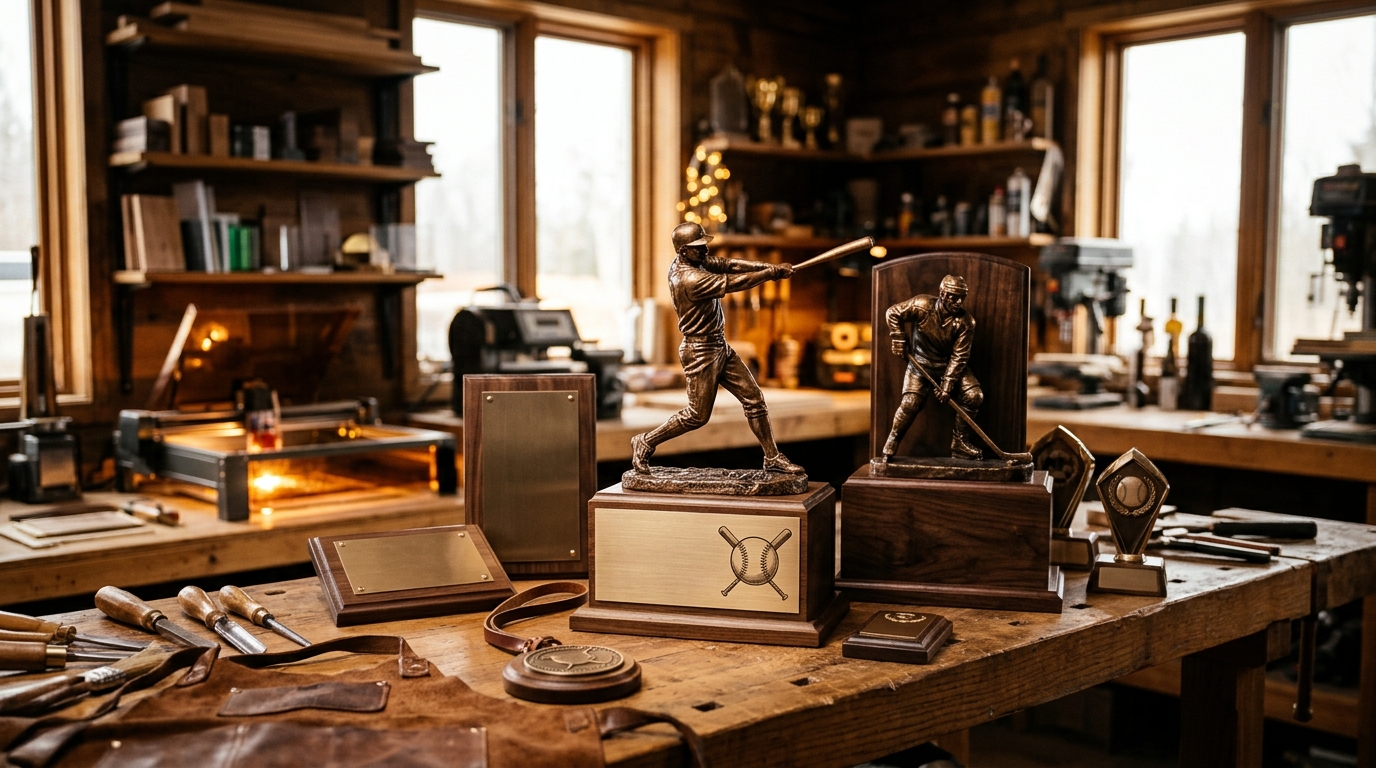
Trophies and Plaques for a Slo-Pitch or Ball Hockey Tournament: The Organizer's Guide
Running an amateur tournament means planning your awards well before the first game. Here is how to choose, count and order your trophies without stress, with help from the Mr Trophée workshop in Léry.
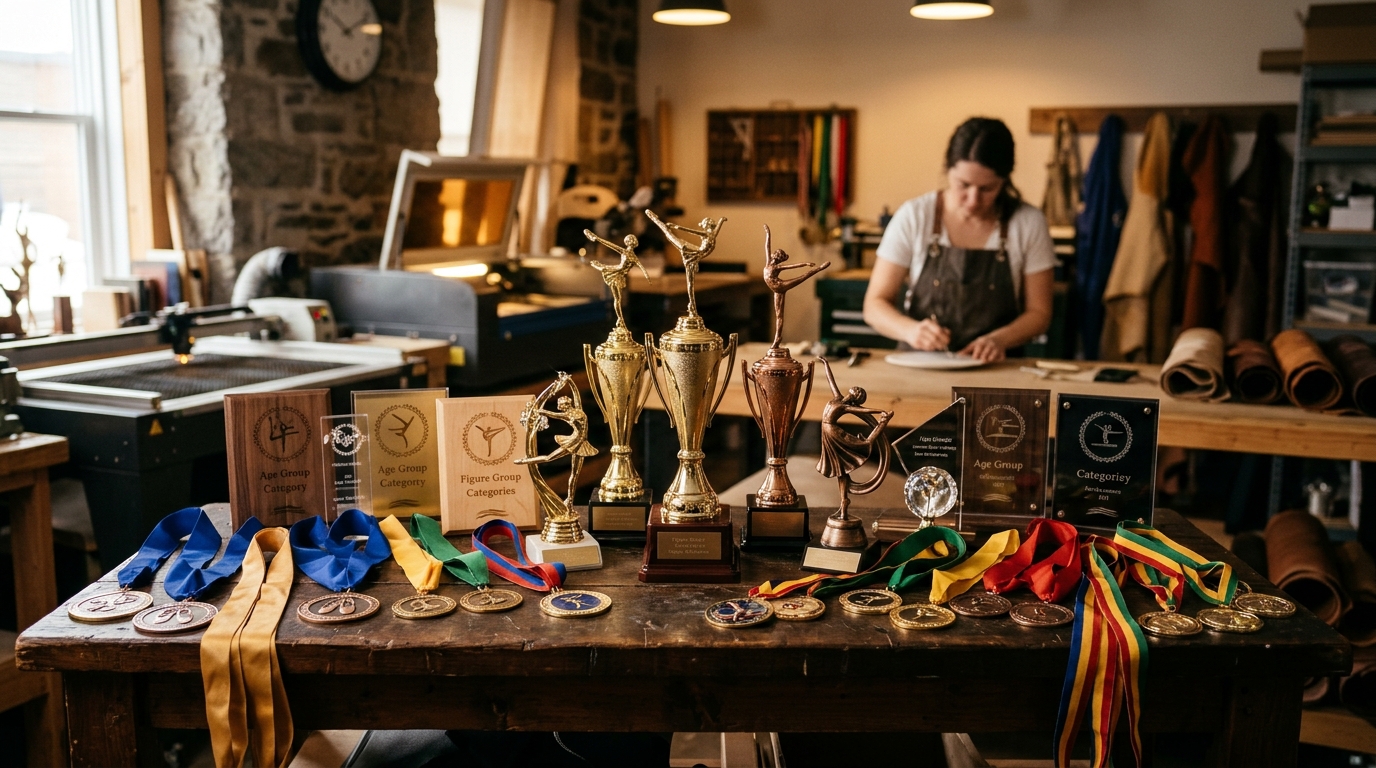
Trophies and Medals for a Dance, Gymnastics or Figure Skating Competition: A Guide for Clubs
Categories, age groups, skill levels: rewarding an artistic competition takes planning. Here is how to choose medals and trophies without stress or surprises.
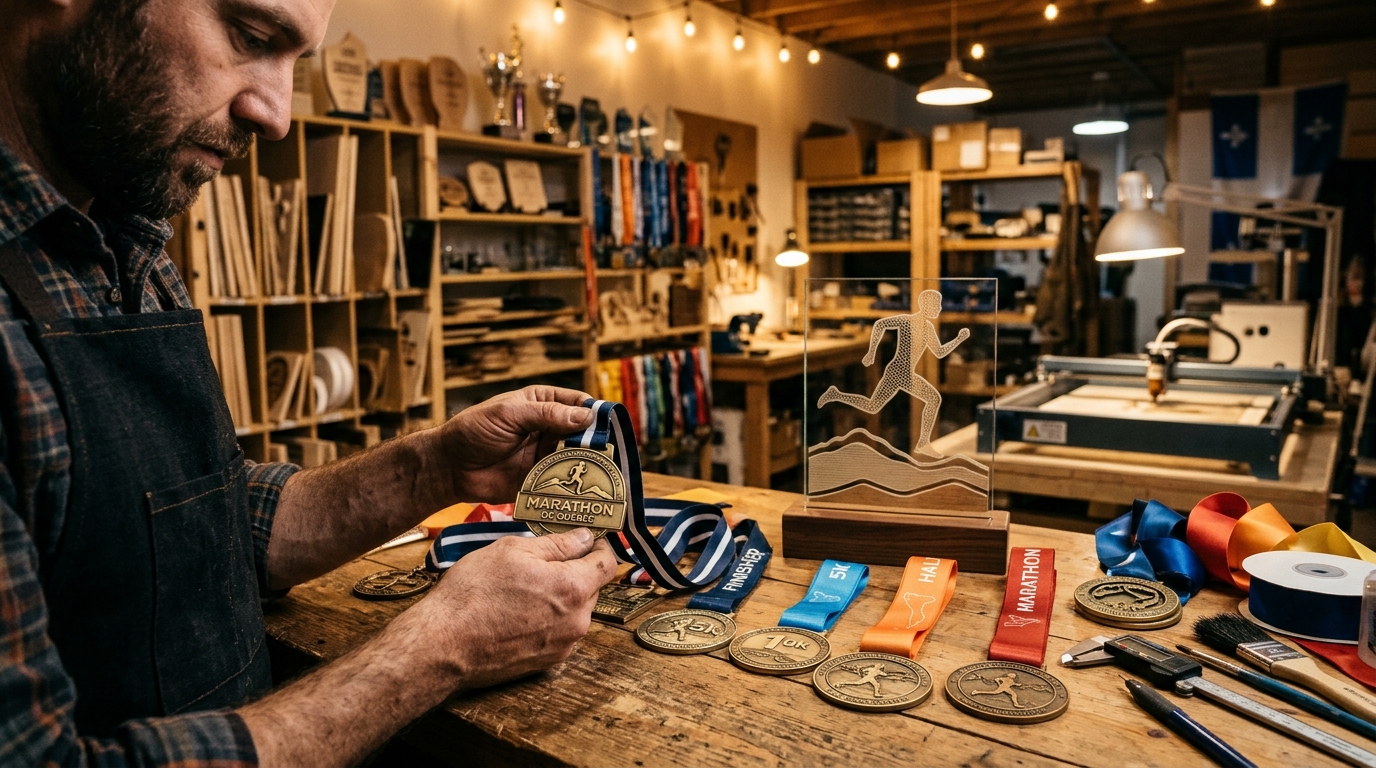
Trophies and Medals for a Running Race or Marathon: A Guide for Organizers
Organizing a running race in Quebec, from a 5K to a full marathon, means choosing medals and prizes carefully. Here is how to plan quantities, formats and personalization without going over budget.