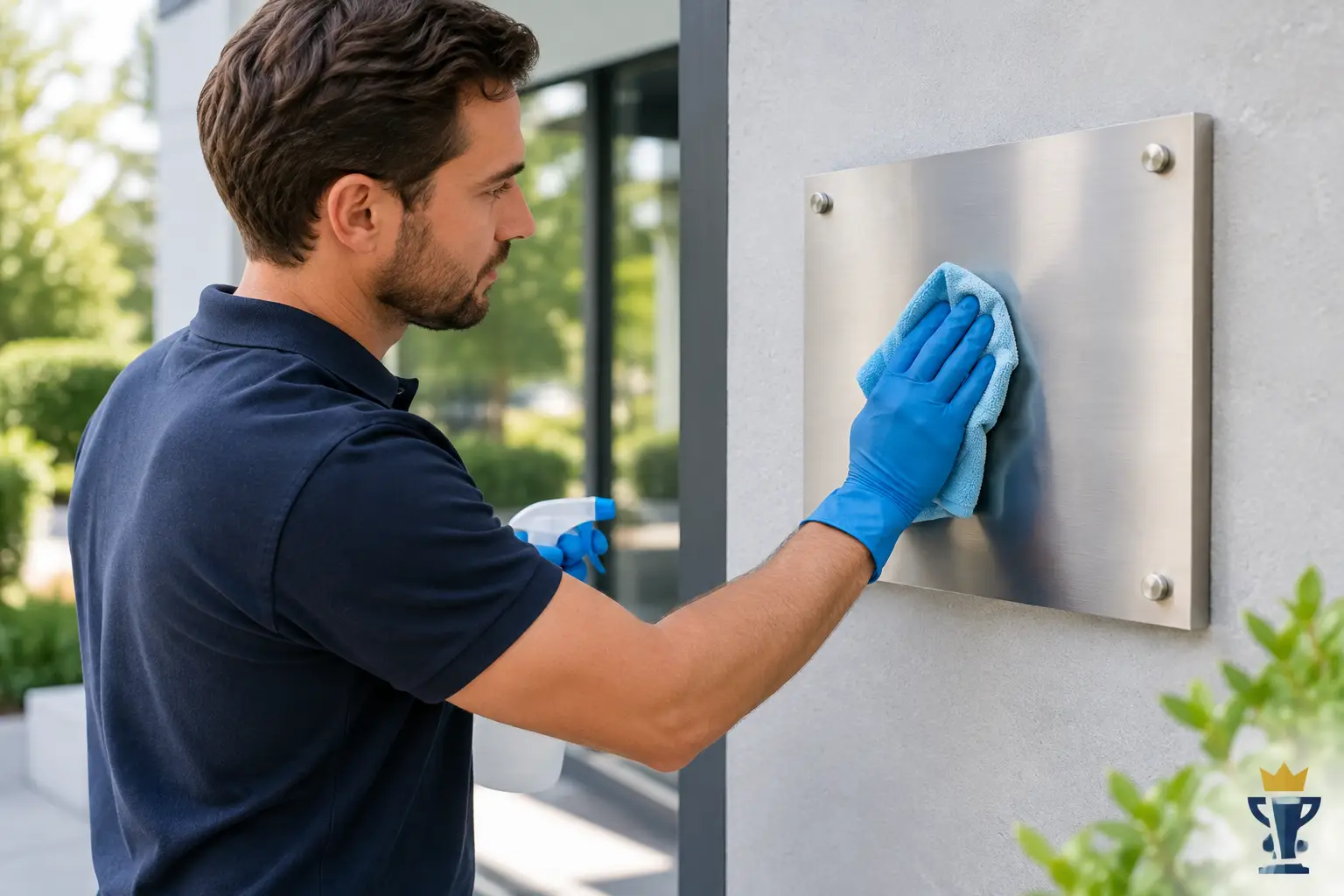
An outdoor plaque that turns yellow, develops white streaks, or becomes hard to read doesn’t just look neglected. For a school, municipality, business, association, or sports facility, it can make wayfinding difficult for visitors and undermine the organization’s image. This outdoor plaque maintenance guide helps preserve the legibility of engraved details, the quality of the finish, and the stability of the mountings, despite harsh Canadian weather.
The right method always depends on the material, location, and type of marking. A wayfinding plaque under an awning doesn’t require the same maintenance as a sign exposed to direct sun, de-icing salt, and freeze-thaw cycles. Cleaning too aggressively can even damage the surface before getting it clean.
Start by Identifying the Plaque’s Material
Before choosing a cleaning product, check what the plaque is made of. Aluminum, stainless steel, brass, acrylic, engraved plastics like Lamicoid, and certain composites do not have the same resistance to chemicals or abrasives.
Aluminum is lightweight, durable, and common for identification, regulatory, and wayfinding plaques. It resists moisture well, but painted, anodized, or printed finishes require gentle cleaning. Stainless steel is well suited for building entrances and institutional plaques thanks to its understated look and durability. However, it can show water spots, mineral deposits, or fingerprints.
Brass provides a classic finish for commemorative plaques and permanent recognition displays. Without maintenance, it naturally patinates and oxidizes over time. This aging process might be desirable for some projects, but not when text needs to maintain high contrast. Engraved plastics and Lamicoid plaques are practical for doors, utility rooms, equipment panels, and safety markers. They hold up well to everyday wear, but a scratched surface or harsh cleaner can dull their finish.
If you don’t know the material or marking process, always start with a spot test in an inconspicuous area at the bottom or back of the plaque. This precaution is especially useful for older plaques, printed logos, or surfaces that have previously been touched up.
Outdoor Plaque Maintenance Guide Based on Exposure
In Quebec and across Canada, outdoor plaques endure much more than just dust buildup. Acid rain, urban pollutants, pollen, bird droppings, road spray, de-icing salts, and rapid temperature fluctuations leave deposits that can permanently mark surfaces.
A plaque located near a sidewalk or parking lot should be inspected more frequently than one mounted up high. Splashes of mud and road salt can build up in the spring, while dust and organic debris are more common during the summer. In the fall, wet leaves can trap moisture against the plaque or behind its mountings. In the winter, the goal isn’t to clean at all costs during deep freezes, but rather to make sure that snow, ice, and debris aren’t putting pressure on the fasteners.
For most installations, light maintenance at each change of season and a more thorough inspection once a year provide a good balance. A high-traffic entrance, a public building, or a site exposed to salt may require monthly cleaning during the harshest periods.
The safest cleaning method
First, remove dust and loose particles with a soft microfiber cloth or a low-pressure rinse. This step prevents grit and sand from being rubbed against the surface. Next, wash with warm water and mild soap, using a clean cloth without scrubbing too hard in one specific spot.
Rinse thoroughly to avoid leaving any soapy film, then dry the plaque with a non-abrasive microfiber cloth. Drying is especially helpful on stainless steel, aluminum, and dark surfaces, where minerals in the water can leave visible water spots. For engraved textures, use a slightly damp, soft cloth and wipe gently in the direction of the pattern or engraving lines.
Avoid scouring powders, scouring pads or steel wool, stiff brushes, and strongly acidic or alkaline products. Bleach, unapproved solvents, and certain industrial degreasers can damage colour, clear coats, printed lettering, or engraving fill. Glass cleaner may be suitable for certain smooth plaques, but it should be tested beforehand and should never replace mild soap as your default solution.
Special case: Brass plaques and patinated finishes
Brass requires an aesthetic decision before any maintenance. An even patina can add character to a historical or commemorative plaque. On the other hand, uneven spots or tarnishing can reduce the contrast between the metal and the engraved text.
Only use a product specifically formulated for brass, follow the manufacturer’s instructions, and test it on a small area first. After polishing, remove all residue and dry thoroughly. If the plaque has a protective lacquer or clear coat, avoid abrasive polishes, as they risk creating uneven patches. A heavily oxidized, antique, or valuable plaque deserves a professional assessment rather than an improvised stripping.
Preserving engraving, colours, and readability
Dirt easily settles into engraved lettering, textured logos, and cut edges. When an engraving is deep, never use a metal object to dislodge debris. A soft, non-abrasive brush or a damp cotton swab will clean fine details without scratching the edges.
On colour-filled plaques, watch for cracks, peeling, or fading. UV rays eventually take a toll on certain inks and materials, especially on a south-facing exterior wall. A slight loss of shine doesn't always warrant a replacement, but a civic number, safety instructions, or room identification must remain legible from a distance.
When changes affect multiple plaques, it is often more efficient to harmonize the whole set. A school, for example, can gradually replace its room plaques, directional signs, and exterior signage to maintain consistent colours, fonts, and sizes. This approach also makes future additions easier.
Check Fasteners Before a Problem Gets Worse
The plaque itself may be in good condition even as its mounting hardware begins to weaken. Rusted screws, loose standoffs, damaged anchors, and open seals let water seep behind the plaque. With freeze-thaw cycles, a little play can quickly turn into an alignment or safety issue.
During your inspection, check five key elements:
- the plaque sits flush against its backing;
- screws, nuts, and standoffs are neither rusted nor loose;
- no corners are lifting or showing cracks;
- water is not accumulating behind the plaque;
- text, pictograms, and colours remain visible from the intended distance.
Tighten fasteners moderately. Over-tightening a screw can warp a thin plaque, crack plastic, or damage masonry. For adhesive-mounted plaques, inspect the edges and corners. Adhesive that is beginning to fail should be addressed quickly, especially on a door, glass pane, or wind-exposed surface.
When to Clean, Repair, or Replace?
Cleaning is suitable when buildup is superficial and the plaque retains its shape, contrast, and mounting integrity. A repair may be enough if a screw, standoff, or mounting component needs replacing. Replacement becomes preferable when the plaque is cracked, warped, difficult to read, heavily faded, or no longer aligned with the organization's current needs.
This is also a good time to review the displayed information. Hours of operation, phone numbers, department names, logos, and accessibility requirements evolve. A durable outdoor plaque must be as accurate as it is resilient. For projects involving engraved plaques, wayfinding, door signs, and equipment tags, coordinated production minimizes discrepancies in size and finish.
At Mr. Trophy, laser engraving, CNC routing, screen printing, and graphic design methods make it possible to tailor the material and marking to the intended use, whether for a commemorative plaque, an outdoor marker, or institutional identification.
A well-maintained plaque remains a reliable reference point for anyone arriving, working at, or returning to your facility. Schedule an inspection before the information becomes difficult to read: you'll be able to fix a fastener, clean a finish, or plan a replacement under the right conditions, rather than in a rush.
You may also like
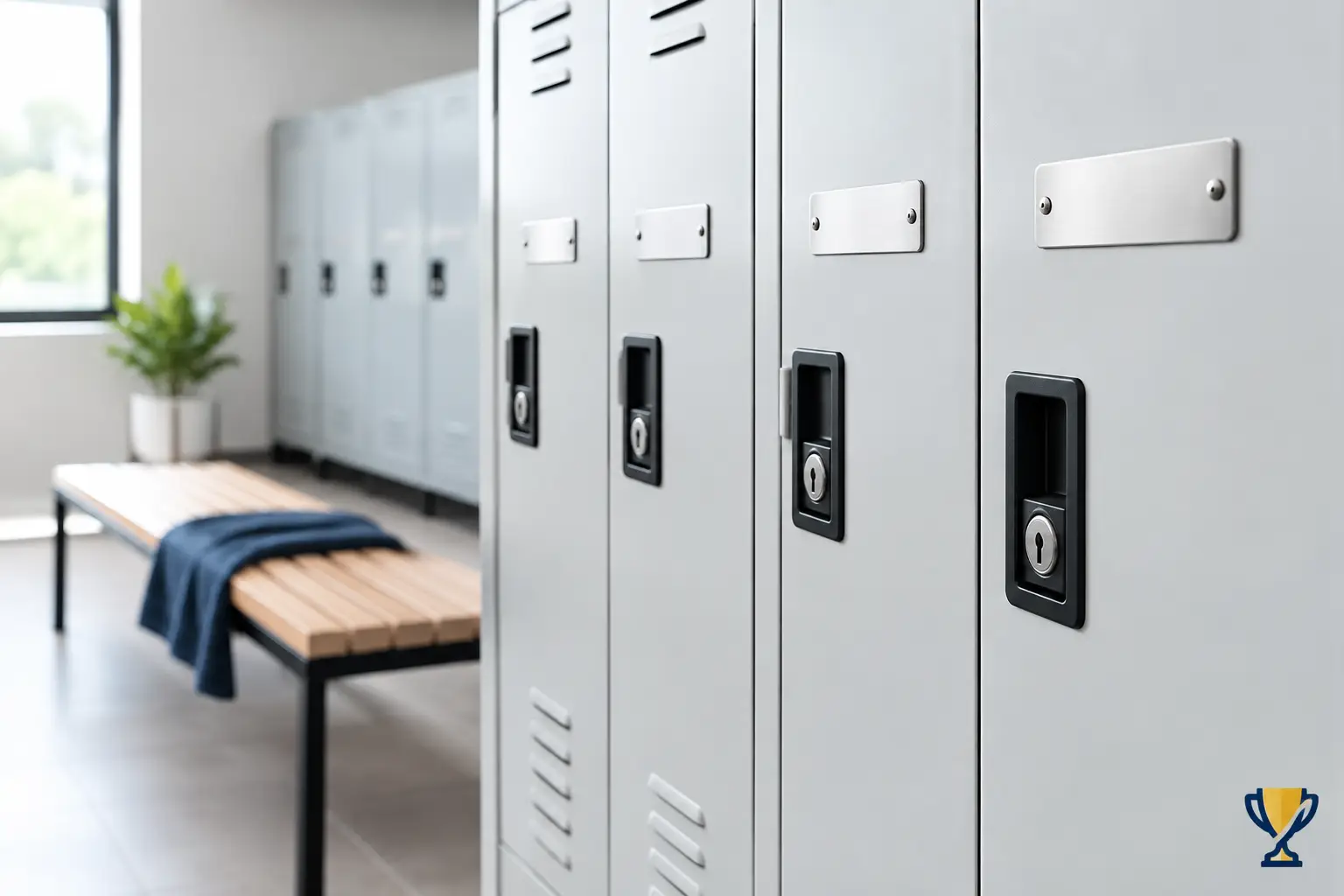
Professional Locker Room Plaque Guide
Locker Room Plaque Guide: Materials, engraving, and formats to identify lockers, areas, and users with precision and everyday durability.

End-of-Season Minor Hockey Trophies: A Guide to Rewarding Your Players
Association, coach or volunteer parent: here is how to choose trophies, award categories and engraved text for a successful minor hockey end-of-season banquet.

Soccer Tournament Trophy Guide: How to Choose the Right One
Soccer tournament trophy guide: choose custom cups, medals, and plaques based on your event's categories, budget, and timeline.