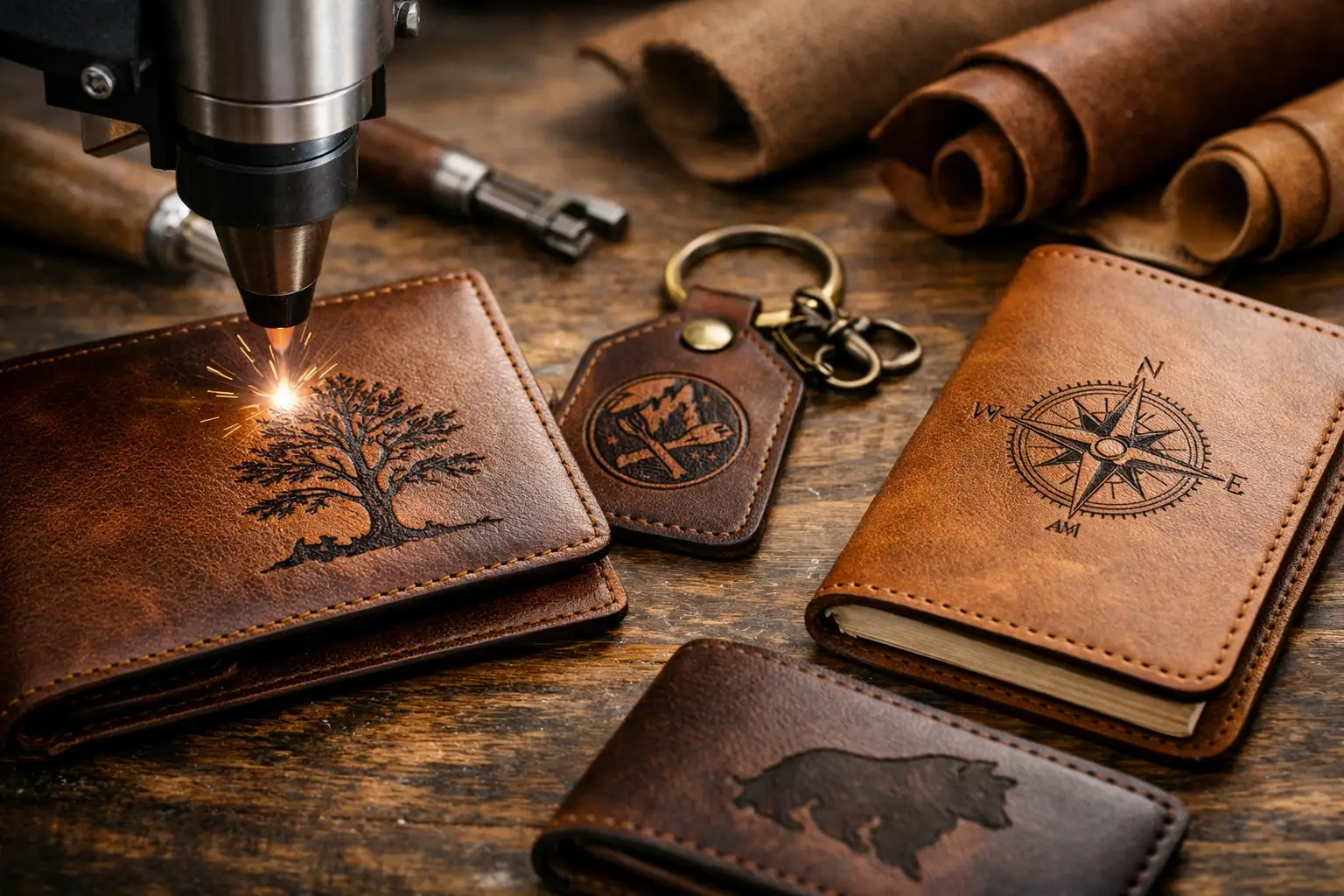
A wallet presented to a long-serving employee, a notebook cover in an association's colours, luggage tags for a team, or a farewell gift bearing a specific date: personalized engraving on leather gives an everyday object lasting value. The result depends just as much on the leather chosen as on the artwork, the technique, and the intended use. For an organization, it's not simply a matter of adding a logo — the goal is to achieve a marking that is legible, consistent, and suited to the item.
Why choose leather engraving
Leather has a presence that few materials can replicate. Its texture, natural aging, and feel in the hand make it a particularly fitting medium for recognition gifts, professional accessories, and commemorative items. A name, initials, a date, a team emblem, or a visual identity can be incorporated in a subtle or more prominent way.
In a professional context, leather is especially well suited to portfolios, notebooks, card holders, keychains, cases, coasters, and desk accessories. A company can use it to mark a service anniversary, thank a keynote speaker, or present a representative item to board members. Schools, sports clubs, and associations also find it to be an appealing solution for volunteer gifts or end-of-season recognition.
The main advantage is the permanence of the marking. Unlike a surface print, a well-executed engraving becomes part of the object itself. It is therefore particularly well suited to products meant to be kept, handled, and used over time.
Not all leathers respond the same way
Before developing a project, the material must be identified. Full-grain leather, corrected-grain leather, suede, vegetable-tanned leather, and synthetic materials marketed as "leather" do not all produce the same result. Their colour, finish, thickness, and surface treatments directly affect the contrast achieved.
A light natural leather can reveal a darker engraving that stands out clearly. On dark brown or black leather, the result may be more tone-on-tone, with a refined and elegant effect. This is often sought after for high-end gifts, but less appropriate when a logo needs to be read quickly from a distance. In that case, choosing a lighter leather, a simplified design, or a different marking method may be preferable.
Synthetic leathers can produce very sharp contrast, but their finish layer must be tested. Some materials change colour when engraved, while others may melt, mark unevenly, or produce an odour during processing. Validating on a sample is helpful when the item comes from an outside supplier or when it involves a large order.
Texture also matters. A deep grain can lend character to a monogram, but may complicate the reproduction of fine lettering or a detailed logo. For a small surface area, such as a tag or a keychain, a relatively smooth material makes for easier readability.
Personalized leather engraving: defining the right marking
The content to be engraved should serve the purpose of the item. For a personal gift, initials, a date, or a short message are generally sufficient. For an institutional award, the recipient's name, the year, their role, and the organization's logo can be combined, provided the information is clearly prioritized.
Readability starts with restraint. A highly detailed logo, a full motto, and several lines of text can be difficult to reproduce on a small case. It's better to keep the most recognizable visual element and shorten the text. For example, the name of the event and the year are often more useful than a long phrase that will become hard to read.
The choice of font plays a concrete role. Simple letterforms with sufficient weight remain more legible on textured materials. Very thin typefaces, tightly spaced letters, and ornate details can lose precision. For individual names, a classic font delivers a professional result. For a brand or a team, the existing visual identity should be adapted without being distorted.
The size of the marking should be determined based on the area actually available, not the overall size of the item. A notebook cover can accommodate a centred logo, but a closure strap or an exterior pocket calls for a smaller format. A mock-up makes it possible to verify proportions before production and to avoid placing a name too close to a seam, a snap, or a zipper.
Laser, press, or hot stamping: choosing based on the finish
Laser engraving is valued for its precision and flexibility. It suits personalized text, serial numbers, small runs, and orders featuring many different names. It also allows vector logos and graphic elements to be reproduced with great consistency, provided the leather responds well to the laser.
Hot stamping, sometimes done with a die, creates a relief or impression with a more traditional look. It can be particularly well-suited to a logo repeated across a series of identical items. The result is often subtle and tactile. On the other hand, it requires specific preparation and may be less appropriate when each item features a different name.
There is no ideal technique for every situation. For 200 key chains with the same emblem, a production-run process may make sense. For 30 retirement gifts with distinct names, titles, and dates, laser engraving generally offers more flexibility. Budget, timelines, the intricacy of the artwork, and the exact nature of the material should all be considered together.
Preparing a file that produces a clean result
A good file reduces surprises. For a logo, a vector format is preferable, as it allows dimensions to be adjusted without losing the sharpness of the outlines. Very small images, screenshots, and compressed files can make lines appear blurry or create details that are unusable for engraving.
Text should be proofread carefully before production begins. On a recognition order, an error in a name, a title, or a year is more than a minor detail — it diminishes the symbolic value of the item. It helps to provide a structured list of personalizations, with one line per item, especially when multiple versions are required.
Organizations that order regularly also benefit from keeping an approved version of their logo and engraving template on file. This makes reorders easier for new hires, annual tournaments, or recurring recognition programs, while ensuring a consistent presentation throughout.
Planning Ahead for Quantities, Lead Times, and Intended Use
A custom leather order requires more preparation than a standard purchase. Selecting items, receiving files, creating the proof, getting approval, and completing production all need to be built into the event timeline. For a ceremony, a tournament, or a holiday gift campaign, building in extra time prevents having to simplify the project at the last minute.
Quantity also influences the approach taken. A one-of-a-kind piece can carry a very personal message. A series of corporate gifts calls instead for a clear structure: a common logo, a consistent placement, and a well-defined personalized variable. In both cases, an approved proof protects the consistency of the final result.
Finally, consider day-to-day use. A keychain is subject to friction, a wallet travels everywhere with its owner, and a notebook cover may sit on a desk for years. The level of contrast, the placement of the engraving, and the choice of item should all reflect that reality. A subtle engraving will be ideal on an executive accessory, while an item distributed at an event benefits from a logo that is more immediately recognizable.
A Recognition Item That Stands the Test of Time
Leather engraving works particularly well when it serves a clear purpose. It can express gratitude, identify, commemorate, or represent a brand — without turning the item into an intrusive promotional vehicle. That balance is precisely what gives a personalized gift its lasting value.
At Mr Trophée, preparing the artwork, selecting the marking technique, and verifying the material are all part of a hands-on personalization process. Whether for an institutional project or a one-of-a-kind gift, starting from the intended use makes it possible to choose a leather, a format, and an engraving that will still feel meaningful years later, every time the item is used.
You may also like
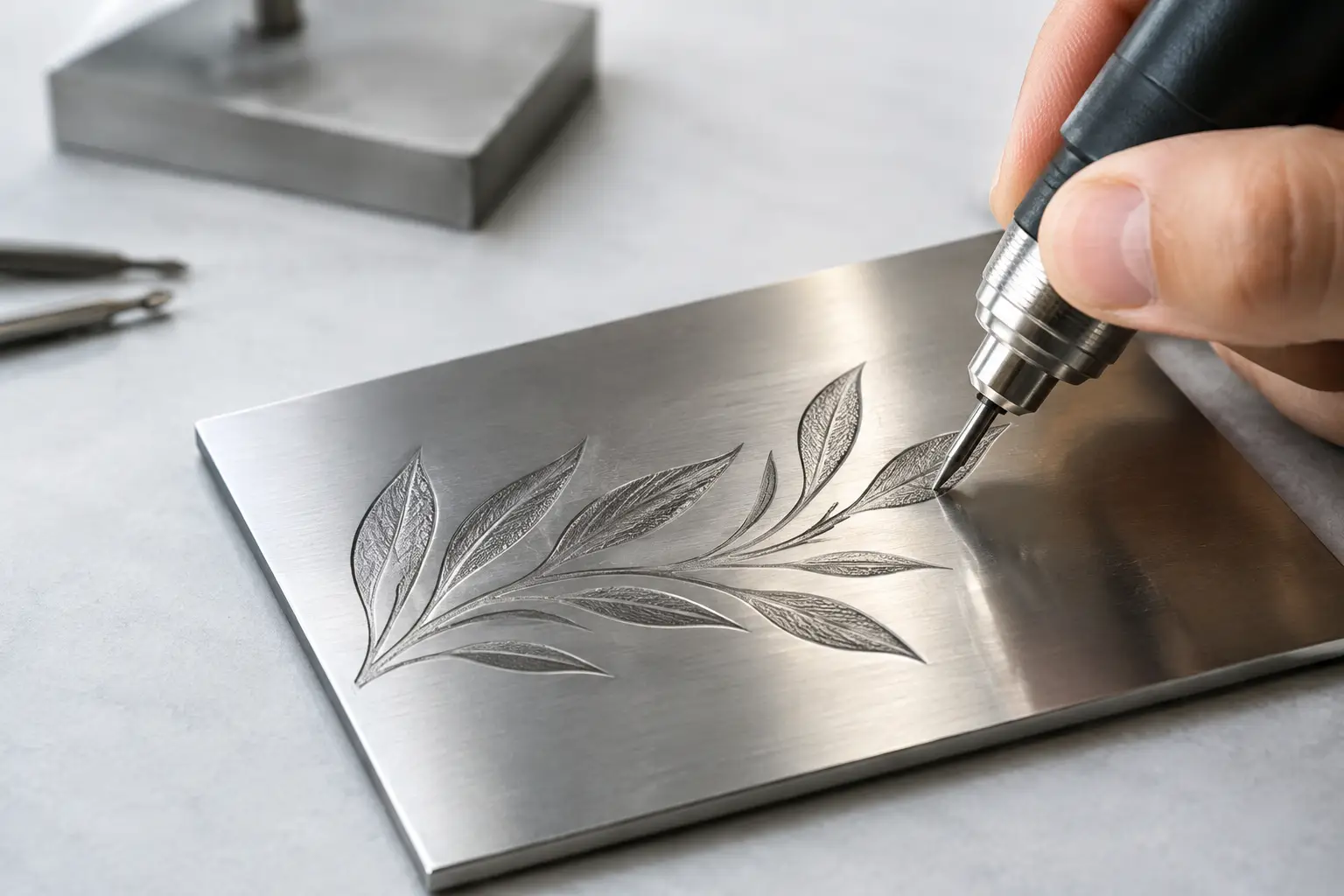
Stainless Steel Engraving Guide for Your Projects
Guide to stainless steel engraving: methods, finishes and copy to plan for creating durable, legible and polished plates, gifts and markers for everyday use.
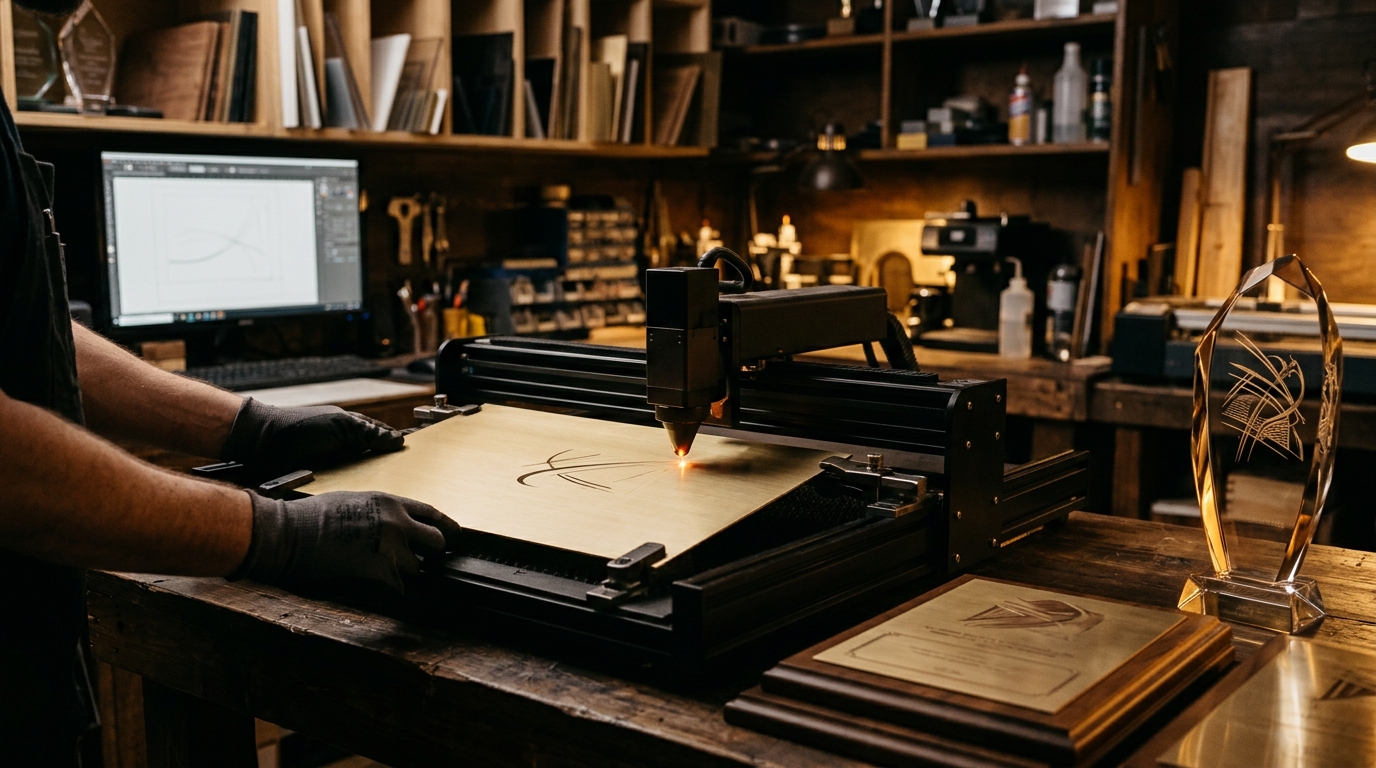
Preparing Your Logo for Laser Engraving and Printing: File Formats and Best Practices
A good file is half of a great trophy. Here are the formats, resolutions and tips to know so your logo looks sharp on your plaques, trophies and medals.
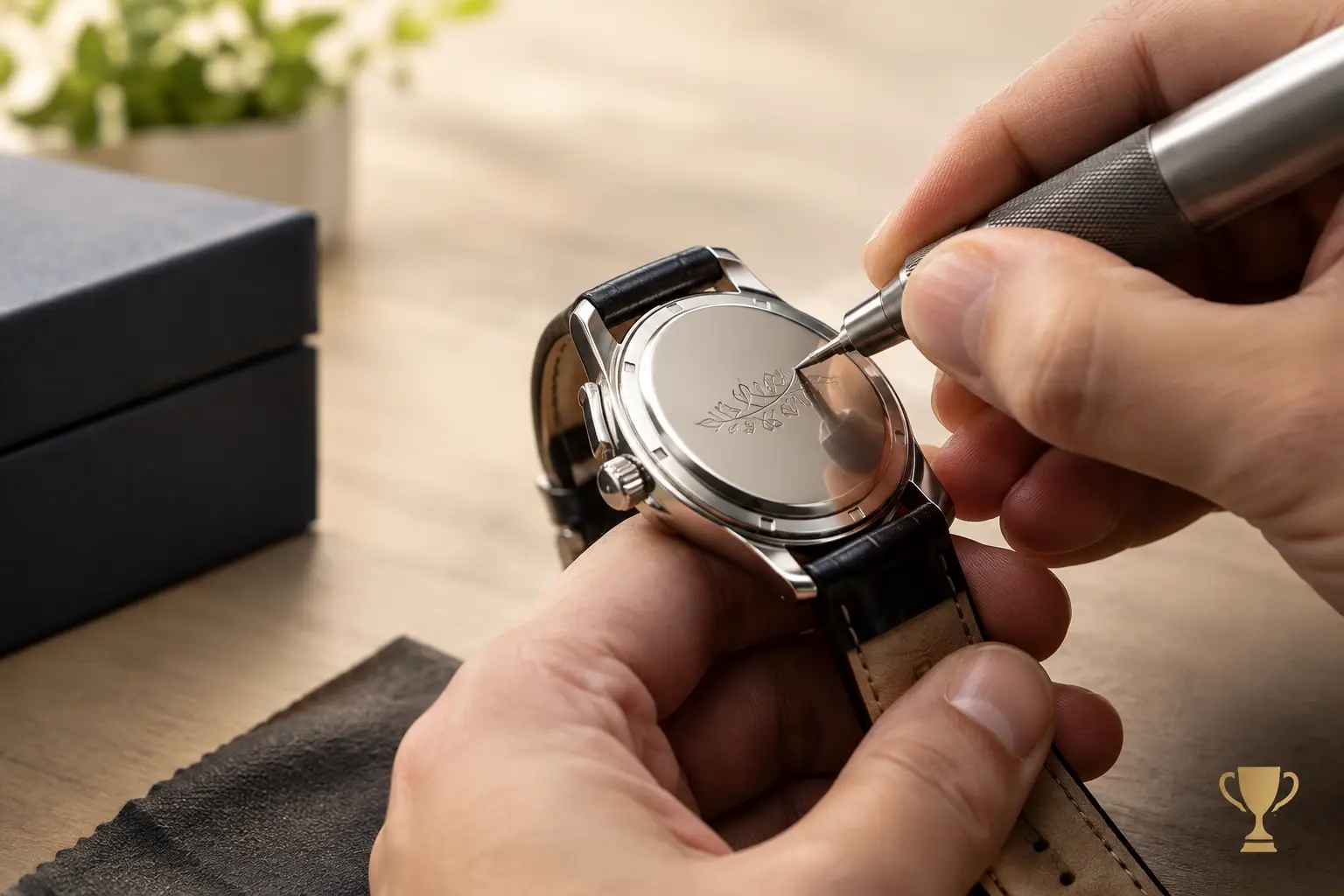
Watch Engraving: Options and Advice
Having a watch engraved requires choosing the right placement, material, and message. Tips for a durable, precise, and uniquely personal result.