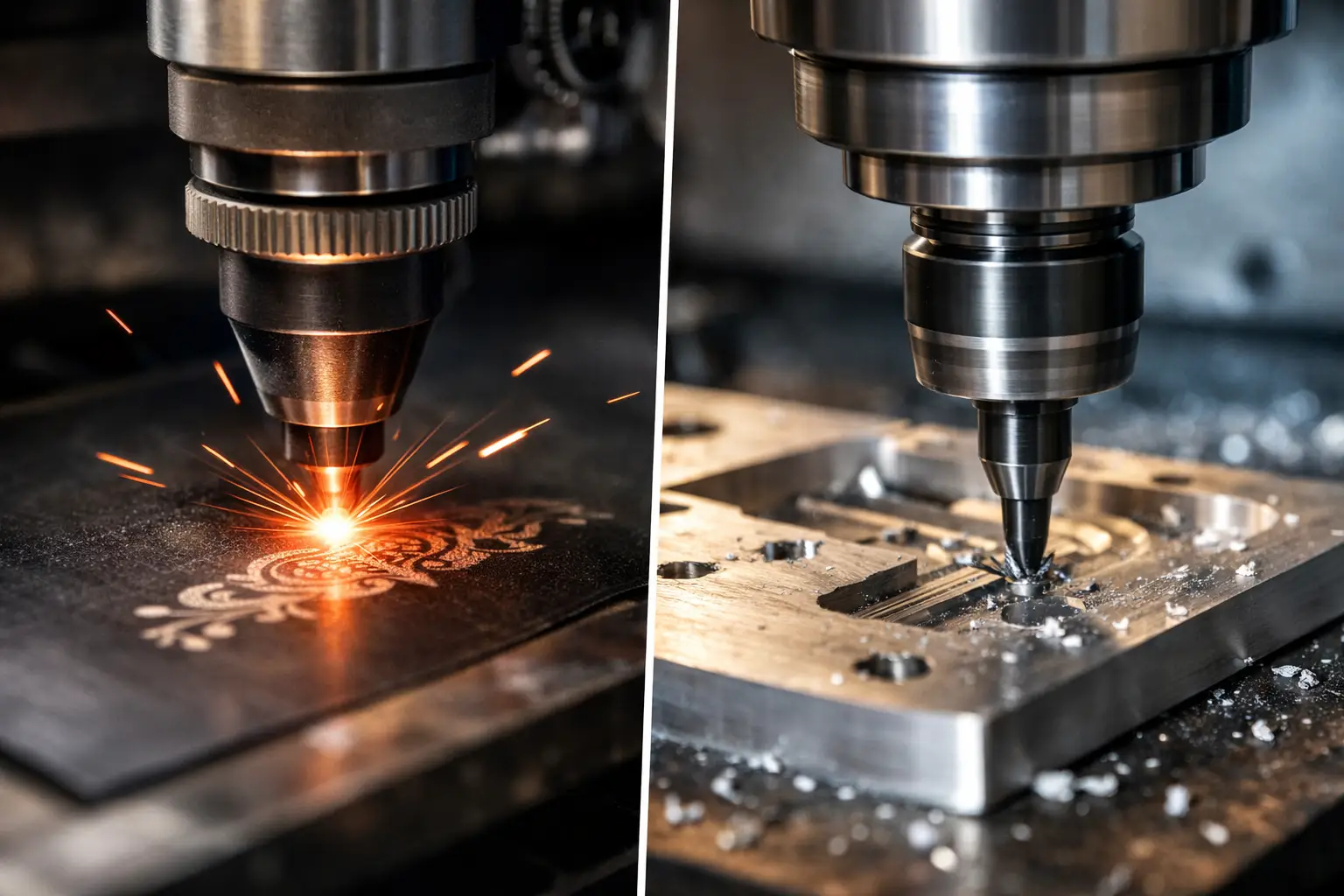
A logo to reproduce on a door plate, a series of medals for a tournament, or a name to engrave on a bottle rarely call for the same method. Comparing laser engraving vs. CNC engraving helps you choose a finish suited to the material, the level of detail required, the quantity, and the final use of the product.
At Mr. Trophy, both processes are part of the personalization solutions offered for trophies, plaques, signs, engraved gifts, and identification products. The right choice doesn't come down to one technology being "better" in absolute terms. It depends instead on the result you're looking for: precise marking, deep engraving, tactile relief, visual contrast, or resistance to everyday use.
Laser engraving vs. CNC engraving: the essential difference
Laser engraving uses a concentrated beam to alter the surface of a material. Depending on the substrate, the laser can remove a thin layer, slightly burn the material, create contrast, or produce a clean and detailed mark. This method is particularly valued for its speed of execution, fine text, complex logos, and individual personalizations.
CNC engraving, on the other hand, is a mechanical engraving process carried out using a numerically controlled cutter. The tool physically cuts or removes material. The result is generally deeper and more tactile, with a visual presence that works very well for rigid plaques, signs, and products meant to stay in place for many years.
In other words, the laser acts on the surface through energy, while CNC removes material through machining. This distinction directly influences the choice of materials, the depth achieved, the fineness of detail, and the final appearance.
When to choose laser engraving
Laser engraving is often the most effective solution when a project calls for a high degree of graphic precision. It makes it possible to reproduce small text, detailed patterns, signatures, codes, serial numbers, or logos featuring fine lines. For an organization looking to identify a large number of items with variable data — such as employee names or team numbers — it also offers flexible and fast production.
On wood, leather, certain plastics, glass, acrylic, promotional items, and many personalized gifts, laser engraving can deliver an elegant result without requiring any mechanical contact with the object. This is an advantage for items with irregular shapes or more delicate surfaces, including bottles, glasses, watches, jewellery, and commemorative pieces.
A precise finish, but not always deeply carved
The depth of a laser engraving varies depending on the machine and the material, but it is often shallower than a CNC engraving. On certain substrates, the result takes the form of a change in colour or texture rather than a pronounced indentation. On wood, for example, the marking can appear dark and warm. On glass, it becomes frosted. On certain engravable plastics, it reveals a contrasting layer.
This level of fineness is ideal for name plates, badges, corporate gifts, and small runs of personalized items. On the other hand, if the goal is to create highly tactile signage or deeply carved inscriptions, CNC may be more appropriate.
Projects that lend themselves well to laser engraving
Laser engraving is particularly well-suited to wood or acrylic trophies, engraved glassware, retirement gifts, commemorative plaques, custom labels, promotional items, and pieces requiring variable information. It also adapts well to projects where fine aesthetic detail takes priority over engraving depth.
For a corporate gala, for example, laser engraving makes it easy to quickly add names, award categories, and different years across an entire trophy line. For a school or sports league, it also simplifies the personalization of medals, plaques, and small recognition items in a series.
When CNC engraving is the better choice
CNC engraving stands out when depth and mechanical durability of the marking are the top priorities. Since a router bit physically removes material, the characters and designs have a relief that is perceptible to the touch. This characteristic is particularly valuable for institutional plaques, directional signage, safety panels, industrial plates, and permanent identification.
It is frequently used on rigid materials such as metal, aluminum, brass, certain technical plastics, and laminated materials like Lamicoid. These substrates are common in offices, schools, buildings, municipal facilities, businesses, and work environments where identification must remain legible despite handling or the passage of time.
A solid solution for signage and identification
A door plate, room sign, control panel, or equipment plate must above all be readable, stable, and suited to its context. CNC offers clean engraving that can be colour-filled when the project calls for it. This contrast improves readability at a distance and supports signage that is consistent with the organization's image.
For an office building, school, or municipality, this process makes it possible to standardize room plaques, department identifications, and functional panels. The result is not merely decorative: it meets a concrete operational need — guiding, informing, and identifying with precision.
Limitations to consider
CNC does not always reproduce fine details as precisely as a laser, especially for very small characters or complex illustrations. Router bits have a physical diameter that imposes certain limitations on angles, very tight lines, and miniature designs. Setup and machining time can also be greater when working with large quantities of small, highly detailed pieces.
This does not mean CNC is less precise. It is precise in a different way: it excels in consistent depth, clean contours, and working with rigid materials. The choice should therefore be based on the visual format and the function of the piece.
The materials often guide the decision
Before choosing between laser and CNC, it's important to identify the exact material of the product. Two plaques that look similar can react very differently depending on their composition, coating, and thickness. A two-layer plastic designed for engraving will produce controlled contrast with either laser or CNC, while bare metal will require a specific approach depending on the expected finish.
Laser is often preferred for leather, wood, glass, acrylic, certain plastics, and gift items. CNC is particularly well-suited for Lamicoid, metal plaques, rigid identification holders, and signs that require deeper engraving.
Colour matters as well. On a dark plaque, contrasted engraving may be more important than significant depth. On an outdoor plaque or a frequently handled panel, mechanical engraving can offer more lasting presence. Exposure to UV rays, humidity, cleaning products, and abrasion should also be taken into account.
Cost, Turnaround, and Volume: What Really Changes
For orders involving many different names, laser is often advantageous thanks to its speed and ability to handle variable data. It works well for award ceremonies, annual events, team gifts, and recognition programs where each piece receives its own distinct personalization.
CNC may require more time per piece, especially when significant depth or colour fill is needed. In return, it delivers a finish particularly well-suited to durable signage orders, professional plaques, and projects where perceived quality needs to be apparent at first glance.
Budget should therefore not be assessed on unit price alone. A less expensive plaque that is poorly matched to its environment may need to be replaced sooner. Conversely, a more elaborate method is not necessarily justified for a small temporary gift or a trophy presented at a one-time occasion.
How to Prepare a Clear Engraving Request
An accurate quote starts with a few simple pieces of information: the type of product, quantity, desired material, dimensions, text to be engraved, logo, and delivery date. For an organizational project, it is also helpful to indicate whether names change from one piece to the next, whether a specific colour must be respected, and whether the products will be used indoors or outdoors.
A good-quality logo file makes reproduction easier, especially for laser engraving of fine details or CNC programming of outlines. If the file isn't ready, a graphic design team can help adapt the artwork to the chosen process. A slight simplification of the logo can sometimes considerably improve readability on a small plaque or medal.
The best approach is to start from the actual intended use of the product, rather than from the technology itself. A door plaque must remain legible. A trophy must highlight the recognition being given. An engraved gift must preserve its personal character. By clarifying this objective from the outset, selecting an engraving method that will do its job well — for the long term — becomes much more straightforward.
You may also like
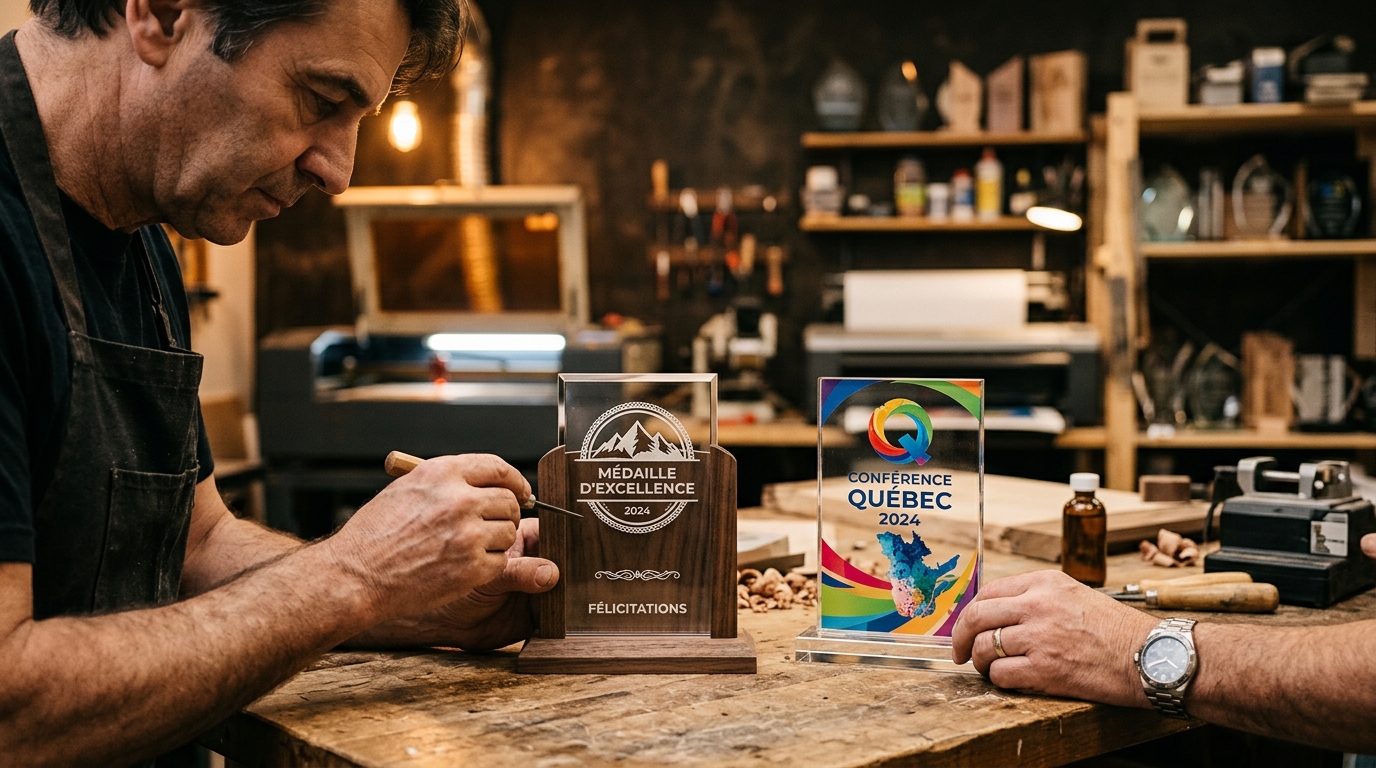
Engraving or Color Printing: Which Should You Choose for Your Awards?
Laser engraving or color printing? This guide compares both techniques to help you choose the best option based on your material, budget, and occasion.
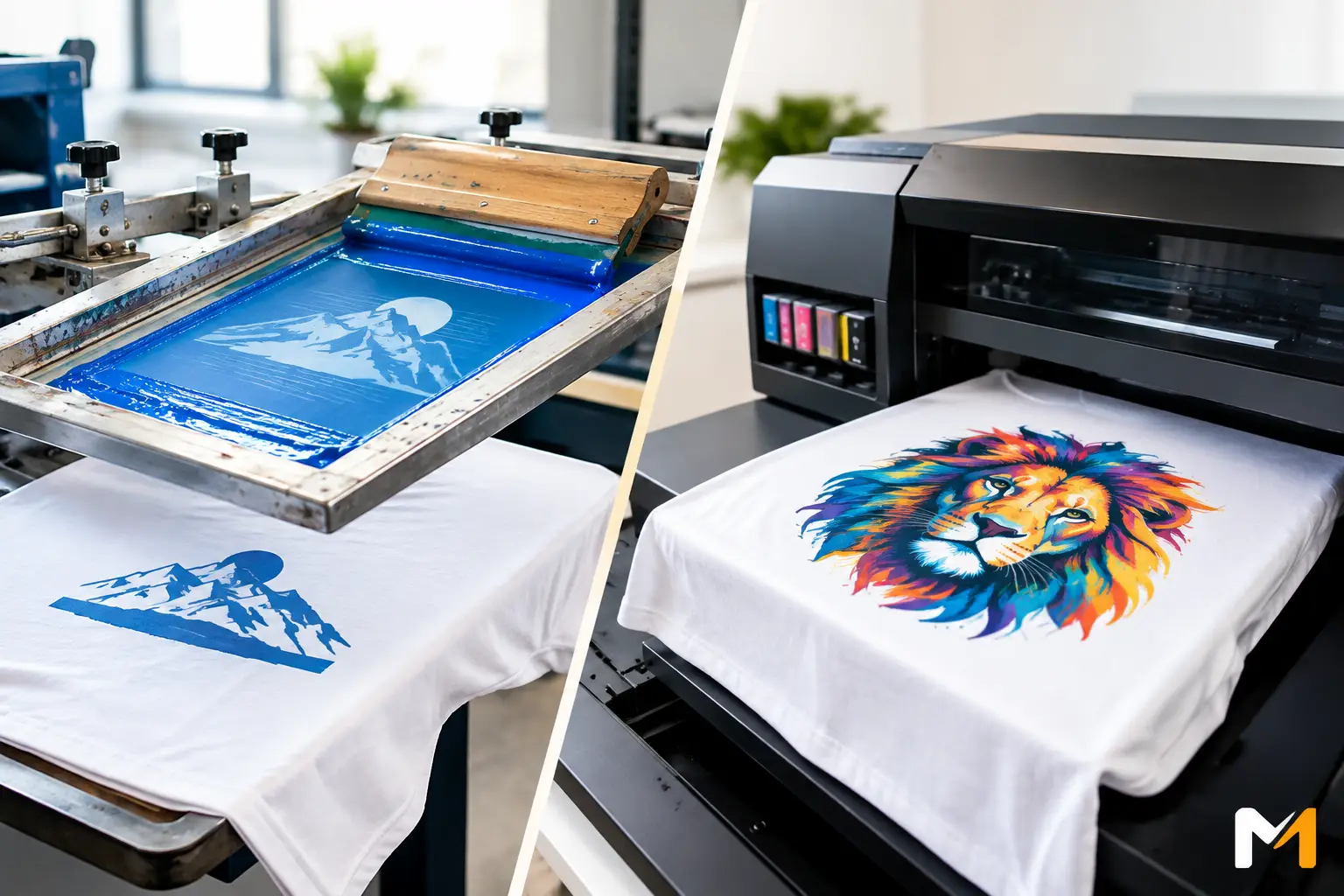
Screen Printing vs. Digital Printing: Which One Should You Choose?
Screen printing vs. digital printing: choose the right technique for your apparel, signs and promotional items for a durable, precise result.
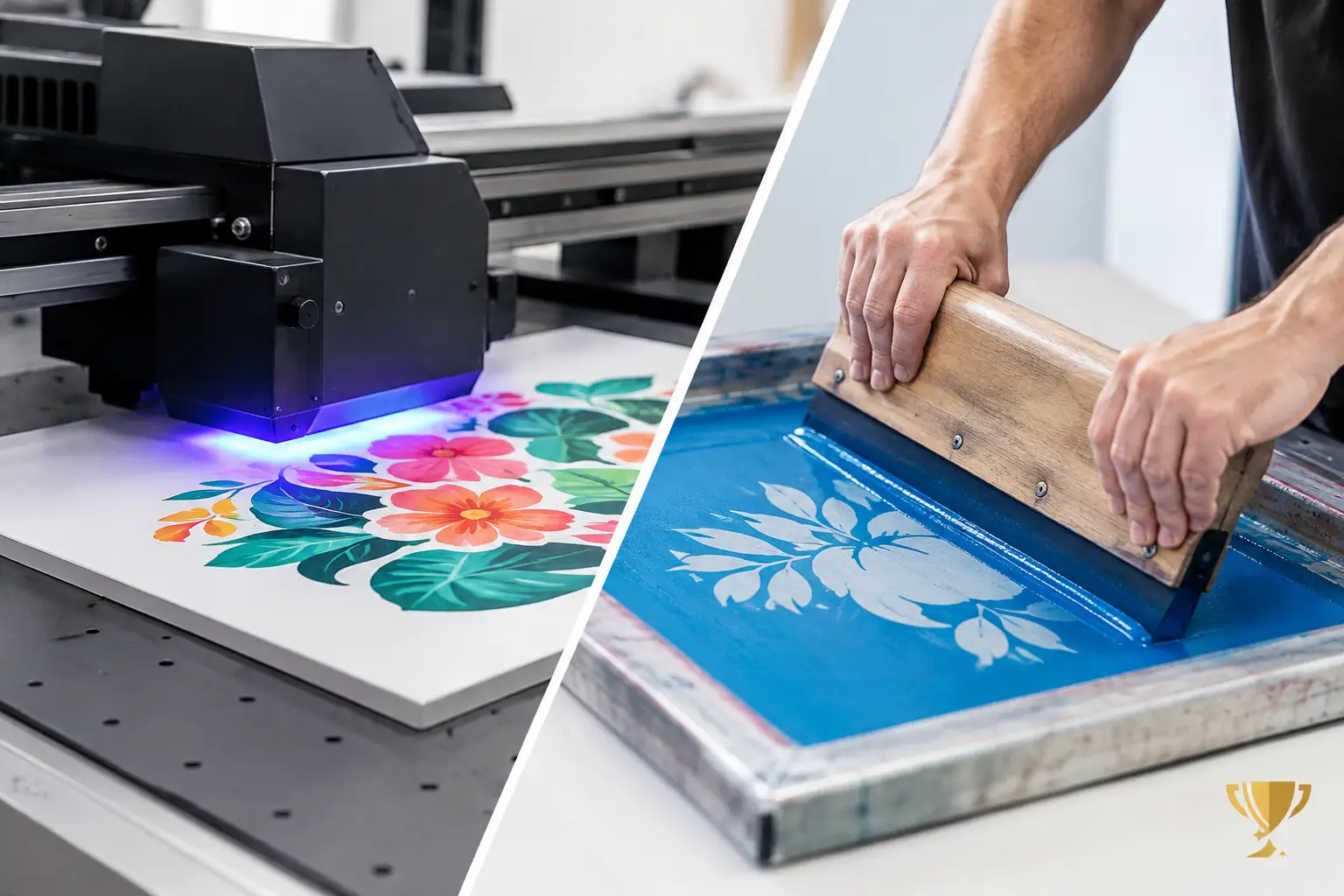
UV vs. Screen Printing: Which Marking Method Should You Choose?
UV vs. screen printing: compare precision, colours, durability and costs to choose the right marking method for your trophies, items and professional signage.