
When your team spans three time zones and a dozen home offices, a trophy left in the head office is not recognition. It is inventory. A corporate recognition program only works when the award reaches the recipient, arrives intact, and gets presented in a moment that feels deliberate rather than improvised. That is a logistics problem as much as a morale problem.
In this how-to guide, you will learn why in-office recognition breaks when the team is off-site, what to confirm before ordering, how to choose award formats that survive the trip, how to plan individual packaging and direct-to-home delivery, how to script a remote-friendly presentation, and how to close the loop with tracking and acknowledgement. We will also cover formats suited to distributed teams and tips for keeping your program intact.
Mr Trophée, a Léry, Quebec workshop, offers laser-engraved and color-printed trophies, medals, plaques, and honorary awards for sports teams, businesses, municipalities, and organizations. The company provides bilingual service and a best-price guarantee; you can reach them at 514-565-6665.
Why In-Office Recognition Breaks When the Team Is Off-Site
The standard recognition workflow assumes proximity. A manager carries a trophy to a desk, the team claps, and the moment is witnessed. When half the team works from home, that workflow fails quietly: the award sits in a supply closet or gets handed to whoever happens to be in the building.
The award itself is rarely the problem. The handoff is. A corporate recognition program runs on a chain of small logistics steps: purchase, engraving, packaging, delivery, presentation, acknowledgement. Any step built around a physical office breaks the chain.
Remote and hybrid employees notice the asymmetry. A colleague in the office receives a plaque in front of peers; someone at home receives an email. That gap reads as a difference in value, not a difference in location.
Fixing it does not require a new philosophy of employee recognition. It requires treating delivery and presentation as first-class parts of the program, each with an owner, a budget line, and a deadline.
This guide follows the operational sequence: choose formats that ship safely, plan individual packaging and direct-to-home delivery, and script a presentation moment that works on camera.
Prerequisites: What to Confirm Before You Order Anything
Before anything is ordered, confirm six items; a missing prerequisite is how an award ends up in a closet instead of in someone's hands.
Roster and addresses. Use home mailing addresses rather than office locations, and name one contact per recipient who can flag a move. Verify each address shortly before ordering.
Award reason and engraving text. Log the reason (service anniversary, project completion, sales target, peer-nominated honour) and the exact wording, checking accents, capitalization, and name spelling in French and English.
Per-recipient budget. Cover the award, engraving, individual packaging, and shipping, plus contingency for a re-ship if a parcel is returned or damaged. Check how award taxability affects your figures using the CRA's gifts, awards, and long-service awards guidance.
Shipping constraints. State provinces or countries, urban or remote destinations, and anyone on leave or travelling during the presentation window.
Single owner. Name who orders, tracks parcels, presents, and follows up when a box does not arrive.
Timing anchors. Work backward from the ceremony: presentation date, production and engraving lead time, dispatch window, and a buffer before the meeting.
Sourcing awards? Personalized trophies, medals, plaques, and engraving from a Léry, Quebec workshop can be quoted per recipient, which makes the budget line easier to defend. With the list settled, you can move on to format selection.
Step 1: Choose Award Formats That Survive the Trip
With addresses confirmed and timing set, format comes next. Weight and shape drive cost and risk alike: a tall trophy with a narrow stem and heavy base is harder to protect than a flat plaque or a cased medal, and dimensional weight, not just actual weight, often sets the shipping price. Prefer a single rigid body with no protruding parts. Anything that can snap at a joint, such as an arm or thin column, needs a foam-cut insert that holds it away from the box walls.
Materials matter. Crystal and glass read premium but typically need more protection in transit; metal plates, acrylic, and wood-backed plaques are usually more forgiving to ship. Medals and medallions travel well because they are small, light, and fit a case or sleeve, which suits large cohorts where individual trophies would be impractical or costly to ship.
Engraving and colour printing both work for a distributed corporate recognition program, but legibility on a webcam is the test. Choose contrast and font size for a camera, not only for a shelf. Order one spare unit per batch so a lost or damaged parcel can be re-shipped immediately rather than delaying the presentation.
Review the workshop's catalogue of personalized trophies, medals, plaques and engraved awards and completed projects for how pieces read on camera.
Step 2: Plan Individual Packaging and Direct-to-Home Delivery
With the award format settled, treat the journey to the recipient's door as part of the product.
Ship one award per box to one home address. Consolidating everything at a head office and redistributing locally recreates the bottleneck you set out to remove.
Budget individual packaging as a line item, not an afterthought: inner protection such as foam, bubble wrap, or a moulded insert; a rigid outer carton; and a label that survives handling.
Verify each address twice, once at order and again shortly before dispatch. Apartment or unit numbers matter, and include a phone number the carrier can use.
For cross-border parcels, decide who pays duties, taxes, and brokerage before dispatch. CBP has suspended duty-free de minimis treatment for low-value shipments, so recipients may face unexpected fees. Tell them in advance so nobody refuses a parcel over a charge they did not expect.
Choose a dispatch window that lands well before the presentation date, and share tracking numbers with the presenter as well as the recipient.
Finally, consider discreet outer packaging. A carton stamped "employee award" spoils the moment if it sits on a doorstep all day.
Next: scripting the reveal itself.
Step 3: Script the Remote-Friendly Presentation Moment
Once tracking numbers are shared, the presentation itself needs a plan.
Assign the presenter. A manager or team lead carries more weight than a generic slide in an all-hands deck. A peer nomination read aloud lands especially well.
Prepare the recipient. Tell them in advance that a parcel is coming and that they will be asked to open it on camera. An unannounced box produces hesitation and dead air.
Write a short script. Two or three sentences on the reason for the award, one line of specific praise, then the ask to open it now. Stay under 90 seconds so the moment does not stall the meeting.
Coach the camera moment. Ask the recipient to centre themselves, keep the box in frame, and sit with light in front rather than behind. Note that the recording will be shared with the wider team.
Plan for bilingual teams. Prepare the script in French and English, or have the presenter deliver the key lines in both. Check engraving text in both languages before production.
Record and share. Post a short clip of the unboxing to the team channel. It extends the recognition to colleagues who missed the call.
With the moment recorded, the remaining work is confirming that every parcel arrived.
Step 4: Close the Loop With Tracking and Acknowledgement
Once the ceremony ends, the program still needs a record. Keep a simple tracker with one row per recipient: name, award, order date, dispatch date, tracking number, delivery confirmation, and presentation date. That sheet is your proof that the employee recognition program actually ran, and it settles budget and audit questions later.
Follow up within a week of delivery. A short message asking whether the award arrived intact catches damage while a re-order is still possible. Log failures, not just successes: returned parcels, wrong addresses, damaged pieces, missed ceremonies. Patterns across a cycle tell you which formats and carriers to avoid next time.
Ask each recipient for a photo with the award. It gives you authentic material for internal communications and shows the next cohort that the program is real.
Then feed the results into the next cycle: adjust lead times, drop fragile formats that caused problems, and keep the packaging specification that worked. A distributed program improves the same way any logistics process does, one documented cycle at a time.
Award Formats That Fit a Distributed Program
Format choice now becomes the variable that most affects whether an award arrives intact.
Trophies: Substantial, but Shipped Wisely
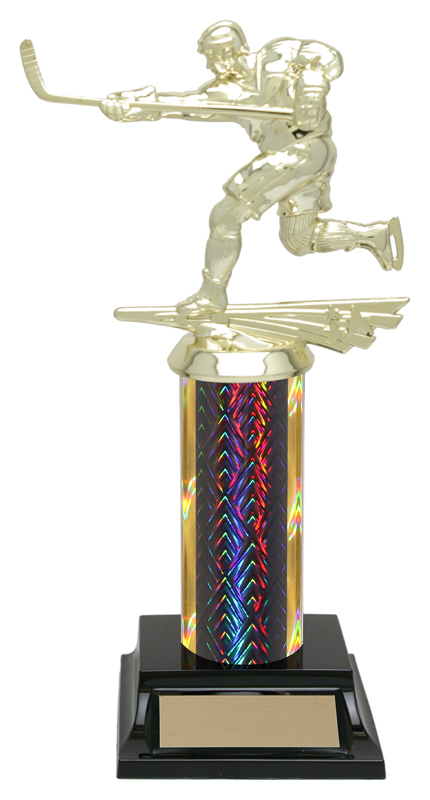
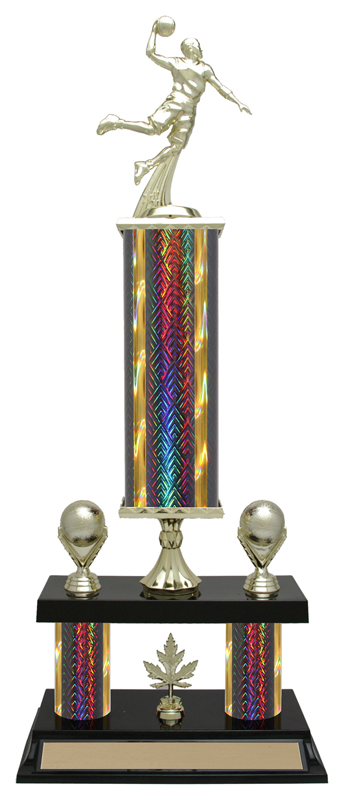
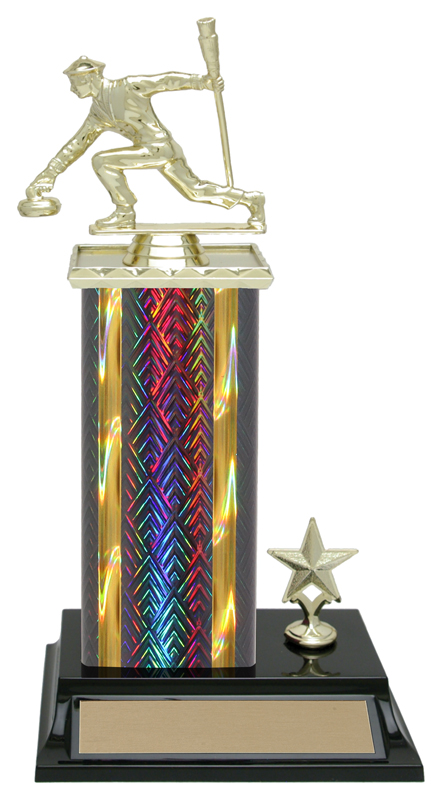
Personalized trophies suit milestone and achievement moments where the object should feel substantial, so apply Step 1's shipping criteria with particular care.
Medals: Built for Cohorts
Medals work for cohorts, team-wide wins, and events where many recipients need something in hand.
Plaques: The Safest Traditional Format
Of the traditional formats, plaques come closest to the flat, rigid ideal described in Step 1.
Engraved and Honorary Awards
Engraved awards and honorary awards cover cases where the wording matters more than the shape, such as retirement pieces, long-service recognition, or a peer-nominated honour.
Mr Trophée's personalized trophies, medals, plaques, and engravings come with bilingual service at 514-565-6665. You can browse the full range of services before settling on a format.
Tips for Keeping a Distributed Recognition Program Intact
Choosing transit-friendly formats solves only half the problem. The other half is running the program so every recipient gets a real moment. The following practices keep a corporate recognition program intact between cycles.
Batch production where possible. Group recipients into one run rather than ordering piece by piece. Unit costs usually fall even when each award still ships to a separate address.
Standardize the presentation format. Give managers a one-page script template and a short checklist. Removing the need to invent a format eliminates the main reason remote recognition gets skipped.
Keep a small stock of generic awards. Personalize only the engraving plate or insert. A late addition to an employee recognition program can then join the ceremony instead of missing it.
Watch the calendar. Avoid dispatching into holiday peaks, long weekends, or periods when recipients are likely to be travelling.
Treat the recipient experience as the specification. If the box arrives late, damaged, or unexplained, the recognition did not happen, whatever the purchase order says.
Applied together, these habits keep delivery and presentation predictable, cycle after cycle.
Conclusion: Make the Box Arrive, Then Make the Moment Count
The operational discipline covered in the previous section comes down to one sequence: get the address right, choose an award that survives the trip, and deliver a moment worth watching. Reverse that order and the program quietly fails.
Start with the address list, not the award catalogue. Nothing else in the program works if the box goes to the wrong place.
Choose formats for transit first and ceremony second. Flat plaques, medals, and compact trophies with wide bases travel better than tall, thin designs.
Ship one award per box to a home address. Verify the address twice, and tell recipients about duties or fees before the parcel arrives.
Script the moment in under 90 seconds. Prepare the recipient in advance, and record it so the rest of the team sees the recognition too.
Track every parcel and follow up after delivery. A returned parcel, a chipped base, or a missed ceremony should shape your format and carrier choices next cycle.
Run those steps consistently and distributed recognition stops being an exception to the program. It becomes the program, whether your people are in the building or three provinces away. If you need Quebec-made trophies, medals, plaques, or engraving with bilingual service, Mr Trophée in Léry can quote formats suited to your roster. Call 514-565-6665.
You may also like

School Merit Awards: A Guide to Properly Recognizing Your Students
Merit gala, end-of-year ceremony or excellence awards: here is how to choose the trophies, medals and plaques that truly celebrate your students' achievements.

Trophies and Awards for a Golf Tournament: The Organizer's Guide
Charity event, corporate outing or friendly get-together: learn how to choose trophies, plaques and skill prizes for a successful golf day. Our workshop tips for budgeting and engraving with confidence.

Examples of Awards for a Corporate Gala
An example of corporate gala awards for choosing custom trophies, plaques, and medals based on your honours, your budget, and a clear image.