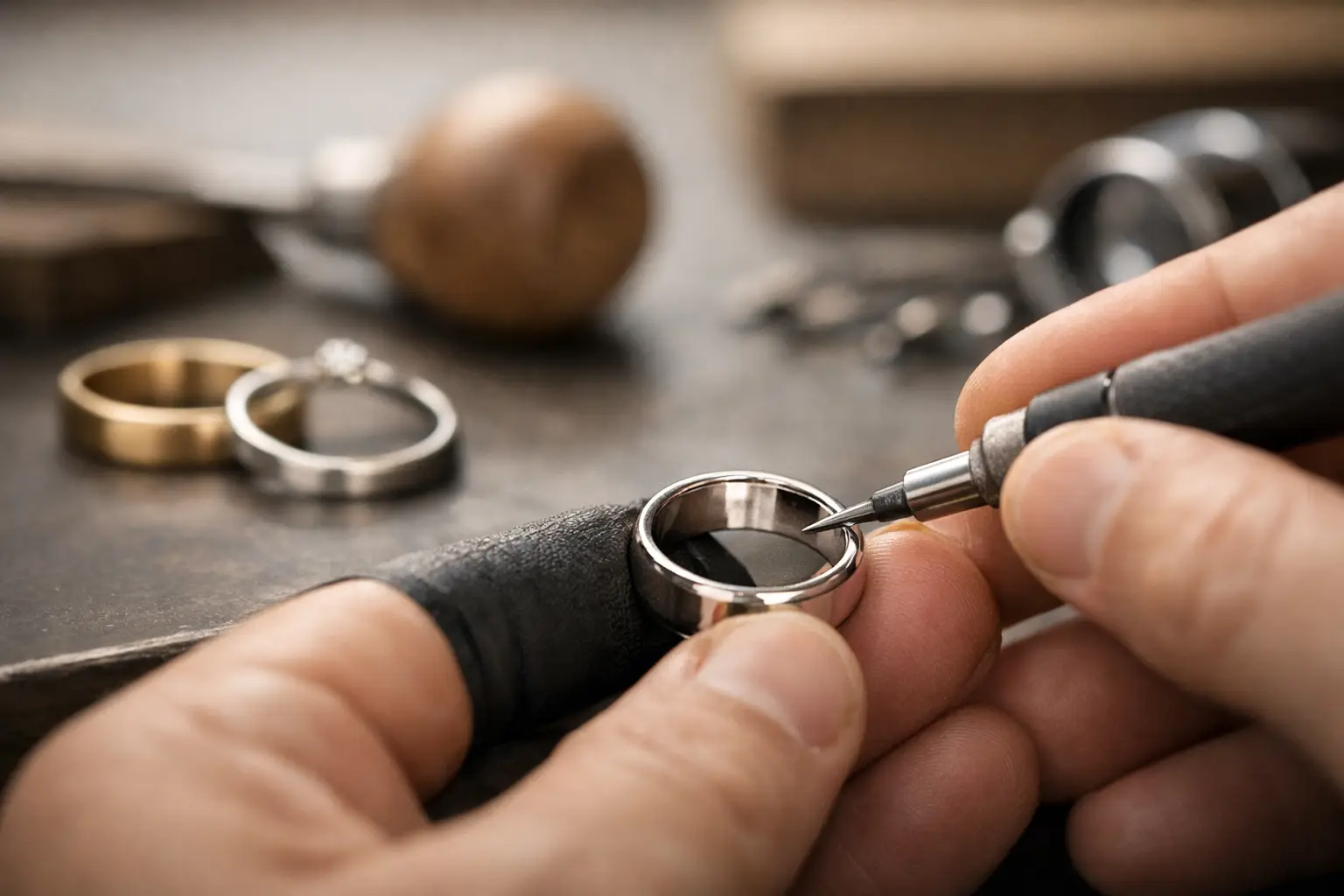
A ring can mark a promise, an anniversary, a graduation or the memory of a loved one. Having a ring engraved transforms a chosen piece of jewellery into something personal, provided the inscription is planned with as much care as the design itself. Space is limited, materials react differently, and a few extra characters can affect readability.
Whether a ring is given to an individual or as part of a series presented by an association, a school or a team, the right decision comes down to three elements: the metal, the surface area actually available, and the message to be inscribed. A well-planned engraving stays sharp, understated and comfortable to wear for years to come.
Before having a ring engraved, check the design
Not all rings lend themselves to the same personalization. A wide band, flat on the inside or outside, offers a more comfortable marking area than a narrow, curved or stone-set ring. The width of the band, its curvature and the presence of any decorative elements determine what character sizes are possible.
Interior engraving is the most common choice for an intimate message: initials, a date, a first name or a short phrase. It preserves the outward appearance of the jewellery while giving the message a sense of privacy. Exterior engraving is more visible and suits a monogram, a simple symbol or an identifying detail that is part of the design.
The condition of the ring should also be examined. A heavily scratched, misshapen or already-engraved surface may need to be assessed before any work is done. Likewise, a hollow, very thin or largely stone-set ring requires extra care. In some cases, it is better to shorten the text or choose a different marking area rather than force an inscription that is too small.
Usable size matters more than diameter
A ring's diameter does not automatically correspond to the length available for engraving. The inscription must fit within an accessible and even section of the jewellery. On a narrow band, a few well-spaced characters will look better than a compressed phrase.
Before production, it is helpful to provide the exact text, the ring size, the material and, if possible, a clear photo. This information makes it possible to confirm feasibility and suggest an appropriate layout. For an order of several rings, approving a text template helps avoid errors in names, dates or spelling.
What message should you choose for an engraved ring?
The best message is often the simplest. An engraving does not need to be long to be meaningful. Two people's initials, a significant date, a short word or abbreviated coordinates can be enough to commemorate a specific occasion.
For a couple's ring, common choices include first names, initials paired with a symbol, a meeting or wedding date, or a phrase split across two bands. For a family gift, a first name and a birth date remain timeless and understated options. A ring tied to an academic, athletic or professional achievement might feature the name of the organization, the year and a brief distinction.
Context shapes the wording. A ring presented to committee members, a championship team, or volunteers can incorporate a simplified logo, an acronym, and a year. If the goal is official recognition, it's better to favour stable, immediately readable information over a lengthy slogan.
Keeping it short without losing meaning
Abbreviations are sometimes necessary, but they should remain understandable over time. For example, "M. & L. 14.06.26" is easier to read than a full declaration shrunk to a tiny size. Accents, periods, hearts, and symbols are possible depending on the technique, but they also take up space.
The font deserves the same attention. A highly decorative typeface may look elegant on screen, then become difficult to make out at just a few millimetres. Simple, open, lightly spaced letters are generally the most reliable. For initials or a monogram, a more expressive font can work if the surface is wide enough.
Metal, material, and engraving technique
Gold, silver, stainless steel, titanium, tungsten, and certain alloys don't all respond the same way to marking. The hardness of the material, its polished, matte, or brushed finish, and the colour of the metal all influence the final contrast. A subtle engraving on polished metal can look very refined, while deeper or higher-contrast marking will be preferable for immediate readability.
Laser engraving suits a wide range of objects and allows fine text, certain logos, and detailed patterns to be reproduced with precision. It is particularly well-suited when consistency is essential, especially across a series of personalized rings. The result does depend on the metal's composition and surface finish, however: the effect can be more or less dark, matte, or contrasted.
Mechanical or CNC engraving physically removes material using a cutting tool. It can produce a clean, durable line, particularly on certain metal surfaces. The choice between laser and CNC is therefore not a matter of prestige, but of finding the right match between the piece of jewellery, the desired look, and the depth of marking required.
A blackened or filled finish can sometimes improve the visibility of an inscription, but it also alters the appearance of the jewellery. It suits a bolder aesthetic more than a very understated classic band. The right choice depends on the intended use: a ring worn daily should be easy to maintain, while a commemorative ring can favour more pronounced contrast.
Preparing a quality file or artwork
For text, it is generally enough to provide the final wording and any style preferences. For a logo, emblem, or illustration, a vector file is ideal, as its outlines remain sharp regardless of size. If that's not available, a clear, high-contrast, high-resolution image can serve as a basis for graphic preparation.
Very fine details don't always reproduce well on the limited surface of a ring. A complete institutional logo may contain small lettering, lines set too close together, or complex areas. In such cases, it is often better to use the main symbol, the organization's initials, or a simplified version of the artwork.
This adaptation is particularly useful for recognition orders. A sports association can, for example, display its logo on the outside and the recipient's name with the year on the inside. A school or a business can choose uniform markings on one side and individual personalization on the other. The consistency of the series matters just as much as the personalization of each piece.
Anticipating lead times and validating every detail
Custom engraving should never be treated as a last-minute addition. Preparing the text, verifying the material, laying out the design, and completing production all require clear validation. Year-end periods, awards ceremonies, galas, and competitions can also extend lead times.
For a single ring, spelling, capitalization, spacing, and punctuation must all be confirmed before production begins. A date formatted as "06.07.2026" reads differently than "07.06.2026," depending on the conventions of the person receiving it. For a group order, a spreadsheet listing names, sizes, messages, and quantities helps minimize the risk of confusion.
It is also wise to build in extra time if the ring is meant to be presented at a ceremony. Engraving is permanent: making a change after production may require reworking the surface, with limitations depending on the material and the depth of the original marking.
Caring for a lasting inscription
A quality engraving is meant to accompany the jewellery piece for the long term, but its appearance changes with use. Abrasive products, repeated impacts, and certain manual activities can dull the surface or cause residue to build up in the recessed areas. Gentle cleaning suited to the ring's metal helps preserve readability.
The ring should be removed when working with chemical products, during activities that carry a high risk of impact, or when safety regulations require it. Highly polished rings can also be maintained by a professional if they become scratched over time, with a note that they contain an engraving to be preserved.
A successful inscription does not depend on a spectacular text. It depends on the right message, a well-assessed space, and a technique chosen for the actual piece of jewellery. When these elements are confirmed before production, the ring retains its primary purpose: to carry a memory, a recognition, or a bond like no other.
You may also like
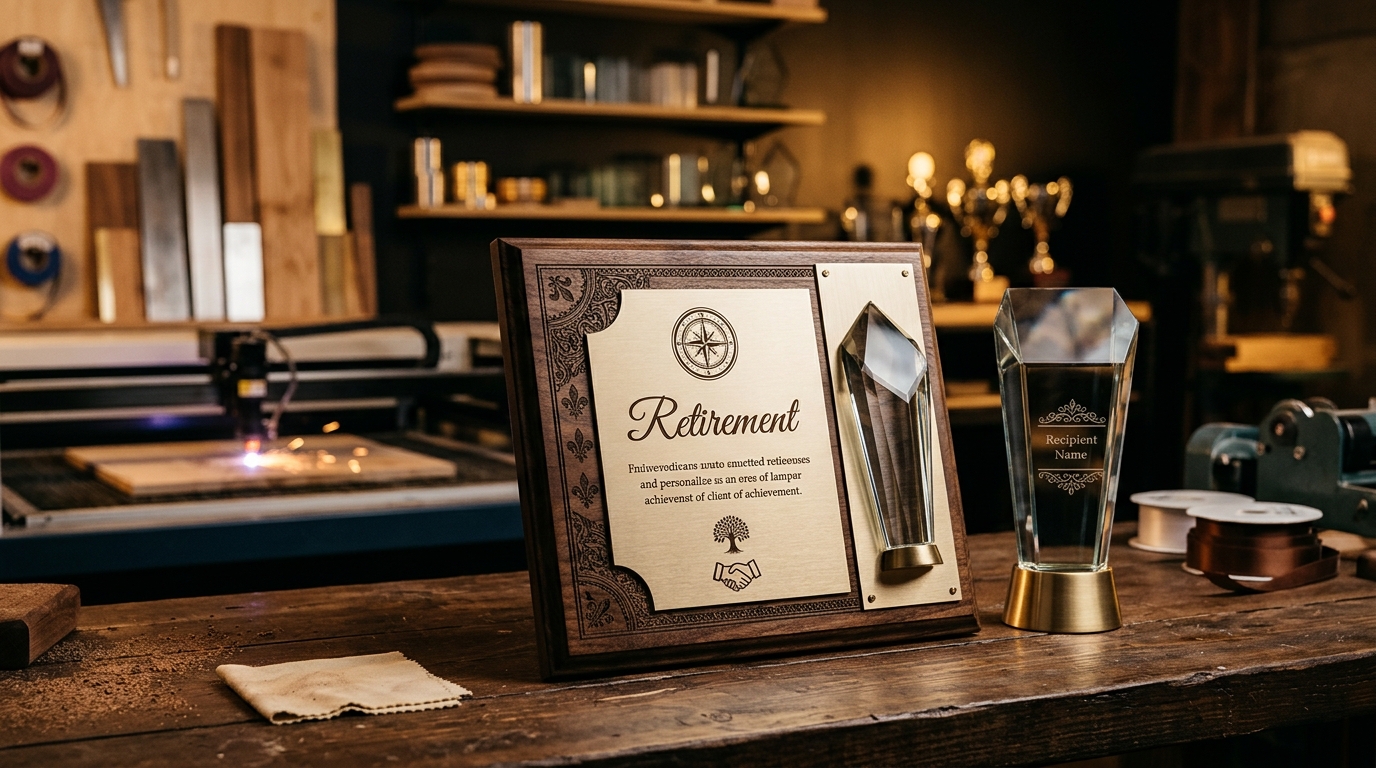
Retirement Gifts: Engraved Plaques and Trophies to Honour a Career
A retirement deserves a keepsake worthy of a whole career. Here is how to choose, word and order an engraved plaque or trophy that will truly touch the person being honoured.
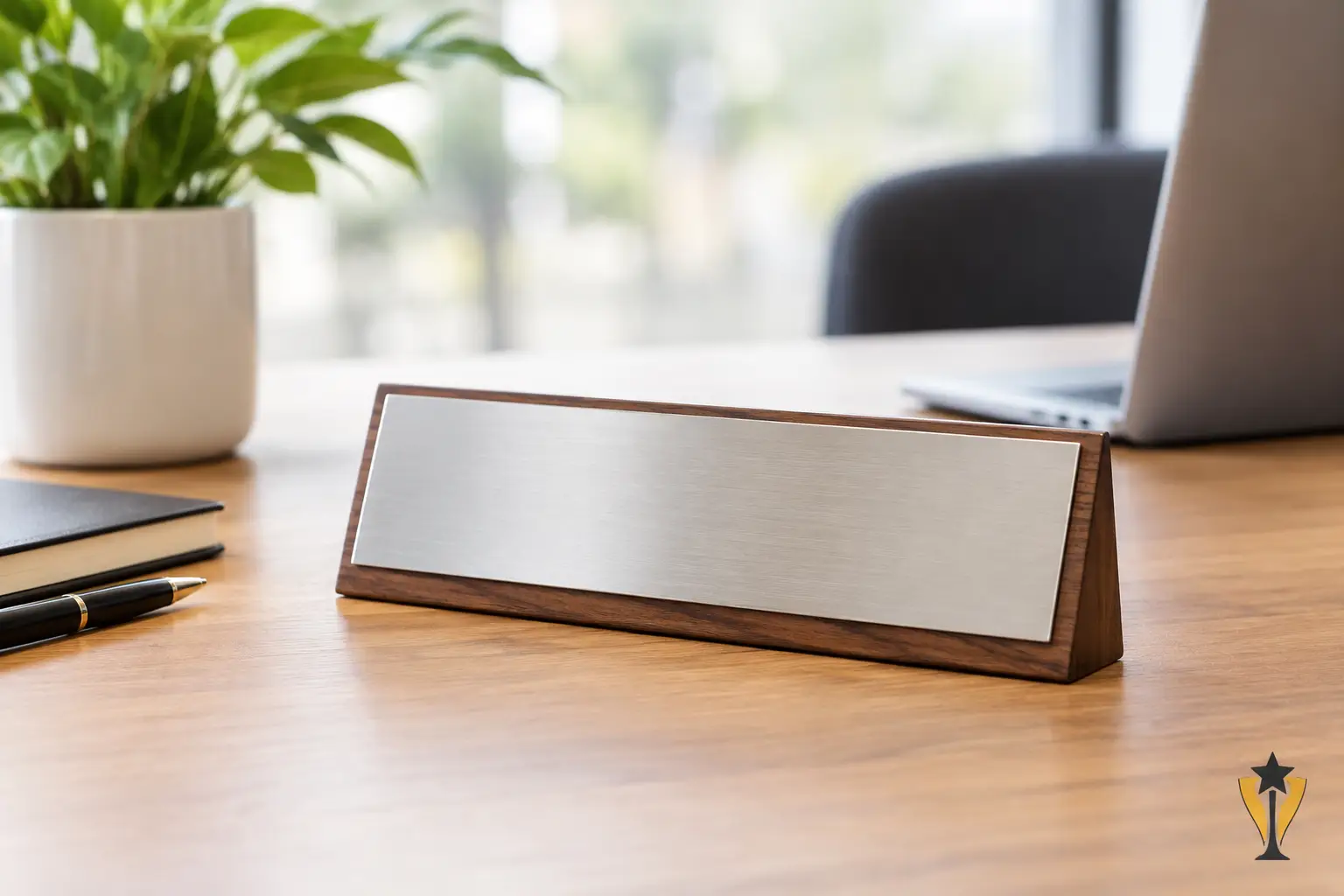
Engraved and Printed Nameplates for Your Spaces
Choose an engraved or printed name badge for offices, events, and facilities: materials, legibility, durability, and professional customization.
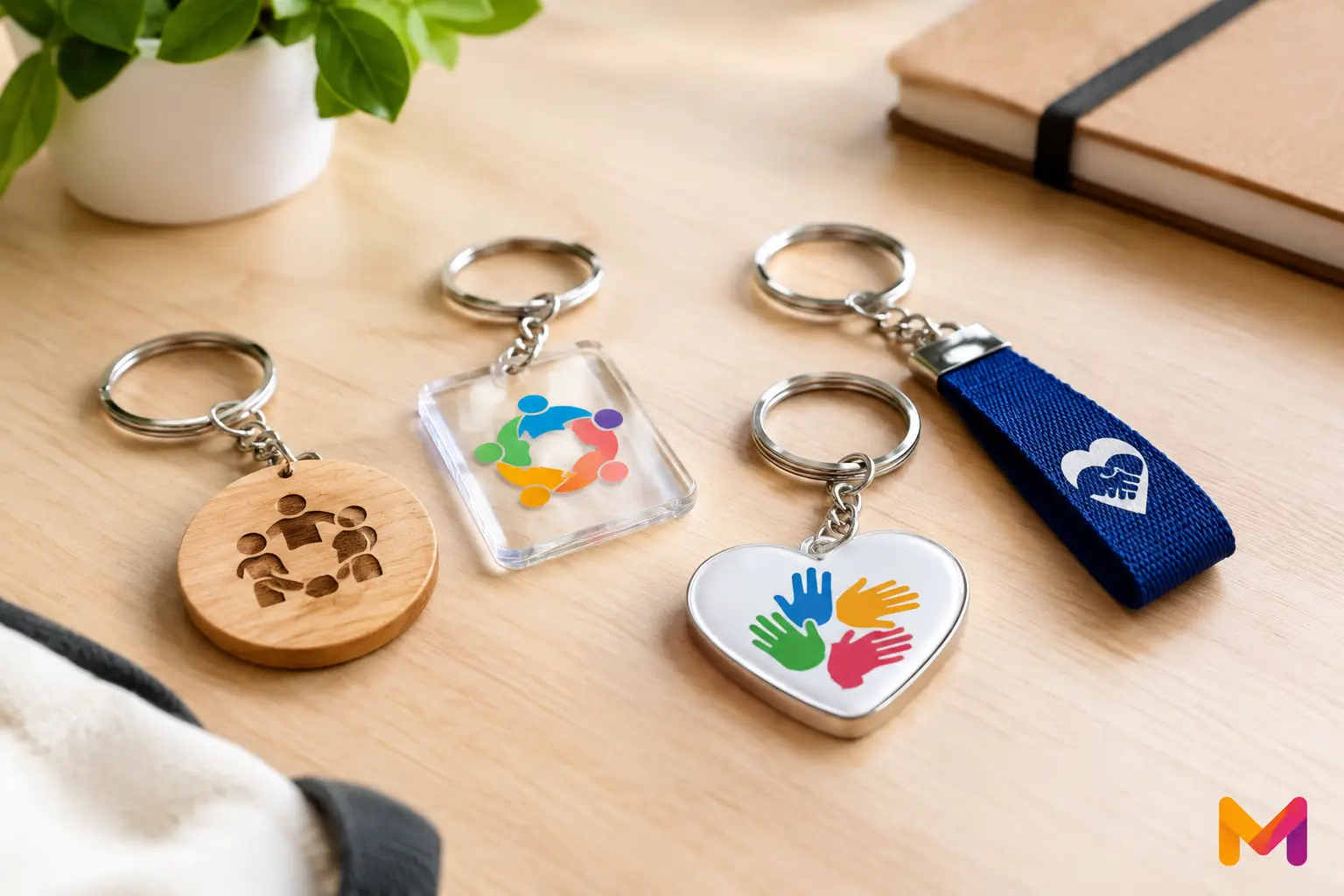
How to Choose the Right Custom Keychains for Your Association
Custom keychains for associations, durable and well-crafted, to thank volunteers, identify your members, and support your activities.