
A visitor looking for an entrance, a service counter, or a specific room shouldn't have to guess where to go. Outside a business, school, sports centre, municipal building, or industrial site, outdoor signs play an immediate role: they identify, direct, and introduce the organization before the very first interaction.
A good sign isn't just about displaying a logo. It has to withstand Quebec's changing seasons, remain legible from a distance, and suit how the space is actually used. An outdoor door plaque, a directional sign on a property, or dimensional letters on a building facade don't face the same constraints. The right choice starts with a simple question: what does the person looking at the sign need to understand, and at what moment?
The Role of Outdoor Signs in the Visitor Experience
A facade sign confirms that the visitor is in the right place. On a property with multiple doors, buildings, or departments, wayfinding signage then points them in the right direction. This continuity is especially useful for schools, sports complexes, municipalities, clinics, workshops, office buildings, and organizations welcoming the public at varying hours.
Identification must also serve on-site staff. Clear signage reduces interruptions at the front desk, makes deliveries easier, and helps new employees, volunteers, or participants find their bearings. For an event, well-designed temporary signs can guide teams, sponsors, and spectators without adding logistical burden.
Visibility must be tailored to viewing distance. A company name on a facade may need to be readable from the street or a parking lot. Conversely, exterior door signage often requires more specific details: room number, department name, restricted access, or entrance indications. Trying to convey everything on a single sign almost always reduces legibility.
Choosing the Right Type of Outdoor Sign
The format depends on the building, traffic flow, and the message. Cut-out letters or facade lettering are ideal when highlighting a name, brand, or institutional identity. They provide a clean, polished look and can be produced in finishes that match the architectural style of the building.
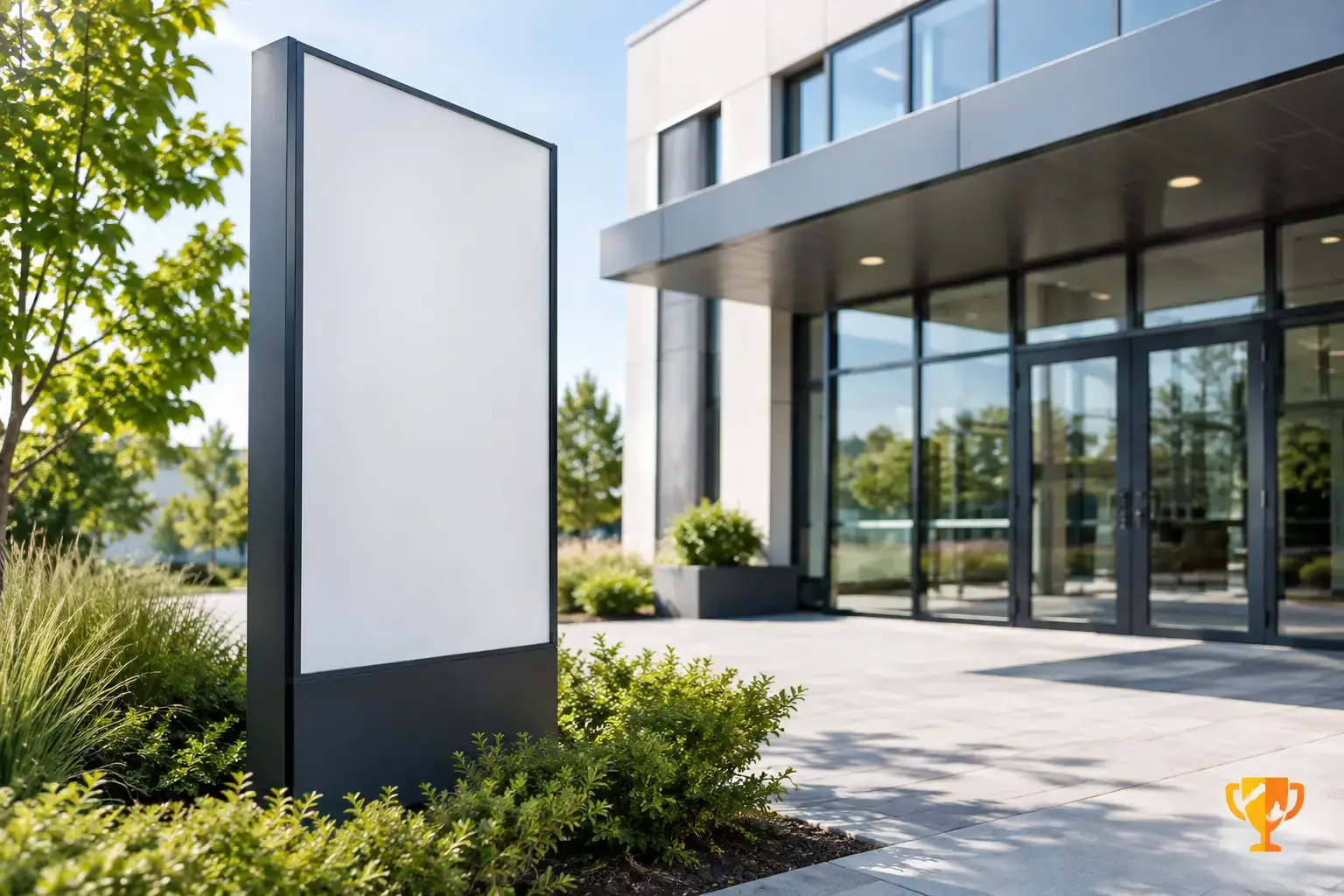
Rigid panel signs are often preferred for more detailed information: business hours, instructions, department names, civic addresses, parking, delivery access, or safety rules. They can be wall-mounted, post-mounted, or integrated into an existing structure. For larger properties, a sign at the main entrance establishes an initial visual reference before additional directional signs guide visitors closer to the buildings.
Blade signs, perpendicular signs, and certain hanging options can be useful in pedestrian areas or for entrances that are less visible from the street. Their advantage is being easily spotted from the side, but installation requires careful attention to mounting, clearance, and local regulations.
Lighting is another factor to consider based on your operating hours. An establishment open in the evening, an arena, or a business located on a busy thoroughfare can benefit from an illuminated sign or directional lighting aimed at the panel. For a daytime office, good contrast and an unobstructed location may be sufficient. It is about investing where visibility adds real value, rather than adding unnecessary technical features.
Materials: Considering Climate, Use, and Maintenance
The material should be chosen based on its location and expected lifespan. Aluminum is frequently used for outdoor signs because it is lightweight, stable, and corrosion-resistant. It is well-suited for directional signs, regulatory displays, and permanent identification.
Acrylic can provide a more contemporary look, especially for letters or plaques with a refined finish. However, it is important to select the appropriate thickness, mounting method, and location. An elegant solution under an awning doesn’t face the same stresses as a sign exposed to wind, salt, impacts, and temperature fluctuations.
Laminated materials like Lamicoid are particularly practical for certain identification plaques, door signs, and engraved applications. Engraving provides durable information without relying solely on surface printing. For messages that change frequently, such as room assignments or temporary directives, a modular solution may be more practical than a permanent plaque that needs regular replacement.
Colour selection also calls for a practical approach. White text on a light background or dark lettering over a busy image can hinder readability, even if the design looks attractive on screen. Sharp contrast, adequately sized lettering, and low-glare finishes improve visibility in the rain, under bright sunlight, and at dusk.
Designing Cohesive Outdoor Signage
An effective sign incorporates the essential elements of your visual identity: logo, colours, font, and tone of communication. This doesn’t mean every sign has to be identical. The building facade can display the organization's full name, while directional signs use pictograms, arrows, and shorter messages.
Information hierarchy makes all the difference. The name of the location or destination should appear before secondary details. On an entrance sign, for example, visitors should first see the building or department, followed by access instructions, and then hours or contact information if necessary. Too much text forces people to stop and read, reducing the sign’s usefulness for motorists.
Pictograms can simplify navigation toward washrooms, accessibility features, parking, reception, or an exit. They are especially useful in bilingual spaces and for diverse audiences. However, they should complement a clear message, not replace it when the information requires operational precision.
Graphic design, cutting, printing, screen printing, and engraving are all methods that influence both the appearance and durability of a sign. An engraved inscription or marking suited to the material may be preferable for a plaque subjected to frequent handling. Full-colour printing may be better suited for brand identity, a campaign, or a sign featuring detailed visuals.
Installation and Compliance: Checks to Make Early On
Before production begins, it is essential to confirm the exact location, available dimensions, and type of mounting surface. A sign mounted to brick, concrete, metal siding, or a post structure does not require the same installation hardware. Visibility can also be affected by trees, parked vehicles, awnings, and neighbouring signs.
Municipalities often impose regulations regarding dimensions, lighting, height, temporary signage, or overhang over walkways. Certain condominium boards, shopping centres, and institutions also have their own internal graphic standards. Checking these requirements before finalizing the artwork prevents having to alter the format, messaging, or mounting method after the fact.
Maintenance must also be taken into account. An outdoor sign should be easy to clean, inspect, and, if necessary, update without rebuilding the entire structure. For an organization undergoing an administrative change, a school repurposing its facilities, or a business adding a department, this flexibility can reduce long-term costs.
Preparing a Clear Project for Production
A signage project moves forward much more efficiently when the initial details are clear. Approximate dimensions, photos of the location, final wording, a high-quality logo file, and the desired installation date make it possible to evaluate options quickly. For multi-sign projects, preparing a numbered list of locations and messages helps prevent transcription errors.
Organizations that also order door plaques, name badges, promotional apparel, trophies, or event items benefit from streamlining their graphic files. The same logo, colours, and nomenclature can serve multiple needs. At Mr Trophée, our signage, graphic design, laser engraving, CNC engraving, and screen printing services allow us to approach these projects with seamless production continuity.
The best outdoor sign is the one that makes the right information visible in the right spot, without requiring any extra explanation. By basing your choices on your visitors’ actual route, you can select a format, material, and marking technique that will remain effective long after installation.
You may also like

Outdoor Plaque Maintenance Guide
Outdoor plaque maintenance guide to preserve the legibility, finish, and mounting of your signs, engraved plaques, and markers throughout the seasons.
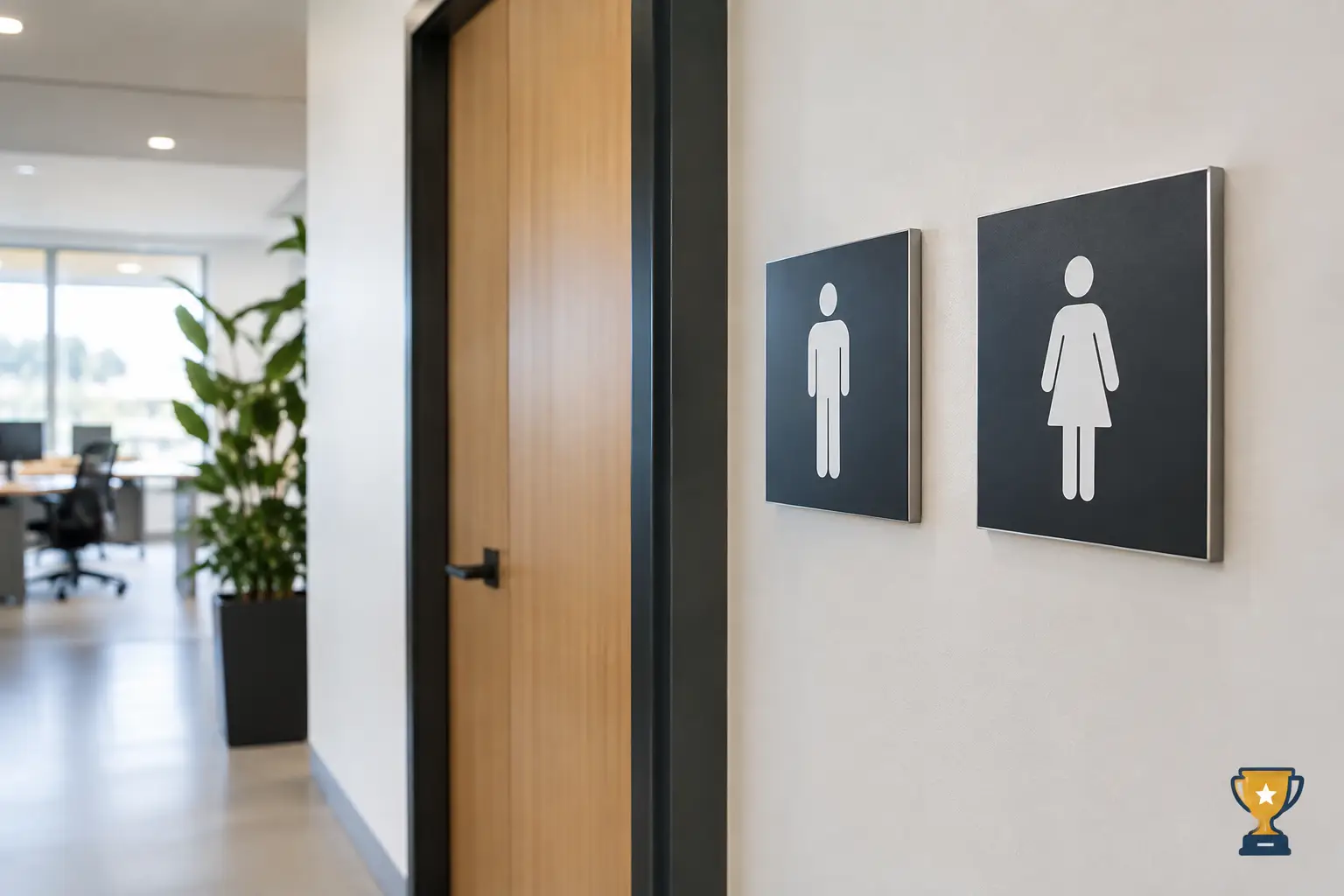
Guide to Washroom Signs for Businesses
Workplace restroom sign guide: materials, pictograms, accessibility and installation for clear, durable signage in Quebec.
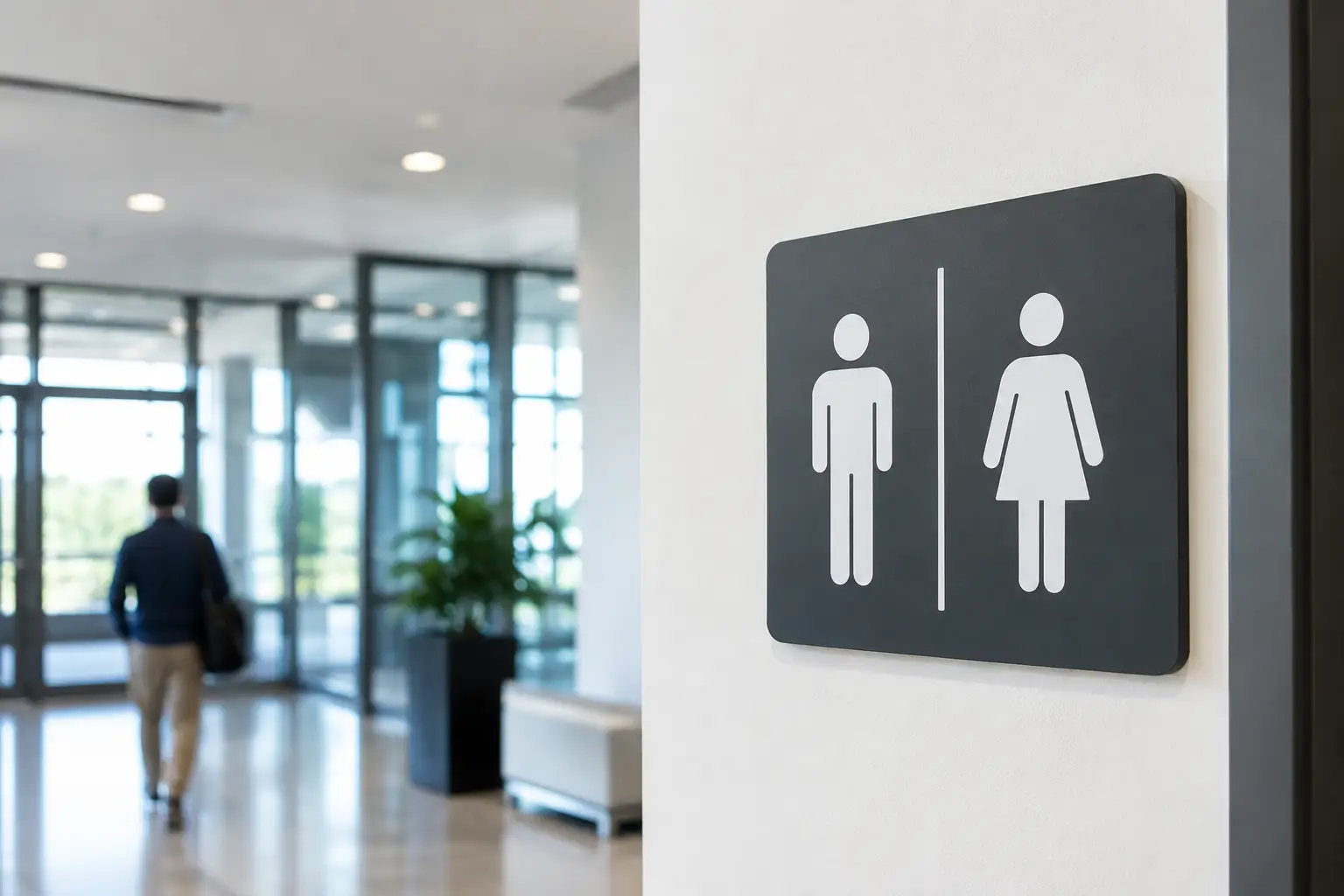
Sanitary Signs for Public Spaces and Workplaces
Choose clear, durable washroom signs suited to your spaces to guide visitors, support hygiene and reduce errors.