A Decision Visible From the Moment You Walk In
An unmarked office door, a confusing corridor or a counter with no clear reference points can quickly leave visitors with questions. Between an interior sign or wall decal, the right choice depends less on aesthetic preference than on actual use: directing, identifying, informing or showcasing your brand.
For a school, a municipality, a clinic, a sports club or a business, interior signage needs to remain clear on a day-to-day basis. It also needs to suit the constraints of the space: available surfaces, traffic flow, maintenance, how long the display will be up and the ability to update information. An engraved plaque and a wall vinyl do not serve the same purpose, even if they can work very well together.
Interior Sign or Wall Decal: The Key Difference
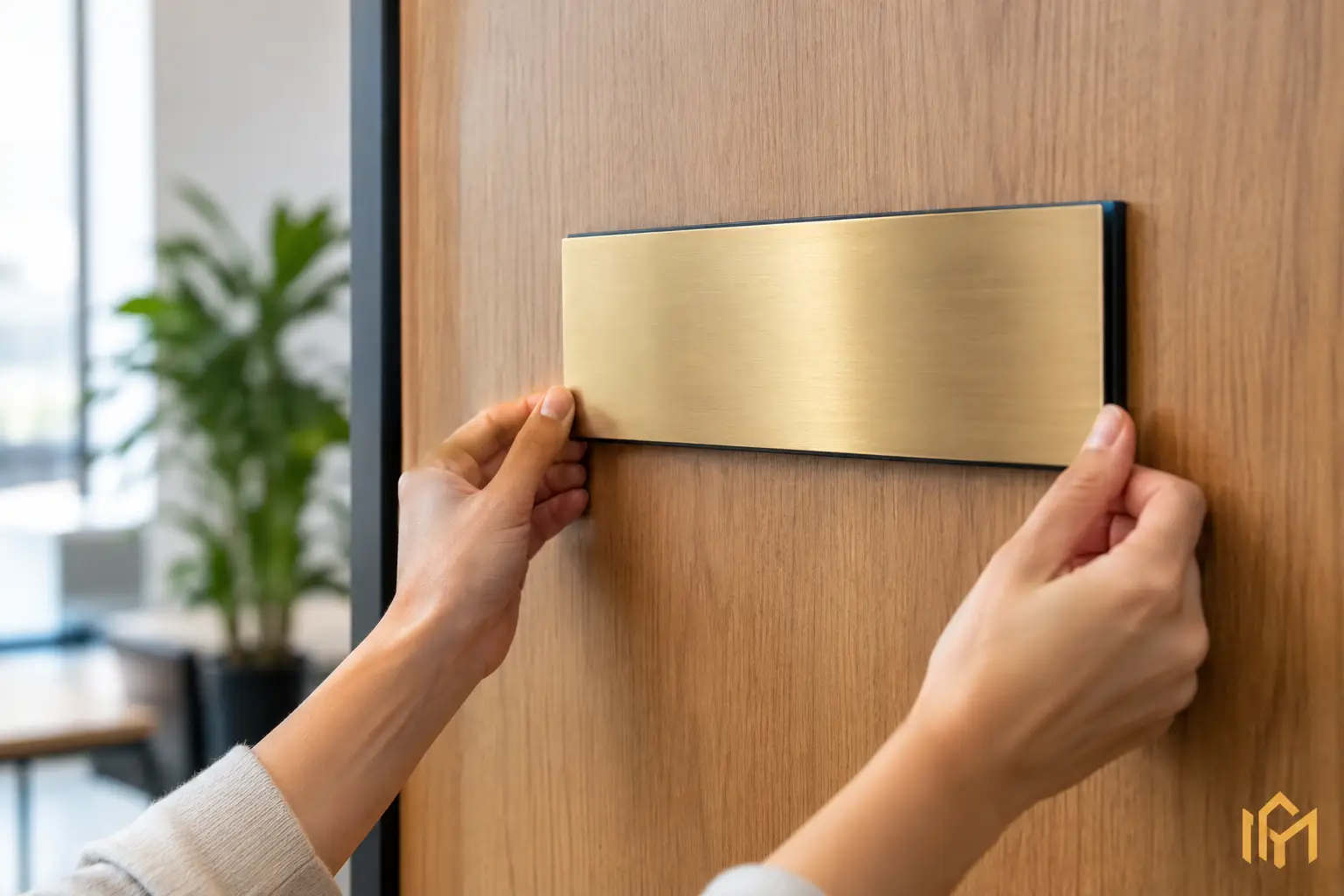
An interior sign is a rigid or semi-rigid signage element, typically installed on a door, a wall, a counter or at the entrance to a specific area. It can be made from Lamicoid, acrylic, aluminum, PVC, wood or metal, depending on the desired style and conditions of use. Laser or CNC engraving allows names, room numbers, pictograms, instructions, hours of operation or logos to be inscribed with a durable and professional finish.
A wall decal, also known as wall vinyl, adheres directly to a smooth surface. It is well suited for messages, brand visuals, quotes, schedules, temporary promotions or large-format graphic reference points. Whether printed, cut to shape or made up of lettering, it offers great freedom of format while requiring very little thickness.
The distinction is straightforward: an interior sign is often used to identify a space or function on a permanent basis, whereas a wall decal transforms an existing surface or conveys a visual message. In a community centre, for example, door plaques can identify the rooms, while a wall vinyl displays the activity schedule or program partners.
Choosing Based on Duration and Frequency of Changes
The first question to ask is this: does this information need to stay the same for several years? If so, an engraved sign is generally the most practical option. Office numbers, washroom identification, meeting room labels, safety instructions and directional plaques are best produced in a durable material. Engraving does not fade the way a surface print can, and it maintains excellent legibility over time.
Conversely, if the message changes frequently, a wall decal allows for greater flexibility. A recruitment campaign, temporary dressing of an event space, seasonal décor or the promotion of a new service can all be refreshed without replacing an entire rigid structure.
There are also in-between scenarios. A business that hosts multiple professionals in rented offices may opt for a sign system with interchangeable inserts. The frame stays in place, but the name or title can be swapped out easily. This solution requires a higher initial investment than a simple decal, but it avoids redoing all the signage every time there is a staff change.
The Installation Surface Influences the Choice
A painted wall, a glass partition, a metal door, a textured surface, or a wood panel don't all behave the same way. Vinyl adheres particularly well to clean, dry, and relatively smooth surfaces. On fresh paint, however, you need to allow the recommended drying time before application. On heavily textured surfaces, adhesion and edge sharpness can be compromised.
An interior sign offers greater flexibility. It can be mounted with screws, standoffs, permanent adhesive, or a combination of methods depending on the surface. On a high-traffic door, a rigid plate often holds up better against repeated impacts and friction than a printed sticker.
Glass deserves special attention. A frosted sticker or cut vinyl can preserve natural light while creating privacy and incorporating a logo. To identify a conference room or an executive office, an acrylic plate mounted near the door provides a more formal and immediate landmark. Both solutions can coexist without cluttering the space, as long as a clear visual hierarchy is maintained.
Visibility, Branding, and Quick Readability
Interior signage doesn't need to be decorative at all costs. Its primary purpose is to be read quickly, sometimes from several metres away. Insufficient contrast, a font that's too thin, or an oversized logo all undermine its function, even if the design looks elegant on screen.
For a door sign, favour short text, strong contrast, and dimensions suited to the reader's viewing distance. The room name or office number should stand out prominently. Secondary information, such as a department name or phone extension, can be added in a smaller, more discreet size.
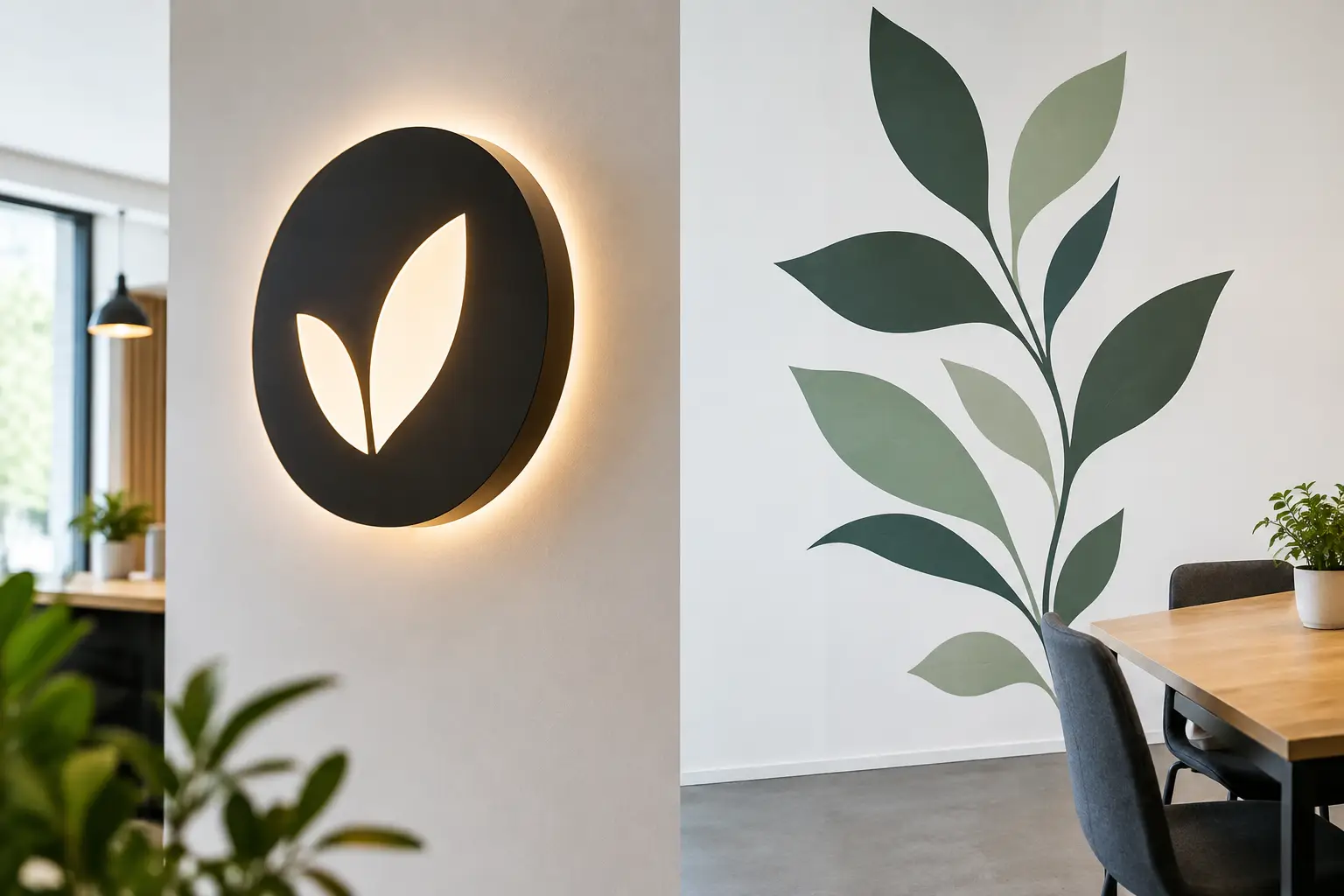
Wall vinyl allows for greater graphic expression. It's particularly useful for incorporating an organization's colours, showcasing its mission, defining reception areas, or bringing life to a corridor. In a school, it can also serve to create colour-coded or mascot-based landmarks to help students and visitors find their way around.
Consistency matters just as much as the product chosen. When plates, posters, display cases, and promotional wear all share the same colour palette and logo treatment, the space feels better organized. This continuity also strengthens the organization's credibility with visitors, employees, parents, and partners.
When to Combine Both Solutions
Systematically pitting interior signs against wall stickers limits your options. In many projects, the most effective approach is to assign each product a specific role.
A clinic might install engraved plates for treatment rooms and washrooms, then use wall vinyl at the reception desk to present its services and values. A sports centre can durably identify changing rooms, exits, and offices with rigid signs, while applying a large team-coloured wall decal in its entrance hall.
For an event, stickers can temporarily dress up a space, while signs serve the reusable elements from one year to the next: welcome areas, registration, restricted access, or trophy presentation zones. This combination reduces replacement costs while delivering a more polished result.
Planning a signage project without unpleasant surprises
Before requesting a quote, gather approximate dimensions, photos of the surfaces, the number of elements required, and the exact content to be displayed. Logos should be provided in a sufficiently high-quality format, ideally vector when possible. For names and titles, careful proofreading is essential, especially for permanent engraving.
It is also helpful to specify installation constraints from the outset: concrete wall, fire door, glass surface, difficult access, frequent cleaning, or areas open to the public. These details influence the material, adhesive type, mounting method, and production timeline.
At Mr Trophée, graphic design, printing, cutting, laser engraving, and CNC engraving make it possible to tailor signage to the practical needs of any space. A single project can incorporate Lamicoid plaques for doors, directional panels, and custom wall elements, complete with the names, pictograms, and colours specific to the organization.
Avoiding choices that complicate maintenance
A very light-coloured wall sticker on a pale wall risks becoming invisible under certain lighting. A glossy plaque in a brightly lit area can produce distracting glare. Finishes should therefore be chosen based on the lighting, reading distance, and actual foot traffic in the space.
Consider cleaning as well. In schools, sports facilities, clinics, and spaces open to the public, surfaces are often disinfected or wiped down. A properly mounted sign made from an appropriate material will hold up better to this kind of upkeep. For vinyl, choosing a suitable product and ensuring a careful installation limits peeling corners and dust accumulation.
Finally, avoid mixing styles without good reason. Three different typefaces, several uncoordinated colours, and varying formats make wayfinding more difficult. Effective signage remains consistent from one room to the next, even when each element serves a different function.
A good project starts with a simple plan: what needs to last deserves a clear and durable sign; what needs to change or cover a large surface is often better suited to wall vinyl. By establishing this division before production begins, you end up with spaces that are easier to navigate and an image that remains true to your organization.
You may also like

Hall of Fame: How to Create a Wall of Honour for Your Club or Business
A well-designed wall of honour keeps your organization's history alive and inspires the next generation. Here is how to choose the format, materials and engraving so it lasts for years.
Order a custom door sign
Ordering a custom door sign: materials, sizes, engraving, and details to consider for clear, durable, and professional signage.

Trophies and Medals for a Basketball or Volleyball Tournament: A Guide for Organizers
Organizing a basketball or volleyball tournament? Here is how to choose trophies, medals and individual awards without going over budget.