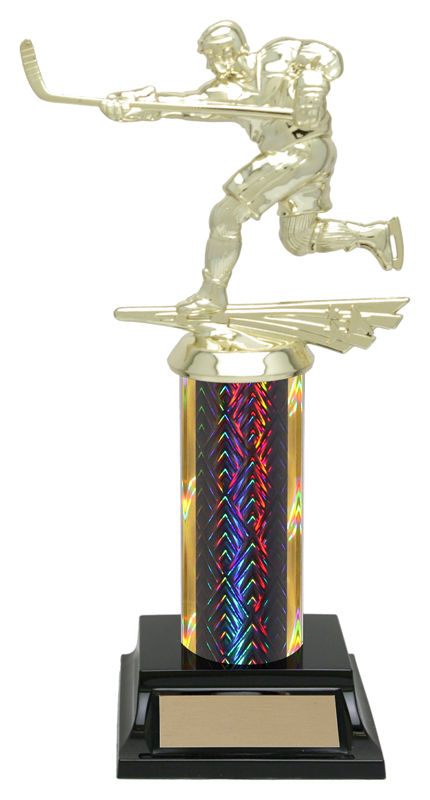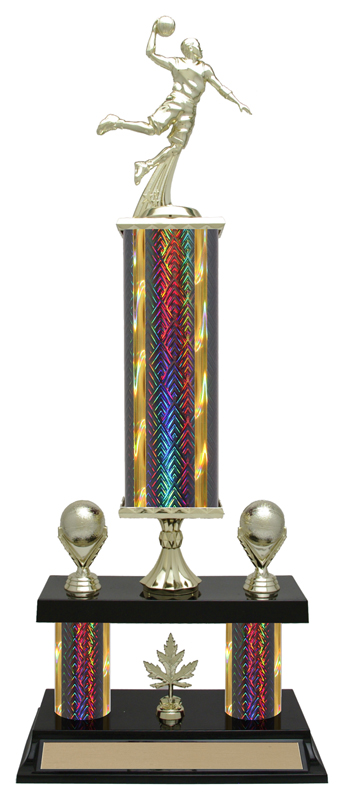

Most organisations do not have a recognition problem. They have a format problem. When a company hands out the same plaque for hitting a quarterly target and for surviving another year on the payroll, employees receive two messages that cancel each other out.
Employee of the Month and service anniversary awards are two of the most common corporate award formats, yet they are not interchangeable. One rewards performance inside a defined period; the other rewards loyalty across time. Confuse them, and you devalue both the achievement and the relationship. That is why any serious employee recognition program must treat format as a strategic decision, not an administrative afterthought.
This head-to-head comparison explains why format choice is a recognition decision, how each award works, and the three ways organisations send mixed signals by using one where the other belongs. It then shows how to build a deliberate two-track award structure that keeps both signals intact, and how to choose the right physical award, whether plaques, trophies, pins or engraving. The goal is not a bigger trophy. It is two clear messages.
Two Awards, Two Signals: Why Format Choice Is a Recognition Decision
As the introduction sets out, these two formats carry different messages and are rarely designed as separate tracks. The tenure side is already under scrutiny, with SHRM reporting that service-anniversary awards miss the mark with millennials, which means the structural gap between the two tracks is worth closing deliberately.
HR writing already treats rewards and recognition as distinct categories. This piece goes one step further, separating two award formats that are routinely blended together.
The argument ahead is direct: using one where the other belongs devalues both, and the fix is structural, not a bigger trophy. A larger plaque aimed at the wrong signal is still the wrong signal.
The practical payoff is a two-track design: a performance track built for short cycles and public comparison, and a tenure track triggered by dates and kept non-competitive. Because both tracks eventually need a physical object, later sections cover plaques, trophies, pins and engraving choices, including bilingual ordering for Quebec organisations that report in French and English.
Employee of the Month: Rewarding Performance Inside a Period
The first track is the one most organizations already run. Performance awards begin with a window: an employee-of-the-month format (or quarterly, or per-campaign version of it) is a periodic, comparative employee recognition program that ranks individuals against peers inside a fixed period. The comparison is the mechanism, not a side effect.
What it communicates is direct: we watch near-term performance, and we are willing to compare people openly to say so. That is a stronger statement than most managers intend, which is why the format earns its place only under specific conditions.
Where it works: short-cycle, measurable roles. Sales floors, production lines, seasonal teams and project sprints all produce output visible inside the window, so a monthly or quarterly verdict lands while the work is still fresh.
Where it breaks down: roles whose contribution is invisible month to month, teams where collaboration matters more than individual output, and thin nomination pools. Run it too broadly and a pattern emerges that most managers will recognise: everyone eventually gets a turn. Once the rota is visible, the award stops signalling anything, because a predictable winner is not a comparison.
Design notes for keeping the signal intact:
Publish criteria before the cycle opens, not after nominations arrive.
Keep the window honest. A Q3 push rewarded in December is a history lesson, not recognition.
Resist defaulting to whoever is loudest or most visible to management.
Decide in advance what happens in a month with no clear winner. A withheld award is more credible than an invented one.
Those four rules turn a monthly rota back into an actual signal, which is the whole point of separating this track from the one that follows.
Service Anniversary Awards: Rewarding Loyalty Across Time
The anniversary award is a milestone trigger, activated by a date rather than a performance comparison, which makes it structurally unlike anything monthly. Nothing is ranked, so nothing invites a contest. WorldatWork, the leading global nonprofit organisation for total rewards professionals, draws the line between spontaneous thanks and structured, planned recognition, and this format sits firmly on the planned side.
What it communicates is simple: we value that you stayed, and the relationship outlasts any single quarter or project. That message is why the format is structurally fair. It requires no ranking, cannot be gamed by proximity to a manager, and never embarrasses the people who did not win, because there is no field of losers.
But an anniversary award left alone as the only recognition in an employee recognition program teaches the wrong lesson. Strong performers learn that tenure, not contribution, earns the trophy, and they act accordingly.
Design notes:
Tier the milestones. Common practice is to mark one, five, ten and twenty years as distinct thresholds, with the object escalating at each.
Fix the ceremony. A predictable rhythm matters more than spectacle: an annual gathering, a quarterly presentation, or a moment at a team meeting.
Make it substantial. An award people keep rather than shelve carries the message past the day it was handed over.
Tenure awards work best with company, not competition. Employee recognition ideas that sit alongside them include peer notes for day-to-day thanks, project-completion tokens that mark finished work, and team-level markers for shared wins. None of these compete with the anniversary, because none of them are about time.
The trouble begins when organisations treat one track as a substitute for the other.
The Confusion Cost: Three Ways Organisations Send Mixed Signals
Both formats work when they are kept apart. Blend them and the signals cancel each other out.
Misuse one: the anniversary trophy as a performance stand-in. When a service milestone becomes the year's recognition highlight, it flattens two messages into one vague "thanks for being here." Tenure gets credited for contribution, and neither claim survives the test.
Misuse two: a monthly cycle so broad that everyone wins. Rotate the winner long enough and the award stops being a comparison. It becomes a rota, a calendar obligation the team reads as an entitlement rather than a signal.
Misuse three: one budget line, one format, one event. A single annual ceremony asked to carry both a performance message and a tenure message lands neither. The audience cannot tell which achievement is being honoured, so it honours none.
The cost shows up in behaviour, not in spreadsheets. The monthly winner stops being someone colleagues talk about. The ten-year recipient, handed the same generic piece as everyone else, quietly wonders whether anyone noticed the work behind the years.
The correction is not a bigger trophy or a louder ceremony. It is separation: one track that measures contribution inside a period, one that marks time served, each with its own criteria, calendar, budget and physical award. Give every award exactly one meaning, and both regain the weight they lost.
Building a Two-Track Award Structure That Keeps Both Signals Intact
Separation is the fix, and it takes two tracks designed on purpose.
Track one: performance. Keep the cycle short, monthly or quarterly, with criteria published before the cycle opens and a named winner announced openly. Then choose an award modest enough to hand out twelve times a year without straining the budget: a medal, a small trophy, a pin.
Track two: tenure. Trigger it by date, never by comparison. Tier it by milestone, following common practice of one, five, ten and twenty years. Because it is non-competitive, nobody is ranked and nobody is embarrassed. Make the award substantial enough that recipients keep it; an engraved plaque or crystal piece reads as a keepsake rather than a formality. Long-service awards are conventionally built around milestone years and non-cash forms, check local tax guidance before ordering (the HMRC guidance at EIM01500 covers UK rules; verify Canadian equivalents with CRA).
These two tracks then need separate calendars. Performance runs on a fixed monthly or quarterly rhythm; service runs on rolling anniversary dates or one annual ceremony. The two should never share a stage. The language should differ just as clearly: performance citations use verbs such as delivered, improved, solved, led, while tenure citations use words about time and commitment: years served, history, loyalty, steadiness.
Rule for overlap. If one person qualifies for both in the same cycle, hold two separate moments and give two distinct awards. Merging them collapses two signals into one.
Audit this week. List every award your organisation currently gives. Label each one performance or tenure. Whichever track has no home is the one generating your mixed signals, and it is the gap your employee recognition programs should close first.
With both tracks defined, the object itself can be matched to the message.
Choosing the Physical Award: Plaques, Trophies, Pins and Engraving
With the tracks separated, the final question is physical: which object carries which message?
For fast-cycle performance awards, the award should be repeatable and modest, so medals, small trophies or pins fit. For milestone service awards, the award should read as a keepsake, so plaques, engraved crystal or a heavier trophy fit better.
Material speaks before anyone reads the engraving. A plaque is typically wall-mounted and built to last; a medal is tied to a single occasion; an engraved keepsake is sized and finished to be kept rather than shelved.
Engrave enough that the object still makes sense a decade later: name, role, dates, milestone number, and one short line of context. A bare year tells a future reader nothing.
In Quebec, bilingual engraving is practical rather than decorative. Businesses, municipalities and sports organisations that order French and English awards from a single supplier keep both tracks visually consistent instead of mismatched.
Mr Trophée, a workshop in Léry, Quebec, produces personalised trophies, medals, plaques and engraving with laser engraving and colour printing, backed by bilingual service and a best-price guarantee. You can review the full catalogue or the online boutique before committing to a format. For advice or a quote, call 514-565-6665.
Lead time matters as much as finish. A performance track needs small runs turned around reliably month after month, not a one-off showpiece. Set a standing template, then reorder it. That is how each award keeps meaning exactly one thing.
Conclusion: Two Tracks, Two Clear Messages
Performance awards and tenure awards are not interchangeable, and each loses value the moment it is asked to carry the other's message.
The three-step corrective outlined above, label, separate, never merge, is design work, not spending.
A modest medal, a well-engraved plaque or a keepsake chosen for the right track communicates far more than a larger, costlier trophy aimed at the wrong signal. Format follows function, and function is what employees actually read.
If you are planning or rebuilding an employee recognition program, call Mr Trophée at 514-565-6665 for a quote on personalized engraved awards, with bilingual service in French or English.
You may also like

Why Employee Recognition Awards Get Abandoned After Year One
Employee recognition awards fail when they are consumable. Learn why durable, personalised awards keep recognition visible and how to fix your program.

Delivering a National Sales Awards Gala in Six Weeks
How a national sales gala got 90 custom trophies in six weeks: format standardisation, sequenced proofing rounds, and staged delivery to the venue.

How to Organize a Successful Awards Ceremony
Plan how to organize an awards ceremony with custom trophies, medals and plaques, while keeping budget, timelines and a clear protocol in view.