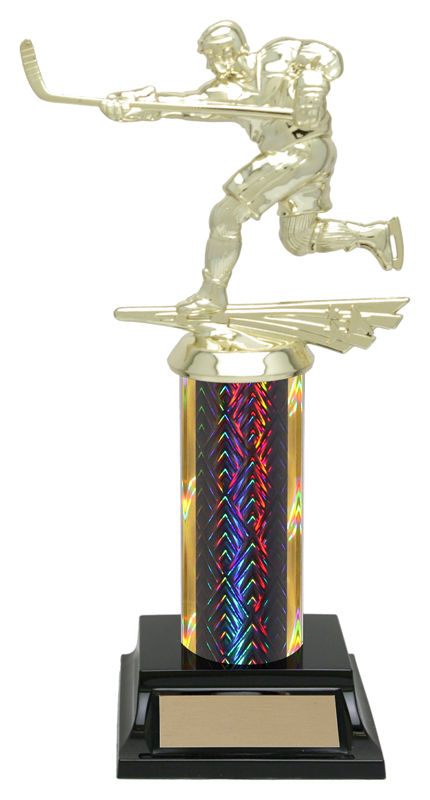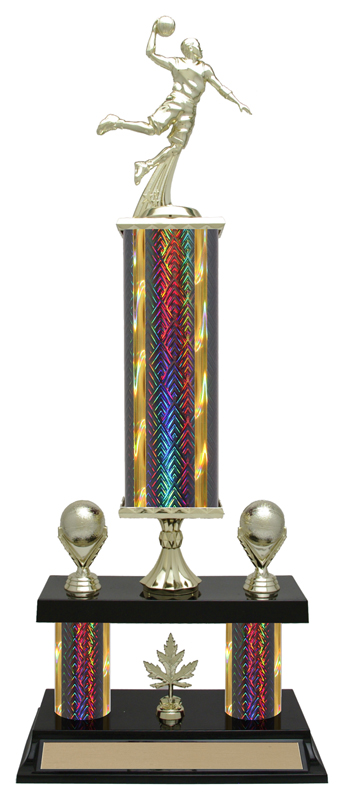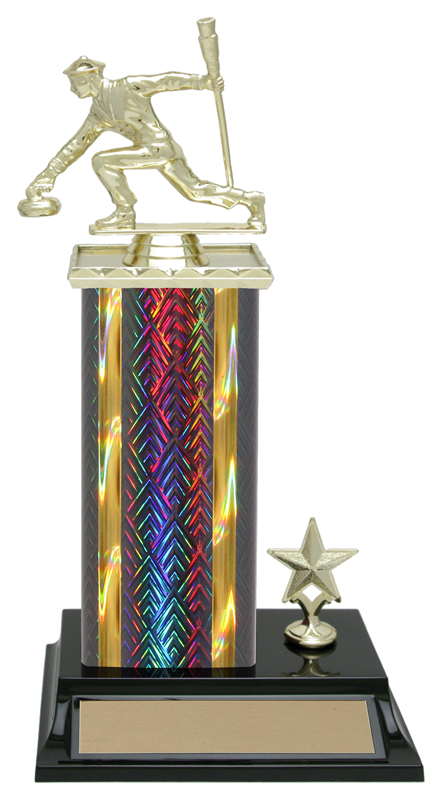

Ninety engraved trophies. One national sales awards gala. Six weeks from brief to stage. That is the reality when a ceremony date cannot move. A custom trophy order in Canada at this scale is not a casual purchase; it is a deadline-driven project where every approval, proof, and shipment affects whether the awards are ready on the night.
This case study follows one Canadian sales gala from first brief to 90 awards on stage. It explains what a national sales awards gala actually requires, why a gala award order must be managed as a project, and where award timelines usually break. It then walks through the three decisions that mattered most: standardising formats, sequencing proofing rounds, and staging production and delivery. You will also see how bilingual proofing and Canadian logistics shaped the plan, what the result looked like on stage, and what the buyer would do differently next year. The conclusion distills the decisions that protect a fixed date.
At a Glance: 90 Trophies, One Fixed Date, Six Weeks
The client: a national sales organisation whose year-end awards gala date could not move. Venue contracts, executive travel, and a published programme all pointed to the same evening.
The order: 90 engraved awards spanning individual sales categories, team recognition, and milestone service anniversaries, all landing in one delivery window.
The window: six weeks from first brief to trophies on stage, covering artwork setup, bilingual proofing, engraving, packing, and transit to the venue.
The format mix: laser-engraved plaques and trophies with colour-printed accents, produced in-house at a Quebec workshop producing trophies, plaques, medals, and engravings in-house, not resold through a third party.
Why the numbers matter: at 90 pieces, every approval delay multiplies across the batch. A single unapproved name can hold an entire tier of custom trophies and awards.
The sections that follow trace the decisions that made that window workable.
The Brief: What a National Sales Awards Gala Actually Requires
A gala order is not a large one-off trophy order. It is 90 named recipients across several categories, tied to a stage running order and a printed programme that locks names weeks before the ceremony.
Day one needs five inputs: the recipient list with exact spellings, category titles, the award format assigned to each tier, logo files in usable formats, and the confirmed ceremony date.
Tiers drive format, and format drives lead time. A top-seller trophy with colour-printed accents, a category plaque, and a milestone service award follow three different production paths. Treating them as variations of one item is how a schedule collapses.
The dependency buyers miss: the programme and the engraving data must agree. If the stage callout differs from the award in the presenter's hand, the room notices.
For anyone researching custom trophies and awards, the recipient list, not the design mockup, is the real critical path. Whether the order spans multiple service categories or a single tier, the sequencing starts with that list.
Why a Gala Award Order Is a Project, Not a Purchase
A gala award order behaves like a project because the ceremony date is contractual. Once the venue is booked and the programme printed, it cannot be renegotiated, so the schedule is built around the date from the first conversation rather than adjusted to fit production.
The method is to work backwards from the event date, subtracting transit, production, proofing, and internal approval time in turn, so the workshop and the client negotiate against one shared calendar. That shared calendar is what lets in-house custom trophy and award services be sequenced against approval capacity rather than a production queue.
Published vendor guidance on award engraving lead times describes single awards: a proof returned in one to three days, roughly six days of production after approval, and about two weeks order to delivery. Treat those figures as industry-practice context for typical single-award orders, not a guarantee for a 90-piece run with staged approvals and multiple approvers.
At gala scale, the real risk is coordination, not capacity: 90 names, several sign-off points, and a client team also running the event itself.
Where Award Timelines Actually Break
The risk in a six-week gala build rarely sits on the workshop floor. Industry guidance on award engraving lead times puts the slippage squarely in the approval stage, where proofs sit unsigned while the one person authorised to sign off is travelling, in meetings, or waiting on a category list from sales leadership that has not arrived yet.
At 90 pieces, that delay compounds. A late proof round does not push one trophy forward; it pushes a whole batch, and by week four late rounds begin colliding with transit.
That same guidance puts a straightforward single-award order at roughly two weeks end to end, a baseline that multiplies unpredictably at 90 pieces.
Decoration method is a genuine scheduling variable. Laser engraving moves quickly as a surface pass; colour fill requires an additional pass per colour, per award, so at 90 pieces colour fill becomes a scheduled production stage rather than a finishing flourish. Naming that delay in advance is what makes six weeks feasible; it lets slack sit in the right stage rather than surface in week five, which is where the format decisions begin.
Decision One: Standardise Formats Before Anything Else
Naming the delay is one thing; removing it is another. The first decision that bought back time was refusing 90 unique pieces.
We grouped the order into four format families: a top-seller trophy, a category plaque, a service award, and a team award. Artwork setup, tooling, and proofing then happened once per family instead of once per recipient.
Each tier got one locked engraving layout: same font, same logo placement, same name position and size. Only the variable data changed. Laser engraving handled volume efficiently; colour was reserved for the top tier only. Mr Trophée's workshop produces custom trophies and awards, plaques, and engraved pieces in-house.
Standardisation is also what makes a fixed ceremony date survivable: a late name swap becomes a data edit, not a design change. And because engraving and colour printing happen in-house, a format locked in week one never needed re-quoting, re-sourcing, or re-approval as the order grew.
Decision Two: Sequence the Proofing Rounds
Standardised formats only pay off if approvals move. We batched the 90 awards by award tier rather than alphabetically by recipient, so three tiers proofed in parallel instead of queuing behind one slow sign-off.
Each batch ran a master design proof and a separate data proof for the name list. Correcting a spelling never reopened a settled layout with a new approver. Before the order opened, the client named an approver and a deputy per batch, each with a agreed return window per proof batch, an arrangement worth establishing in writing before the order opens rather than assuming it will happen naturally.
We also built one authoritative recipient list with exact spellings and correct accented characters, then froze it before the final proof round, so late edits became deliberate exceptions. A documented revision trail per batch let additions or substitutions be quoted against a known baseline instead of reopening all 90 pieces.
Next, staging production and delivery.
Decision Three: Stage Production and Delivery
With the recipient list frozen, production ran in ceremony order. Awards entered the queue in the sequence they would be handed out, so the first piece finished was the first piece presented. Packing followed the same logic: boxes filled by podium, tray, and table position rather than uniform quantities, letting venue staff unbox straight onto the stage without sorting on the night.
Where the venue permitted it, delivery split into two drops: a bulk drop early for setup and photography, then a final corrected batch in the days before the gala. A small contingency of un-engraved stock stayed on the shelf, so a last-minute substitution could be handled overnight instead of reprinting an existing piece.
Every award carried a number from production through packing, tracked against the frozen list, so a missing or duplicated name surfaced at the packing table rather than during the ceremony.
The same staging discipline runs through the custom trophies and awards our workshop produces for galas and tournaments. Language and delivery distance were the remaining variables.
Bilingual Proofing and Canadian Logistics
Sequence and tracking solve the workshop floor. Language and border distance solve the last mile.
Bilingual proofing belongs in the artwork, not after approval. When award titles, category names, or programme copy run in French and English, accented characters and differing title lengths require checking on the actual layout. Proof both language versions on the live layout, so the engraving matches what the stage announcer and the printed programme will say.
A Quebec-based workshop ships domestically to Canadian venues, removing the cross-border customs step that international suppliers face.
For organisations comparing custom trophy suppliers in Canada, price per piece is only half the question. The other half is who owns delivery risk on the day the ceremony is scheduled. Mr Trophée quotes in Canadian terms, with a best-price guarantee, bilingual service from Léry, Quebec, and a contact line at 514-565-6665.
The Result: 90 Awards on Stage on the Night
The last mile held. The final proof round closed with days to spare, and that margin absorbed one late recipient substitution without disturbing the production schedule or the stage order, exactly what reserved approval time is for.
On the night, names, category titles, and award tiers matched the printed programme because the data proof and the programme had been compared in week four, not at the venue.
The sequencing method, not production speed, was the margin.
Read this as one account, not a benchmark. The transferable part is the sequencing method, not a universal lead-time claim.
What the Buyer Would Do Differently Next Year
The sequence worked, but it was assembled under pressure. Next year, the same buyer would front-load five decisions.
Start with the recipient list, not the trophy design. It is the item most likely to arrive late and the one that generates the most downstream rework, from proofs to program copy.
Name the approver and a deputy before the order opens. Give each a written deadline per proof batch, so sign-off becomes a scheduled task rather than an interruption that stalls a tier.
Order the top tier earlier than the rest. Colour fill and custom crystal artwork add the most production steps per piece, and therefore the most scheduling risk, so this tier needs the earliest start.
Reserve contingency stock and a small change budget up front. Negotiating late additions in the final week, when the fixed ceremony date removes all leverage, costs more and risks more.
Book the venue delivery slot at the same time the order is placed. Receiving, storage, and setup then get planned with the venue instead of improvised on arrival.
Each trades a small upfront cost for slack later.
Conclusion: The Decisions That Protect a Fixed Date
The three decisions, format families, parallel proof batches, ceremony-order packing, all bought approval time rather than production time.
Apply that test to any fixed-date order: work backwards from the ceremony, decide where the slack sits, and treat the proof round as the stage most likely to slip.
For Canadian organisations planning a year-end gala, Mr Trophée in Léry, Quebec produces custom trophies and awards in-house with bilingual service, laser engraving, colour printing, and a best-price guarantee. Call 514-565-6665 to plan your schedule before the date is set in stone.
You may also like

How to Organize a Successful Awards Ceremony
Plan how to organize an awards ceremony with custom trophies, medals and plaques, while keeping budget, timelines and a clear protocol in view.

Championship or Season-Long Awards: Which Trophy Fits?
Compare championship trophies and season-long points awards: what each signals, what drives cost, and how leagues budget for both without overspending.

Best Awards for Golfers
Find the best golf awards: engraved trophies, medals and plaques to recognize every tournament, league or club across Canada.