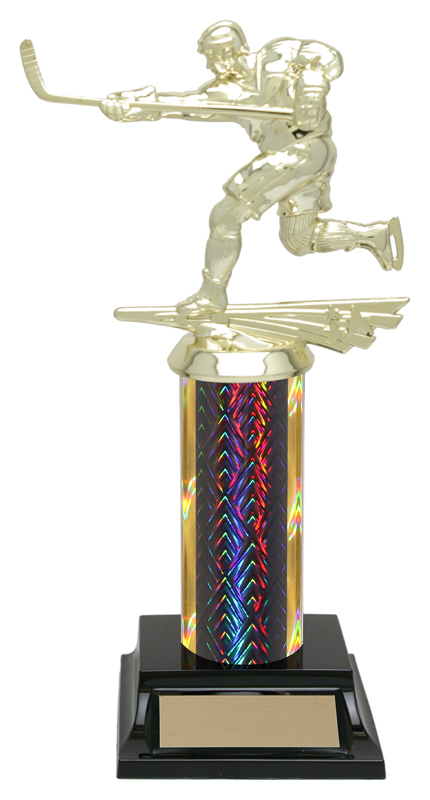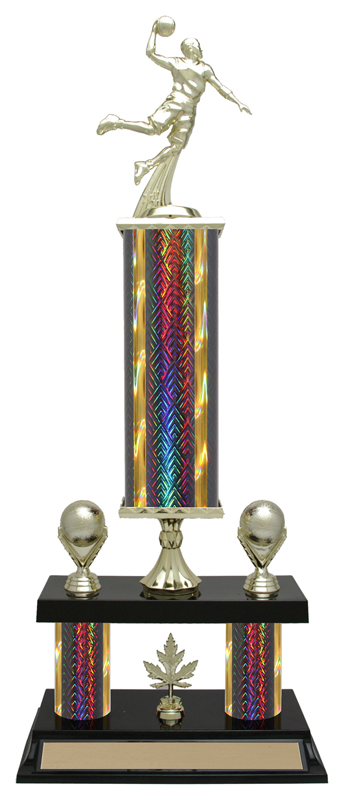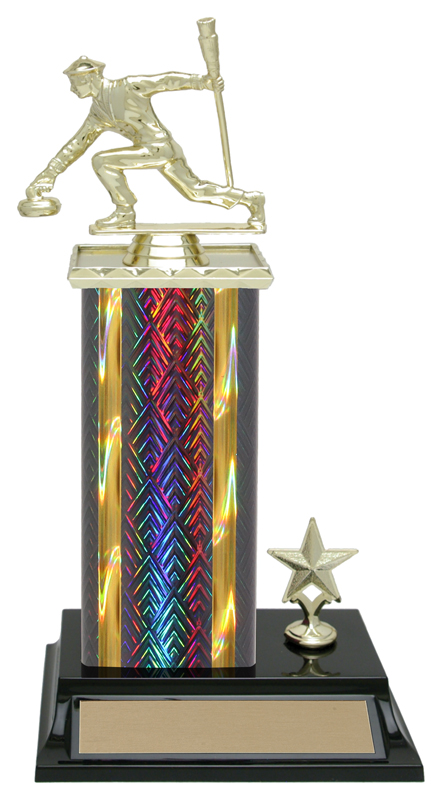

A logo that looks sharp on a screen can become illegible on a door plate, too thin on a medal, or imprecise on a screen-printed garment. For business logo design, it's important to think from the outset about the objects and surfaces that will carry your identity. This choice influences both your brand image and the quality of your signage, trophies, promotional items, and everyday identification elements.
For a school, a municipality, a sports team, an association, or a business, the logo must be able to serve in multiple contexts. It appears on communications, but also on name plates, recognition awards, uniforms, corporate gifts, and signage. A good graphic concept isn't just visually appealing — it's designed to be reproduced with precision.
Business logo design: starting from real-world uses
Before choosing a colour or a typeface, it's useful to list the intended applications. A business that only needs a digital signature doesn't have the same requirements as an organization that orders medals, banners, team apparel, and engraved trophies every year.
This step helps avoid a common pitfall: adapting a complex logo to a small surface too late in the process. An illustration filled with detail, very thin text, or colour gradients may work well in a brochure, but can yield limited results in laser engraving, CNC engraving, or screen printing. A simple, distinctive, and well-proportioned emblem is easier to recognize on a large panel as well as on a label just a few centimetres across.
This doesn't mean reducing all visual identities to a minimalist symbol. Some organizations need a crest, a mascot, or a more detailed institutional visual. In that case, the best solution often involves planning several versions: a full version for official documents, a simplified version for small items, and a monochrome version for engraving and marking.
The elements of a logo that reproduces well
An effective logo rests on a balance between personality and legibility. Its shape must remain recognizable even when reduced, engraved without colour, or printed on a textured material. This requires concrete graphic decisions.
A typeface that's legible at every size
The company name must be easy to read on an exterior sign, but also on a desk plate, a name badge, or an engraved glass. Decorative typefaces can have their place in an identity, provided they don't interfere with readability. Letters that are too thin, too tightly spaced, or heavily ornate quickly lose precision when reproduced at a small size.
It's also important to consider the text that accompanies the logo. A tagline, a founding year, or a department name may be relevant in an official version without being necessary on a promotional item. Planning a shorter signature helps maintain clean, balanced marking.
Colours suited to different surfaces
Colours are a strong visual reference point, especially for a sports team, a local brand, or an internal recognition campaign. However, they need to be defined in a way that allows them to be reproduced across different materials: fabric, plastic, metal, glass, wood, or Lamicoid.A palette of two or three main colours is generally more versatile than a design made up of many shades. In screen printing, each colour can affect the preparation and cost of the project. In engraving, the result depends more on the material: a two-tone plate can reveal a contrasting layer, while glass offers an elegant and understated frosted effect.
Always ask for a black-and-white version of the logo. This is not a secondary option. This version is used for administrative documents, stamps, metal engraving, identification plates, and certain applications where colour is unavailable or undesirable.
Shapes That Hold Their Impact
Very thin outlines and overly narrow negative spaces can disappear during production. A symbol intended for engraving must have sufficiently open lines to retain its shape. Likewise, a logo enclosed within a circle or crest should be tested with its text at a small scale to avoid it becoming a solid mass that is difficult to distinguish.
This check is particularly useful for medals, pins, pens, keychains, and small plaques. For these products, simplicity is not an aesthetic constraint — it is a condition for legibility and quality of finish.
Planning the Right Files From the Start
An image file downloaded from a website is generally not sufficient for production. It may look acceptable on screen, but lack the resolution needed when the design must be enlarged or a precise cut prepared. For professional use, the logo should be kept in vector formats, which allow the size to be changed without any loss of quality.
Vector files are particularly useful for sign fabrication, CNC engraving, laser marking, and printing. They also make it easier to adjust colours and separate graphic elements. A high-resolution file may work for certain types of printing, but it does not always replace a clean vector drawing.
Ideally, keep a folder containing the logo in colour, black, white, and monochrome versions, as well as horizontal and vertical layouts. Include colour references and the fonts used. This organization saves time when a human resources department orders long-service awards, when a committee is preparing a tournament, or when a manager is renewing the signage in their facilities.
Matching the Logo to the Organization's Products
The same logo is not always used in the same way. On a trophy, it may appear alongside the recipient's name, the event title, and the date. On a door plate, its function is rather to identify a location, a department, or a person. On a promotional garment, it needs to be visible from a distance and remain balanced with the dimensions of the fabric.
For recognition programs, a well-integrated logo reinforces the perceived value of the award. An engraved plaque or custom trophy doesn't just identify a winner — it reflects the care put into the event and the person being recognized. The choice of material, format, and marking method should therefore match the desired level of formality.
Promotional items call for a different approach. An engraved bottle, bag, piece of clothing, or desk accessory should remain useful and worth keeping. A logo that's too large can overwhelm the item, while one that's too small loses its role as a brand reminder. The right size depends on the item, the audience, and how much information needs to be displayed.
Working with a Customization Specialist
Graphic design decisions benefit from being discussed with the people who will produce the final product. A specialist in engraving, screen printing, signage, or promotional items can quickly flag elements that may be difficult to reproduce. This review doesn't limit creativity — it helps turn an idea into a lasting result.
At Mr. Trophy, logo projects can be approached with specific applications in mind: trophies and medals, plaques, signage, promotional clothing, engraved items, and personalized gifts. A single identity can be adapted to multiple needs without losing its consistency.
Before confirming an order, take the time to review the visual proof, dimensions, spelling of names, and dates. For an awards ceremony, a grand opening, or a sporting event, these details make all the difference. They prevent last-minute corrections and ensure every piece reflects your image.
A well-prepared logo becomes a lasting working tool. When it's legible, adaptable, and ready for various customization processes, it represents your organization on a sign, at a ceremony, and in the hands of the people you want to recognize.
You may also like
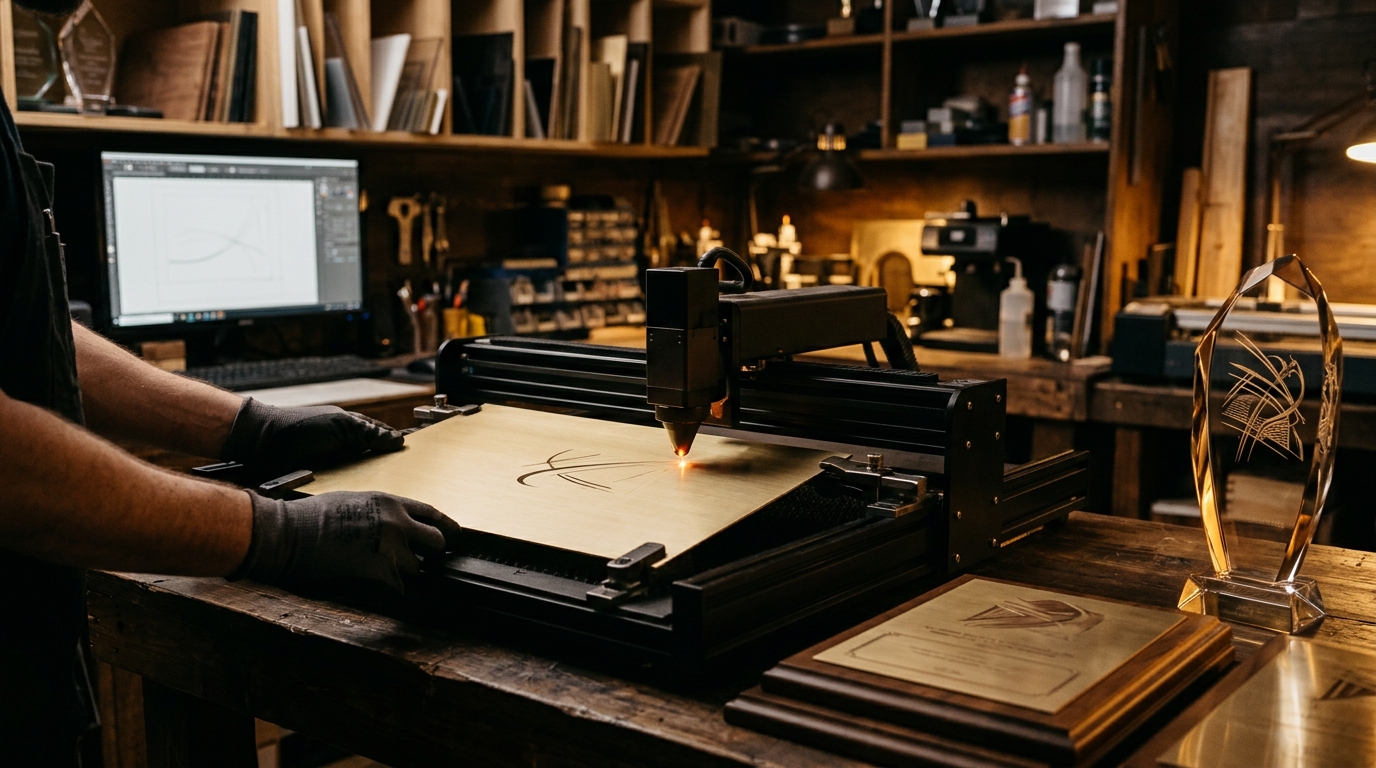
Preparing Your Logo for Laser Engraving and Printing: File Formats and Best Practices
A good file is half of a great trophy. Here are the formats, resolutions and tips to know so your logo looks sharp on your plaques, trophies and medals.
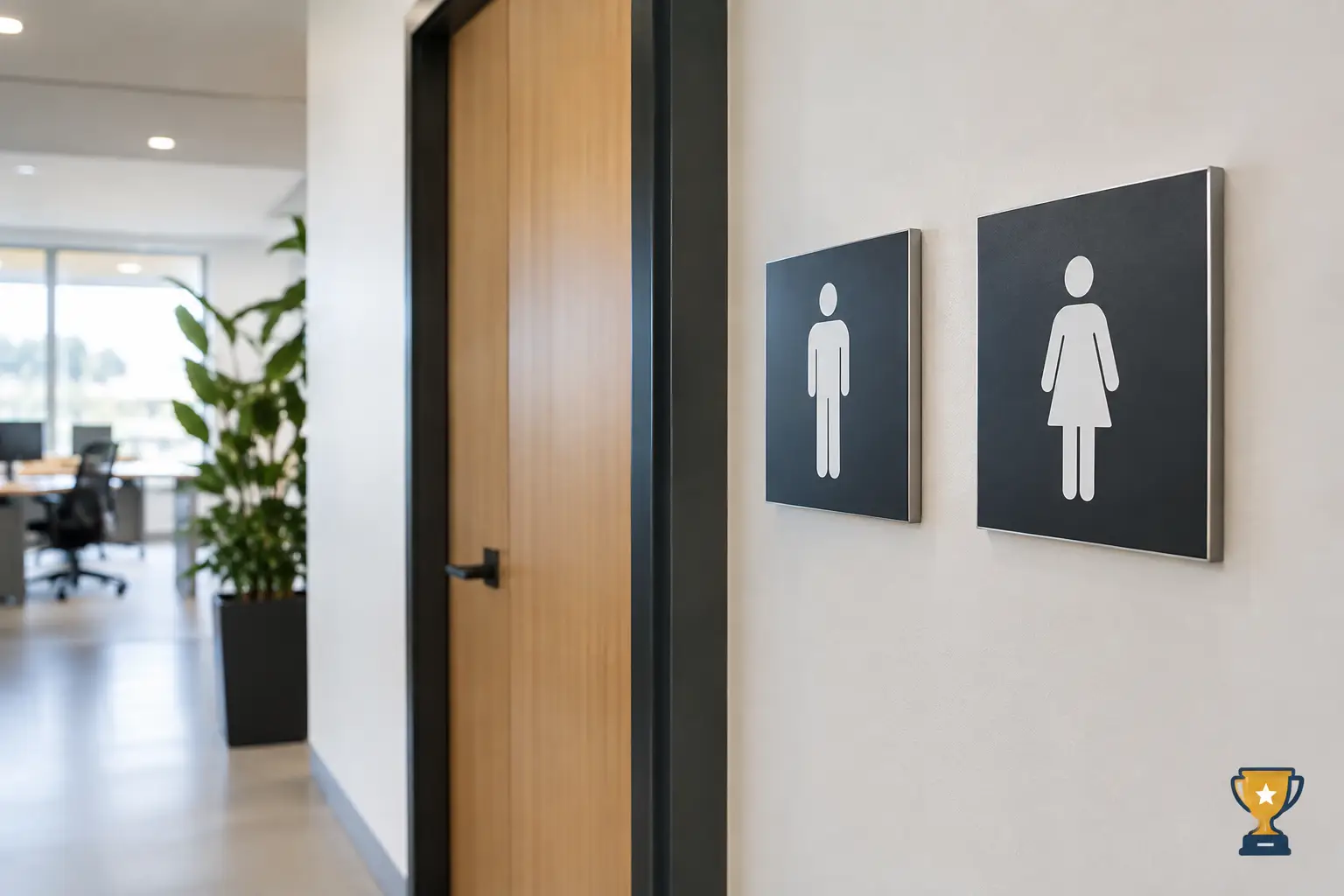
Guide to Washroom Signs for Businesses
Workplace restroom sign guide: materials, pictograms, accessibility and installation for clear, durable signage in Quebec.
Case Study: A Youth Tournament Well Rewarded
This youth tournament case study shows how to plan trophies, medals and engraving for a clear, lasting and memorable on-site presentation.