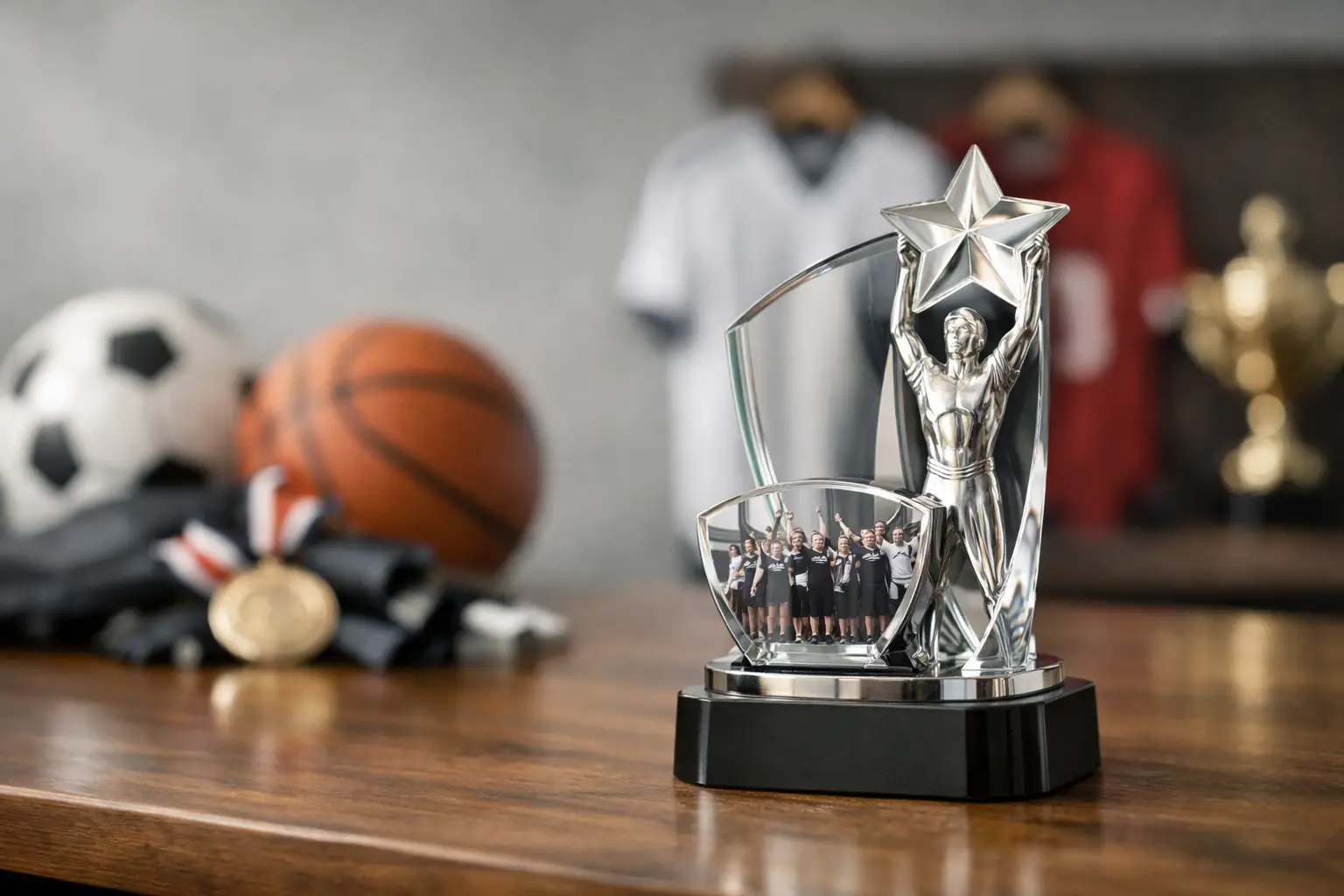
A trophy presented after a final, a school tournament, or a full season stays in the hands of the team that receives it for a long time. To carry that kind of value, a custom sports team trophy must do more than display a club name. It must clearly identify the event, highlight the achievement, and hold up to handling, transport, and sometimes several years of presentations.
For a league director, a coach, a volunteer committee, or a school, making the right choice comes down to very practical decisions: format, material, text to engrave, logo, quantity, and deadline. A well-planned award prevents last-minute mistakes and gives the ceremony a presentation that matches the effort the athletes put in.
Start with the purpose of the trophy
The first choice isn't about aesthetics — it's about function. Will this be an award that stays with the organization and receives a new engraved plate each year? An individual prize given to each player? Or a participation keepsake intended for every member of a team? These three uses don't call for the same budget or the same product.
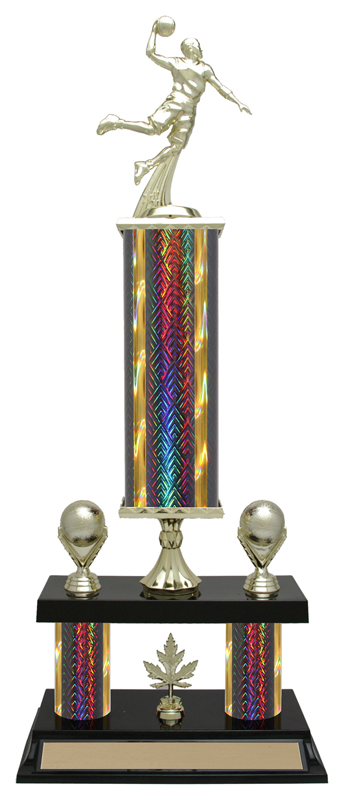
A perpetual trophy is well-suited to annual championships, inter-club cups, and municipal competitions. It makes a strong impression during the presentation and allows the names of winning teams to be added with each new edition. This requires a base large enough to accommodate future plates. On the other hand, an individual trophy or a personalized medal lets each athlete leave with lasting recognition.
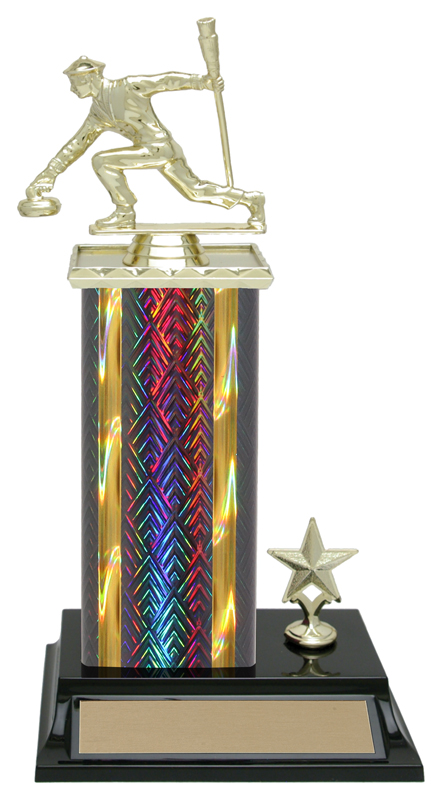
For tournaments with multiple categories, a cohesive product family also makes organizing easier. The champion, the finalist, the sportsmanship award, and the most valuable player can each receive a distinct format while sharing the same colour palette, the same emblem, and the same typography. This consistency gives the entire presentation a professional look.
Choosing a material suited to the sport and the budget
Glass, acrylic, metal, wood, and traditional cups don't produce the same effect. The choice depends on the identity of the event, but also on handling conditions and the number of units to order.
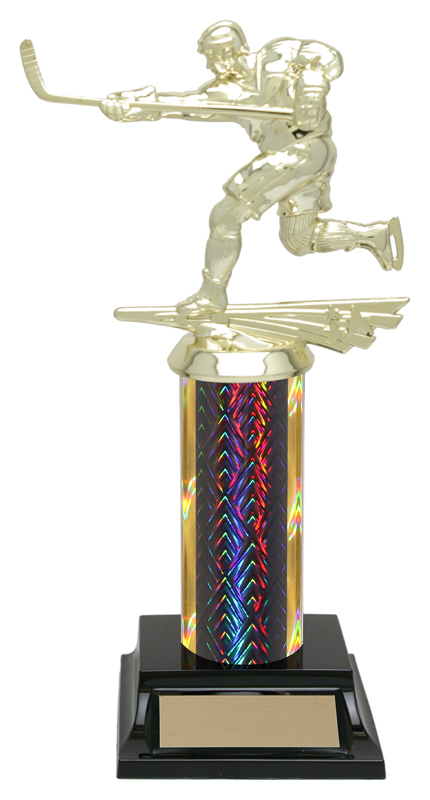
A cup on a base remains a go-to choice for hockey, soccer, baseball, and basketball leagues. It is immediately associated with victory and is easily spotted from a distance on a stage or in a gymnasium. It is particularly well-suited as the main team trophy. The key consideration is size: a large piece requires more careful transport and storage.
A glass or crystal trophy conveys a more formal type of recognition. It suits sports galas, end-of-season honours, coaching awards, or sponsor recognition. Laser engraving produces a precise result on these materials, especially for names, dates, and logos. That said, a stable model and protective packaging are worth prioritizing if the recipients are young athletes.
Acrylic is often an excellent compromise for schools, associations, and tournaments with multiple awards. Lightweight, modern, and available in a variety of shapes, it allows for the inclusion of a colour, a logo, or a sports visual without straining the budget. Wood can bring a warmer, more local feel — particularly appreciated for community competitions or volunteer recognition.
A medal, finally, doesn't always replace a trophy, but it complements a rewards program very well. It's practical for podiums, large teams, and single-day events. With a ribbon in the organization's colours and personalization on the back, it becomes a clear and accessible commemorative item.
Personalizing a sports team trophy without overloading the design
The engraving content should be readable from a few steps away and still make sense years later. Too much text, multiple fonts, or a poorly prepared logo all reduce the impact of the trophy. The goal is to prioritize the information, not to reproduce the entire tournament poster in a small space.
In most cases, the essential elements are the name of the event, the distinction being awarded, the year or season, and then the name of the winning team or recipient. The logo of the league, school, or sponsor can be added if it is clear enough. On a small plaque, it's better to shorten a phrase than to reduce the font size excessively.
For example, "U13 Regional Championship 2026 – Champions" is more effective than a lengthy text describing the rules of the competition. For an individual award, "Most Valuable Player" or "Team Spirit" delivers an immediate message. In bilingual programs, the available space guides the decision: two languages can be incorporated on a large trophy, while a short phrase or a universal symbol will sometimes be the wiser choice on a medal.
The quality of the logo file matters just as much as the choice of product. A vector graphic or a sharp image allows for more faithful reproduction in laser engraving, CNC engraving, or screen printing. When a logo contains very fine details, the production team may recommend simplifying it so that the marking remains clean on the chosen material.
Planning quantities, award levels, and timelines
A sports recognition program becomes much more manageable when all categories are defined before production begins. This means accounting for team trophies, individual awards, medals, ranking plaques, and spare units. Having a few extra pieces on hand can prevent issues if a category is added, if two players tie, or if an error appears in a list of names.
Before requesting a quote, gather four key pieces of information:
- the exact date of the ceremony and the date by which the products need to be ready;
- the quantities per category, along with the desired formats;
- the final text, proofread for accents, numbers, and the spelling of names;
- the logos and colours to be reproduced, along with good-quality files.
This preparation leads to a realistic recommendation. A trophy ordered for a national final is not handled the same way as a small run of participation medals. The complexity of the artwork, the material, the marking method, and the quantities all affect production time. For recurring events, keeping references from the previous year is also a worthwhile time saver.
Budget deserves a balanced approach. Not every award needs to be identical for the program to feel cohesive. A larger cup for champions, mid-sized trophies for special categories, and medals for participants create a natural hierarchy. Shared personalization ties everything together and avoids the impression of a mismatched assortment.
Thinking about the presentation as much as the product
The moment of presentation influences the size, weight, and look of the trophy. On a large stage, a very small piece will lose its visual impact. In a classroom, an oversized cup can feel cumbersome. For an outdoor presentation, the stability of the base and the durability of the product matter more, especially when photos are taken quickly between games.
The engraved plate should be facing the right way at the moment of presentation. It sounds straightforward, but a quick check beforehand prevents the team name from being hidden in official photos. If the trophy is perpetual, have the current year's plate ready before the ceremony as well. Presenting an award without the champions' names takes away a part of its symbolic value.
Organizations looking for a complete presentation can coordinate trophies with medals, plaques, banners, directional signs, or promotional apparel. This visual consistency is especially useful for a tournament welcoming teams from multiple regions: it identifies venues, supports sponsors, and strengthens the event's image without adding complexity for volunteers.
Working with an engraving specialist
A supplier able to offer trophies, medals, plaques, and several marking techniques helps keep the project on track. At Mr Trophée, laser engraving, CNC engraving, screen printing, and graphic design make it possible to tailor the personalization to the chosen product, rather than forcing a single process across the board.
For a sports organization, this flexibility is valuable when the program combines a perpetual cup, glass awards for officials, and medals for players. It also makes it easier to maintain a consistent identity from one season to the next, even as names, categories, or quantities change.
A well-executed trophy does not need to be oversized. Above all, it needs to be right: right in the wording, right in the proportions, right in the finish, and ready for the day a team hears its name called. That precision is what turns an award into a season-long memory.
You may also like
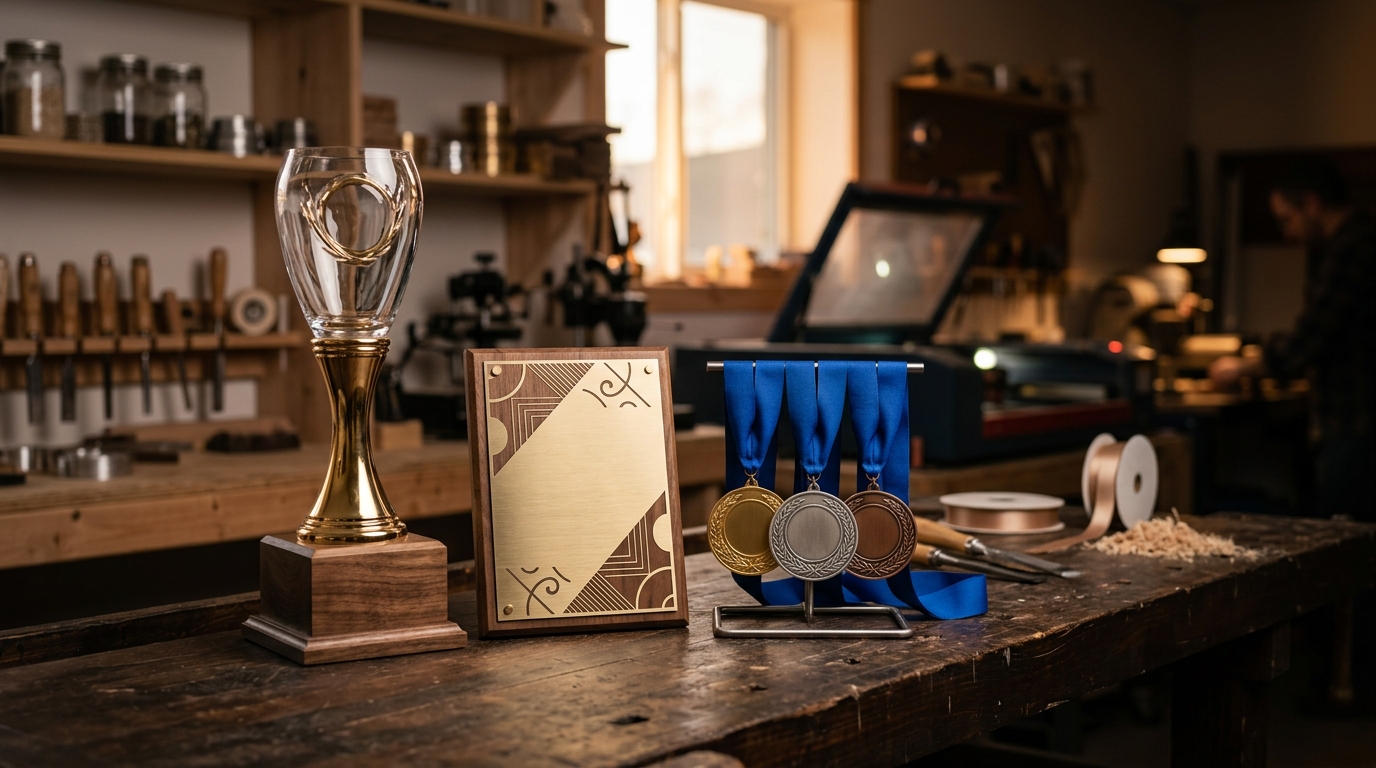
Team Recognition: Trophy or Plaque, Which Format?
Individual trophy, team plaque or medal: how to balance individual and collective recognition without friction or overlooked contributions.

Soccer Tournament Trophy Guide: How to Choose the Right One
Soccer tournament trophy guide: choose custom cups, medals, and plaques based on your event's categories, budget, and timeline.

Choosing Your Trade Show Banners
Choose trade show banners that are visible, durable, and tailored to your space, your message, and your actual installation constraints.