
What if the trophy you hand out matters less than the structure behind it? In league design, a single championship trophy creates one unforgettable climax, while a season-long points award keeps players engaged across months. Both can build recognition, but they do different jobs. This post compares championship trophies and season-long awards as deliberate budget choices, not competing formats. You will see why many leagues benefit from planning both.
We will examine the case for two awards, the distinct signal of a championship trophy, and how a points standings award sustains participation. Then we compare them side by side, break down the real budget drivers, and outline a hybrid model that runs both structures in one season. You will also learn how to choose by league type, from basketball and minor sports to municipal and business leagues, and how to budget for both awards without doubling spend. By the end, you will know how to match the award to the stakes and get more recognition value from the same budget.
Two Awards, Two Jobs: The Case for Planning Both
A championship trophy marks a single climax. A season-long points award sustains participation across months. Neither replaces the other, because one rewards a decisive performance and the other rewards consistency, attendance, and cumulative effort.
European football proves the structures can coexist. UEFA works alongside 55 national association members, while each country operates its own domestic league and cup. Leagues and cups complement each other rather than compete.
A single season can carry several award moments. Bayern Munich is documented as the only German club to win the Bundesliga, DFB Cup, UEFA Champions League and Supercup in one campaign, under Jupp Heynckes in 2012/13. Four trophy moments, four budget lines, one year.
The logic scales down. A minor hockey league, municipal basketball circuit, or corporate rec league can run a regular-season points race and a playoff final without doubling its administration burden. Both fit one calendar.
The premise: leagues that plan both structures deliberately get more recognition value from the same budget than leagues that buy one big trophy and stop. This is a planning decision before a purchasing decision. Mr Trophée in Léry, Quebec works with leagues that map their award calendar first, then choose sizes, materials, and engraving.
The Championship Trophy: One Climax, Maximum Signal
A championship trophy does one job: it concentrates all recognition into a single, high-drama moment, usually the final of a playoff or knockout bracket. Scarcity is the product. One lift, one photograph, one name on the plate.
That is why championship trophies land through visibility, physical scale and permanence. A big trophy on a podium frames every photo, feeds social media, and becomes the image the league reuses all season.
Specification Variables That Matter
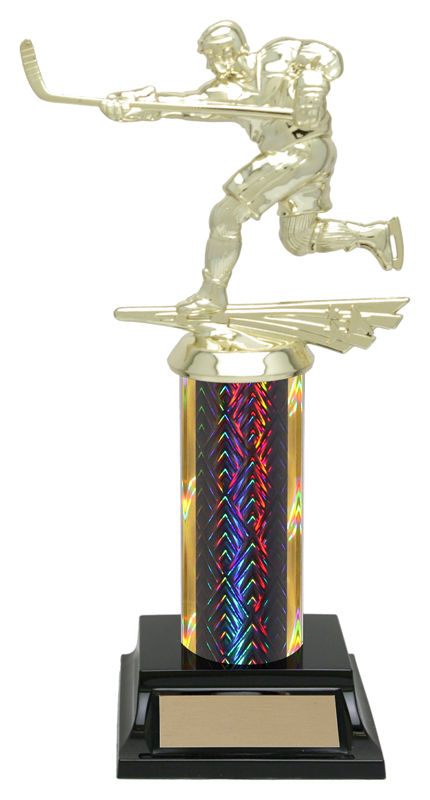
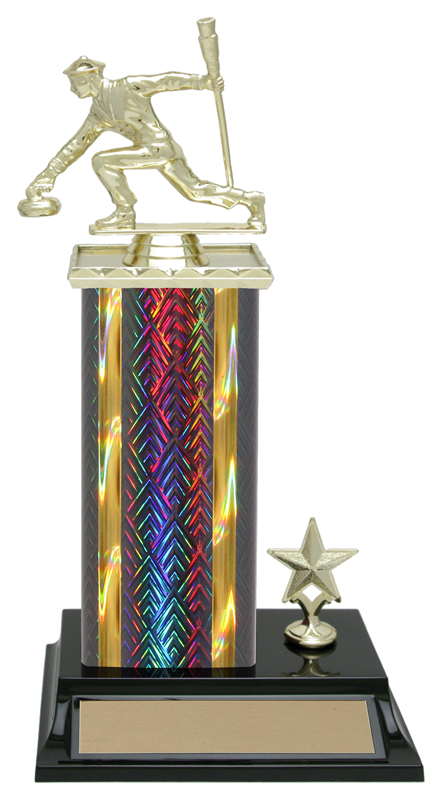
Before ordering, settle height, base construction, material (metal, acrylic, resin or wood), plate size, and the engraving surface the design allows for team names and years. A perpetual championship trophy stays with the league and is re-engraved annually; individual keepsakes go home with players. Many leagues need both, which reshapes quantity and the overall cost profile.
Downstream stakes raise the signal further. The Leagues Cup awards three qualification spots to the 2027 Concacaf Champions Cup, with the champion advancing directly to the Round of 16. A trophy can literally be a ticket, not just an object.
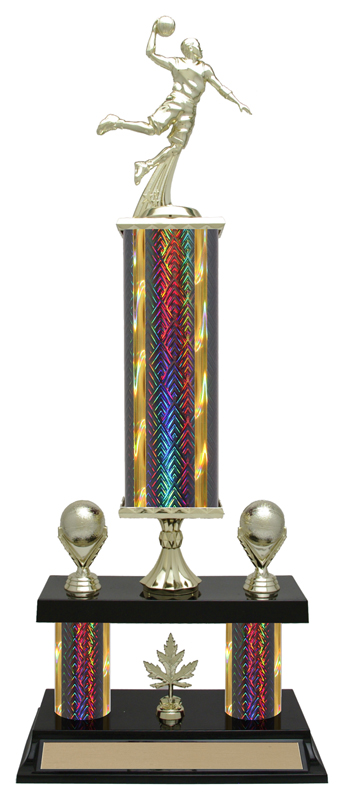
Sport shapes design. Basketball championship trophies often need taller, narrower silhouettes and a stable base to survive being hoisted, so material and base construction matter more than generic catalogue picks.
Next, the season-long counterpart that keeps players showing up week after week.
The Season-Long Points Award: Keeping Players in the Game
If a championship trophy rewards one decisive night, the season-long points award rewards everything leading to it: cumulative achievement across a full schedule, consistency, attendance, and steady performance rather than a single hot streak. The distinction is structural: playoff awards concentrate recognition on a decisive eliminator, while regular-season honours reward cumulative performance across a full schedule.
The participation mechanic is the real payoff. When standings points stay visible week to week, mid-table teams have a reason to keep showing up in week nine, not just the clubs chasing a title.
Delivery formats stay flexible and affordable: individual medals, plaques, engraved pucks or balls, certificates, and small perpetual boards for top scorer, most improved player, or best attendance record.
Season-long standings also do functional work in modern formats. In Leagues Cup 2026, MLS clubs are seeded by the final 2025 Supporters' Shield standings and LIGA MX clubs by cumulative 2025 Apertura and Clausura performance, so the regular season decides who gets the easier path.
Because these awards are distributed in quantity, they reward early planning: unit price, consistent engraving, and repeatable design rather than one-off custom fabrication. The comparison below weighs both structures directly.
Side by Side: Championship vs. Season-Long Awards Compared
Standings reward consistency; trophies decide who lifts silverware. The table below sets both structures against the criteria that shape a purchase.
Criterion
Championship award
Season-long award
What it rewards
One decisive performance in a final or knockout run
Cumulative performance across a full schedule
When presented
At the season's climax, after the final
At season's end, or progressively week to week
Typical quantity
One championship unit plus player keepsakes
Dozens or hundreds of units; the single biggest swing factor in total spend
Visibility
High: podium moment, photos, sponsor exposure
Distributed: repeated touchpoints with every recipient
Design freedom
High: scale, multi-tier bases, custom fabrication
Moderate: repeatable design, clean engraving surfaces
Cost drivers
Size, material, engraving complexity, quantity, perpetual versus individual
The same variables, magnified by volume and batch setup
Best-fit leagues
Leagues with one marquee date
Leagues fighting mid-season drop-off
No pricing figures are published for either award type. Treat those variables as the factors that move a quote up or down.
Championship trophies signal prestige and history; season-long awards signal belonging and effort. Leagues chasing retention should weight the second. Leagues chasing visibility and sponsorship should weight the first.
The decision rule is simple. If your league has one memorable date, start with a championship trophy. If your league struggles with mid-season drop-off, start with season-long recognition.
What Each Award Actually Costs: The Budget Drivers That Matter
The five drivers below explain why no standard price list exists for either award type.
Size and scale. A big trophy with a wide base and multiple tiers consumes more material and engraving surface than a compact cup; shipping and storage scale with it.
Material. Acrylic and resin keep costs down and allow colour printing. Metal and crystal raise the ceiling on perceived prestige. Laser engraving works across all of them, letting you reuse one design language for both award types.
Quantity and repeatability. Championship trophies are low volume and highly customized. Season-long medals and plaques are higher volume, and bulk ordering there is where leagues usually find savings.
Engraving complexity. Name-and-year plates are straightforward. Logos, colour printing and multi-line text on small surfaces need more setup, so batch engraving requests to cut per-unit setup time.
Perpetual versus individual. Perpetual awards need re-engraving capacity for years, which is simplest when the original workshop keeps your design files on record.
One workshop handling both award types keeps all five drivers predictable. Mr Trophée's best-price guarantee and bilingual service in Léry, Quebec suit leagues planning a full calendar; review nos réalisations, browse the boutique, and see our full services before requesting a quote.
The Hybrid Model: Running Both Structures in One Season
Budget drivers settled, the structural question remains: can one calendar carry both awards without chaos? Leagues Cup 2026 proves it can. The Concacaf-sanctioned, fully interleague tournament runs August 4 to September 6, 2026, in its fourth year, with 36 clubs: all 18 LIGA MX teams and 18 qualified MLS clubs.
The format splits cleanly. Phase One is a nine-day round-robin of 54 MLS versus LIGA MX matches, feeding a single-elimination bracket from quarterfinals to the final. Sustained participation, then one clear climax.
The compressed calendar, nine days of group play, then knockout rounds wrapping September 6, means award logistics must be planned as tightly as match scheduling.
Organizers also engineered stakes into every fixture with a no-ties points system: 3 for a regulation win, 2 for a shootout win, 1 for a shootout loss. That makes the season-long standings worth tracking and worth awarding.
That downstream access, three Champions Cup spots, the winner direct to the Round of 16, justifies investing more in the physical championship award.
Amateur leagues can scale the same logic: a six-week regular season with published standings and a points-based individual award, then a two-week playoff bracket and a championship trophy. Same model, smaller budget.
Choosing by League Type: Basketball, Minor Sports, Municipal and Business
Basketball leagues: pair a substantial championship trophy for the playoff winner with a season-long scoring or MVP award. Basketball championship trophies read best with height, a clean engraving plate, and a base wide enough to survive a post-game celebration.
Minor and youth sports: weight the budget toward season-long recognition. Medals, certificates and participation plaques give every player a tangible memento, distributing recognition broadly rather than concentrating it in one trophy most players never take home. Add one shared championship trophy for the league to keep.
Municipal and recreation departments: award both, designed as a matching family so the department's visual identity carries across programs. Bilingual French and English engraving is commonly used in municipal programs to reflect community language needs.
Corporate and business leagues: a season-long points award doubles as an employee recognition program; the championship trophy serves the year-end gala. Colour printing on plaques lets sponsor logos appear without a separate signage budget.
School athletic programs: align awards with the competitive calendar so playoff and regular-season recognition land at different moments, giving the same sport two separate moments of visibility.
For all of these, request a quote before finalizing the calendar. Lead time on custom engraving and fabrication can decide whether awards arrive before the final. Once you know which award each league type needs, the remaining question is how to split one budget between them.
How to Budget for Both Awards Without Doubling Spend
Whichever league type you run, the budget mechanics are the same: one award envelope, split deliberately rather than spent twice.
Start with a single figure, then assign shares. Weight more of the budget toward season-long recognition when mid-season drop-off is the primary concern; shift the balance toward the championship award when visibility and sponsorship are the priority. Write the ratio down before requesting quotes.
Standardize design across both award types: one base shape, one engraving font, one colour scheme. Consistency reads as more expensive than it costs and cuts setup work per order, keeping both structures under one design language.
Reduce specification before reducing recipients. Dropping a tier of height or moving the season-long category from crystal to acrylic usually frees more money than cutting medals, which damages the participation signal you are paying for.
Treat the two awards as separate commercial assets. The championship trophy is sponsor-facing; season-long awards are participant-facing. Sponsors fund visibility, participants fund loyalty. Price sponsorship against both.
Finally, request one quote covering both award types. Mr Trophée in Léry, Quebec offers personalized trophies, medals, plaques and engraving, bilingual service, and a best-price guarantee. Call 514-565-6665 to plan both structures in one order.
Conclusion: Match the Award to the Stakes
With the budget split settled, the remaining question is priority. Decide what the award has to do before you decide what it looks like. A championship trophy crowns one climax; a season-long award keeps people showing up for months.
If your league has one memorable date and needs visibility, lead with a substantial championship trophy. If players drift away mid-season, lead with season-long recognition. Most leagues need both, and the two structures coexist cleanly in a single calendar.
Budget by design consistency, not by cutting recipients. One engraving style, one base family, and batch ordering get you two award structures for close to the price of one done badly.
Next step: list your season's recognition moments, assign a share of the budget to each, and request one quote covering both. Mr Trophée serves leagues, schools, municipalities and businesses across Quebec with laser engraving and colour printing, bilingual service, and a best-price guarantee at 514-565-6665.
You may also like

Metal Trophy versus Resin Trophy: Which One Should You Choose?
Metal versus resin trophy: compare durability, style, weight and customization to choose the right award for your annual ceremony.
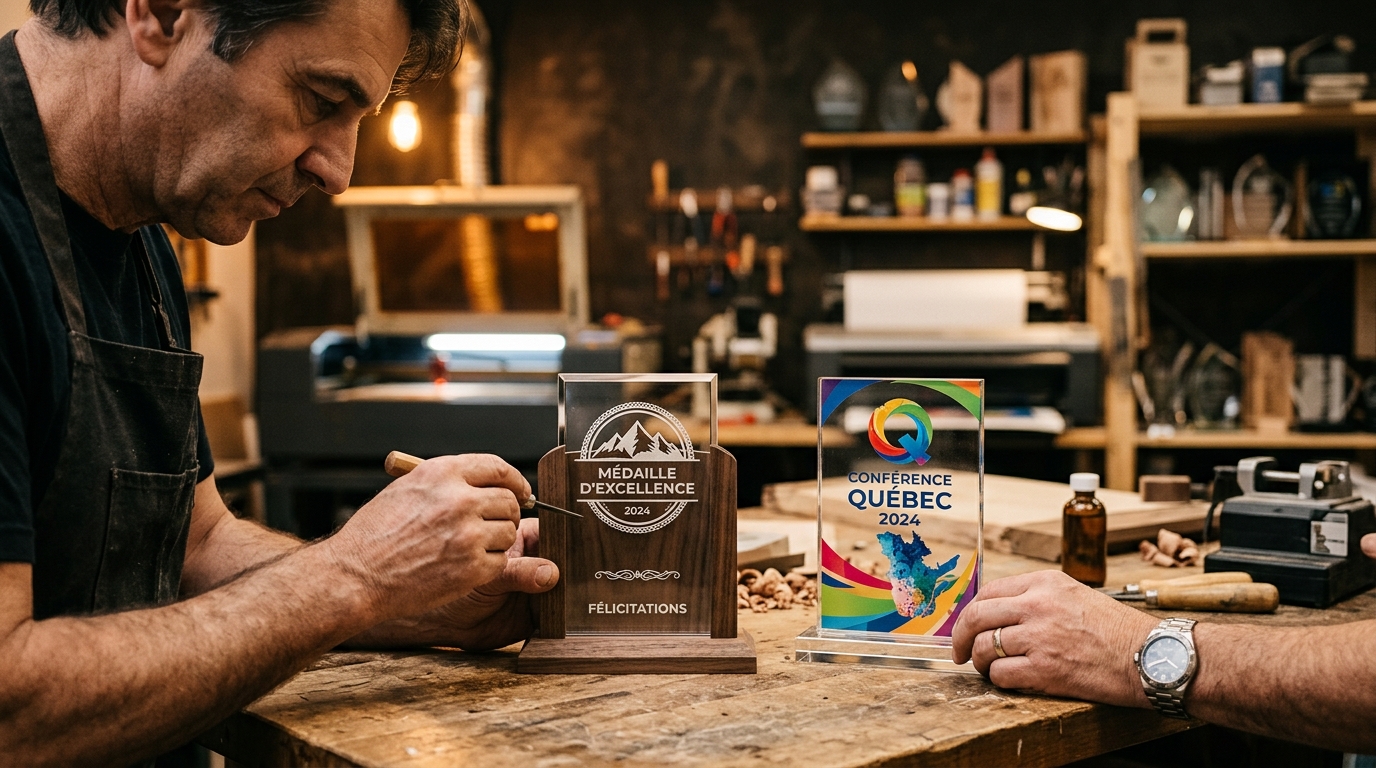
Engraving or Color Printing: Which Should You Choose for Your Awards?
Laser engraving or color printing? This guide compares both techniques to help you choose the best option based on your material, budget, and occasion.

Guide: Laser Engraving or Full-Color Printing — Which to Choose for Your Awards?
Laser engraving or full-color printing: two techniques with very different results. This guide helps you choose the right method based on award type, material, and budget.