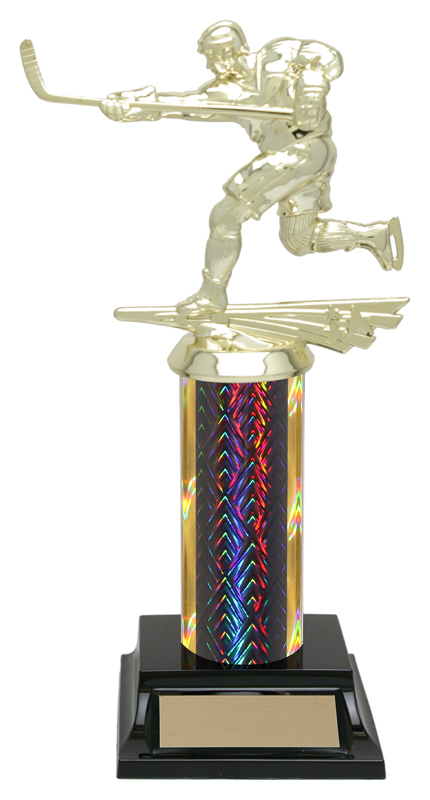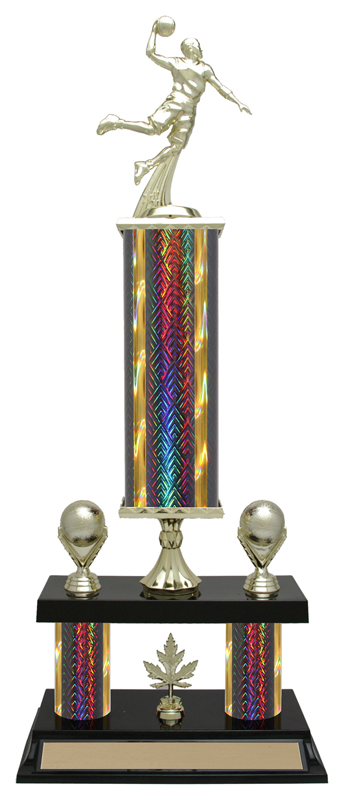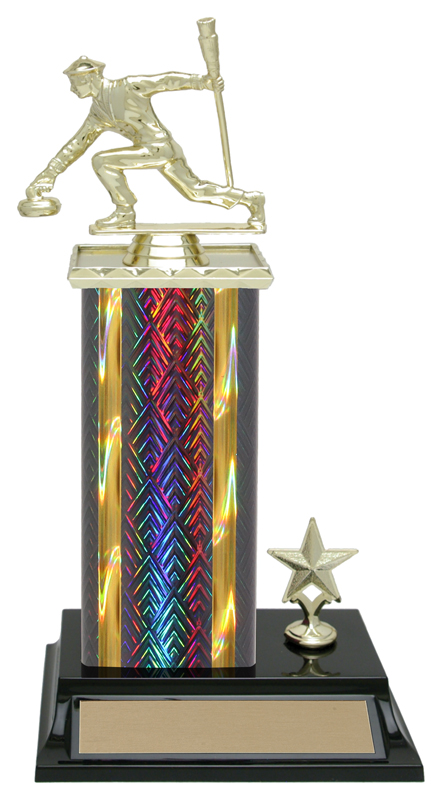

A tournament is sometimes decided by a single point, but its memory is also shaped at the awards ceremony. The search "how to choose a tournament trophy" often comes up when the event is already planned, teams are registered, and the date is just around the corner. Yet the trophy deserves to be chosen from the start: it should match the sport, the level of competition, your image, and the information to be engraved.
The right choice isn't necessarily the most impressive trophy. For a local league, a school, an association, or a company, a well-proportioned model that is clearly personalized and delivered on time will have more impact than a spectacular piece that's poorly suited to the context. Here are the criteria that help you order awards that are cohesive, lasting, and easy to present.
How to choose a tournament trophy based on the event
Before browsing models, clarify what your tournament is meant to celebrate. A championship final, a school sports day, a corporate tournament, and a minor hockey competition don't call for the same presentation. The trophy conveys a level of recognition: it must therefore be aligned with the actual scope of the event.
For an annual competition, a large challenge trophy can become a landmark that participants look forward to year after year. In that case, it's wise to plan for a base large enough to add the winners' names with each edition. For a one-time tournament, an individual or team trophy bearing the date and name of the event is generally a more straightforward solution.
The number of categories also matters. The champion, the runner-up, the most valuable player, the sportsmanship award, the best goaltender, or the tournament's rookie of the year don't necessarily call for the same format. A clear visual hierarchy makes the ceremony run smoothly: a more substantial trophy for the main title, then coordinated cups, plaques, or medals for secondary distinctions.
Define the recipient before the model
A trophy intended for a team should be visible from a distance and easy to display in a clubhouse, a school, or an office. An individual award can be more compact, provided the engraving remains legible. For younger participants, weight and handling are also worth considering: a very heavy cup or a fragile piece can be awkward to present during the ceremony.
The age of the audience influences the style. Children often appreciate sport silhouettes, themed figures, and colours associated with their discipline. For adults, businesses, or associations, glass, crystal, metal, and clean lines offer a more institutional presentation. There are no hard and fast rules: a charity golf tournament may call for an elegant plaque, while a family bowling tournament may favour a more expressive trophy.
Choosing the material based on use and budget
The material affects both the price and the perception of the award. It's therefore important to compare options based on expected lifespan, quantity ordered, and the effect you're going for.
Resin trophies are versatile. They allow for detailed shapes tied to a wide range of sports, such as soccer, hockey, baseball, basketball, and skating. They work well for tournaments with multiple categories, since you can maintain a consistent look while varying the disciplines.
Metal cups remain a natural choice for team standings and championships. Their silhouette is immediately associated with victory. They can be mounted on a customizable base, with an engraved plate featuring the tournament name, category, year, and winners.
Glass and crystal are particularly well-suited for corporate events, prestigious competitions, and more formal award presentations. They offer a clean surface for laser engraving of text or logos. On the other hand, they require more careful packaging and handling, especially if the awards need to be transported to multiple venues.
Acrylic offers a lightweight and contemporary alternative. It can be cut or presented in a variety of shapes, with colours or a transparent effect. It is useful when an organizer wants to incorporate their visual identity in a more prominent way, without moving to a crystal piece.
For large quantities, medals are often the most practical solution. They recognize all participants or finalists, are quick to distribute, and can feature a ribbon in the organization's colours. A medal does not always replace a champion's trophy, but the two products work very well together: trophies for the top positions, medals for the other categories or participants.
Planning for clear and complete personalization
Personalization is what turns a catalogue item into an event keepsake. A successful engraving is not about filling every available inch of the plate. It organizes information in order of importance: tournament name, award title, category, winner or team name, then year or date.
The logo deserves special attention. A good-quality file allows for a sharper reproduction on a plate, a medal, a glass trophy, or a base. If the tournament already uses visuals for jerseys, posters, or banners, incorporating those same elements creates a cohesive presentation. Graphic design can also help adapt an existing logo to the chosen engraving format.
Text should be proofread before production begins. Accents, hyphens, team names, and category titles are easy to correct on a proof, but much less so after engraving. For tournaments where winners are only known at the end, two approaches are possible: prepare the trophies with the fixed information and add the names after the event, or present an engraved plate at a later date. The right scenario depends primarily on your timeline and the type of product.
Do not underestimate the available space
A small plate cannot accommodate lengthy text, multiple logos, and a list of sponsors without losing clarity. When there is a lot of information, it is better to choose a wider base, a separate commemorative plate, or a trophy whose engraving surface is genuinely suited to the amount of content.
This is especially true for perpetual trophies. If you plan to engrave winners over multiple years, estimate how many lines you'll need right from the start. A slightly larger model can save you from having to replace the trophy after just a few editions.
Matching Awards to Your Tournament Structure
Your budget should be distributed according to the logic of your awards presentation. In a single-elimination tournament with eight teams, you can concentrate your investment on the champion, the runner-up, and a few individual honours. In a school or community event bringing together many young participants, it may be more appropriate to plan recognition for every participant while setting aside a distinct trophy for standout results.
Think about consistency across categories as well. A highly impressive first-place prize alongside a very simple medal for second place may be fitting for a competitive championship. In a participation-focused event, too large a gap can feel disproportionate. The message conveyed by the awards should reflect the spirit of the tournament.
If the event includes sponsors, volunteers, or referees to thank, plan their recognition pieces in the same order. Recognition plaques, engraved gifts, or promotional items can complement the trophies without feeling like a last-minute addition. Grouping your needs together also makes it easier to maintain consistency in colours, logos, and inscriptions.
Ordering Early Enough to Keep Your Options Open
Lead time isn't just about engraving. You need to select models, check stock, confirm quantities, prepare logos, review text, and produce the customizations. The earlier you place your order, the more flexibility you have over materials and formats.
For a rush order, focus on available models and straightforward personalization. This doesn't mean sacrificing quality: a well-engraved plaque on a classic cup is often more impressive than a complex model ordered in a hurry. Custom trophies, special assemblies, large series, or more elaborate graphic elements, on the other hand, typically require more lead time.
When requesting a quote, share the number of awards needed, the categories, the presentation date, your approximate budget, and the type of personalization you have in mind. This information makes it possible to suggest realistic products rather than an overwhelming selection. At Mr Trophée, options including laser engraving, CNC engraving, screen printing, and graphic design allow awards to be tailored to the medium of your choice.
A tournament trophy doesn't need to be extravagant to be meaningful. Give it a precise title, a clean engraving, and a form that suits the people receiving it. When the winner sets it on a shelf or brings it back to their team, they should be able to recognize immediately what it stands for.
You may also like

Soccer Tournament Trophy Guide: How to Choose the Right One
Soccer tournament trophy guide: choose custom cups, medals, and plaques based on your event's categories, budget, and timeline.

Guide: How to Choose Trophy Size Based on Event Type and Budget
Size, material, budget: three variables that go hand in hand when ordering a trophy. This guide gives you concrete benchmarks to make the right choice for your event.

It's a Goal! How to Choose the Perfect Trophy for Your Hockey Season
Hockey season is wrapping up and it's time to honour your players with awards as memorable as their best goals. Discover how Mr Trophée can make your year-end ceremony truly unforgettable.